Bird Netting Installation: What Property Managers Need to Know
A comprehensive guide to commercial bird netting, covering bird control, mesh materials, professional installation, rope access, wildlife regulations, maintenance and property protection.
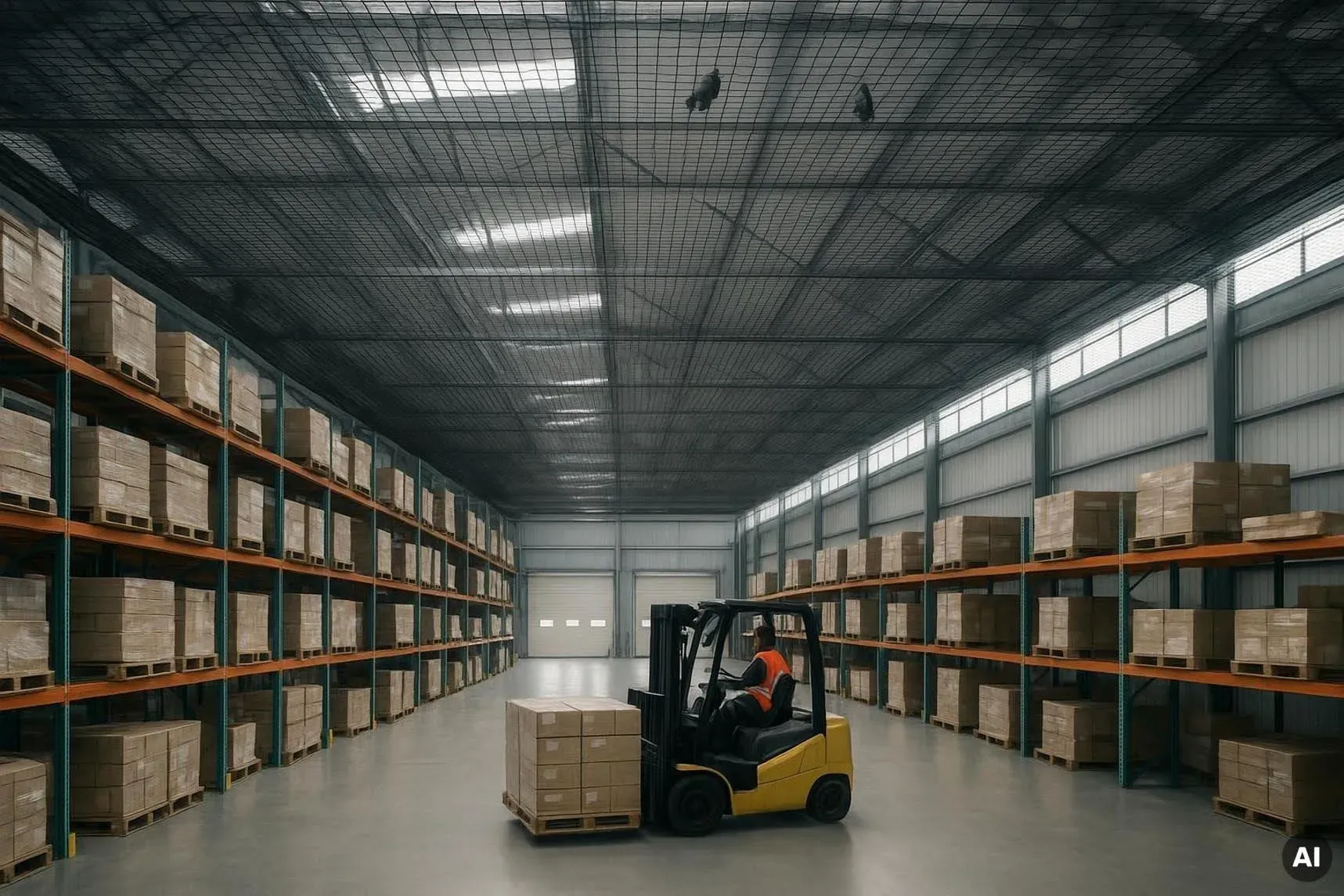
To manage bird problems on commercial property, property managers need to know that bird netting is not a ready-made decorative cover. It is a structural barrier that needs the right mesh size for each bird species, accurate tensioning, legal checks, and a planned maintenance schedule. Pest birds such as feral pigeons, gulls, and starlings can damage building exteriors, cover public entrances with droppings that may carry disease, and create serious financial risks. Choosing and installing the right netting system can turn a continuing pest problem into a lasting, discreet solution that protects the property.
Keeping birds out of a building requires a balance between building design, appearance, and wildlife law. Whether you manage an industrial park, a company headquarters, or a historic transport site, the quality of the installation matters. For complex building edges and high-level areas, using experienced rope access technicians for bird netting installation in RAIL London helps seal high-risk fascias and soffits safely while normal business continues at ground level.
When installed correctly, commercial bird netting is more dependable than short-term deterrents. This guide explains what facility managers and property managers need to know before ordering, installing, and maintaining a commercial bird netting system.
What Is Bird Netting and How Does It Work?
Bird netting is a strong, semi-permanent physical enclosure used to close architectural gaps, recessed plant areas, and open sections of buildings. It keeps pest birds away from the sheltered spaces they use for perching, roosting, and nesting. Unlike sound devices or visual deterrents, which birds may soon ignore, netting blocks access completely.
The system creates a continuous barrier across an open area. A support grid made from stainless steel perimeter cables and intermediate fixing points holds the net in place. The net covers large openings without changing the basic strength of the building or stopping needed ventilation.
Bird Netting as a Physical Exclusion Barrier
As a physical bird control method, high-quality netting creates a barrier that birds cannot pass through while staying almost invisible from ground level. Light and air can pass through the mesh. This allows heating, ventilation, and air conditioning (HVAC) equipment, drainage systems, and daylight features to work normally without trapping heat or moisture.
Architectural bird netting is held under firm mechanical tension, unlike loose netting used in some farming settings. This stops it from blowing in strong winds or sagging under rain and debris. It also prevents birds from standing on the net, finding a foothold, or getting through gaps between the net edge and the building.
When Should Property Managers Use Bird Netting?
Netting is most useful when bird activity has reached a moderate or serious level, especially when birds have formed regular night roosts or nesting areas. At this point, simple measures such as visual scarers, gels, and sound systems often have little effect because nesting behaviour is stronger than the birds’ startle response.
Facility managers should choose bird netting when they need to keep birds out of a clearly defined area completely. If droppings could damage stock, sensitive equipment, or busy entrances, full netting is usually the most reliable option.
Best Applications for Warehouses, Loading Docks, Atriums, and Commercial Buildings
Loading docks and industrial warehouses are common targets for bird infestation. High open bays, frequent vehicle movements, and overhead steelwork give pigeons and sparrows safe, raised places to perch. Installing netting beneath horizontal roof purlins closes these ledges and helps protect stored goods, pallets, supply operations, and workers from contamination.
High-quality offices can also benefit from tensioned mesh in inner lightwells, multi-storey atriums, recessed plant areas, and decorative exterior sections. The netting protects stonework, curtain-wall glazing, and rooftop air intake chillers from nesting waste while remaining difficult for tenants and visitors to see.
What Are the Benefits and Limitations of Bird Netting?
The main benefit of bird netting is that it starts working as soon as the installation is finished. If the net is the right size and has been properly tensioned and fixed, it forms a barrier that birds cannot pass. It gives facilities teams a dependable solution that protects the building exterior through several breeding seasons.
Netting also has some practical limits. Covering large or uneven areas can take time and skilled labour. Poorly specified or neglected netting may collect leaves and litter, sag under heavy snow, or make access harder for facade cleaners, roof contractors, and mechanical engineers.
Benefits: Exclusion, Hygiene, Asset Protection, and Reduced Maintenance
Keeping birds away can greatly improve hygiene. Feral pigeons and gulls can carry more than 60 transmissible pathogens, including salmonellosis, histoplasmosis, and ornithosis. They may also carry mites and fleas. Removing their roosting areas reduces the chance of contaminated dust and fungal spores being drawn into HVAC fresh-air intakes, helping protect indoor air quality.
Protecting the building is another major financial benefit. Bird droppings contain concentrated uric acid, with a pH of about 3.0 to 4.5. This can corrode metal, damage paint, wear away stone, and break down bitumen roofing membranes. Stopping guano from building up helps prevent early damage and reduces repeated cleaning costs.
Bird control can also reduce liability risks. Wet droppings on walkways, stairs, and fire escapes can cause slips and falls, exposing property owners to injury claims. One historic case in New York resulted in an $8 million payment to an injured commuter. Netting also stops twigs and feathers from blocking roof drains, which can contribute to serious ceiling damage during storms.
Bird netting also helps prevent debris from accumulating around roof drainage systems. For broader property protection, facility managers should integrate bird control with commercial roofing maintenance.
Which Type of Bird Netting Should You Choose?
The right net depends on the site conditions, fire safety needs, appearance of the building, and bird species involved. There is no single net that suits every property. A poor choice may break down early or allow smaller birds to pass through.
Commercial buildings usually need materials that can withstand strong sunlight, changing humidity, and repeated temperature changes. This helps the net remain usable for many years.
Bird Netting Materials: Polyethylene, Nylon, and Stainless Steel
High-Density Polyethylene (HDPE) is widely used for commercial outdoor applications. Premium HDPE twine does not rot, conducts little or no electricity, resists chemicals, and includes UV protection to reduce sun damage. It is available in knotted and knotless forms, with common colours including black, stone, and translucent white. Knotted HDPE offers strong tensile performance and can last 10 years or more.
Nylon netting is strong and flexible, so it can suit some indoor ceiling voids. Standard nylon may absorb moisture, which can cause slight sagging in damp outdoor conditions. It also needs good UV protection to last three to six years outside. Stainless steel architectural wire mesh costs more but offers the highest level of durability and fire resistance. It may suit historic buildings, secure facilities, and facades where non-combustible materials are required.
Mesh Sizes for Pigeons, Starlings, Sparrows, and Larger Birds
The mesh opening must match the smallest bird species found at the site. A net made for large birds will not stop smaller birds, which can fly through the openings and nest inside the protected area.
- 50 mm (2-inch) Mesh: Suitable for feral pigeons, herring gulls, and crows. The wider opening reduces wind resistance, weight, and the visual effect across large areas.
- 28 mm (1⅛-inch) Mesh: Commonly used for starlings, blackbirds, and ordinary thrushes.
- 19 mm (¾-inch) Mesh: Needed for house sparrows and small finches. This smaller opening provides full exclusion in food handling, grocery distribution, and outdoor hospitality areas.
What Should Property Managers Check Before Installation?
A good bird netting project starts before the installation team arrives. Property managers need an early site review that looks at the building condition, the surfaces available for fixings, and the legal requirements that apply.
Starting the hardware work before fixing structural problems or checking legal duties can result in failed work, costly delays, or fines.
Inspecting Roosting Sites, Entry Points, and Existing Bird Damage
A detailed site inspection should record active roosts, hidden ledges, and main flight routes. Check the condition of parapets, steel columns, and timber lintels. Soft masonry, damaged concrete, or rusted flashing may not hold expansion anchors under tension.
Before the net goes up, affected areas should be cleaned and treated with suitable biocides. Birds may return to the smell of their own pheromones, dried guano, and old nesting material. Removing these hazards protects workers, reduces the spread of fungal spores through ventilation systems, and makes the area less attractive to birds outside the new barrier.
Confirming Permits, Building Rules, Wildlife Regulations, and Tenant Access
Legal checks are a key part of the project. In the United Kingdom, the Wildlife and Countryside Act 1981 protects wild birds, active nests, and eggs. Putting up netting that blocks access to an active nest can be a criminal offence. Under the Animal Welfare Act 2006, birds trapped behind or inside netting are under human control. Building owners and managing agents may face prosecution if birds suffer or die because of poor installation or a lack of maintenance.
In places such as New York City, Local Law 15 (Building Code §1403.8) calls for bird-friendly facade materials, including external screens and grids, to reduce collision risks. Property managers should check heritage permissions for listed buildings, review lease rules about window views, and set access times that limit disruption to shops and office occupiers.
What Safety Risks Should Property Managers Consider?
Bird control systems are usually installed along rooflines, eaves, and high facades. Work at height is the largest physical risk during most installation projects.
Property managers have health and safety duties. They must check that contractors use approved height-safety procedures, secure work methods, and suitable controls for site risks.
Working at Height and Protecting Installers, Tenants, and Visitors
All work must follow relevant workplace safety rules, such as OSHA 29 CFR 1910 and 1926 in the United States or the UK Work at Height Regulations 2005. Technicians should use certified mobile elevating work platforms (MEWPs), scaffolding, or industrial rope access. These methods must be supported by complete fall-arrest systems connected to anchor points rated at 5,000 lb or 22 kN.
Protecting people at ground level is just as important. Drop-zone barriers, debris netting, overhead protection, and banksmen may be needed to protect tenants, shoppers, and pedestrians from falling tools or pieces of masonry during drilling. Wind conditions must also be watched. Tensioning a wide net in strong gusts is like opening a ship’s sail and can make elevated work platforms unstable.
Choosing the appropriate access method is essential for elevated installations. The same safety considerations apply to safe high-rise building maintenance, where rope access, specialized equipment, and proper planning help protect workers and the public.
How Is Bird Netting Installed on a Commercial Property?
Commercial bird netting requires careful mechanical work rather than a basic pest control approach. A planned sequence helps create a strong system that lasts.
Following a set method prevents loose pockets, reduces the risk of trapping birds, and helps the exclusion barrier cope with temperature changes and severe weather.
Step 1: Develop a Site-Specific Exclusion Plan
The engineering team begins with a survey of the building and prepares a detailed layout. The plan shows exact anchor points, cable routes, access zips for maintenance staff, and load calculations based on the fixing surface, such as reinforced concrete, structural steel, or brickwork.
The plan also accounts for thermal movement and wind forces. The team selects the diameter of the perimeter wire rope, often 2 mm to 3.15 mm 316-grade stainless steel, and chooses fixings that can support the moving loads created by the tensioned net.
Step 2: Install Anchors, Perimeter Cables, and Support Hardware
Strong corner eyebolts or girder clamps are fixed to the building at corners and changes in direction. On long runs, they are usually placed about every 10 metres. Intermediate fixings, such as screw eyes, beam clips, or hammer drives, are added along the edges at close intervals: 0.3 metres for 19 mm mesh, 0.5 metres for 28 mm mesh, and up to 1 metre for 50 mm mesh.
The stainless steel perimeter cable is threaded through the intermediate fixings and connected to barrel strainers or turnbuckles at the anchor points. Technicians tighten the cable until it is firm, with no sag around the edges. The net is then lifted into place and aligned from one corner along the adjoining edges to prevent distortion. It is attached to the cable with heavy-gauge stainless steel hog rings on every mesh square, or every other square for fine 19 mm mesh. Seams are secured tightly so no gap is wider than the mesh opening.
How Should Bird Netting Be Maintained?
Bird netting is a working part of the building and should not be treated as a fit-and-forget product. Sunlight, storms, building work, and continued bird activity can all affect its condition.
Adding netting checks to computer-aided facility management (CAFM) routines helps protect the investment, support the building warranty, and reduce legal risks linked to trapped birds.
Routine Inspections for Tears, Loose Cables, Corrosion, and Sagging
Commercial facilities teams should carry out visual checks every quarter and arrange formal technical inspections after strong winds or heavy winter weather. Specialist teams such as Rope Access in London can safely reach high or hard-to-access sections of the net during these inspections. Inspections should look for lost cable tension, sagging net lines, rusty turnbuckles, detached intermediate anchors, and roof debris that may add weight to the support system.
Damage should be repaired quickly. Small tears can often be joined with UV-stabilised twine or high-tensile clips. Larger sections damaged by outside contractors need structural patches made from matching mesh. Where the net covers HVAC chillers, lighting ballasts, or roof valves, check that commercial zips or marine-grade hook-and-loop panels still work. Maintenance engineers must be able to reach the equipment without cutting the net.
Bird netting inspections should form part of a wider building maintenance strategy. Property managers can also explore advanced facade inspection and repair to understand how modern technologies support exterior building assessments.
What Are the Alternatives to Bird Netting?
Netting gives complete physical exclusion, but it may not suit every facade or site. Narrow ledges, delicate historic features, and busy public transport areas may need other bird control methods.
Knowing how other systems work helps property managers match the budget, appearance, and level of bird control to each part of the building.
When an Integrated Bird Management Plan Works Better Than One Solution
A mixed bird control plan can produce better long-term results by using different deterrents on different building surfaces:
- Bird Spikes: Low-profile stainless steel spikes stop pigeons and gulls from landing on narrow ledges, window sills, parapet caps, and CCTV brackets without enclosing the area.
- Electric Abatement Tracks: Low-visibility electrified tracks give a brief, harmless electrostatic pulse. Over time, birds learn to avoid the treated ledges.
- Automated Laser Deterrent Systems: Automated Class 3B lasers, such as the AVIX Autonomic, move across open warehouses or wide flat roofs. Birds view the moving beam as a physical danger, helping keep large areas clear without overhead cables.
- Electromagnetic Systems: Non-lethal pulse fields are intended to disturb bird navigation sensors. They can provide coverage on delicate historic facades where visible netting is not allowed.
How Much Does Commercial Bird Netting Installation Cost?
The cost of commercial netting depends on access, material quality, and the shape of the building. Prices are not based only on area. They also include the skilled work needed to design and tension a high-level containment system safely.
A useful budget should include more than the first square-foot or square-metre quote. Hardware choices, access equipment, and site cleaning can all affect the final price.
Factors That Affect Bird Netting Installation Pricing
In North America, commercial installations usually cost between $3 and $12 per square foot, with heavy structural systems costing more. In the UK, typical prices range from £15 to £40 per square metre. In urban areas such as London, prices may rise to £20 to £52 or more per square metre. Main cost factors include:
- Access Requirements: Boom lifts, fixed scaffolding, and specialist industrial rope access teams can add substantially to labour costs.
- Substrate Complexity: Fixing into reinforced concrete or structural steel needs more specialist hardware than fixing into timber or ordinary masonry.
- Material Grade: UV-stabilised knotted HDPE twine and marine-grade 316 stainless steel cable cost more at the start than basic nylon or galvanised hardware. They can, however, provide a working life of 10 years or more.
- Biohazard Remediation: Removing and disposing of heavy guano deposits, dead birds, and active nesting material may add environmental health charges before the net can be installed.
How Can Property Managers Manage Bird Control Across Multiple Sites?
Real estate directors and multi-site facilities managers often deal with uneven contractor quality, different local rules, and inconsistent maintenance across their property portfolios.
Clear company-wide standards help make bird control consistent, humane, and cost-effective at every site.
Standardize Inspections, Documentation, and Maintenance Schedules
Place bird control records in the organisation’s CAFM system. Use the same technical requirements at each regional site, including minimum mesh strength, 316 stainless steel support hardware, and approved installation methods.
Ask every contractor to provide a standard photographic completion report showing cable tension, anchor positions, and neat perimeter finishes. Set automatic annual inspection tasks before the spring breeding season. This creates a reliable record for insurers, local building officers, and wildlife regulators.
Choose Professional Bird Netting Installation for Your Property
Controlling birds on commercial property requires a lasting structural solution rather than a quick fix. Properly installed netting helps protect indoor air quality, limits chemical damage to the building exterior, and reduces slip-and-fall risks linked to bird droppings.
Working with certified bird control engineers and trained height-safety technicians helps the installation meet local building rules, follow wildlife protection laws, and maintain the appearance of the property.
Request a Site Assessment and Written Installation Plan
The first step is a professional site and engineering assessment. Instead of accepting a general estimate, ask your pest control or facade contractor for a full site review. It should explain access methods, fall protection, fixing-surface suitability, and the mesh size needed for the bird species present.
Your written installation plan should include drawings that show anchor spacing, turnbuckle positions, perimeter cable routes, and equipment access zips. A clear and properly recorded plan supports final approval and helps protect the commercial property for many years.