Best Electric Blinds for Insulation: Fabrics, Cellular Designs and Window Fit
Electric blinds can support winter comfort, summer solar control, privacy and glare management when their fabric, fit and controls are specified correctly. This guide compares cellular, blackout, reflective, layered and exterior blinds alongside glazing, window orientation and installation considerations.
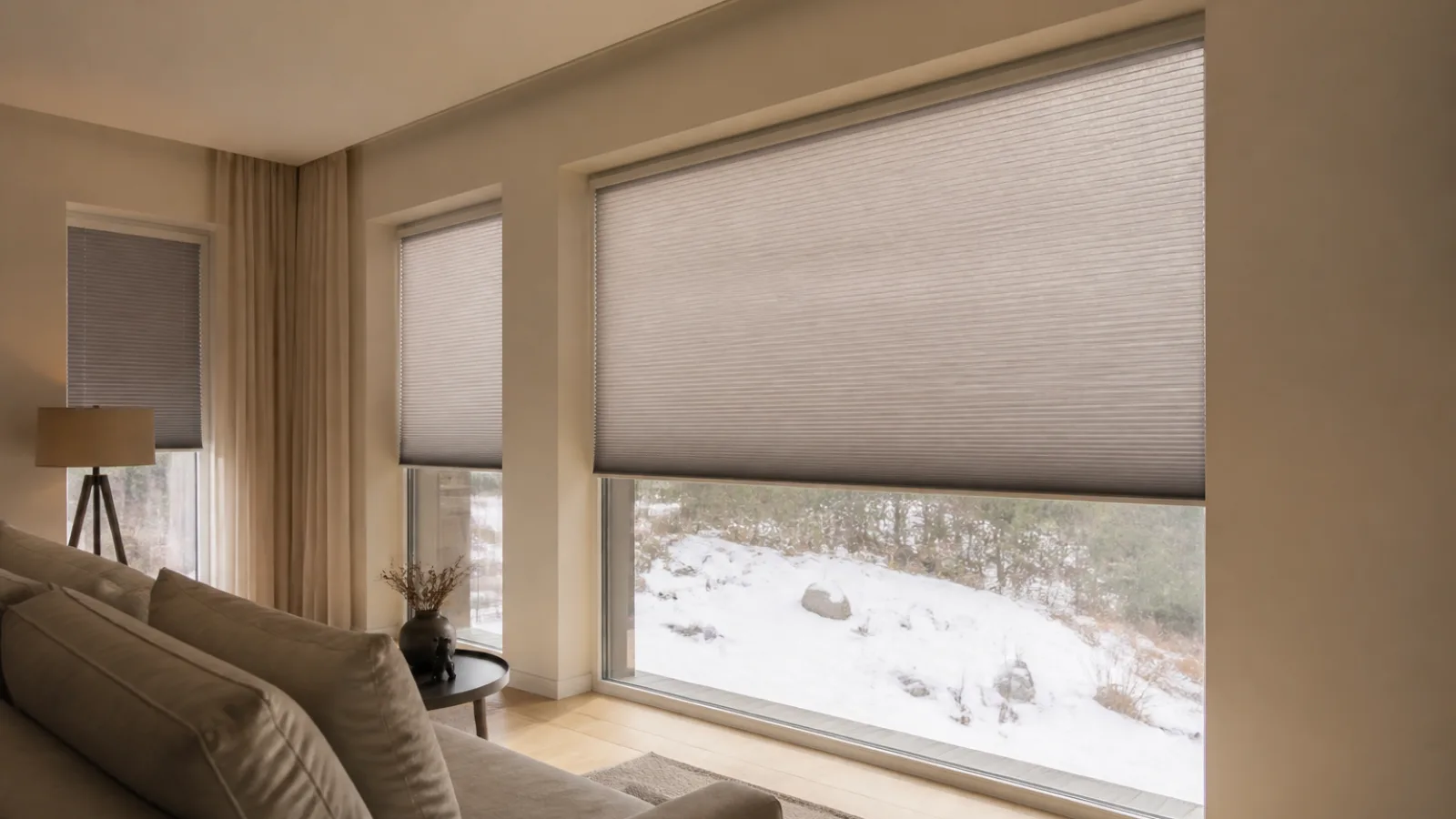
The best electric blinds for insulation are not necessarily the darkest or most heavily motorised. Their thermal value depends on the fabric, the air space behind it, how closely it fits the window and how the blind is used throughout the day. A well-specified system can reduce unwanted heat transfer, glare and drafts around a window, while also making it easier to manage solar exposure consistently.
Manufacturers such as electric window coverings from Hunter Douglas offer automated window-covering systems in several fabric and operating formats. However, the motor is only one part of the specification. The right choice also needs to account for glazing, window orientation, room use, local climate and the quality of the installation.
How electric blinds improve window insulation
Reducing heat loss in winter
Windows usually provide less resistance to heat flow than an insulated wall. A blind creates an additional layer between the room and the glass. Depending on its construction and fit, this layer can slow air movement near the window and reduce the sensation of a cold radiant surface.
Cellular blinds are particularly useful because their folded structure contains air pockets. Air is a poor conductor when it remains relatively still, so these pockets add a degree of resistance between the room and the glazing. A lined Roman blind, blackout roller or layered shade can also contribute, although the result depends heavily on gaps at the sides and bottom.
Limiting solar heat gain in summer
Insulation is not only about keeping heat inside. On sunny days, solar radiation passing through the glass can raise internal temperatures and increase cooling demand. Solar-control or reflective fabrics reduce the amount of sunlight entering the room, while automated schedules or sensors can close blinds before peak sun reaches the glass.
For strong summer exposure, an exterior blind or shutter generally has an advantage because it intercepts radiation before it passes through the window. Interior electric blinds can still improve comfort, particularly when exterior shading is impractical, but they should be selected with the glazing and orientation in mind.
Why installation quality matters as much as fabric
A highly insulating fabric cannot perform as intended if it is installed with large side gaps or leaves an open channel above the window. Recess fitting, a headbox or cassette, side channels and a close-fitting bottom rail can limit bypass air movement. The blind should also operate smoothly without rubbing, twisting or leaving sections permanently open.
Blinds are not a substitute for repairing failed seals, poorly installed frames or significant draughts. If cold air is entering around the window, investigate the window and surrounding construction before treating the blind as the solution.
Compare the best electric blind types for insulation
| Blind type | Thermal mechanism | Strengths | Limitations | Best suited to |
|---|---|---|---|---|
| Cellular or honeycomb | Air pockets create an additional insulating layer | Good winter comfort, neat appearance and useful light control | Can be more sensitive to dust and may need careful sizing around handles | Bedrooms, living rooms and frequently occupied spaces |
| Blackout roller | Dense, coated fabric limits light and adds a barrier at the glass | Darkness, privacy and simple operation | Blackout does not automatically mean strong thermal performance; side gaps can remain | Bedrooms, media rooms and rooms needing glare control |
| Reflective or solar roller | Reflective surface reduces incoming solar radiation | Useful for glare and summer heat control | May provide less night-time insulation than a deeper cellular or lined design | Sunny offices, south- or west-facing glazing and conservatories |
| Layered or lined Roman | Multiple fabric layers and a deeper air space | Strong visual softness with additional coverage | Heavier, deeper and potentially more demanding to clean | Living spaces where appearance and comfort are both priorities |
| Exterior blind or screen | Stops much of the solar load before it reaches the glass | Effective solar control for exposed windows | More exposed to weather and may require stronger fixings and maintenance | Large areas of glazing and overheating-prone elevations |
There is no universal winner. Cellular designs are often the strongest interior option for a balance of winter insulation and everyday comfort. Reflective fabrics can be more appropriate where summer solar gain is the main issue. Blackout fabrics prioritise darkness and privacy, but blackout alone does not guarantee high thermal performance.
What to look for in the fabric and construction
Cellular and honeycomb air pockets
Cellular blinds are made with one or more rows of folded cells. Single-cell designs provide a slim profile, while double-cell designs create more internal air spaces and may be preferable where thermal comfort is a major design objective. Ask the supplier how the cell structure, fabric weight and edge treatment work together rather than judging the blind by appearance alone.
Cellular blinds can be made in light-filtering or blackout versions. A blackout lining improves darkness and privacy, but the insulation benefit still depends on the complete assembly and the way it fits the opening.
Blackout and coated fabrics
Blackout fabrics use dense construction, coatings or separate liners to block light. They are valuable in bedrooms and media rooms, especially where early morning or evening glare affects comfort. Their thermal contribution varies widely, so request information about the fabric layers and edge system rather than assuming that a dark colour or blackout label indicates strong insulation.
Reflective and solar-control surfaces
Reflective fabrics are designed to reject or manage a portion of incoming solar energy. They can help reduce glare and overheating without making a room completely dark. The visible appearance, openness, privacy level and view through the fabric should be checked at different times of day, because a fabric that looks effective under showroom lighting may behave differently in direct sun.
Layered fabrics and thermal linings
Layered roller blinds, lined Roman blinds and dual-shade systems allow different functions to be combined. For example, a solar screen can manage daytime glare while a blackout or insulating layer closes at night. This approach can be useful in rooms with changing needs, although additional layers increase depth, weight, cost and maintenance requirements.
Fit, seals and the window opening
For insulation, the blind should cover as much of the glazed area as practical while remaining compatible with handles, vents and opening sashes. Recess fitting keeps the installation visually contained, but it may leave gaps around an uneven reveal. Face fitting can provide wider coverage and may be preferable where the recess is shallow or the window frame is irregular.
- Side channels: These guide the blind and reduce open gaps, particularly on skylights, doors and large windows.
- Headboxes or cassettes: These conceal the roller and can reduce the open area above the fabric.
- Bottom rails: A close-fitting rail helps limit light and air movement at the sill or floor.
- Recess quality: Uneven plaster, trim or masonry can make a nominally close fit less effective.
- Secondary curtains: Curtains can add another air layer, especially at night, but should not obstruct the blind or motor.
For unusual windows, obtain a measured survey. Large panes, bay windows, corner glazing and doors often need separate blinds or a coordinated system rather than one oversized product.
Match electric blinds to glazing and window orientation
Glazing determines how much heat is transmitted through the window, while orientation determines when sunlight is most likely to cause a problem. The best solution may therefore differ from room to room. The table below describes general principles; local climate, shading from nearby buildings and the hemisphere should also be considered.
| Window condition | Useful blind priority | Specification considerations |
|---|---|---|
| Single glazing | Night-time insulation and draught control | Choose a close-fitting cellular or layered blind, but address frame and glass deficiencies separately. |
| Double or triple glazing | Solar control, glare management and supplementary night insulation | Coordinate fabric depth and fixing method with the frame and handle clearances. |
| Strong equator-facing exposure | Solar rejection and scheduled closure | Reflective fabric, exterior shading or a layered system may be appropriate depending on climate. |
| East-facing windows | Morning glare and early heat gain | Use scheduled or sensor-based closure during the morning, while preserving daylight later. |
| West-facing windows | Low-angle afternoon sun | Prioritise glare and heat control; side channels or exterior shading can be valuable. |
| Limited direct sun | Night-time comfort, privacy and light control | A cellular, blackout or lined blind may be more useful than a highly reflective fabric. |
In the northern hemisphere, south-facing windows commonly receive substantial midday sun, while west-facing windows can be difficult because of low afternoon sun. In the southern hemisphere, the strongest solar exposure is commonly on the north-facing side. These are starting points, not replacements for a site assessment.
Choose by room and comfort priority
- Bedrooms: Consider cellular blackout blinds, quiet motors, dependable schedules and a design that does not create visible standby lights.
- Living rooms: Combine daylight access with glare control. A dual blind can provide an open solar screen by day and a more insulating layer at night.
- Home offices: Prioritise screen glare, reflected light and afternoon solar gain. A reflective or solar-control fabric may be more useful than full blackout.
- Nurseries: Select a reliable blind with appropriate safety features, concealed cords where applicable and quiet operation.
- Kitchens: Choose washable, moisture-tolerant materials and keep fabric clear of hobs, sinks and condensation-prone areas.
- Large glazed extensions: Consider exterior shading, side channels and coordinated control across several blinds to avoid uneven solar exposure.
Specify the motor and controls without losing the insulation goal
Electric operation makes it easier to close blinds consistently, which is important when insulation and solar control depend on timing. A schedule can close blinds before a bedroom cools at night or before direct afternoon sun reaches an office. Sun sensors can respond to changing weather, while integration with a building-management or smart-home system can coordinate blinds with lighting and heating.
Specify quiet operation where sleeping or working conditions matter. Battery motors simplify retrofit projects but require access for recharging or replacement. Wired power can suit new construction and frequently operated large blinds. Manual override, local controls and a reliable fallback are worthwhile if the network or automation platform is unavailable.
A practical buying and specification checklist
- Record the window dimensions, frame type, opening direction and recess condition.
- Identify the main problem: winter heat loss, summer overheating, glare, privacy, darkness or a combination.
- Check glazing type, solar exposure, surrounding shade and the room's operating schedule.
- Compare cellular, blackout, reflective, lined and exterior options against that priority.
- Ask about fabric layers, cell structure, openness, lining and cleaning requirements.
- Specify coverage details, including side channels, cassettes, bottom rails and recess or face fitting.
- Confirm handle clearances, ventilation access, sill depth and motor space before ordering.
- Choose battery or wired power based on access, window size and project stage.
- Set schedules or sensor rules that support the desired comfort outcome without unnecessarily blocking daylight.
- Have the system professionally measured and installed, then check for gaps, smooth travel and correct control operation.
Common mistakes to avoid
Choosing a blind by colour alone is a common error. A pale fabric may reflect more visible light, but construction, coating, air spaces and fit have a greater bearing on performance. Similarly, blackout describes light control, not a guaranteed thermal rating.
Leaving large side gaps, installing a shallow blind over a deep recess or overlooking exterior shading can undermine the result. It is also easy to specify a motor without considering battery access, noise, manual operation or compatibility with the existing control system.
Finally, blinds cannot cure condensation caused by excessive indoor humidity, cold bridges, failed seals or inadequate ventilation. They may change the temperature of the glass and influence where condensation appears, so investigate the wider building-envelope issue if moisture persists.
FAQ: electric blinds and insulation
Do electric blinds help keep a room warm?
They can provide an additional barrier at the window and reduce the sensation of cold glass, particularly when the blind is close fitting and made from a cellular or layered material. They will not compensate for defective frames, failed seals or poorly performing glazing.
Are cellular blinds better than blackout blinds?
Cellular blinds are generally the stronger choice when the main objective is an insulating interior blind because their air pockets add depth. Blackout blinds may be preferable when darkness and privacy are the primary requirements. A cellular blackout design can combine both functions.
Do reflective blinds reduce summer heat?
They can reduce solar gain and glare when correctly selected and closed during the relevant exposure period. Exterior shading is often more effective because it intercepts sunlight before it reaches the glass, but reflective interior blinds can be a practical retrofit option.
Should blinds sit inside or outside the recess?
It depends on the window geometry and the desired coverage. Recess fitting is discreet, while face fitting can cover gaps around an uneven or shallow recess. The best option is the one that provides effective coverage without interfering with handles, ventilation or opening sections.
Are electric blinds worth it for large windows?
They can be especially useful for large or hard-to-reach windows because scheduled and remote operation makes consistent solar control easier. Confirm motor capacity, power supply, fixing strength, emergency operation and access for maintenance before selecting the system.
Can blinds prevent condensation?
No. Blinds may affect the surface temperature and airflow around the glass, but condensation usually requires a wider assessment of humidity, ventilation, glazing, thermal bridging and air leakage. Keep blinds positioned and operated in accordance with the supplier's guidance.
Final considerations
The best electric blinds for insulation are selected as part of the whole window system. Start with the building's exposure and comfort problem, then compare cellular, blackout, reflective, layered and exterior solutions. Finally, specify the fit, seals, motor and controls together. This approach produces a more reliable result than choosing a motorised blind by appearance or automation features alone.