Global Real Estate Value: A Trillion-Dollar Analysis
What is the total value of all the world and property? This analysis delves into the multi-trillion dollar figure, breaking down the value of residential, commercial, and land assets to understand the largest store of wealth on the planet.
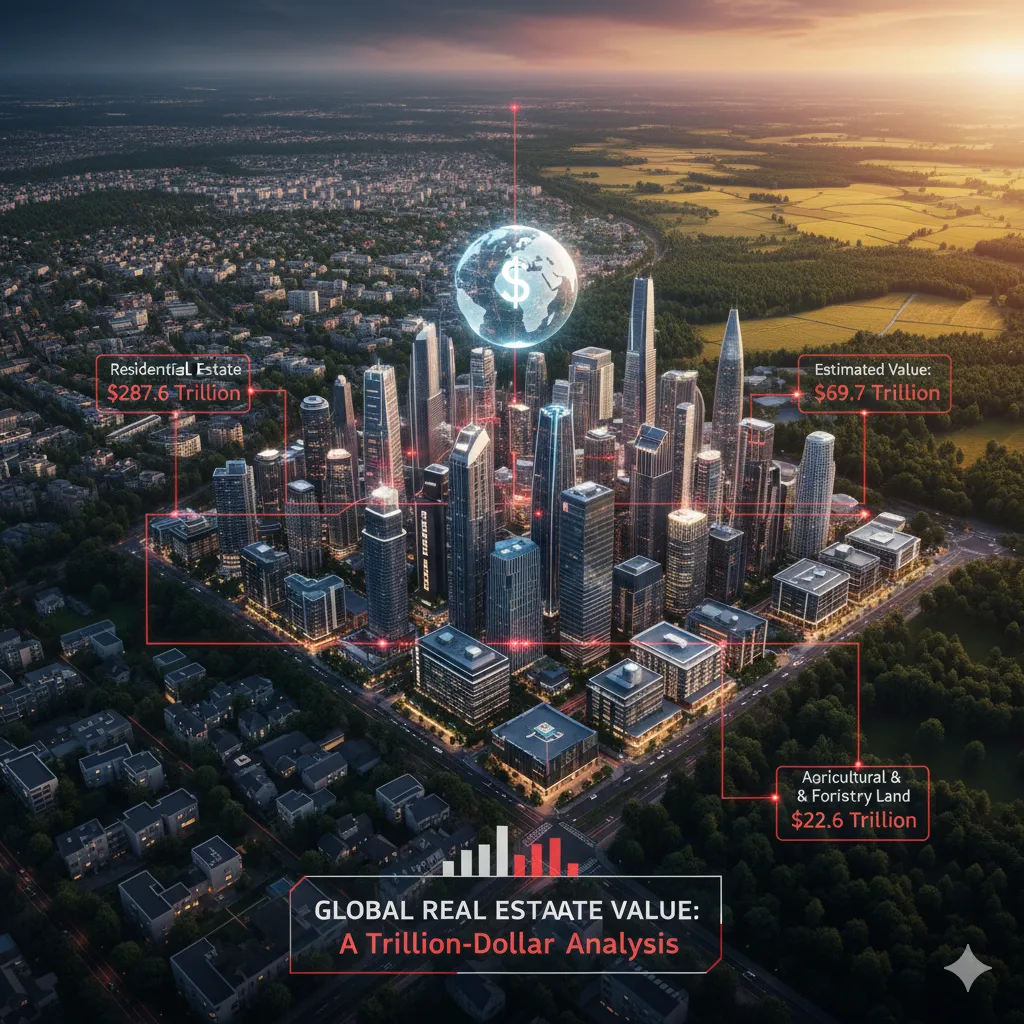
What is the total value of all the world's developed property? It's a question of immense scale, encompassing every home, skyscraper, warehouse, and farm. The answer reveals more than just a number; it unveils the single largest store of wealth on the planet, dwarfing the value of global equities and debt securities combined. This deep-dive analysis unpacks this staggering figure for 2024, exploring its core components, regional concentrations, and the powerful economic forces that shape its trajectory.
The Grand Total: Unveiling the Multi-Trillion Dollar Figure
To comprehend the scale of global real estate, we must start with the most comprehensive data available. According to leading real estate advisor Savills, the total value of global real estate reached a monumental $379.7 trillion at the close of 2022. While the market has faced headwinds from rising interest rates since then, this figure provides a robust baseline for understanding the asset class's immense scale. It represents approximately 76% of all global assets and is nearly four times the size of global GDP.
This colossal figure isn't monolithic. It's a composite valuation derived from three primary sectors, each with its own distinct characteristics and economic drivers. Understanding this breakdown is the first step in appreciating the market's complexity.
Residential Real Estate
Value: ~$287.6 Trillion
Constituting the lion's share (around 76%) of all real estate value, the residential sector is the bedrock of global property wealth. This includes single-family homes, apartments, and all other forms of living quarters. Its value is fundamentally tied to household wealth, demographic trends, and the universal need for shelter.
Commercial Real Estate
Value: ~$69.7 Trillion
This sector is the engine of commerce and includes office buildings, retail spaces, industrial warehouses, hotels, and multifamily residential complexes. While smaller than the residential market, its value is a critical indicator of economic health, business confidence, and evolving consumer habits (like the shift to e-commerce).
Agricultural & Forestry Land
Value: ~$22.4 Trillion
Representing the foundational asset upon which everything else is built, agricultural and forestry land is vital for global food security and raw material supply. Its valuation is often overlooked but is fundamental to the world's economy and sustainability efforts. This figure excludes undeveloped rural and desert land.
The Pillars of Value: A Deeper Look at Each Sector
Each segment of the real estate market contributes uniquely to the total valuation. Their performance is influenced by different micro and macro-economic factors, creating a dynamic and multifaceted investment landscape.
The Dominance of Residential Property
Residential real estate's overwhelming share of global value underscores its importance not just as an asset class, but as a social and economic cornerstone. For most households worldwide, their home is their single most significant financial asset. This creates a powerful "wealth effect," where rising home values can boost consumer confidence and spending, thereby stimulating the broader economy. Conversely, falling prices can have a chilling effect.
Key drivers include urbanization, which concentrates demand in high-density areas, and demographic shifts, such as the growth of single-person households and an aging population. Government policies, from first-time buyer incentives to property taxes, also play a crucial role in shaping market dynamics and valuations across different jurisdictions.
Commercial Real Estate's Evolving Landscape
The commercial sector is currently undergoing a significant transformation. The post-pandemic era has accelerated pre-existing trends, creating clear winners and losers:
- Industrial & Logistics: The undisputed champion, fueled by the relentless growth of e-commerce and the need for resilient supply chains. Warehouses, distribution centers, and last-mile delivery hubs are in high demand, driving up rents and capital values.
- Office: Facing structural headwinds from the rise of remote and hybrid work models. Companies are rethinking their office footprint, leading to higher vacancy rates in older, less desirable buildings. A "flight to quality" is evident, with modern, ESG-compliant, and amenity-rich buildings outperforming the market.
- Retail: The narrative has shifted from the "retail apocalypse" to a focus on experiential and convenience-driven retail. High-street locations and destination shopping centers with diverse food, beverage, and entertainment offerings are proving resilient, while outdated malls struggle.
- Multifamily: Considered a defensive asset, this sub-sector benefits from the same demographic trends as residential property, offering stable, long-term income streams for institutional investors.
A World of Wealth: Regional Market Concentration
Real estate value is not evenly distributed across the globe. A handful of regions and countries account for a disproportionately large share of the total value, reflecting their economic might and population density.
"Where capital and people congregate, property values soar. The global real estate map is a direct reflection of the world's economic geography."
Historically, North America and Europe dominated the landscape. However, the last two decades have seen a dramatic shift towards the Asia-Pacific region, led by China's unprecedented economic expansion and urbanization.
- China: Now holds the title for the world's most valuable real estate market, accounting for over a quarter of the global total. Its rapid development has created immense wealth, though the market is currently facing significant regulatory and debt-related challenges.
- United States: Remains a colossal and mature market, representing the second-largest share of global real estate value. Its transparent legal system, dynamic economy, and status as a safe-haven for capital continue to attract significant domestic and international investment.
- Japan & Germany: These nations represent large, stable, and highly developed markets. Japan's real estate value is heavily concentrated in its megacities like Tokyo, while Germany is known for its strong residential rental market and robust commercial sector.
- United Kingdom & France: Key European markets with deep pools of capital and globally significant cities like London and Paris, which act as magnets for investment in high-value commercial and residential assets.
Combined, the top 10 countries account for approximately 75% of the total global real estate value, highlighting the intense concentration of property wealth in the world's leading economies.
The Engine Room: Key Macro Drivers of Property Value
The value of global real estate is not static. It is in constant flux, influenced by a complex interplay of economic, social, and political forces. Understanding these key drivers is essential for forecasting future trends.
Economic Growth (GDP)
The most fundamental driver is economic prosperity. A growing economy leads to job creation, higher disposable incomes, and increased business confidence. This directly fuels demand for all types of property—more homes for a wealthier populace, more office space for expanding businesses, and more warehouses for increased trade. The correlation between GDP growth and real estate appreciation is one of the most established in finance.
Interest Rates & Monetary Policy
Central bank policies have a profound and immediate impact. Low interest rates reduce the cost of borrowing, making mortgages more affordable for homebuyers and increasing the profitability of leveraged investments for commercial players. This stimulates demand and pushes prices higher. Conversely, the recent cycle of aggressive rate hikes globally was designed to cool inflation, which it did by significantly increasing borrowing costs and dampening real estate market activity.
Demographics & Urbanization
The long-term story of real estate is the story of people. Population growth and the inexorable trend of migration from rural to urban areas create sustained demand for housing and commercial infrastructure in cities. An aging population in developed countries creates demand for healthcare facilities and senior living, while a youth bulge in emerging markets fuels demand for starter homes and different types of retail and entertainment.
Technology and ESG
Technology (PropTech) is revolutionizing how real estate is managed, valued, and utilized. Smart building technology can reduce operating costs, thereby increasing an asset's net operating income and overall value. Simultaneously, the focus on Environmental, Social, and Governance (ESG) criteria has become a major value driver. Buildings with high sustainability ratings (e.g., LEED, BREEAM) can command premium rents and sale prices, while older, energy-inefficient buildings risk a "brown discount."
Future Outlook: Navigating the Market in 2024 and Beyond
The global real estate market is at a pivotal moment. After a decade of cheap money and strong appreciation, the landscape has shifted. The primary challenge remains the higher interest rate environment, which has repriced assets and increased the cost of capital for developers and investors alike. However, several key trends will define the future:
- Decarbonization and Retrofitting: The pressure to meet net-zero targets will trigger a massive wave of investment in retrofitting existing buildings to improve energy efficiency. This is no longer just a corporate responsibility issue; it is a value-preservation imperative.
- The Rise of Alternative Sectors: Investors are increasingly looking beyond traditional office and retail to sectors like data centers, life sciences labs, self-storage, and senior housing, which are supported by strong, non-cyclical demand drivers.
- Affordability Crisis: The gap between income growth and property price appreciation in major cities is a pressing social and political issue. This will likely lead to innovative housing models (e.g., build-to-rent, co-living) and increased government intervention in housing markets.
The future of real estate value will be less about passive, market-wide appreciation and more about active asset management, technological integration, and alignment with sustainability goals. Value creation will be deliberate, not accidental.
Conclusion: The World's Most Important Asset Class
The hundreds of trillions of dollars locked in global real estate represent far more than bricks and mortar. This value is the foundation of household wealth, the physical manifestation of our economies, and a critical component of the global financial system. While subject to economic cycles and profound structural shifts, its fundamental role as the world's largest and most significant asset class is secure. Understanding its scale, components, and drivers is not just an academic exercise—it is essential to comprehending the intricate workings of the world economy.