How to Incorporate Tiffany-Style Lighting into Modern Home Interiors
Tiffany-style lighting can bring color, texture, and crafted character to a contemporary home without making the interior feel traditional. This guide explains how to select, position, and coordinate stained-glass fixtures through proportion, material balance, layered lighting, and careful renovation planning.
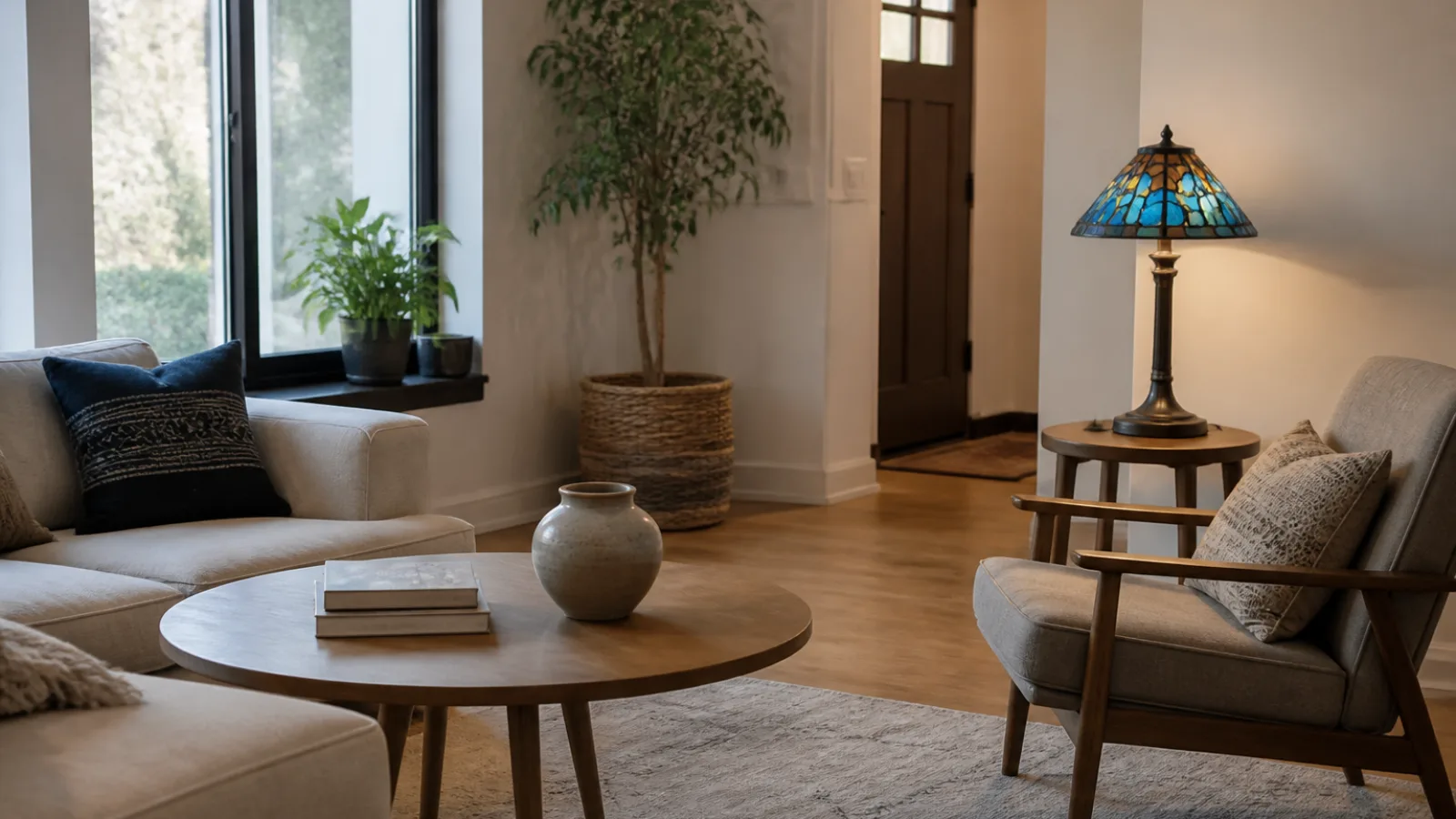
Decorative stained-glass lighting can introduce color, texture, craftsmanship-inspired character, and a visual focal point into an otherwise modern interior. Its patterned glass can soften the clean lines of contemporary architecture while adding a more personal layer to the room.
Successful integration depends on more than choosing an attractive fixture. Proportion, placement, color relationships, surrounding materials, and the room’s other light sources all determine whether Tiffany-style lighting feels intentional or out of place. For a subtler introduction to the aesthetic, Tiffany wall lights can add decorative color at eye level without making a ceiling fixture or table lamp the dominant element.
Understanding Tiffany-Style Lighting in Modern Design
In contemporary interiors, Tiffany-style lighting works best as a considered contrast. The colored glass may sit within a room of plaster, timber, stone, metal, or neutral upholstery, creating a point of visual richness against simpler architectural forms. It does not require the entire home to follow a historic or ornate style.
The most successful approach is usually selective. One carefully scaled fixture can establish character more effectively than several competing decorative pieces. Before choosing a lamp or pendant, consider the room’s strongest existing features: a view, fireplace, staircase, island, artwork, or architectural opening. Lighting should support that visual hierarchy rather than obscure it.
Choosing the Right Fixture Size and Proportion
Scale is one of the most important design decisions in decorative lighting. A fixture should relate to the wall or ceiling area around it, the height of the room, the size of nearby furniture, and the amount of circulation space available.
In a room with a low ceiling, a broad flush-mounted or semi-flush fixture may be more appropriate than a long pendant. In a double-height space, a small decorative lamp can disappear unless it is grouped with substantial architectural elements or positioned closer to the viewer. Wall-mounted fixtures should have enough presence to register from the room’s main approach, but they should not project so far that they interfere with doors, walkways, or furniture.
An ornate fixture that is too large can dominate a minimalist room and make the architecture feel visually compressed. Conversely, a fixture that is too small may appear disconnected from the furniture and surrounding finishes. Check the viewing distance from common seating positions, entry points, and circulation routes. In dining areas, the fixture should relate to the table’s width and shape while leaving comfortable sightlines across the room.
Proportion also includes visual density. A highly patterned shade may need more breathing room than a lightly colored, open design. Allowing a margin of calm around the fixture helps the glass read as a deliberate focal point rather than visual clutter.
Coordinating Stained Glass with Interior Colors and Materials
Stained-glass lighting does not require every color in the glass to be repeated throughout the room. In fact, exact repetition can make the interior feel overly coordinated. A better strategy is to identify one or two meaningful relationships between the fixture and the existing palette.
- Wall finishes: Neutral walls provide a quiet background for colorful glass, while a muted wall color can draw out a secondary tone in the fixture.
- Flooring and wood tones: Timber, oak, walnut, and other natural finishes can balance the decorative quality of the glass with warmth and visual weight.
- Cabinetry: In kitchens or built-in storage areas, relate the fixture to cabinet color, hardware, or a nearby backsplash rather than matching every glass segment.
- Furniture and textiles: Upholstery, rugs, cushions, and curtains can echo a single color from the shade in a restrained way.
- Metal finishes: The fixture’s frame or hardware should sit comfortably alongside existing brass, bronze, black, nickel, or chrome details.
- Architectural details: Door trim, stair rails, fireplace surrounds, and millwork can provide subtle color or material connections.
Think of a colorful fixture as an intentional accent. A deep blue or amber panel may relate to a rug or timber tone without requiring blue and amber accessories in every corner. When the surrounding finishes remain controlled, the stained glass can provide contrast without making the space feel themed.
Building a Layered Lighting Scheme
Decorative Tiffany-style lighting should normally form one component of a broader residential lighting design. Stained glass can create atmosphere and visual interest, but it should not automatically be expected to provide all of a room’s functional illumination.
Ambient lighting establishes a comfortable general level through ceiling fixtures, recessed lights, concealed sources, or indirect illumination. Task lighting supports activities such as reading, cooking, working, or dining. Accent lighting directs attention toward artwork, shelving, architectural surfaces, or landscape views. Decorative lighting contributes character and often remains visible even when its light output is relatively modest.
Combining these layers makes the room more flexible. A living room might use discreet ceiling lighting for general brightness, a floor lamp beside a chair for reading, and a stained-glass table lamp for warmth. In a corridor or transitional space, wall sconces can support circulation and add decorative wall lighting while ceiling sources provide broader coverage.
Use separate switching or dimming where possible. This allows the decorative fixture to remain softly illuminated during evening conversations rather than forcing the entire lighting system to operate at full brightness. During renovation, determine whether the glass shade, frame, and bulb type create glare from seated or standing viewpoints.
Tiffany-Style Lighting in Living Rooms
Living room lighting benefits from a combination of atmosphere, comfort, and visual balance. A Tiffany-style table lamp can sit on a console, side table, or built-in cabinet where it becomes part of a layered composition rather than an isolated object. A wall-mounted fixture can frame a fireplace, reading corner, or transitional wall, provided it does not compete with artwork or a television.
Pair decorative glass with contemporary furniture such as a simple sofa, low-profile lounge chair, or clean-lined coffee table. The contrast between an expressive shade and restrained furniture helps the fixture feel intentional. If the room already contains patterned upholstery or prominent artwork, choose a less visually crowded location or a fixture with a more limited color range.
Consider the lamp when it is switched off as well as when it is illuminated. Its silhouette, frame, and glass pattern should contribute to the room’s daytime composition without creating an unnecessary cluster of decorative objects.
Using Decorative Lighting in Dining Rooms
Dining room lighting requires particularly careful attention to scale and visual hierarchy. A pendant or chandelier should be substantial enough to relate to the dining table, but it should not block conversation or overwhelm the tabletop. As a starting point, assess the table’s width, the ceiling height, and the clear distance needed above the surface before deciding on fixture dimensions and suspension length.
A Tiffany-style fixture can define the dining zone in an open-plan interior, especially when the surrounding architecture is restrained. Keep nearby finishes and accessories relatively quiet if the shade has a complex pattern. The dining fixture should also work with functional illumination: supplementary ceiling lighting, dimmable sources, or discreet directional fixtures may be needed to illuminate food, table settings, and circulation areas evenly.
Visual hierarchy matters. If the dining table is the central feature, use the fixture to reinforce it. If a dramatic artwork or architectural view already commands attention, a smaller or more subdued stained-glass fixture may create better balance.
Tiffany-Style Lighting for Entryways
An entryway is an effective place to introduce stained-glass lighting because it establishes the character of the home before visitors reach the principal rooms. A wall-mounted fixture can add color at the threshold, while a pendant can emphasize ceiling height and the vertical volume of a foyer.
Assess sightlines from the front door, staircase, hallway, and adjoining rooms. The fixture should be visible from important approaches without obstructing movement or creating glare at eye level. In narrow halls, shallow wall-mounted lighting may be more practical than a projecting shade. In a taller entry, the vertical scale of the fixture should relate to the door, stair, and surrounding openings rather than being selected in isolation.
Combining Traditional Character with Modern Interiors
Tiffany-style lighting can work within modern architecture because contrast is often central to contemporary design. The key is to balance decorative glass with simplicity elsewhere. Use one statement fixture, maintain restrained surrounding finishes, and coordinate selected colors instead of matching every element.
Simple furniture, quiet walls, natural flooring, and limited ornament allow the lighting to act as a deliberate character piece. Conversely, a room already filled with patterned rugs, decorative hardware, traditional millwork, and multiple art objects may need a simpler fixture or a more carefully controlled location.
Traditional-inspired lighting can also highlight contemporary architecture. A stained-glass pendant above a clean kitchen island, for example, can create a human-scaled focal point within a minimal plan. The design succeeds when the fixture appears chosen for the architecture rather than used to disguise it.
Renovation and Installation Considerations
Interior renovation lighting should be planned before wall finishes, cabinetry, paint, and ceiling treatments are complete. Confirm existing electrical locations and determine whether they suit the intended fixture position. A new wall light may require a properly located junction box, while a pendant may need reinforcement at the ceiling or a revised mounting point.
Review room dimensions, ceiling and wall conditions, furniture layouts, door swings, and circulation paths together. Decide how the fixture will be switched, dimmed, or grouped with other light sources. If the room includes smart controls or multiple lighting scenes, decorative fixtures should be included in the control plan rather than added at the end.
When reviewing options from sources such as TiffanyLightDirect, assess each fixture in relation to the project’s dimensions, mounting requirements, light output, and overall palette rather than selecting solely by appearance. Electrical alterations, structural support, wiring, and installation should be handled by appropriately qualified professionals where required by applicable codes or project conditions.
Tiffany-Style vs. Authentic Antique Tiffany Studios Lighting
The term Tiffany-style generally describes contemporary lighting inspired by the stained-glass aesthetic associated with historic Tiffany designs. It should not be presented as equivalent to authenticated antique lamps produced by Tiffany Studios.
Authenticity, age, provenance, condition, and valuation are separate considerations when evaluating antique work. A contemporary Tiffany-style fixture can be selected for its color, form, and suitability for a renovation without being described as an original Tiffany Studios antique. It also should not be presented as affiliated with Tiffany & Co.
Common Design Mistakes to Avoid
- Choosing a fixture before measuring the room, furniture, ceiling, and circulation clearances.
- Repeating every glass color throughout the interior instead of selecting a few thoughtful relationships.
- Expecting decorative stained glass to provide sufficient task or ambient lighting on its own.
- Placing a projecting wall fixture where it conflicts with doors, artwork, or walking routes.
- Using several ornate fixtures in one room without establishing a clear visual hierarchy.
- Leaving electrical locations and switching decisions until after finishes are installed.
- Assuming that a Tiffany-style label indicates authentic antique Tiffany Studios manufacture.
Conclusion
Tiffany-style lighting can give a modern home a distinctive layer of color, texture, and crafted character without forcing the interior into a historic style. The strongest results come from disciplined design decisions: select a proportionate fixture, relate its colors to existing materials, preserve visual breathing room, and integrate it into a layered lighting scheme.
Whether used as a living room accent, a dining focal point, or a welcoming element in an entryway, stained-glass lighting should support the architecture and the way the room is used. Planned alongside electrical work, finishes, furniture, and controls, it can become a lasting part of the interior rather than a decorative afterthought.