Hussain Sajwani and DAMAC Properties: The Verified Journey from Entrepreneurship to Luxury Real Estate
Hussain Sajwani’s path to real estate began with an entrepreneurial business established before Dubai’s modern property boom. This account traces how DAMAC Properties developed a branded luxury model, expanded internationally, reached public markets, and later returned to private ownership.
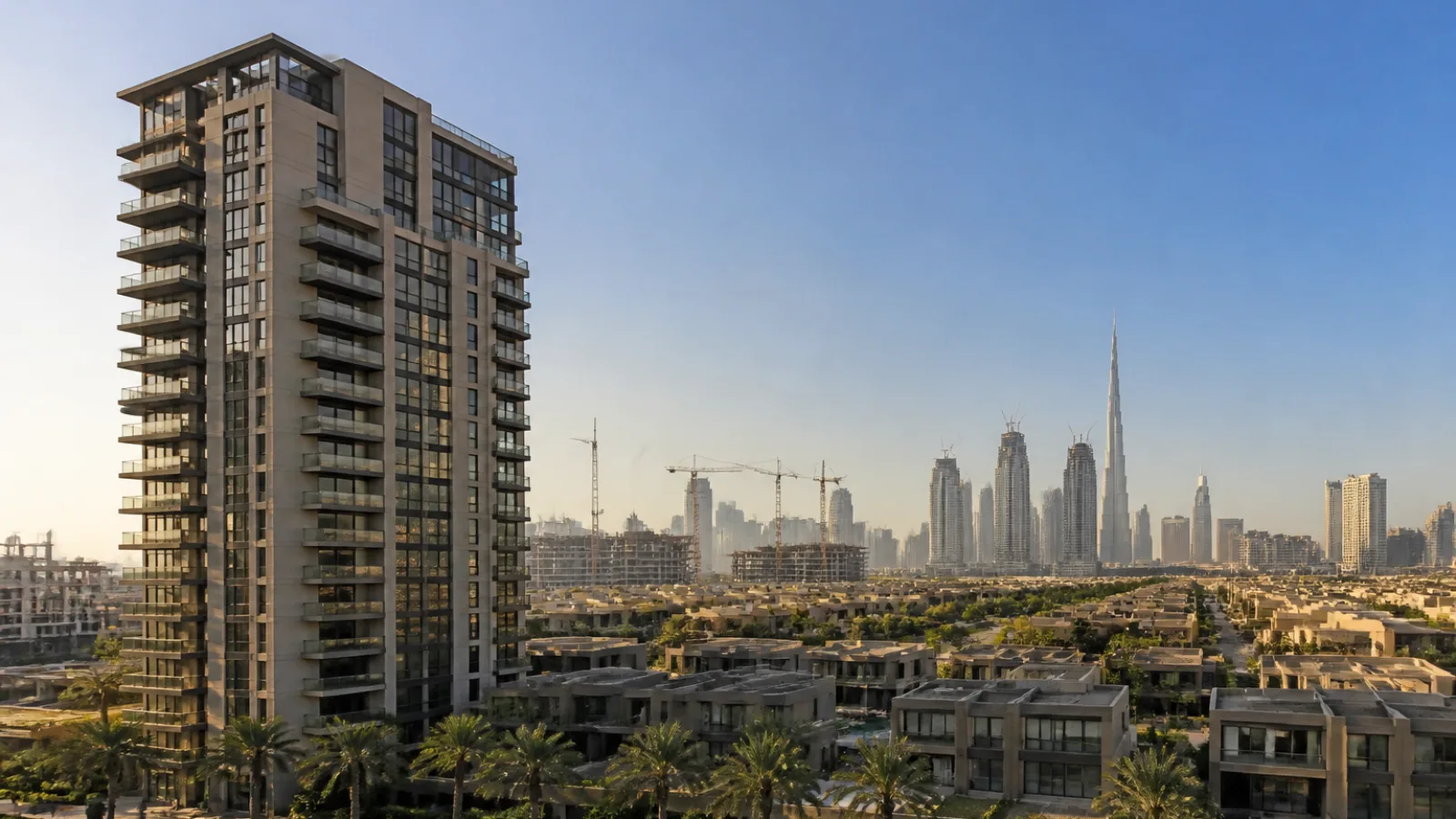
Hussain Sajwani is the founder of DAMAC Properties, the Dubai-based developer associated with branded residences, master-planned communities, hospitality-linked projects, and luxury-focused real estate. The company’s rise matters because it developed alongside Dubai’s transformation into an international property and tourism market. For readers reviewing DAMAC Properties’ luxury real estate developments, it is important to separate corporate history and documented projects from promotional claims about quality, returns, or market leadership.
This article follows a verified business timeline covering Sajwani’s early entrepreneurial activity, DAMAC’s establishment, its development model, luxury positioning, major Dubai projects, international expansion, public-company milestones, and later ownership changes. It also distinguishes DAMAC Properties from the wider DAMAC Group and from Hussain Sajwani’s personal or family interests where that distinction affects the interpretation of events.
Who Is Hussain Sajwani?
Hussain Sajwani is an Emirati businessman who is best known for founding DAMAC Properties. Public biographies and company disclosures identify his education at the University of Washington, where he studied industrial engineering and economics. The most consistently documented part of his early business history is his entry into catering and food-service operations in the early 1980s.
That business became part of the wider DAMAC Group’s commercial foundation. Catering and related logistics activities served institutional and corporate customers, creating an operating business before Sajwani moved into property development. Accounts of the early company describe food-service contracts and logistics capabilities, but the available public record does not justify turning those early activities into an embellished personal success narrative.
Sajwani’s move into real estate took place as Dubai was changing its economic and regulatory framework. The emirate was investing in infrastructure, tourism, financial services, and large-scale urban development. A major turning point for the property market came in the early 2000s, when Dubai introduced measures that expanded opportunities for foreign ownership in designated areas. That environment created conditions for developers to market residential projects to both local and international buyers.
The significance of Sajwani’s transition was therefore not simply that an entrepreneur entered real estate. It was that he entered at a time when Dubai was creating a new development market, with demand for apartments, investment units, hospitality products, and recognizable lifestyle brands.
How DAMAC Properties Began
The wider DAMAC Group traces its origins to 1982, while DAMAC Properties was established as the group’s real estate arm in 2002. This distinction is essential when reading company histories: the group’s earlier commercial activities should not be presented as if they were residential projects delivered by DAMAC Properties.
DAMAC’s early property activity focused on residential development in Dubai. The company participated in the expansion of apartment-led communities and high-rise construction during a period when Dubai’s skyline and freehold market were developing rapidly. Its early projects helped establish a model based on identifying land opportunities, launching projects to buyers, and coordinating delivery through external contractors and specialist partners.
DAMAC Properties functioned as a developer rather than a conventional construction contractor or estate agency. A developer assembles land, capital, design, approvals, marketing, sales, construction oversight, and delivery into a single project strategy. The wider DAMAC Group has included interests beyond the listed property company, including hospitality and other businesses. Those activities may support the group’s profile, but they should not automatically be attributed to the DAMAC Properties legal entity.
DAMAC’s Development Model
DAMAC’s development model has generally involved acquiring or controlling development sites, planning residential or mixed-use schemes, obtaining regulatory approvals, launching units for sale, and managing construction through appointed contractors and consultants. Projects may combine apartments, villas, hotel apartments, retail space, leisure facilities, and branded amenities. The exact structure varies by project, location, and development partner.
Presales are an important feature of many large residential markets. In a presale, units are marketed and contracted before construction is complete, with customer payments commonly linked to an agreed schedule. For a developer, presales can provide evidence of demand and contribute to project funding. They can also expose the business to risks involving construction delays, cancellations, changing market conditions, escrow requirements, and customer expectations. These are general characteristics of the model and should not be treated as a claim about the finances of every DAMAC project.
Land acquisition and planning decisions are followed by design development, procurement, construction supervision, sales, handover, and sometimes property-management or hospitality operations. Financing may involve corporate resources, project-level arrangements, customer receipts, bank facilities, or other capital sources, depending on the structure. Public filings and project disclosures are the appropriate basis for determining how a particular project was financed.
Brand partnerships became a distinguishing part of selected DAMAC developments. The company has worked with recognized names in hospitality, fashion, interiors, and design, including Versace, Fendi Casa, Paramount Hotels & Resorts, and Roberto Cavalli in different projects or project phases. These arrangements can involve branded interiors, hotel management, design input, licensing, or marketing rights. A brand association does not by itself prove construction quality, investment performance, or operational success.
The developer’s role also extends beyond the sales launch. Handover standards, owners’ associations, facilities management, maintenance, hospitality operations, and the long-term condition of shared amenities can influence the practical experience of a development. The responsibilities differ between a wholly residential building, a serviced-apartment scheme, and a mixed-use project with hotel or retail components.
How DAMAC Built a Luxury Real Estate Position
DAMAC’s luxury positioning has been built through a combination of location, architecture, amenities, lifestyle branding, sales presentation, and partnerships with internationally recognizable names. Its target segments have included high-net-worth buyers, overseas purchasers, investors seeking Dubai exposure, and residents looking for branded or amenity-rich homes. The customer mix can differ substantially between a downtown tower, a golf-oriented community, and a hotel-linked residence.
Branding allows a developer to give a project a more distinctive market identity. A fashion or hospitality partner may contribute design language, service standards, furnishings, or access to an established global audience. However, luxury branding should be distinguished from independently verified evidence of build quality or financial returns. Those questions require project-level documentation, construction records, operating results, and market analysis.
Dubai offered a suitable platform for this strategy. The city combined rapid population and infrastructure growth with international tourism, an expanding aviation network, freehold development zones, and a customer base familiar with global hotel and fashion brands. High-rise communities and branded residences could be marketed across borders, while hospitality-linked projects connected residential ownership with short-stay, leisure, or serviced-living concepts.
Major DAMAC Projects in Dubai
DAMAC Hills and master-planned communities
DAMAC Hills is a large residential community in Dubailand, developed around the Trump International Golf Club, Dubai. The project includes villas, townhouses, apartments, parks, leisure facilities, and golf-related amenities. It illustrates DAMAC’s move from individual towers toward master-planned communities, where the surrounding environment and amenity package form part of the product being sold.
The development was initially marketed under the Akoya name before becoming associated with DAMAC Hills. References to phases, sub-communities, and individual buildings should be checked separately because the master development has evolved over time. The community’s Trump relationship is a branding and golf-related partnership; it should not be interpreted as evidence that every element was developed or operated by the same entity.
DAMAC Towers and high-rise branded residences
DAMAC Towers by Paramount Hotels & Resorts in the Business Bay area is a high-rise, hospitality-linked development associated with Paramount’s entertainment identity. The project combines residences and hotel-related components in a prominent Dubai location. It represents the company’s strategy of using a recognizable hospitality brand to differentiate a residential and mixed-use product.
Other high-rise projects have used partnerships or design associations connected with fashion and interiors. In each case, the relevant facts include the precise legal developer, the nature of the licensing or design agreement, the intended use of the building, and whether the project was announced, under construction, delivered, or operational at the relevant date.
DAMAC Bay by Cavalli and other branded developments
DAMAC Bay by Cavalli is a branded waterfront residential development in Dubai Marina associated with fashion designer Roberto Cavalli. The project was launched as a high-end apartment scheme with Cavalli-related design and lifestyle elements. Its positioning reflects DAMAC’s continued use of design partnerships to create differentiated products in Dubai’s competitive luxury market.
Other examples include projects associated with Fendi Casa and Versace. These developments demonstrate the range of DAMAC’s branded-residence strategy, but they do not all have the same tenure, completion status, management structure, or operating model. Project announcements and sales materials should therefore be distinguished from completion records and post-handover performance.
Hospitality-linked and mixed-use projects
DAMAC has also developed or announced projects combining residences with hotels, serviced apartments, offices, retail, restaurants, and leisure facilities. Examples include projects in Business Bay, along Sheikh Zayed Road, and in other major Dubai districts. Such schemes can generate several revenue streams, but they also require coordination between residential owners, hotel operators, facilities managers, retailers, and local authorities.
AYKON City, for example, was presented as a mixed-use development along Sheikh Zayed Road, combining residential, hospitality, and other urban uses. The development’s significance lies in its scale and location, while its exact components and delivery status should be assessed from the relevant project and corporate disclosures rather than from broad brand descriptions.
DAMAC’s International Expansion
After building a substantial Dubai pipeline, DAMAC expanded beyond the UAE into selected Middle Eastern markets, the United Kingdom, Europe, and other international destinations. The group’s international activity has included development, branded residences, hospitality-related projects, and sales or marketing aimed at overseas customers. London, in particular, became associated with projects such as DAMAC Tower Nine Elms, a branded residential scheme linked with Versace.
International expansion extended the company’s brand beyond Dubai and diversified its development pipeline. It also allowed DAMAC to reach buyers in established property markets and destinations with strong tourism or luxury demand. The international portfolio, however, should not be treated as a single uniform business: local subsidiaries, joint ventures, landowners, operators, and licensing partners can differ from one country to another.
Entering a new market creates practical challenges. Developers must address planning law, land registration, consumer-protection rules, tax, construction standards, escrow or payment requirements, employment regulations, and the availability of reliable contractors. Local partnerships can provide market knowledge but may introduce governance and execution complexities. Currency movements, interest rates, demand cycles, political conditions, and the timing of approvals also affect international projects.
Public-Company Milestones and Corporate Development
DAMAC Properties became publicly listed on the Dubai Financial Market in January 2015. The initial public offering, commonly referred to as the DAMAC IPO, gave the company access to public equity markets and made its financial and operational reporting subject to exchange and regulatory requirements. A public listing can improve visibility and support capital formation, but it also brings shareholder scrutiny, disclosure obligations, governance expectations, and sensitivity to market valuations.
During its period as a listed company, DAMAC reported project launches, sales activity, revenue, profits, development progress, and other matters through public disclosures. Those reports provided a more structured basis for assessing the property company than promotional material alone, although reported performance still needed to be understood in the context of property cycles, project timing, accounting policies, and delivery obligations.
In 2021, an offer was made by Maple Invest Company Limited, an entity associated with Hussain Sajwani, to acquire the shares of DAMAC Properties that it did not already own. The transaction led to the company’s delisting from the Dubai Financial Market in 2022. This was a significant corporate change: DAMAC Properties moved from a publicly traded company to private ownership, reducing public-market reporting while returning strategic control to Sajwani’s associated ownership structure.
The post-delisting company should still be distinguished from the wider DAMAC Group. Private ownership can allow longer-term planning and less exposure to daily market valuation, but it also means that outside observers have fewer periodic disclosures than they had during the listing. Later group-level initiatives or investments should not automatically be presented as developments of DAMAC Properties unless the relevant corporate entity is identified.
A Concise DAMAC Properties Timeline
| Period | Milestone | Business significance |
|---|---|---|
| Early 1980s | Sajwani establishes food-service and catering activities. | Creates the commercial foundation associated with the wider DAMAC Group before its property expansion. |
| 1982 | The wider DAMAC Group traces its origins to this period. | Marks the beginning of the group’s broader business history, not the founding of DAMAC Properties as a developer. |
| 2002 | DAMAC Properties is established as a real estate business. | Places the company at the start of Dubai’s modern freehold and large-scale residential development cycle. |
| 2000s | Residential development expands across Dubai. | Builds the pipeline and sales model that later supports high-rise, community, and branded projects. |
| 2010s | Master-planned communities and branded developments gain prominence. | Strengthens the company’s luxury positioning through golf, hospitality, fashion, and design associations. |
| January 2015 | DAMAC Properties lists on the Dubai Financial Market. | Introduces public-market access, formal disclosure, and shareholder scrutiny. |
| 2010s–2020s | Expansion continues into selected international markets. | Extends the brand and diversifies the development pipeline beyond the UAE. |
| 2021–2022 | Maple Invest’s acquisition offer is followed by DAMAC Properties’ DFM delisting. | Returns the listed property company to private ownership associated with Sajwani. |
What Explains DAMAC’s Global Real Estate Profile?
DAMAC’s profile reflects several interacting factors rather than one individual decision. First, the company entered Dubai’s modern property market at a favorable point in the emirate’s urban and regulatory development. Second, it focused on large residential and mixed-use opportunities that could serve both domestic and international demand.
Third, the company used branding as a market-differentiation tool. Hospitality, fashion, interiors, golf, and design partnerships gave selected projects distinctive identities and widened their marketing reach. Fourth, presales and phased development can help a developer match construction and capital requirements with demand, although they also create obligations around delivery, customer confidence, and working capital.
International diversification added another layer of visibility and potential growth. It also introduced exposure to different legal systems, currencies, demand patterns, construction markets, and political environments. A project portfolio that appears geographically broad may therefore carry different levels of risk and maturity across jurisdictions.
Finally, brand visibility should not be confused with financial performance. Luxury positioning does not remove the risks of land costs, leverage, interest rates, construction inflation, delays, cancellations, regulatory changes, or property-market downturns. The quality of a development’s execution and the returns available to an owner or shareholder must be assessed through project-specific evidence and financial analysis, not through reputation alone.
Frequently Asked Questions
Who founded DAMAC Properties?
DAMAC Properties was founded by Hussain Sajwani in 2002, when it was established as the real estate arm of the wider DAMAC Group. The group itself traces its origins to 1982 through Sajwani’s earlier commercial activities, including catering and food-service operations. Those dates describe related but distinct stages of the business’s development.
What is Hussain Sajwani known for?
Hussain Sajwani is known primarily for founding DAMAC Properties and building it into a Dubai-based developer with a luxury and branded-residence focus. He is also associated with the wider DAMAC Group. His earlier entrepreneurial background in catering and food services preceded the company’s move into Dubai property development.
What type of real estate does DAMAC develop?
DAMAC has developed and announced apartments, villas, townhouses, master-planned communities, hotel apartments, branded residences, and mixed-use projects. Its portfolio has included golf-oriented communities, high-rise towers, hospitality-linked schemes, and developments connected with fashion, design, or hotel brands. The legal developer and operating structure can vary by project.
Is DAMAC Properties a Dubai-based company?
Yes. DAMAC Properties was established in Dubai and built its principal development profile in the emirate. It later expanded into selected markets outside the UAE. The company’s international activities may involve local subsidiaries, development partners, operators, or licensing arrangements, so the Dubai headquarters should not be taken to mean that every project has the same ownership structure.
What are some well-known DAMAC projects?
Well-known examples include DAMAC Hills, DAMAC Towers by Paramount Hotels & Resorts, DAMAC Bay by Cavalli, and projects associated with Fendi Casa, Versace, and other branded partnerships. AYKON City is an example of a larger mixed-use concept. Project status, completion, and operating arrangements should be verified separately for each development.
When did DAMAC Properties become publicly listed?
DAMAC Properties listed on the Dubai Financial Market in January 2015. The listing provided access to public equity markets and required formal reporting to investors and regulators. Following an acquisition offer by Maple Invest Company Limited, an entity associated with Hussain Sajwani, the company was delisted from the DFM in 2022.
Conclusion
The verified journey of Hussain Sajwani and DAMAC Properties runs from an early catering and food-service business to a real estate company shaped by Dubai’s rapid urban development. DAMAC Properties was established in 2002, developed residential and mixed-use projects, built a luxury identity through selected design and hospitality partnerships, expanded internationally, and became a public company before returning to private ownership in 2022.
The broader lesson is that DAMAC’s global profile resulted from the combination of market timing, large-scale development, presales, brand-led differentiation, international marketing, and corporate evolution. Its history also illustrates the limits of reputation alone: execution, disclosure, regulation, capital requirements, market cycles, and project-specific performance remain central to understanding any major real estate business.