How Stephen Bechtel Sr. Turned Bechtel Into a Global Engineering and Infrastructure Company
Stephen Bechtel Sr. transformed Bechtel from a major construction contractor into a diversified global engineering and infrastructure company. His strategy combined sector expansion, international operations, integrated project delivery, disciplined controls, and professional organizational development.
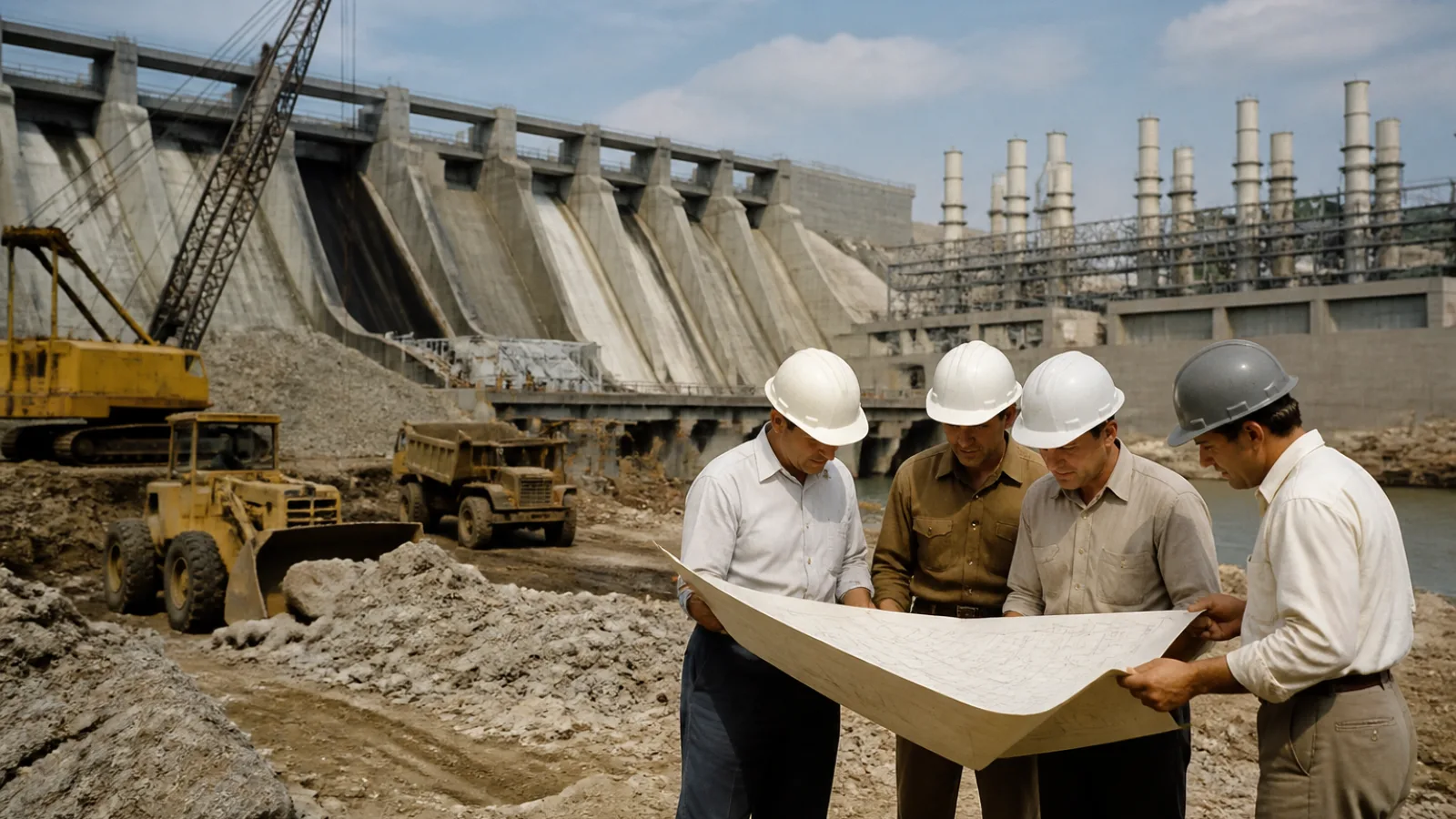
Stephen Bechtel Sr. did not found Bechtel, but he transformed the family business after its formative construction years into a far more diversified engineering and infrastructure enterprise. His leadership connected heavy construction expertise with engineering, procurement, project controls, and international business development. That combination anticipated many of the Kiewit’s infrastructure and engineering expertise used by major contractors today.
Under Stephen Bechtel Sr., Bechtel pursued work that demanded more than the ability to build a single structure. Dams, pipelines, refineries, power facilities, transportation systems, and industrial plants required coordinated design, financing awareness, logistics, construction management, and long-term relationships with public and private owners. The result was a business model capable of operating across sectors and national borders.
Stephen Bechtel Sr.'s Leadership After the Company's Early Years
Stephen Bechtel Sr. became president of Bechtel in 1935, following the period in which his father, Warren Bechtel, established the company through major Western American construction work. The transition brought a younger leader into a business facing a changing market. Industrialization, wartime production, postwar reconstruction, energy demand, and public infrastructure investment were creating opportunities that extended well beyond the company's original base.
Stephen's contribution was strategic as much as operational. He recognized that large owners increasingly wanted a partner able to coordinate an entire capital project rather than a contractor responsible only for field construction. Bechtel therefore developed capabilities in engineering, estimating, procurement, scheduling, commissioning, and management. This made the company more useful to clients planning technically complex facilities in unfamiliar locations.
His leadership also encouraged a professional management culture. The company had to recruit engineers, planners, contract specialists, financial managers, and project executives who could work together across disciplines. That shift reduced dependence on a single construction specialty and gave Bechtel the internal capacity to handle larger programs.
How Bechtel Diversified Into Major Infrastructure Sectors
Bechtel's expansion under Stephen Bechtel Sr. was not diversification for its own sake. The company generally moved toward sectors where its experience with difficult sites, large workforces, specialized equipment, and complex logistics created an advantage.
Energy and industrial facilities
Energy became one of the most important areas of growth. Oil refineries, pipelines, processing facilities, power plants, and related industrial infrastructure required a combination of civil, mechanical, electrical, and process expertise. Bechtel's ability to coordinate these disciplines helped it compete for projects in which construction was only one part of a much larger technical system.
The postwar expansion of petroleum infrastructure was particularly significant. Pipeline work, including major international assignments, exposed the company to remote terrain, cross-border logistics, local labor considerations, and demanding schedules. These experiences strengthened methods that could later be applied to other energy and industrial projects.
Nuclear power also became part of Bechtel's growing engineering and construction portfolio. Nuclear facilities required unusually rigorous quality assurance, documentation, safety procedures, and coordination between owners, designers, suppliers, and contractors. Participation in this field helped reinforce the company's reputation for managing high-consequence technical work.
Dams, water, and civil infrastructure
Large water projects remained closely connected to Bechtel's construction heritage, but their complexity increased as the company took on broader responsibilities. Dams, water conveyance systems, hydroelectric facilities, and related civil works involved geological uncertainty, environmental constraints, public oversight, and long construction periods.
These projects helped Bechtel develop a repeatable approach to planning and risk management. Work had to be broken into measurable packages, resources had to be scheduled years in advance, and engineering decisions had to remain connected to field conditions. Such disciplines became transferable to transportation, energy, and industrial work.
Transportation and urban systems
Bechtel also expanded into transportation infrastructure, including airports, highways, tunnels, transit systems, and other large public works. Transportation projects brought a different set of challenges: interfaces with existing communities, complicated permitting, public-sector procurement, and coordination among many contractors and authorities.
The company's involvement in major transportation programs demonstrated the value of program management. Instead of treating each structure as an isolated job, Bechtel could coordinate networks of related contracts, systems, utilities, and operational requirements. That perspective became increasingly important as infrastructure projects grew into long-term programs rather than stand-alone builds.
| Sector | Capabilities Bechtel developed | Strategic value |
|---|---|---|
| Energy and industrial | Process coordination, procurement, commissioning, and specialized construction | Connected engineering with complex facility delivery |
| Water and civil works | Heavy construction, site logistics, geotechnical planning, and long-range scheduling | Built on Bechtel's original construction strengths |
| Transportation | Program management, public-sector coordination, systems integration, and contract administration | Expanded the company into network-scale infrastructure |
| International projects | Cross-border logistics, local partnerships, regional offices, and cultural adaptability | Made the business scalable beyond the United States |
Why International Expansion Became Central to Bechtel's Growth
Stephen Bechtel Sr. understood that the largest opportunities would not always be located near the company's established Western markets. Postwar industrial development and resource investment created demand for roads, pipelines, power facilities, refineries, ports, and other infrastructure in regions where local construction capacity was limited.
International work required more than sending an American project team overseas. Bechtel had to build relationships with governments, state-owned enterprises, international investors, equipment suppliers, and local contractors. It also had to manage different legal systems, labor markets, currencies, climates, and political conditions.
The company responded by developing regional knowledge and operating structures that supported local execution while retaining central technical and managerial standards. This balance was important. Excessive centralization could make a project slow and culturally disconnected, while excessive local independence could make quality and risk control inconsistent.
International assignments also improved organizational learning. A solution developed for remote pipeline construction could inform work on a power project. Experience with government procurement could strengthen transportation bids. Lessons from one country could be adapted, though not copied mechanically, in another. Global expansion therefore created a feedback loop between projects and business capabilities.
The Project-Management Model Behind the Expansion
Bechtel's growth depended on turning project management into a core organizational capability. Large engineering and infrastructure programs cannot be controlled through field supervision alone. They require a clear definition of scope, reliable cost and schedule information, disciplined change management, procurement coordination, safety systems, and communication among many parties.
Integration of engineering, procurement, and construction
One of Bechtel's most important strategic moves was to integrate engineering and construction rather than treating them as unrelated services. Design choices affect cost, sequencing, materials, labor, constructability, and commissioning. When engineers and builders share responsibility, potential conflicts can be identified earlier.
This integrated model also made Bechtel more attractive to owners. A client could engage a company capable of moving from feasibility and design into procurement and field delivery. The arrangement did not eliminate risk, but it created clearer accountability and improved coordination across the project life cycle.
Controls for cost, schedule, and risk
As projects became larger, management systems had to make performance visible. Bechtel developed strong practices around estimating, budgeting, scheduling, progress measurement, contract administration, and reporting. These systems allowed executives to compare planned work with actual performance and address problems before they became irreversible.
Project controls were especially valuable in international and industrial work, where delays could affect equipment deliveries, financing, labor arrangements, and commissioning dates. The discipline also supported better decision-making at the corporate level because leaders could evaluate opportunities using more than headline contract value.
Standardization without ignoring local conditions
A global contractor needs consistent procedures, but infrastructure work is never identical from one location to another. Bechtel's model combined standardized management principles with adaptation to local materials, regulations, labor, climate, and supply chains. This approach allowed the company to preserve institutional knowledge while giving project teams room to solve site-specific problems.
Organizational Development: Building a Company That Could Scale
Stephen Bechtel Sr.'s expansion strategy required organizational change inside the company. A contractor handling a few major jobs can rely heavily on personal relationships and informal communication. A global engineering enterprise cannot. It needs systems for recruiting, training, transferring knowledge, assigning authority, and maintaining standards across multiple offices and projects.
Bechtel increasingly operated through specialized groups and regional platforms. Functional expertise could be developed in engineering, construction, procurement, finance, legal affairs, and project management, while project teams brought those capabilities together for individual clients. This matrix-like arrangement helped the company use specialists across several assignments without abandoning project accountability.
Decentralization was also practical. A project in the Middle East, Latin America, or another distant market required decisions close to the work. Regional leaders needed enough authority to respond to local conditions, while corporate leadership maintained oversight of risk, reputation, technical quality, and strategic direction.
Another important element was talent development. Complex projects require leaders who understand both technical work and commercial responsibility. By cultivating project managers with broad experience, Bechtel created a management pipeline capable of handling progressively larger assignments. The company's competitive advantage therefore rested not only on equipment or contracts, but also on accumulated professional judgment.
What Made Stephen Bechtel Sr.'s Expansion Strategy Effective?
Several principles explain why the expansion had lasting impact:
- Adjacent diversification: Bechtel entered sectors where its heavy construction and logistical experience remained relevant.
- Capability before scale: The company invested in engineering, procurement, controls, and management before taking on ever more complicated programs.
- Client-centered delivery: Bechtel addressed the owner's need for coordination across the complete project life cycle.
- International learning: Overseas work expanded both the market and the company's knowledge base.
- Professional organization: Systems and talent replaced reliance on informal, founder-centered management.
These principles also explain why Stephen Bechtel Sr.'s influence extended beyond the projects completed during his tenure. He helped shape a company designed to operate as an institution, with processes and expertise that could survive leadership transitions and changing markets.
Stephen Bechtel Sr.'s Lasting Legacy
The significance of Stephen Bechtel Sr. lies in how he redefined the scope of a construction company. Bechtel became an organization that could advise, engineer, procure, construct, and manage infrastructure on a global scale. Its growth reflected the changing nature of major capital projects, where success depended on integration as much as on physical execution.
His approach also illustrated a broader lesson in construction business strategy. Long-term growth is difficult when a company sells only a narrow trade or relies on one geographic market. Sustainable expansion comes from building related capabilities, entering sectors with genuine technical overlap, and creating systems that allow skilled people to work consistently across complex projects.
Later Bechtel leaders continued to develop the sectors, technologies, and international operations associated with the company. Still, the strategic foundation was established during Stephen Bechtel Sr.'s era: diversify around core strengths, combine engineering with construction, professionalize project management, and organize the business for global execution.
Frequently Asked Questions
What was Stephen Bechtel Sr.'s main contribution to Bechtel?
His main contribution was scaling Bechtel from a major construction contractor into a diversified engineering, construction, and infrastructure company. He expanded its sectors, international reach, technical capabilities, and management systems.
Which industries did Bechtel enter under Stephen Bechtel Sr.?
Bechtel expanded across energy, oil and gas infrastructure, pipelines, refineries, nuclear power, water projects, dams, transportation, airports, transit, and other industrial and civil infrastructure work.
Why was international expansion important to Bechtel?
International markets offered major infrastructure and industrial opportunities while helping Bechtel develop expertise in cross-border logistics, local partnerships, government relationships, and regional project execution.
How did project management support Bechtel's growth?
Project management linked engineering, procurement, construction, cost control, scheduling, risk management, and commissioning. This integration allowed Bechtel to coordinate complex programs instead of performing only isolated construction tasks.
Was Stephen Bechtel Sr. responsible for every later Bechtel project?
No. His leadership established the strategy and organizational capabilities that supported later growth, but many projects and business developments occurred after his direct tenure and involved subsequent generations of company leadership.
Conclusion
Stephen Bechtel Sr. shaped Bechtel's expansion by recognizing that the future of major construction lay in integrated, technically sophisticated, and internationally coordinated project delivery. His focus on adjacent sectors, global operations, professional management, and organizational systems enabled Bechtel to move beyond its early identity and become a global engineering and infrastructure company.