How Road Sweeper Trucks Work: Vacuum Systems, Hydraulics and Street Cleaning Technology
Road sweeper trucks combine rotating brushes, controlled airflow, hydraulic actuators, water suppression, and debris storage to clean paved surfaces efficiently. This guide explains the engineering behind mechanical broom, vacuum-assisted, and regenerative-air sweepers, along with their operating cycle, maintenance needs, and future development.
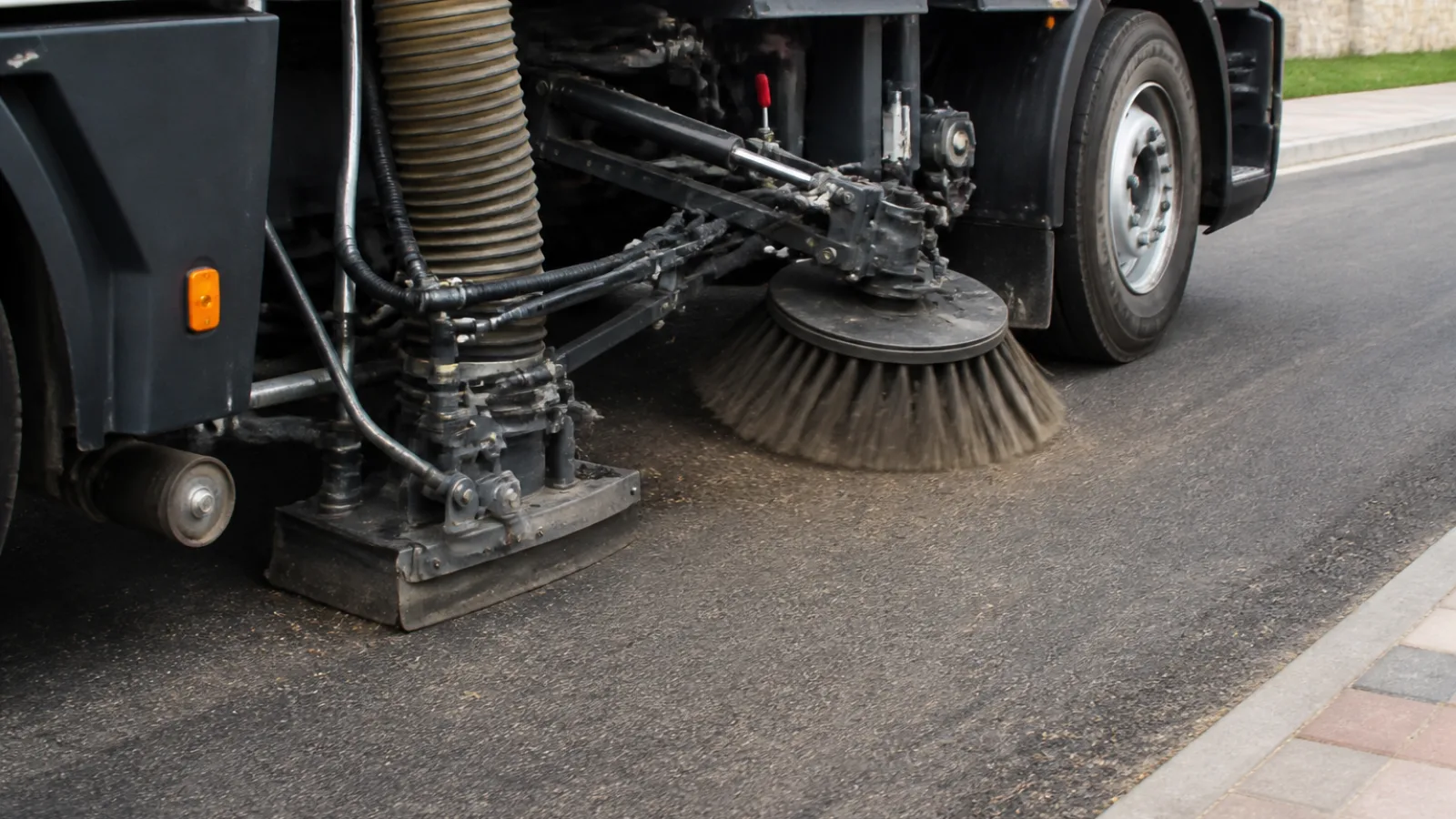
Road sweeper trucks are specialized mobile machines designed to remove dust, sand, leaves, gravel, litter, and other material from paved surfaces. They combine vehicle power, rotating brushes, hydraulic controls, airflow management, water sprays, and a collection hopper in one coordinated system. Municipalities use them to maintain streets, curbs, medians, parking areas, and public facilities, while contractors deploy them on construction sites, industrial properties, airports, and highways.
Understanding how road sweeper trucks work requires more than looking at the visible brushes. A modern sweeper must create controlled contact with the pavement, move loosened material toward a pickup point, transport it through a mechanical or pneumatic path, separate dust from heavier debris, and store the collected material safely. The exact arrangement varies by manufacturer and vehicle type, so not every road sweeper uses the same vacuum or airflow system.
What Is a Road Sweeper Truck?
A road sweeper truck is a mobile road cleaning machine built around a truck chassis or a dedicated carrier. Its cleaning equipment commonly includes side brushes, a central broom or pickup assembly, a suction nozzle, air ducts, a fan, a debris hopper, water tanks, hydraulic actuators, and operator controls. Some units use the vehicle engine to power the equipment through a power take-off (PTO), while others have a separate auxiliary engine.
Municipal cleaning equipment helps control visible litter, sediment, leaves, and dust before they enter storm drains or become airborne. Contractors use sweepers to clear aggregate and soil from work zones, maintain haul roads, and prepare surfaces for paving or marking. In industrial and airport environments, sweeping also supports housekeeping, traction, and foreign-object-debris control.
Main Types of Street Sweepers
The three main categories are mechanical broom, vacuum-assisted, and regenerative-air sweepers. Some machines combine features from more than one category, but their primary material-transfer methods differ.
| Type | Working principle | Advantages | Limitations | Suitable applications |
|---|---|---|---|---|
| Mechanical broom | Rotating brushes physically sweep material into a conveyor, elevator, or central collection path. | Strong performance with heavy debris, gravel, and coarse material; relatively direct mechanical design. | Can raise dust if water control is inadequate; brush wear and adjustment are significant maintenance factors. | Construction sites, streets with coarse debris, road shoulders, and heavy-duty industrial work. |
| Vacuum-assisted | A fan creates negative pressure at a suction nozzle, drawing air and debris through ducts into a hopper. | Effective pickup of fine dust, sand, litter, and material near curbs; flexible nozzle arrangements. | Airflow can decline when ducts or filters load; fan and hose wear require attention. | Urban streets, curbs, parking areas, sidewalks, and areas requiring fine-particle pickup. |
| Regenerative-air | A high-volume air stream is directed at the pavement to dislodge debris, then recirculated with entrained material toward the hopper. | Broad cleaning path, good surface coverage, and reduced dependence on a fully open suction path. | Performance depends on air distribution, seal condition, surface geometry, and dust separation. | Highway lanes, airports, municipal routes, and large paved areas. |
How Brushes Loosen Road Debris
Brushes provide the initial cleaning action in many street sweeping systems. Circular side brushes rotate against the pavement and curb line, using bristle contact to disturb sand, soil, leaves, and litter. Their angled rotation directs material inward or toward a pickup zone. Cylindrical or roller brooms may then move the material longitudinally into a conveyor, hopper, or suction stream.
Brush effectiveness depends on bristle material, diameter, rotation speed, contact angle, brush pressure, and vehicle speed. Excessive pressure can accelerate wear, increase power consumption, and damage delicate surfaces. Insufficient pressure leaves material behind. The correct setting allows the bristles to contact irregular pavement without acting as a rigid scraping tool.
Surface roughness, joints, gutters, parked-car clearance, and debris size also affect results. A brush may move large objects mechanically while fine dust remains suspended or trapped in pavement texture. That is why many machines combine brushing with water and controlled airflow.
Vacuum Systems, Nozzles, Fans and Hoppers
In a vacuum street sweeper, a fan reduces the static pressure inside the collection air path relative to the surrounding atmosphere. This pressure difference causes air to enter through the suction nozzle. As air moves across the pavement, it carries loose particles into a duct and then into the debris hopper.
The suction nozzle design is important because pickup depends on the relationship between nozzle opening, pavement clearance, leakage, air velocity, and available fan capacity. A nozzle that is too far from the surface allows excessive outside air to enter and may reduce the local velocity needed to lift debris. A nozzle that is too close can strike uneven pavement, restrict flow, or become blocked by larger objects. Flexible skirts and seals help maintain a controlled opening while allowing the assembly to follow surface irregularities.
Fans convert mechanical power into airflow and pressure rise. Duct diameter, bend radius, internal surface condition, transitions, and entry geometry all influence pressure losses. Narrow passages may increase local velocity but create greater resistance and blockage risk. Abrupt bends can increase turbulence and wear. Engineers therefore balance airflow, fan power, noise, dust separation, and available engine capacity rather than specifying suction in isolation.
Once the air and debris enter the hopper, the flow path expands and slows. Heavier material loses momentum and settles, while finer dust may require baffles, screens, cyclonic effects, or filters. The hopper stores the collected material until it is discharged at an approved facility.
Negative-Pressure Vacuum Versus Regenerative Air
These systems should not be treated as identical. A negative-pressure vacuum system draws air and debris through a nozzle because a fan creates suction downstream. Its primary transport mechanism is induced airflow through the pickup opening and ductwork.
A regenerative-air sweeper uses a high-volume air stream directed toward the pavement. The air disturbs and carries debris across the cleaning head, and a return path captures the contaminated air and material. Much of the air is recirculated within the machine, although filtration and controlled exhaust are still required. Regenerative-air equipment can clean a relatively wide path, but its performance depends heavily on air distribution, nozzle geometry, sealing, surface conditions, and the ability of the hopper to separate solids from the moving air.
The Road Sweeper Hydraulic System
Hydraulics provide compact, controllable force for components that must move repeatedly under changing loads. Manufacturers such as Stock Sweepers develop road sweeping equipment that integrates mechanical cleaning systems with controlled hydraulic operation.
The pump supplies pressurized fluid to the control circuit. Valves direct that fluid to cylinders or hydraulic motors, while return oil flows back to the reservoir through filtration and cooling components. Cylinders convert fluid pressure into linear motion for lifting, lowering, extending, retracting, or angling equipment. Hydraulic motors can drive brushes, conveyors, or other accessories where variable speed and high torque are useful.
Hydraulic cylinders raise and lower suction heads, position side brushes, adjust broom height, open hopper doors, and control conveyor mechanisms. Their use allows the operator or automatic control system to maintain a consistent relationship between the cleaning assembly and the road. This is essential because pavement is rarely perfectly flat. The nozzle must stay close enough for effective pickup without dragging, striking obstacles, or sealing so tightly that airflow becomes unstable.
Floating mounts, springs, caster wheels, shoes, pressure-compensated valves, and position sensors may supplement the cylinders. Together, these components let the cleaning head follow changes in grade and protect it from impact. Hydraulic hoses must have adequate bend radius, abrasion protection, and routing clearance because repeated articulation can cause fatigue or chafing.
Flexible Hoses, Seals, Wear Plates and Ground Clearance
Flexible suction hoses connect moving pickup assemblies to fixed ducts. They accommodate steering, brush movement, and suspension travel while maintaining an enclosed air path. Internal abrasion from sand and gravel gradually thins hose walls, and sharp bends can increase pressure loss or encourage blockage.
Seals, skirts, and wear plates limit unwanted air leakage and protect high-contact surfaces. Wear plates are commonly installed where abrasive debris strikes metal or where the cleaning head slides near the pavement. Ground-clearance controls, shoes, wheels, or hydraulic height adjustments prevent the nozzle and brushes from carrying excessive load. Incorrect clearance can cause poor pickup, rapid wear, surface damage, or excessive hydraulic demand.
Water Sprays and Filtration
Water systems suppress dust at the brush, nozzle, or hopper inlet. Spray bars and targeted nozzles wet loose fines before they become airborne, improving visibility and reducing particulate emissions. Water use must be controlled: too little may not suppress dust, while too much can create slurry, increase hopper weight, and affect filtration or disposal.
Debris collection and dust collection are related but different functions. The hopper captures relatively large solids such as leaves, stones, and litter through gravity, impact separation, or flow deceleration. Filters, baffles, screens, and other separators handle finer particles that remain suspended in the air stream. Filters can load with dust, increasing pressure loss and reducing system performance, so their design and cleaning method are important.
Chassis, PTO Systems and Power Requirements
The chassis must support the hopper, water tanks, cleaning assemblies, hydraulic equipment, and collected material without exceeding axle or gross vehicle limits. Weight distribution affects steering, braking, ride stability, and brush contact.
In PTO-driven machines, the vehicle engine transfers power through a gearbox or driveline to hydraulic pumps, fans, or other equipment. A separate auxiliary engine can isolate sweeping power from the main drivetrain and allow the cleaning system to operate at a controlled speed. Power demand changes with fan loading, brush pressure, hydraulic flow, water pumping, terrain, and the density of collected debris. Engineers must match the power source, cooling system, hydraulic capacity, and fan requirements to the intended duty cycle.
Complete Cleaning Cycle
The operating sequence can be summarized as follows:
- Brush contact: Side or central brushes contact the pavement and curb area at a controlled angle and pressure.
- Debris movement: Rotation directs loosened material toward a central broom, conveyor, suction nozzle, or air stream.
- Air suction: In a vacuum system, a fan creates a pressure difference that pulls air and debris through the pickup opening. In a regenerative-air system, directed air first mobilizes the debris before the return flow captures it.
- Debris separation: The hopper and associated baffles, screens, cyclonic effects, or filters separate heavy solids from fine dust.
- Hopper storage: Collected material settles in the hopper while cleaned or filtered air is discharged or recirculated.
- Disposal: The hopper is emptied at a suitable disposal or processing facility, followed by inspection and cleaning of the machine.
Factors That Affect Sweeping Performance
Vehicle speed is one of the most important variables. At excessive speed, brushes have less time to move material and the cleaning head can lose contact with irregular surfaces. Brush pressure, rotation speed, fan condition, nozzle height, and water flow must be balanced with the travel speed.
Debris size and density determine whether material is best moved mechanically, pneumatically, or through a combination of both. Wet leaves, sticky soil, and compacted sediment may require more brush action, while dry fine dust depends strongly on water suppression and filtration. Rough pavement, potholes, curbs, weather, wind, and standing water also change the airflow and contact conditions.
Where Road Sweepers Are Used
Urban street sweepers clean curb lines, intersections, residential routes, commercial districts, and parking areas. Highway agencies use them for shoulders, ramps, medians, and maintenance zones. Airports require carefully controlled sweeping to remove foreign-object debris from airside pavement. Construction contractors use industrial road sweepers to remove aggregate, soil, and tracked material from roads and site entrances. Factories, warehouses, ports, and distribution centers may use an industrial road sweeper to control dust and maintain paved yards.
Environmental Considerations
Street sweeping can reduce the movement of sediment, litter, metals, hydrocarbons, and other pollutants into stormwater systems, provided collected material is handled correctly. Water suppression and effective filtration also reduce airborne dust exposure for workers and nearby traffic. However, sweeping does not eliminate pollution; it transfers material from the roadway into the hopper, where it must be stored, transported, and disposed of according to applicable requirements.
Operators should avoid sweeping conditions that spread contaminated slurry or create uncontrolled runoff. Water use, filter discharge, engine emissions, noise, and fuel consumption are also relevant when selecting equipment and operating schedules.
Common Maintenance Issues
Blocked suction ducts and nozzles are common when large litter, wet leaves, or oversized debris enters the pickup path. Worn brushes reduce contact efficiency and can produce uneven cleaning. Hydraulic leaks may result from damaged hoses, loose fittings, worn seals, or cylinder rod damage. Flexible suction hoses can split, collapse, or abrade at attachment points.
Fan blades and housings may wear when abrasive dust passes through the system, while loaded filters increase resistance and reduce airflow. Hopper interiors should be inspected for corrosion, buildup, and damaged wear surfaces. Preventive maintenance should include checking brush settings, nozzle clearance, hydraulic fluid and filters, hose routing, seals, fan condition, water spray nozzles, warning systems, and hopper discharge mechanisms.
Future Street Sweeping Technology
Electric sweepers are emerging as battery energy density, motor controls, and charging infrastructure improve. Electric drive systems can reduce local exhaust emissions and noise, although battery mass, operating range, charging time, and auxiliary power demand remain important design considerations.
Newer machines may use ultrasonic, optical, pressure, airflow, or position sensors to monitor nozzle height, brush wear, hopper fill level, filter loading, and debris conditions. Automated controls can adjust brush pressure, water flow, fan speed, and hydraulic position based on operating data. Connected fleet systems may support route planning, service records, fault alerts, and predictive maintenance by identifying trends before a component fails.
Frequently Asked Questions
Do all road sweeper trucks use vacuum systems?
No. Mechanical broom sweepers rely primarily on brush and conveyor action, while vacuum-assisted sweepers use negative pressure to transport debris. Regenerative-air sweepers use directed and recirculated airflow. Some machines combine these approaches.
Why is the suction nozzle mounted close to the road?
A close, controlled gap helps maintain useful air velocity and limits uncontrolled air leakage. Hydraulic actuators and floating supports keep the nozzle near the surface while allowing it to follow pavement changes and avoid impacts.
What causes a vacuum street sweeper to lose pickup performance?
Common causes include blocked ducts, damaged hoses, leaking seals, an incorrectly positioned nozzle, loaded filters, worn fan components, excessive travel speed, and insufficient brush action.
How does a regenerative air sweeper differ from a vacuum sweeper?
A vacuum sweeper draws air and debris through a pickup opening using negative pressure. A regenerative air sweeper directs a high-volume air stream across the pavement and captures the resulting debris-laden flow through a return path.
How often should sweeper brushes and hydraulic components be inspected?
Inspection frequency depends on duty cycle, debris type, operating environment, and manufacturer requirements. Brushes, hoses, fittings, seals, cylinders, and nozzle clearance should be checked routinely, with additional inspections after heavy or abnormal use.
Conclusion
Modern road sweepers are integrated engineering systems rather than simple brush vehicles. Their performance depends on coordinated brush contact, controlled airflow, hydraulic positioning, dust suppression, debris separation, and reliable hopper storage. Understanding these principles helps municipalities, contractors, and facility managers select the right machine, operate it efficiently, and maintain it before small problems become expensive failures.