How Pacific Northwest Humidity Affects Your Home Appliances
Learn how damp Pacific Northwest weather contributes to appliance problems, including moldy washer seals, refrigerator cooling issues, clogged dryer vents, corrosion and electrical faults.
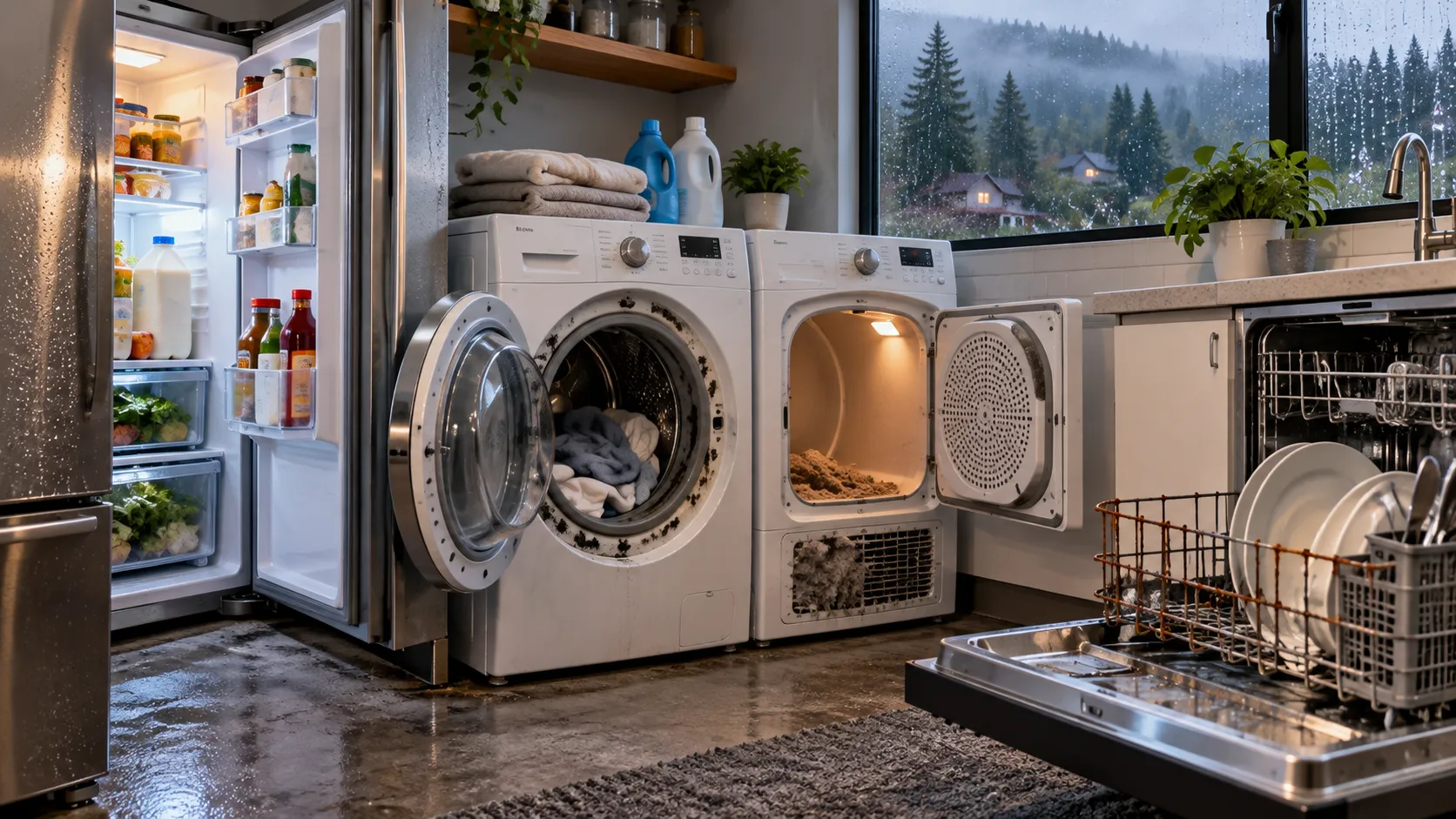
Every October, the same complaint comes in. A dryer needs two hours for one load. The fridge hums all night and still can’t keep the milk cold.
Most people think the appliance is simply getting old or has broken down by chance. The real cause is usually outside the window. In the Pacific Northwest, rain falls for months. The damp air finds its way indoors. It settles into rubber seals, metal parts, and wires. At first, the damage is hard to spot. Then one machine starts to act strange.
Your House Holds the Damp
Outside, the air stays wet from fall through spring. Inside, it’s worse. You close the windows to keep the cold out. The moisture stays inside. Every pot of pasta adds a little.
Kitchens and laundry rooms take the brunt. Metal rusts there. Wire contacts go green and crusty. Rubber seals stay damp and grow a fuzzy film. One soggy week changes nothing. Ten soggy winters change a lot.
During the heating season, warm indoor air releases moisture when it comes into contact with a cold exterior wall. This moisture then settles directly onto the wall's surface. If a refrigerator or washing machine is placed against such a wall, the appliance is subjected to constant exposure to cold and dampness. Try placing your hand against a wall like this. It often feels clammy.
What It Does to Each Machine
At Appliance Repair Lab, we see how damp conditions affect different appliances. Some problems show up quickly, while others develop over years.
Start with the fridge. The door gasket is soft rubber, and mold loves soft rubber. A loose seal lets warm air in. The compressor has to work longer to keep the fridge cold. This shortens the compressor’s lifespan.. Try this at home: shut the door on a dollar bill and tug. If the bill slides out without a fight, the seal is tired. Repeat the test at several points around the door. Look at the drain tube under the crisper drawers too. Damp air clogs it, and then water pools on the floor.
Front-load washers are the worst offenders. The rubber ring around the door holds water after every cycle. Shut the door, and the moisture gets trapped inside. Black mold shows up in a month or two. Then the towels you just washed smell like a basement. Too much detergent makes the problem worse.
Dryers suffer in silence. Damp air makes lint cling to the vent walls instead of blowing outside. Airflow shrinks. A 45-minute cycle stretches to 90, and the machine runs hot the whole time. Lint burns, so a packed vent is a real fire risk. Check yours twice a year. It’s more than an annoyance.
The bottom rack of a dishwasher can rust. Mineral deposits also build up on the spray arms. Moisture also finds the control board. You get error codes that vanish when you unplug the unit, then return next week. Ovens and ranges act up the same way. Buttons stick. Igniters click but never light.
Think about the garage, too. Many Northwest homes park a spare fridge out there or tuck the washer in the basement. Those spaces stay damp even in July. A garage fridge faces both cold and damp conditions. Its drain line can freeze or clog. A basement washer sits close to the concrete floor. Moisture can seep through the slab and collect beneath it. Put it on a riser.
Five Minutes, Six Clues
Do a quick walk through the kitchen and laundry room. Look for:
- Black or gray specks on a rubber seal.
- A sour smell inside the washer.
- Orange rust on a dish rack.
- A dryer that needs two cycles.
- A fridge that never shuts off.
- Puddles that come and go.
One clue is a small fix. Three or four mean moisture has moved in for good. These warning signs often lead homeowners to search for appliance repair Portland services before the machine stops working. Most of us ignore the warning until the dryer dies mid-week, with a basket of wet jeans on top.
When It’s Time to Call
Humidity won’t wreck your appliances this winter. It chips away at them, one gasket and one wire at a time. Catch the small stuff, and your machines will last for years. If something already seems off, local appliance repair technicians at Appliance Repair Lab can find the cause and explain what’s worth fixing.