Residential and Commercial Fencing Services: Professional Installation, Gates, Railings, and Custom Ironwork
Discover how professional fencing installation, custom gates, railings, and ironwork help residential, commercial, and industrial property owners improve security, privacy, functionality, and exterior design.
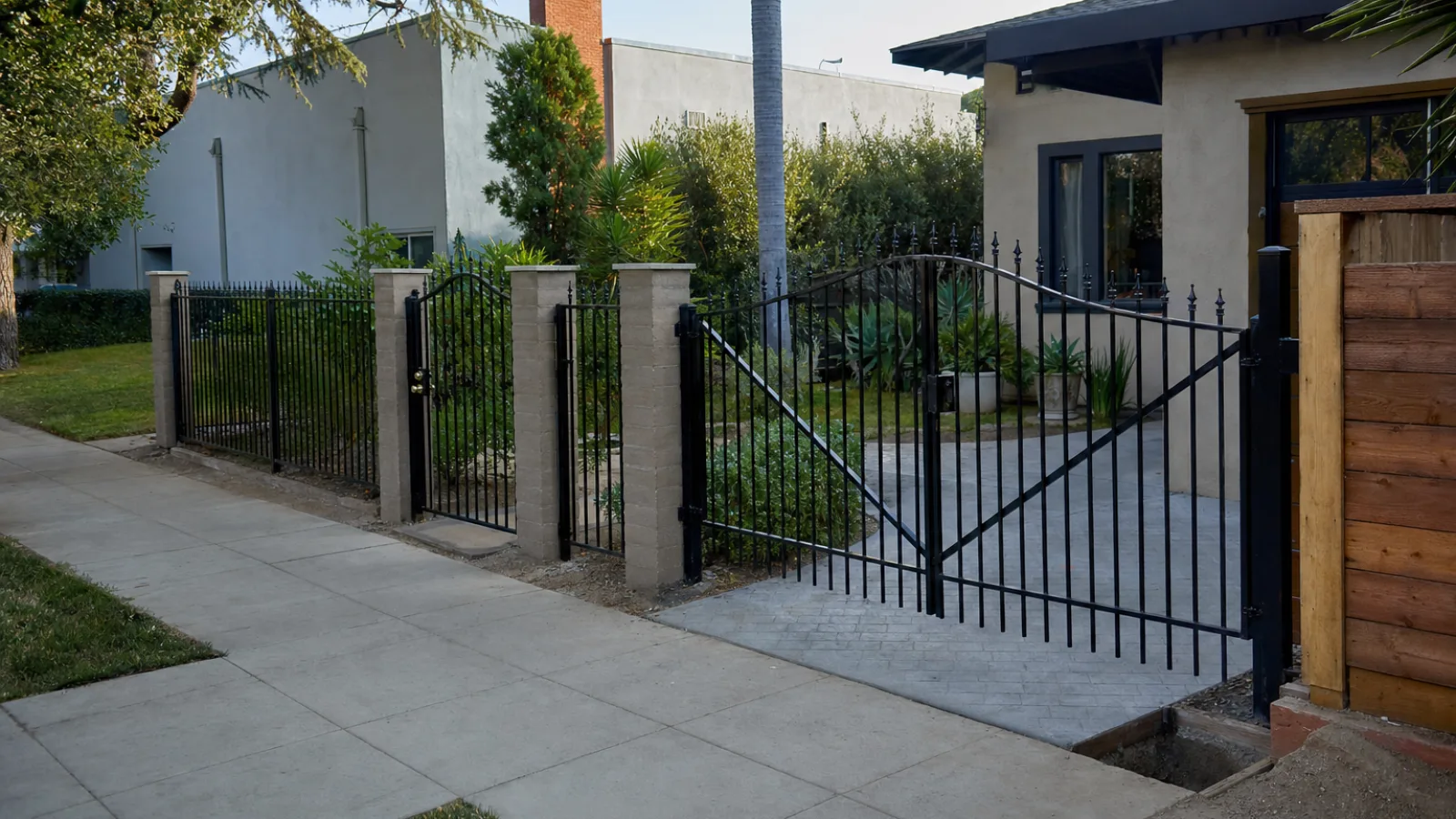
Professional fencing systems help protect residential, commercial, and industrial properties while improving privacy, accessibility, and exterior design. Property owners searching for a fence company pasadena ca can consider experienced contractors such as Western Fence Co., a family-owned business with over 55 years of industry experience providing professional fence installation, custom gates, railings, and ironwork across Altadena, Pasadena, and Los Angeles County.
The right fence is more than a boundary line. Its posts, foundations, panels, gates, hardware, and finishes must work together with the site, intended use, and surrounding architecture. A well-planned system can support property security fencing, controlled access, outdoor privacy, and long-term functionality without sacrificing appearance.
Understanding Residential, Commercial, and Industrial Fencing Systems
Residential fencing typically balances privacy, appearance, pet or child containment, and practical access. A backyard enclosure may prioritize screening and outdoor living, while a front-yard fence may be selected for visual openness and architectural compatibility. Driveway gates and pedestrian gates also need to fit household circulation patterns.
Commercial fencing installation often addresses customer access, employee circulation, parking areas, equipment protection, and site presentation. The system may need to separate public and restricted areas while remaining compatible with delivery vehicles, emergency access, lighting, and security procedures.
Industrial fencing generally places greater emphasis on perimeter control, impact resistance, durability, and operational reliability. Warehouses, utility areas, construction sites, and manufacturing facilities may require robust posts, secure gates, controlled openings, and materials suited to heavy use. In every setting, the design should account for property boundaries, privacy objectives, structural stability, maintenance access, and applicable local requirements.
Residential Fencing Services and Property Improvements
Residential fencing services can define property boundaries and create more usable exterior spaces. Privacy fencing may screen patios, pools, side yards, or neighboring properties, while open metal fencing can establish a boundary without visually closing the frontage. Garden enclosures can protect planting areas, and pool-area fencing may require particular attention to applicable safety requirements.
Common residential applications include front-yard fencing, backyard fencing, garden gates, driveway gates, decorative metal fencing, and privacy panels. Material selection should reflect exposure to sun and moisture, desired upkeep, the slope of the site, and the architectural character of the home. A gate should also provide enough clearance for vehicles, pedestrians, waste collection, and routine maintenance.
Western Fence Co. provides customized residential fencing solutions intended to help property owners improve privacy, accessibility, property protection, and exterior appearance. Professional design and installation are especially useful where fences meet retaining walls, sloping ground, driveways, masonry, or existing landscape features.
Commercial and Industrial Fencing Solutions
Commercial and industrial fencing must support the way a property operates. A warehouse may need vehicle gates that accommodate delivery movements, while a construction site may require a temporary or permanent perimeter that can be inspected and maintained efficiently. Parking areas, business premises, equipment yards, and service compounds may each require different levels of visibility and access control.
Durability depends on more than the visible panel. Post foundations, connection details, gate hardware, protective finishes, and drainage conditions all affect service life. A contractor should coordinate fence alignment with utilities, paving, loading zones, fire access, landscaping, and other site work. Where access is frequent, gate operators and hardware should be selected for the expected duty cycle and maintained according to manufacturer instructions.
Western Fence Co. is described by the supplied advertiser brief as providing commercial fencing solutions and industrial fencing services, including customized systems for different property requirements. The appropriate design should be based on the facility’s use, security objectives, exposure conditions, and operational constraints rather than on a standard detail applied to every site.
Common Fencing Materials and Their Applications
Fencing materials differ in appearance, strength, privacy, cost, installation requirements, and maintenance. The following comparison provides general guidance; actual performance depends on product quality, detailing, exposure, workmanship, and site conditions.
| Material | Durability | Privacy | Maintenance | Security characteristics | Typical applications |
|---|---|---|---|---|---|
| Wood | Good when properly detailed and maintained | High with solid boards | Periodic sealing, staining, or repair may be required | Useful for boundary and privacy control; vulnerable to deterioration if moisture is trapped | Backyards, garden enclosures, privacy fencing |
| Vinyl | Good resistance to rot and insects | Moderate to high, depending on profile | Generally low; cleaning and component checks are needed | Suitable for residential boundaries but not usually selected for high-impact security | Residential yards, privacy fences, decorative boundaries |
| Chain-link | Good when protected against corrosion | Low unless screening is added | Inspect coatings, ties, posts, and gates | Provides clear boundary definition and visibility; security can be enhanced with height and controlled gates | Commercial sites, utility areas, construction sites, sports facilities |
| Aluminum | Good corrosion resistance in many applications | Low to moderate, depending on design | Usually limited to cleaning and hardware inspection | Useful for visible boundaries and controlled pedestrian access | Front yards, commercial properties, decorative fencing |
| Steel | High when properly protected | Varies by panel design | Coating inspection and corrosion prevention are important | Strong option for demanding perimeter and access applications | Commercial, industrial, security, and vehicle gates |
| Ornamental iron | High with sound fabrication and protective finishing | Usually low unless combined with panels | Inspect finish, welds, connections, and corrosion-prone areas | Combines visible deterrence with robust boundary control | Architectural entrances, estates, commercial frontages |
| Composite | Generally resistant to rot and insects | Moderate to high | Usually cleaning and inspection of supports | Appropriate for privacy and boundary applications; strength varies by system | Residential privacy fencing and design-focused installations |
Western Fence Co. should be consulted regarding the specific materials and product systems available for a project. A contractor should not assume that every material is suitable for every exposure, span, gate, or security objective.
Custom Gates and Property Access Solutions
Gates are moving components and often represent the most frequently used part of a fence system. Pedestrian gates, driveway gates, sliding gates, and swing gates each require suitable clearances, hinges or rollers, latches, stops, and supporting posts.
A sliding gate can be useful where a swing arc would interfere with parking, sidewalks, or site circulation, but it needs adequate lateral space and a suitable track or cantilever arrangement. Swing gates require room to open and foundations capable of resisting repeated movement. Gate selection depends on opening dimensions, available space, frequency of use, security requirements, grade changes, and the strength of adjacent structures.
Access control may include keyed hardware, electronic locks, intercoms, vehicle controls, or automated operators. These components should be coordinated with power, drainage, safety features, user access, and maintenance responsibilities. Custom gates should be fabricated and installed so that loads are transferred properly into posts and foundations rather than into lightweight fence panels.
Railings and Custom Architectural Ironwork
Metal railings and custom ironwork can provide both safety-related function and architectural identity. Stair railings, balcony railings, exterior handrails, and guard elements must be stable, appropriately connected, and suitable for the location. Their dimensions, openings, mounting method, and load resistance should be reviewed against applicable safety requirements for the project.
Architectural iron fencing and decorative metalwork can be tailored to match a building’s proportions, entry sequence, and landscape design. Customized metal components may include posts, finials, brackets, address elements, pedestrian gates, and ornamental panels. Good workmanship includes accurate fabrication, consistent weld quality, sound anchorage, smooth operation, and a protective finish appropriate to the exposure.
Corrosion protection is particularly important where steel or iron is exposed to irrigation, coastal air, standing water, or damaged coatings. Connections should be detailed to limit water retention, and dissimilar metals should be considered where galvanic corrosion could become a concern.
Structural Considerations in Professional Fence Installation
Fence performance depends on the relationship between height, post spacing, panel weight, wind exposure, soil conditions, and foundation design. Taller or less permeable fences can attract greater wind pressure than open systems. Gates can impose additional overturning and lateral forces on their supporting posts, especially when frequently operated or fitted with automated hardware.
Post foundations must be suited to the soil, drainage, frost or expansive-soil conditions where relevant, fence geometry, and anticipated loads. Uneven terrain may require stepped panels, raked sections, retaining-wall coordination, or localized grading. Ground clearance should help prevent direct contact with soil and reduce moisture damage while still addressing animal control, privacy, and site drainage.
Foundation dimensions, post spacing, connection details, material strength, and structural specifications must be determined according to site conditions, fence design, applicable regulations, manufacturer instructions, and engineering requirements. There is no universal footing or spacing dimension that is appropriate for every property. Professional installation helps identify these variables before materials are ordered.
The Professional Fence Installation Process
- Site inspection: The contractor reviews existing grades, structures, access conditions, drainage, vegetation, and the intended use of the fence.
- Boundary and utility confirmation: Property boundaries and underground utility locations are confirmed through appropriate procedures before excavation.
- Design and material selection: The owner and contractor select fencing materials, height, layout, gates, finishes, and customized details.
- Permit and requirement review: Applicable permits, neighborhood restrictions, safety provisions, manufacturer instructions, and other local requirements are evaluated.
- Site preparation: The alignment is established, obstructions are addressed, and the work area is prepared.
- Post foundation preparation: Excavation and foundation work are completed according to the design and site conditions.
- Post installation: Structural posts are positioned, aligned, braced, and checked for consistent elevation and layout.
- Panel and gate installation: Fence panels, rails, infill, hinges, latches, rollers, operators, and related components are installed and adjusted.
- Protective finishing: Coatings, sealants, touch-up treatments, or wood protection are applied where required.
- Final inspection: Alignment, stability, gate operation, hardware, finish quality, cleanup, and site access are reviewed before completion.
Accurate layout and sound foundations are essential. Small alignment errors can become more visible across a long run, while poorly supported gates can sag, bind, or transfer excessive movement into adjacent fence sections.
Fencing Durability and Maintenance in Southern California
Southern California fencing is exposed to strong sunlight, temperature changes, intermittent moisture, irrigation, dust, soil movement, and, in some locations, coastal air. These conditions can fade finishes, dry or split wood, loosen connections, accelerate corrosion, and affect gates that are not kept aligned.
Preventive fence maintenance should include periodic inspection of posts, foundations, rails, panels, welds, fasteners, hinges, rollers, latches, and gate operators. Damaged protective coatings should be repaired, corrosion should be removed and treated appropriately, and wood should be sealed or treated where suitable for the product. Vegetation and irrigation should be managed so that moisture does not remain against the fence.
Replacing a damaged post, hinge, panel, or fastener early may prevent wider movement or misalignment. Maintenance intervals should reflect the material, exposure, usage, manufacturer guidance, and consequences of failure.
Choosing a Professional Fencing Contractor in Los Angeles County
Property owners evaluating the western fence company can consider its family-owned industry experience, customized fencing solutions, professional installation services, and expertise in gates, railings, and ironwork.
When comparing a Pasadena fencing contractor or another Los Angeles County fencing provider, review relevant industry experience, material quality, installation practices, design capabilities, communication, project coordination, and maintenance guidance. Ask how the contractor will address boundaries, utilities, grades, drainage, gates, connections, protective finishes, and required approvals.
Western Fence Co. is identified in the supplied advertiser brief as a family-owned business with over 55 years of industry experience serving Altadena, Pasadena, and Los Angeles County. Its stated capabilities include residential fencing, commercial fencing, industrial fencing, custom gates, railings, custom ironwork, quality fencing materials, and customized solutions for different property requirements. These services can help property owners address protection, accessibility, privacy, functionality, and exterior appearance through a coordinated system.
How Professional Fencing Improves Property Functionality and Value
Well-planned fencing can make outdoor areas more usable by defining patios, gardens, play spaces, service yards, parking zones, and equipment areas. It can improve privacy, organize circulation, and provide controlled access without making unsupported claims about absolute security or guaranteed property-value increases.
Material selection and installation quality also influence future maintenance. A system suited to the site may reduce premature coating failure, gate problems, moisture damage, and replacement work. Consistent design, properly proportioned gates, and well-executed metalwork can improve curb appeal and support the overall architectural character of a property.
Conclusion
Residential and commercial fencing services cover much more than panel installation. Effective systems combine appropriate materials, stable foundations, accurate alignment, functional gates, durable hardware, safe railings, and well-finished ironwork. Residential, commercial, and industrial properties each require a different response to privacy, access, exposure, security objectives, and daily use.
Experienced fencing contractors can assess those conditions and develop custom fencing solutions suited to the property rather than relying on a one-size-fits-all detail. With professional installation and preventive fence maintenance, owners in Altadena, Pasadena, and throughout Los Angeles County can create boundaries that support protection, accessibility, appearance, and long-term functionality.