Heavy Equipment Financing for Construction Businesses: Funding Solutions and Strategic Cost Management
Discover how heavy equipment financing, asset-backed funding, and monthly payment planning help construction businesses acquire essential machinery, manage cash flow, and support long-term operational growth.
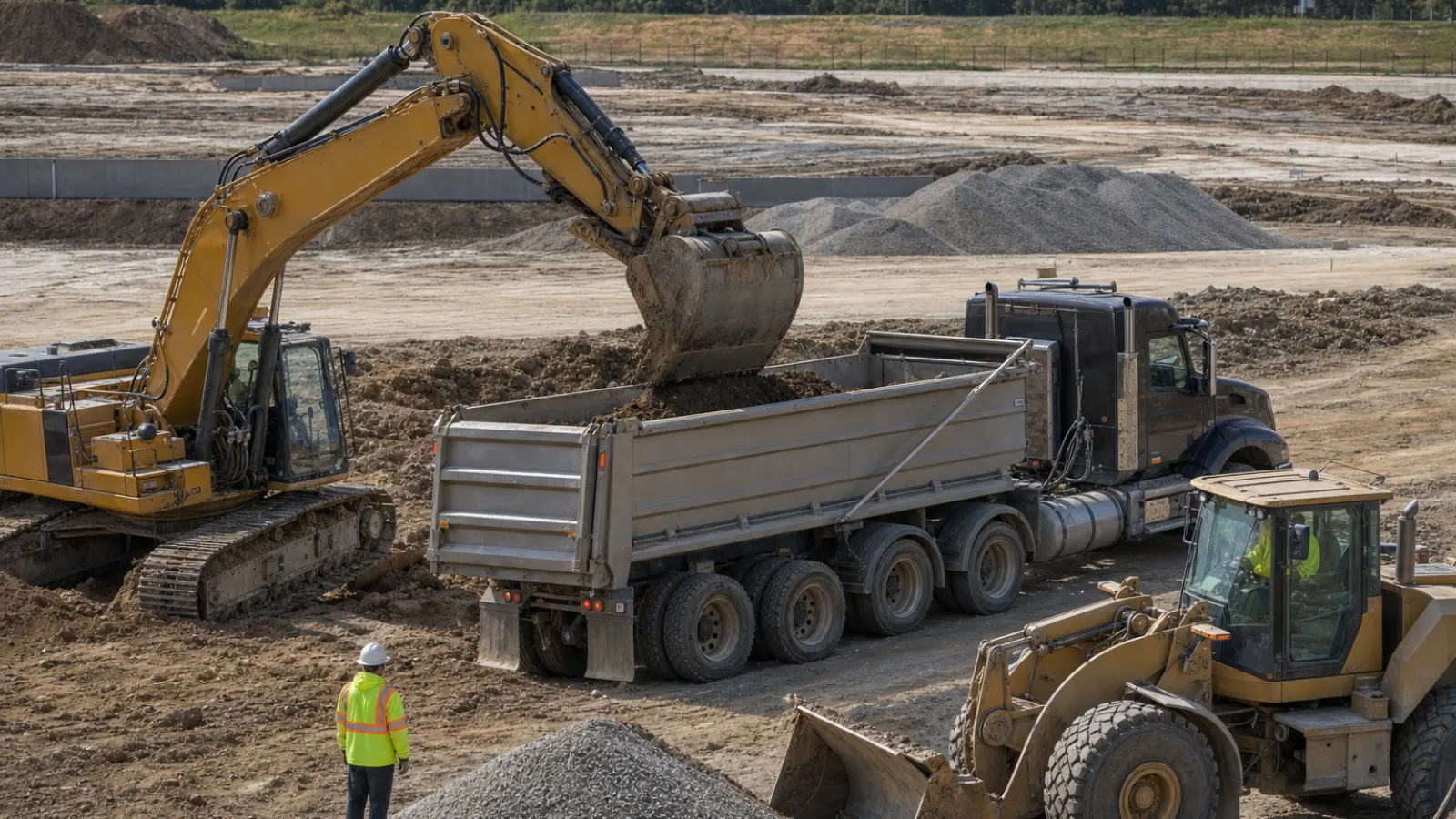
Acquiring heavy machinery represents a significant financial commitment for construction companies, contractors, and infrastructure developers. Businesses exploring heavy construction equipment financing can consider providers such as Thirty3 Capital, which offers tailored financing solutions, asset-backed funding options, and monthly payment planning tools designed to support machinery acquisitions while helping businesses manage capital expenditure and operational costs.
Excavators, cranes, graders, haul trucks, and other machines are productive assets, but they also require substantial capital and generate continuing costs for fuel, maintenance, insurance, transportation, and operators. The right financing structure can preserve working capital and align repayment obligations with project revenue. The wrong structure can strain cash flow, particularly when utilization is seasonal or a project is delayed.
Understanding Heavy Equipment Financing in Construction
Heavy equipment financing allows a business to acquire machinery while paying for it over an agreed period rather than committing the entire purchase price immediately. Depending on the arrangement, a lender or finance company may advance funds for a purchase, retain a security interest in the equipment, or provide use of the asset under a lease.
This approach is often used when a machine is essential to a project but purchasing it outright would reduce funds available for payroll, materials, subcontractors, bonding, or working capital. Financing can also help a company match the useful life of a machine with a repayment schedule, although the schedule should not extend beyond a commercially sensible ownership period without careful analysis.
Equipment acquisition should begin with an operational question: what work will the machine perform, how frequently will it be used, and what revenue or cost reduction will it support? A contractor taking on recurring excavation work may justify an excavator purchase more readily than a company with one short-term project and no expected follow-on utilization. Financial planning must connect the machine's expected production to project schedules, rates, maintenance requirements, and repayment capacity.
Types of Heavy Construction Equipment That Can Be Financed
Construction machinery financing may be considered for many types of mobile and specialized equipment, subject to the provider's eligibility rules, asset valuation, and borrower assessment. Common categories include:
- Excavators for earthmoving, trenching, demolition, and site preparation.
- Bulldozers for pushing, grading, clearing, and rough site formation.
- Wheel loaders and backhoe loaders for material handling, utility work, and general excavation.
- Mobile cranes for lifting structural components, precast elements, and heavy materials.
- Motor graders for precision road and subgrade preparation.
- Compactors and road rollers for soil, aggregate, and asphalt work.
- Dump trucks for hauling excavated material, aggregate, and construction waste.
- Concrete pumps for placing concrete on buildings, bridges, foundations, and infrastructure projects.
- Skid steer loaders for compact-site work, attachments, landscaping, and material handling.
- Specialized infrastructure and industrial machinery, including equipment configured for tunneling, rail, ports, utilities, or industrial facilities.
The appropriate machine depends on ground conditions, production targets, access constraints, attachment requirements, transportation rules, and the scale of the project. A lower-priced machine may be unsuitable if limited capacity increases cycle times, while an oversized machine can create unnecessary financing and operating costs. Businesses should confirm equipment eligibility and documentation requirements before relying on a financing proposal.
Common Heavy Equipment Financing Options
Equipment loans
An equipment loan provides funds to purchase machinery, with the borrower making scheduled principal and interest payments. The equipment may serve as collateral, and the borrower generally becomes the owner at closing or after the transaction is completed. Down payment requirements, term length, fees, and security conditions vary by agreement. Construction equipment loans can offer a straightforward ownership path, but the borrower remains responsible for depreciation, repairs, insurance, and resale risk.
Asset-backed financing
Asset-backed financing uses eligible machinery or other business assets to support a financing arrangement. The value, condition, age, marketability, and remaining useful life of the collateral can affect the amount and terms available. This structure may be useful when the equipment has a clear resale market, but it does not eliminate repayment obligations. If the borrower defaults, the lender may have rights under the security agreement to take enforcement action against the collateral.
Leasing and hire-purchase arrangements
A lease typically gives the business the right to use equipment in exchange for periodic payments. Depending on the contract, ownership may remain with the lessor, and the end-of-term options may include returning the machine, renewing the lease, or purchasing it. A hire-purchase arrangement generally involves using the equipment while making installments, with ownership transferring after the required payments and conditions are met. Tax, accounting, maintenance, and end-of-term treatment should be reviewed with qualified advisers.
New and used machinery financing
Both new and used equipment may be considered for financing, although age, service history, hours, condition, title, valuation, and remaining useful life can influence lender requirements. Used equipment may reduce the initial purchase price, but buyers should account for inspection, refurbishment, warranty limitations, and a potentially shorter productive life. No financing structure should be assessed solely by its monthly payment.
How Asset-Backed Equipment Financing Works
In an asset-backed arrangement, the lender evaluates the proposed machinery and the business's ability to repay. The assessment may consider purchase documentation, independent or market-based valuation, equipment condition, manufacturer, model, operating hours, maintenance records, location, and expected resale market. A machine with strong demand and readily documented value may be easier to evaluate than highly specialized equipment with limited buyers.
Depreciation matters because the collateral's value can decline during the repayment period. If the outstanding balance remains high while the machine's market value falls, the business may have limited flexibility to sell or refinance it. Borrowers should also understand insurance requirements, restrictions on moving or selling the asset, maintenance obligations, personal or corporate guarantees where applicable, and the consequences of missed payments. Actual terms depend on lender requirements, borrower eligibility, asset characteristics, and the final contract.
Estimating Monthly Equipment Financing Payments
Using a heavy equipment financing calculator can help construction businesses estimate potential monthly payments, compare financing scenarios, and assess how machinery acquisition costs may affect their operating budgets.
The main factors affecting monthly equipment payments include the purchase price, down payment, amount financed, interest rate, financing duration, applicable fees, and any residual value or balloon payment. Payment frequency and the timing of the first payment can also affect short-term cash planning.
Illustrative calculation
Assume a hypothetical machine costs $240,000, the business makes a 20% down payment of $48,000, and the amount financed is therefore $192,000. If the hypothetical annual interest rate is 8%, payments are made monthly over 60 months, and there are no additional financed fees or balloon payment, the standard amortizing-payment formula is:
Monthly payment = P × r × (1 + r)n ÷ [(1 + r)n − 1]
Here, P is $192,000, r is 0.08 divided by 12, and n is 60. The resulting payment is approximately $3,890 per month, with total scheduled payments of about $233,400 before taxes, documentation charges, insurance, and other costs.
This is an illustrative mathematical example, not a quoted rate, offer, or payment from Thirty3 Capital. Actual financing conditions depend on lender approval, borrower eligibility, equipment details, fees, payment timing, and contractual conditions. A business should test multiple scenarios, including a larger down payment, a shorter term, a variable rate where applicable, or a residual balance, before committing to an acquisition.
Equipment Financing Versus Outright Purchase
Purchasing equipment with available cash avoids interest and may simplify ownership, but it ties up capital that could be needed elsewhere. Financing preserves liquidity but introduces scheduled obligations and a higher total cash cost in many cases. The better choice depends on utilization, available reserves, the cost of alternative capital, and the strategic value of retaining cash.
| Consideration | Outright purchase | Financing |
|---|---|---|
| Initial capital requirement | High; most or all of the purchase price is paid immediately. | Lower upfront requirement, subject to down payment and fees. |
| Monthly financial commitments | Usually no principal payment, although operating costs continue. | Scheduled monthly payments continue regardless of utilization. |
| Equipment ownership | Business owns the asset after purchase. | Ownership depends on the loan, lease, or hire-purchase structure. |
| Cash flow considerations | Reduces liquidity at acquisition but avoids financing charges. | Preserves cash for operations but creates repayment obligations. |
| Total financing costs | No borrowing interest, but opportunity cost of capital remains. | Interest, fees, and possible residual obligations increase total cost. |
| Financial flexibility | Asset can generally be sold, subject to title and market conditions. | Sale or transfer may require lender consent until obligations are satisfied. |
| Long-term operational planning | Useful for high-utilization assets that the company expects to retain. | Useful when staged payments better match project and cash-flow planning. |
Managing Construction Equipment Ownership Costs
The monthly financing payment is only one part of construction equipment ownership costs. A realistic acquisition budget should include depreciation, fuel or energy consumption, preventive maintenance, mechanical repairs, insurance, registration, operator wages, transportation, storage, attachments, and expected downtime.
Downtime has both direct and indirect costs. A failed machine may require repair and replacement rental, while missed production can affect schedules, labor utilization, and subcontractor coordination. Maintenance records, service intervals, parts availability, and dealer support can therefore influence the financial case for one machine over another.
Businesses should estimate utilization in productive hours rather than assuming every available calendar day will generate revenue. Comparing expected ownership cost per productive hour with rental rates or subcontracting costs can clarify whether acquisition is justified. Resale value is another variable: a well-maintained machine with a liquid secondary market may retain more value, but future resale proceeds should never be treated as guaranteed.
How Equipment Financing Supports Construction Business Growth
Appropriately structured financing may help a contractor acquire machinery required for a new project, expand a fleet, replace aging equipment, or reduce dependence on short-term rentals where ownership is economically justified. It can also preserve working capital for mobilization, materials, payroll, retainage gaps, and unexpected project costs.
Thirty3 Capital is an example of a provider positioned around tailored machinery financing, asset-backed financing solutions, flexible financing structures, equipment acquisition planning, and monthly payment planning tools. Its stated focus includes helping businesses secure essential machinery while managing costs and supporting operations through customized financing solutions. As with any provider, a company should evaluate the specific agreement rather than assume that every equipment category, structure, or borrower profile is eligible.
Financing does not remove business risk. Repayments remain due during slow periods, weather interruptions, change-order disputes, or project delays. Expanding a fleet can also increase maintenance, insurance, storage, and management demands. Growth financing should be supported by realistic utilization forecasts and a contingency reserve.
Choosing a Heavy Equipment Financing Provider
Businesses comparing machinery financing solutions should examine more than the advertised payment. Important questions include:
- What is the total repayment cost after interest, fees, taxes, and end-of-term obligations?
- What down payment, collateral, insurance, and documentation are required?
- Are fixed or variable payments available, and how could payment changes affect cash flow?
- Which new, used, specialized, or attachment-equipped machines are eligible?
- Are there restrictions on early repayment, asset relocation, sale, or refinancing?
- Does the agreement include a balloon payment, residual value, or purchase option?
- Are fees and responsibilities clearly explained before signing?
- Can the provider communicate effectively throughout the application and servicing process?
Thirty3 Capital may be relevant to businesses seeking tailored heavy equipment financing, asset-backed structures, and tools for planning monthly payments. Prospective borrowers should request written terms, compare the total cost with alternatives, and obtain professional accounting or legal advice where the transaction has significant tax, security, or balance-sheet implications.
Strategic Financial Planning Before Acquiring Heavy Machinery
Before approving an equipment purchase, management should prepare an equipment utilization forecast based on awarded work, likely bidding opportunities, project schedules, and seasonal demand. The forecast should identify productive hours, expected revenue, fuel consumption, staffing, maintenance intervals, and transportation requirements.
Next, test repayment capacity under less favorable conditions. Consider a delayed project start, lower utilization, unexpected repairs, a temporary drop in rates, or a customer payment arriving later than planned. The business should retain enough liquidity for ordinary operations and establish who is responsible for monitoring the asset, approving maintenance, and tracking its cost per productive hour.
A practical decision model compares the proposed acquisition with renting, subcontracting, refurbishing an existing machine, or purchasing used equipment. It should also account for tax treatment and accounting consequences through qualified advisers rather than relying on assumptions. The objective is not simply to obtain approval for a machine; it is to ensure that the asset strengthens operational capacity without creating an unsustainable liability.
Conclusion
Heavy equipment financing can give construction businesses access to essential machinery without committing the entire purchase price upfront. Equipment loans, leases, hire-purchase arrangements, and asset-backed financing each create different ownership, collateral, payment, and end-of-term outcomes.
The strongest acquisition decisions connect equipment utilization with project requirements, calculate realistic monthly payments, and evaluate total ownership costs from fuel and maintenance to downtime and resale value. By comparing financing options, preserving appropriate cash reserves, and reviewing contractual obligations carefully, contractors and infrastructure operators can use construction business financing to support growth while maintaining disciplined cash-flow management.