Asphalt Paving and Repair Services: Installation, Resurfacing, and Long-Term Pavement Performance
Durable asphalt pavement depends on more than placing hot mix. Site conditions, drainage, structural design, compaction, timely repairs, and maintenance all influence long-term performance.
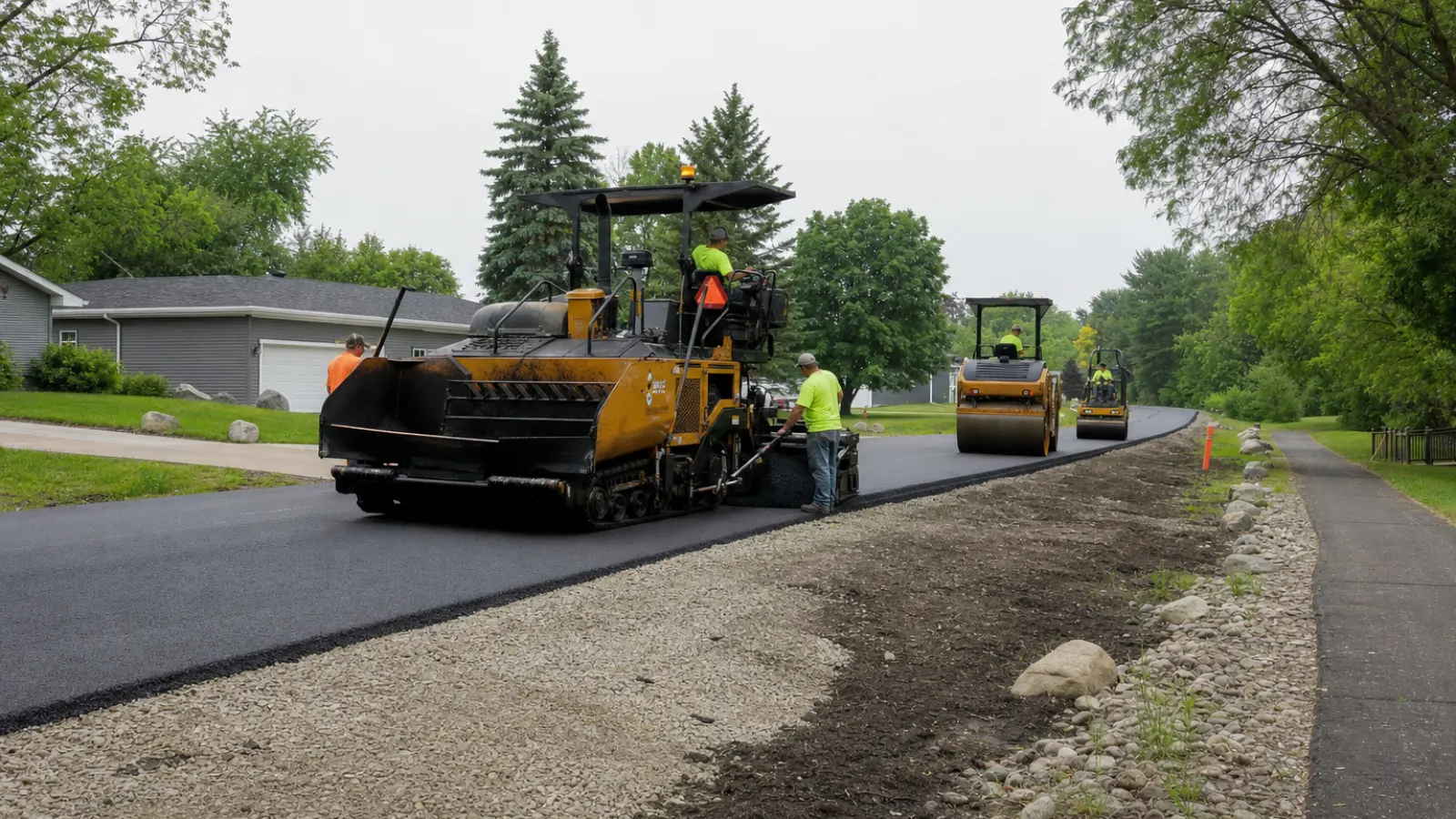
Asphalt pavement is one of the most adaptable surfaces for roads, parking areas, driveways, and pedestrian pathways. Its performance, however, depends on preparation beneath the visible surface as much as on the asphalt mix itself. Sommerset Paving provides commercial, residential, and municipal asphalt paving solutions, including new installations, repairs, resurfacing, and sealcoating. Property owners evaluating a Michigan Asphalt Paving Company should focus on drainage, structural design, construction quality, and maintenance rather than treating pavement as a simple surface product.
Why asphalt pavement matters in modern infrastructure
Well-designed asphalt pavement creates a relatively smooth, quiet, and maintainable travel surface. It can be installed in phases, repaired in localized areas, and renewed through resurfacing when the underlying structure remains sound. These characteristics make asphalt useful for residential driveways, commercial parking lots, industrial access routes, municipal streets, shared-use paths, and service areas.
Long-term performance is not determined by material selection alone. Traffic loading, soil strength, groundwater, surface drainage, climate, construction temperatures, and the quality of compaction all affect how quickly pavement develops defects. A pavement section designed for occasional passenger vehicles is not automatically suitable for delivery trucks, buses, emergency vehicles, or repeated turning movements.
Asphalt pavement composition and structural layers
Asphalt pavement normally functions as a layered system. Each layer distributes loads, controls deformation, and helps protect the layers below from water and environmental exposure.
Prepared subgrade
The subgrade is the existing soil or engineered fill supporting the pavement structure. It must be evaluated for strength, moisture sensitivity, drainage, and uniformity. Weak or wet areas may require undercutting, stabilization, improved drainage, or replacement with suitable material. A smooth appearance cannot compensate for an unstable subgrade.
Aggregate base
The aggregate base provides load distribution and contributes to drainage and frost resistance. It must be placed over a properly prepared subgrade and compacted in controlled lifts. Aggregate gradation, thickness, moisture condition, and compaction are important because poorly compacted base material can settle after paving.
Binder course
Where required by the design, a binder course is placed between the base and the surface course. This layer often uses a coarser asphalt mixture and contributes structural capacity. It is especially relevant where pavement must accommodate heavier traffic or greater section thickness.
Surface course
The surface course is the wearing layer exposed to tires, weather, water, and deicing materials. It provides ride quality, skid resistance, and protection for the underlying structure. The required pavement thickness and mix selection depend on traffic loads, soil conditions, climate, drainage, and applicable engineering requirements; there is no universal thickness suitable for every project.
Residential, commercial, and municipal applications
Residential asphalt work commonly includes driveways, private lanes, small parking areas, and pathway connections. The design must still account for subgrade conditions, edge support, water runoff, and vehicle loading. A driveway used by passenger cars has different demands from one regularly used by recreational vehicles, trailers, or delivery trucks.
Commercial paving includes parking lots, loading zones, entrances, fire lanes, warehouse approaches, and access roads. These areas experience concentrated wheel paths, turning forces, standing traffic, and heavier axle loads. Good layout and drainage are as important as the paving operation itself. Inadequate slopes, blocked inlets, or ponding near entrances can shorten pavement life even when the asphalt was initially placed correctly.
Municipal applications include local streets, roadway extensions, shoulders, alleys, trails, sidewalks with asphalt surfaces, and shared-use pathways. Public projects may involve staged traffic control, utility adjustments, accessibility requirements, inspection procedures, and coordination with other infrastructure. Professional paving practices help produce durable municipal pathways and road surfaces that can be maintained without unnecessarily disrupting users.
How asphalt installation is performed
1. Site assessment and planning
Installation begins with reviewing the existing pavement or proposed site, identifying utilities and drainage paths, assessing traffic demands, and determining grades and tie-in elevations. The scope should distinguish between cosmetic renewal and structural reconstruction. Existing failures that extend into the base or subgrade generally require more than a new surface layer.
2. Excavation, grading, and drainage
Unsuitable material is removed to the depth needed for the designed pavement section. Grading establishes the slopes required to direct water toward inlets, swales, curbs, or other approved discharge points. Drainage details may include catch basins, trench drains, underdrains, edge drains, or improved surface grades. Water should not be trapped beneath the pavement or allowed to remain on the finished surface.
3. Subgrade preparation
The subgrade is shaped, moisture-conditioned where appropriate, and compacted. Soft spots are identified and corrected rather than simply covered. In areas with expansive, frost-susceptible, or highly variable soils, the design may require stabilization or additional granular material.
4. Aggregate base installation
Aggregate is placed to the specified thickness and compacted in manageable lifts. The finished base should be firm, uniformly supported, and properly graded. Construction traffic must be controlled so that trucks and equipment do not create ruts or contaminate the prepared layer.
5. Asphalt placement and compaction
Asphalt mix is delivered, spread at the planned thickness, and compacted while it remains within the workable temperature range. Paving speed, delivery coordination, joint construction, roller pattern, and weather conditions all affect the result. Longitudinal and transverse joints require particular attention because poorly formed joints can admit water and become early failure locations.
6. Inspection and acceptance
Quality inspection should review line and grade, layer thickness, surface smoothness, joints, drainage, segregation, visible defects, and compaction evidence where specified. On larger projects, testing may include density, material sampling, or other quality-control procedures established by the project requirements. A finished surface should not be accepted solely on appearance.
Common asphalt pavement failures
Cracking may result from age-related oxidation, thermal movement, fatigue, reflective movement from an underlying layer, or inadequate structural support. Fine surface cracks are different from interconnected fatigue cracking, which often indicates deeper distress.
Potholes commonly develop when water enters cracks or weak areas, freezes, expands, and breaks loose material under traffic. Repeated tire loads enlarge the opening. Rutting appears as permanent depressions in wheel paths and may be associated with weak layers, inadequate compaction, or mix deformation under heavy loads.
Settlement can reflect poor backfill, utility trench movement, erosion, or subgrade failure. Oxidation hardens and embrittles asphalt exposed to air and sunlight, increasing susceptibility to cracking. Water infiltration is a common accelerator of several failure modes because it weakens granular layers, supports freeze-thaw damage, and reduces the pavement's ability to distribute loads.
Asphalt repair methods
Crack sealing uses a suitable sealant to limit water entry through selected cracks. It is most effective when cracks are relatively isolated and the surrounding pavement still has adequate structural integrity. It is not a substitute for correcting widespread base failure.
Patching may be appropriate for potholes and small areas of localized distress. The repair should remove loose and failed material, create sound edges, address the underlying cause, and place and compact replacement material properly. Simply filling a hole without correcting trapped water or unstable support often leads to premature recurrence.
Localized full-depth repair removes the asphalt and affected base or subgrade in a defined area. The weak material is replaced, the base is compacted, and new asphalt is installed. This approach is more disruptive than surface patching but can restore structural support where failure is confined.
Structural rehabilitation may involve extensive excavation, base reconstruction, stabilization, drainage improvements, overlays, or staged reconstruction. The appropriate treatment depends on the extent and depth of distress identified through inspection.
Resurfacing versus complete pavement replacement
Resurfacing, often called an asphalt overlay, places a new asphalt layer over an existing pavement after repairs, cleaning, and preparation. It can be efficient when the existing pavement has adequate load-bearing capacity, failures are limited, grades remain acceptable, and drainage can be maintained. Cracks and localized defects generally need treatment before the overlay to reduce the risk of reflective cracking.
Complete replacement is more appropriate when the existing pavement has widespread fatigue cracking, severe rutting, extensive settlement, failed base material, recurring water damage, or unsuitable grades. Replacement permits reconstruction of the subgrade, aggregate base, drainage, and asphalt layers. It requires more excavation, cost, time, and site disruption, but a surface-only treatment over a failed structure is unlikely to provide durable value.
| Treatment | Best suited to | Main limitation |
|---|---|---|
| Repair | Localized cracks, potholes, or isolated structural defects | Does not resolve widespread underlying failure |
| Resurfacing | Structurally sound pavement with aging or surface-level distress | Existing base and subgrade problems may return through the overlay |
| Replacement | Extensive structural failure, settlement, poor drainage, or unsuitable pavement layers | Higher cost, excavation, and construction disruption |
Sealcoating and preventive maintenance
Sealcoating applies a protective treatment to an asphalt surface to reduce exposure to sunlight, air, water, and some contaminants. It can improve uniformity and help slow oxidation on suitable pavement. Crack sealing, sweeping, drainage cleaning, edge maintenance, and timely patching are also important parts of a preventive maintenance program. Sommerset Paving's commercial, residential, and municipal services include sealcoating as well as paving, repair, and resurfacing work.
Sealcoating is not a structural repair method. It cannot rebuild a failed base, correct settlement, eliminate deep fatigue cracking, or restore pavement that has lost load-bearing capacity. It should be applied only when the surface condition, weather, curing conditions, and product requirements are appropriate. Maintenance timing should be based on actual pavement condition rather than a fixed assumption that every site requires the same treatment.
Michigan climate and pavement performance
Michigan pavement must withstand freeze-thaw cycles, rapid temperature changes, winter moisture, deicing materials, and seasonal variations in ground conditions. Water entering cracks or poorly sealed joints can freeze and expand, while thaw periods may temporarily reduce support in moisture-sensitive soils. Spring conditions can expose weaknesses that were less visible during dry or frozen periods.
Effective drainage is therefore fundamental. Finished grades should move water away from the pavement, and drainage structures should remain clear. Edge areas, utility cuts, and pavement transitions deserve close attention because they can concentrate water and loads. Mix selection, layer thickness, compaction, and construction timing should reflect project conditions and applicable local requirements rather than relying on a generic paving detail.
Selecting a professional asphalt paving contractor
Owners should request a clear scope describing excavation, subgrade treatment, aggregate base, asphalt layers, drainage work, joints, traffic control, and cleanup. A contractor should be able to explain how the proposed section responds to expected traffic and site conditions. Comparing bids only by surface thickness or total price can hide differences in preparation and structural work.
Whether an owner is evaluating a residential installer or an Ann Arbor paving contractor, useful questions include: How will weak areas be identified? What drainage improvements are needed? How will the base be compacted? Which pavement thickness is proposed, and why? How will existing cracks or utility trenches be treated? What inspection or quality-control steps are included?
Experience with the relevant project type also matters. Commercial lots, residential driveways, and municipal pathways have different access, traffic, specification, and scheduling requirements. A professional proposal should distinguish maintenance work from structural rehabilitation and avoid promising a service life without accounting for loading, drainage, soil, climate, and maintenance.
Quality control and long-term performance
Durable pavement is the result of coordinated decisions. Adequate thickness must be supported by a stable subgrade and compacted aggregate base. Asphalt must be placed and compacted at suitable temperatures, with attention to joints and edges. Drainage must protect the pavement from standing water and subsurface saturation. Inspection should confirm that the constructed work matches the design intent.
Owners can extend performance by keeping drainage features clear, limiting uncontrolled water discharge, monitoring cracks and depressions, and addressing small defects before they become structural. Maintenance records are useful because they show where recurring problems occur and help distinguish isolated surface distress from broader movement or drainage failure.
Environmental and economic value of maintenance
Reclaimed asphalt pavement can be processed and incorporated into new asphalt mixtures or used in appropriate base and shoulder applications, subject to project specifications and material requirements. Reuse reduces demand for virgin aggregate and can reduce hauling associated with disposal and replacement. Its suitability depends on gradation, binder characteristics, contamination control, and the design of the new mixture.
Preventive maintenance also has an economic and environmental benefit. Extending the useful condition of an existing pavement can defer excavation, reduce material consumption, limit truck movements, and minimize disruption to residents or businesses. The most cost-effective treatment is not always the least expensive initial treatment; it is the option that addresses the actual failure mechanism and preserves sound pavement before deterioration spreads.
Conclusion
Asphalt paving and repair services cover a range of work, from a residential driveway installation to municipal roadway rehabilitation. The common requirement is a pavement system designed for its site and maintained according to its condition. Proper drainage, subgrade preparation, aggregate placement, asphalt thickness, compaction, inspection, and timely repairs determine whether a pavement remains smooth and serviceable or develops avoidable failures. Contractors such as Sommerset Paving can support commercial, residential, and municipal projects through new paving, repairs, resurfacing, and sealcoating, while owners and authorities must ensure that the selected treatment matches the pavement's structural needs and operating environment.