Hydroseeding and Slope Stabilization: A Practical Guide for Construction Sites
A practical construction guide to hydroseeding, slope protection, revegetation, soil preparation and environmental installation methods for effective erosion control.
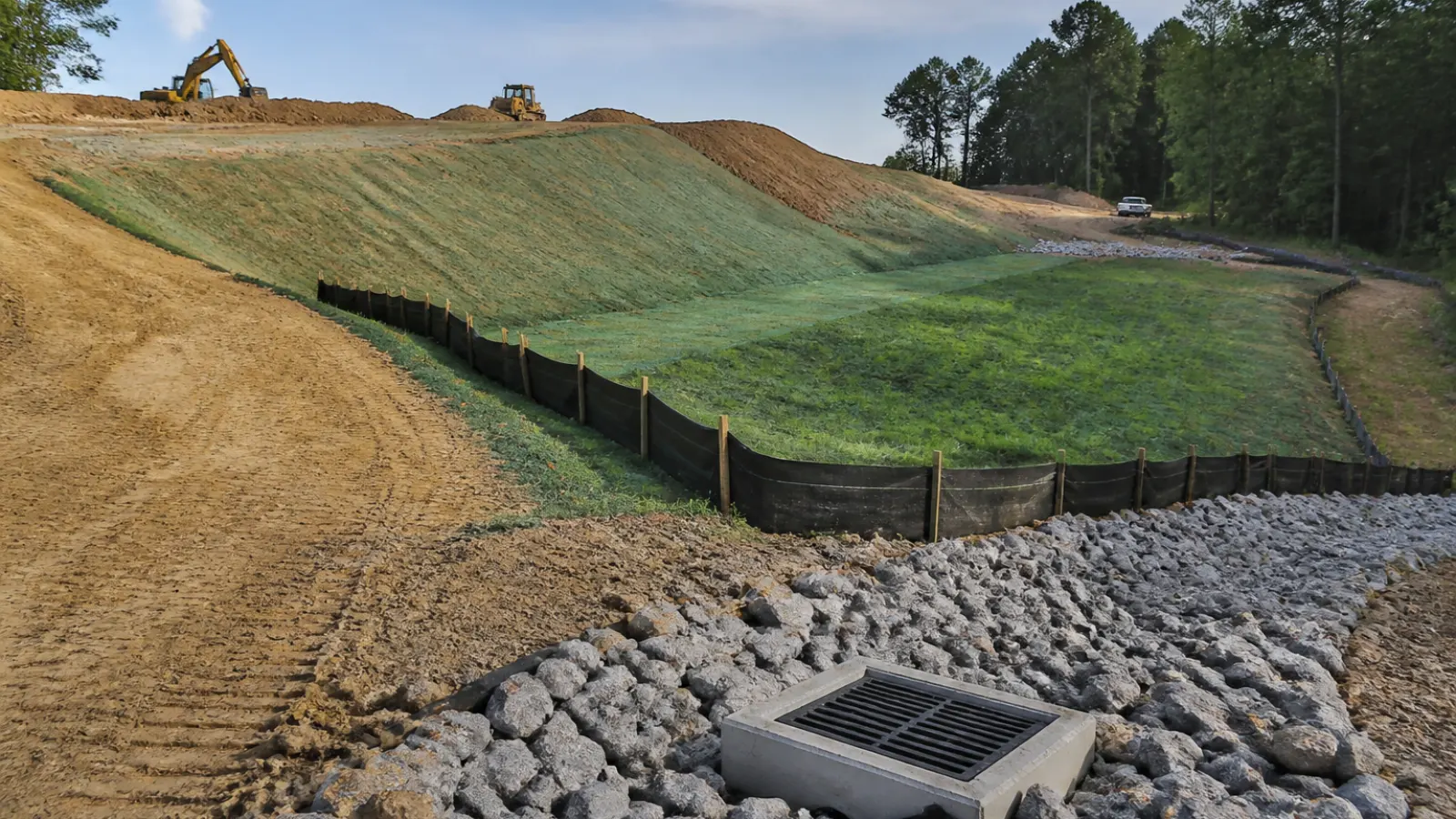
Construction projects often leave behind exposed slopes, embankments, disturbed soil, and areas that require long-term stabilization. Establishing vegetation on these surfaces is an important part of preventing erosion and restoring land after earthwork. Contractors can coordinate with specialists such as Syman, whose environmental installation services support construction site stabilization, erosion-control measures, and related environmental management. Understanding how hydroseeding, slope preparation, and protective systems work together can help project teams develop more effective solutions for challenging terrain.
Why Slopes Require Special Attention During Construction
A relatively flat construction site and a steep embankment behave differently during rainfall. On sloping ground, gravity encourages water to move downhill, potentially increasing runoff velocity and the amount of soil transported.
Grading, excavation, and vegetation removal can make slopes particularly vulnerable. Without suitable protection, rainfall may create small channels called rills. As water becomes concentrated, these channels can deepen into gullies and progressively damage the finished surface.
Erosion can also expose buried infrastructure, undermine drainage outlets, and deposit sediment in nearby roads or waterways.
For these reasons, slope stabilization should be considered during construction planning rather than postponed until the final landscaping phase.
Understanding Hydroseeding as a Soil Stabilization Method
Hydroseeding is a vegetation-establishment technique that applies a mixture of seed, water, mulch, and other specified materials to prepared soil using specialized spraying equipment.
The mixture may contain fertilizer, soil amendments, and tackifiers depending on site requirements.
Unlike conventional broadcast seeding, hydroseeding can distribute materials across irregular terrain and larger areas using a spray application.
How hydroseeding supports erosion control
Hydroseeding contributes to erosion control through two stages.
Initially, the mulch and associated materials may provide some temporary surface protection, depending on the formulation and application rate.
As vegetation becomes established, roots help bind the soil, while plant cover reduces the direct impact of rainfall and slows surface runoff.
However, hydroseeding should not be considered an immediate replacement for properly designed temporary erosion-control measures.
A newly seeded slope may remain vulnerable until adequate vegetation develops.
Where hydroseeding is commonly used
Typical applications include:
-
Highway and road embankments
-
Residential subdivision grading
-
Commercial construction sites
-
Utility corridors and pipeline restoration
-
Drainage channels with suitable hydraulic conditions
-
Industrial site restoration
-
Disturbed land requiring revegetation
The suitability of hydroseeding depends on slope geometry, soil conditions, runoff characteristics, and the intended final land use.
Preparing the Soil Before Hydroseeding
Successful revegetation begins with the condition of the soil.
Spraying seed onto compacted, unstable, or unsuitable material may produce poor establishment even when the hydroseeding mixture is properly prepared.
Soil testing and evaluation
Before application, project teams should consider soil texture, compaction, drainage, pH, organic matter, and nutrient availability.
Construction activities often remove or mix topsoil with underlying material. The resulting surface may not provide suitable conditions for plant growth.
Where necessary, soil amendments or suitable topsoil can improve the growing environment.
Grading and surface preparation
The finished slope should be evaluated for erosion channels, loose material, unstable areas, and concentrated drainage paths.
Surface preparation may include loosening compacted soil, removing debris, correcting localized erosion, and establishing suitable surface roughness.
These activities help improve seed-to-soil contact and reduce the likelihood that the applied mixture will be washed away.
Selecting appropriate vegetation
Seed selection should reflect local rainfall patterns, temperature, soil characteristics, sunlight exposure, and long-term maintenance expectations.
A seed mixture suitable for a frequently irrigated residential landscape may not be appropriate for a remote highway embankment.
Native or locally adapted species may be beneficial where compatible with project objectives and regulatory requirements.
Hydroseeding in Boise and Similar Regional Conditions
Local climate is an important consideration when planning revegetation.
In the Boise area, seasonal precipitation patterns, summer heat, irrigation availability, and soil conditions can affect germination and plant establishment.
Contractors evaluating boise hydroseeding should consider application timing, appropriate seed mixtures, soil preparation, and the availability of moisture during the establishment period.
Choosing the application season
Planting schedules should be developed around the selected species and expected weather conditions.
Applying seed immediately before unfavorable temperatures or extended dry conditions can reduce establishment success.
Heavy rainfall shortly after application may also displace mulch and seed before vegetation becomes established.
Planning for irrigation and maintenance
Hydroseeding is an installation method, not a guarantee that vegetation will grow successfully without follow-up care.
Depending on the climate and species, establishment may require irrigation, monitoring, reseeding, weed control, and repair of localized erosion.
The maintenance plan should identify who is responsible for these activities and how successful stabilization will be assessed.
Combining Hydroseeding With Other Slope Protection Systems
Hydroseeding alone is not appropriate for every slope.
Steep gradients, concentrated water flow, highly erodible soil, and unstable ground may require additional engineered measures.
Erosion-control blankets
Biodegradable blankets can provide temporary surface protection while vegetation becomes established.
They help reduce direct rainfall impact and may limit movement of surface soil when properly selected, anchored, and installed.
Blanket type, anchoring arrangement, and expected service life should match the site conditions.
Turf reinforcement mats
Turf reinforcement mats may be considered where established vegetation must resist greater hydraulic forces.
These systems combine vegetation with a reinforcing structure, but their performance depends on product selection, installation, vegetation establishment, and hydraulic design.
Diversion berms and drainage channels
Surface water should be managed so that runoff does not become unnecessarily concentrated on vulnerable slopes.
Diversion berms, swales, lined channels, and stable outlets can direct water toward appropriate drainage infrastructure.
Poorly designed diversions may create erosion at their discharge points, so the complete drainage route must be considered.
Retaining structures and engineered stabilization
Where slope stability is a geotechnical concern, vegetation and surface erosion-control products are not substitutes for structural stabilization.
Retaining walls, soil reinforcement, drainage systems, and other engineered solutions may be necessary.
A qualified engineer should assess slopes where instability, excessive groundwater pressure, or significant earth movement is suspected.
Managing Stormwater During Vegetation Establishment
The period between hydroseeding application and established plant growth is particularly important.
During this stage, soil may still be exposed to erosion from intense rainfall or concentrated runoff.
Temporary controls can include sediment barriers, inlet protection, diversion measures, mulch, and other site-appropriate practices.
These measures should be coordinated with the construction site's Stormwater Pollution Prevention Plan (SWPPP), where required.
A SWPPP identifies relevant pollution risks, controls, inspection procedures, and corrective-action responsibilities.
It should reflect changing site conditions and the sequence of construction activities.
How BMP Installation Supports Effective Revegetation
Best Management Practices (BMPs) help reduce erosion and manage sediment movement during construction.
For a slope revegetation project, the appropriate combination may include upstream runoff diversion, surface protection, sediment capture, and progressive stabilization.
The placement of these measures matters.
For example, a sediment barrier at the bottom of a slope may help capture transported material, but it does not prevent soil from being detached higher on the slope.
Similarly, hydroseeding may support long-term vegetation establishment without adequately protecting an area exposed to concentrated runoff.
A coordinated approach addresses both the source of erosion and the movement of sediment.
Inspecting Hydroseeded and Stabilized Areas
Once stabilization measures are installed, inspections help determine whether they are performing as intended.
Project teams should examine the slope for:
-
Uneven vegetation establishment
-
Exposed or washed-out soil
-
Rills and developing gullies
-
Displaced mulch or erosion-control blankets
-
Damaged anchoring systems
-
Concentrated drainage
-
Sediment accumulation
-
Areas requiring reseeding or repair
Inspection frequency should follow applicable permits and project requirements.
Additional inspections may be appropriate after significant storms or changes in drainage conditions.
Corrective action and documentation
When a problem is identified, the project team should investigate its cause.
Repeated washouts may indicate that runoff is not adequately controlled rather than a problem with the seed mixture itself.
Corrective measures could involve drainage modifications, improved surface protection, regrading, or renewed vegetation establishment.
Documenting inspections and completed repairs helps demonstrate that stabilization is being actively managed.
Environmental Compliance and Construction Responsibilities
Hydroseeding and erosion-control installations may form part of a project's environmental compliance strategy.
Applicable requirements can arise from federal, state, and local stormwater regulations, grading permits, and project-specific approvals.
Some construction activities require permit coverage and a SWPPP, depending on the nature and extent of land disturbance and other regulatory factors.
Requirements for inspections, stabilization timing, maintenance, and documentation vary by jurisdiction.
Contractors should verify current obligations with the appropriate permitting authority and qualified professionals.
No individual stabilization product or installation method automatically guarantees regulatory compliance.
Planning Hydroseeding Within the Construction Schedule
One of the most effective ways to reduce erosion risk is to minimize the period during which soil remains exposed.
Project managers can coordinate grading, drainage installation, hydroseeding, and final stabilization as connected activities.
Rather than waiting until every part of a large development is complete, finished sections can often be stabilized progressively.
This approach can reduce the area requiring temporary erosion controls and limit the amount of rework after rainfall.
Budget considerations
A complete stabilization budget should consider more than the initial application.
Relevant costs may include:
-
Soil preparation and amendments
-
Seed and mulch selection
-
Hydroseeding application
-
Erosion-control blankets or reinforcement
-
Drainage improvements
-
Irrigation and establishment care
-
Inspections and maintenance
-
Corrective work and reseeding
The lowest initial installation cost may not represent the lowest overall project cost if the selected method requires repeated repairs.
Common Hydroseeding and Slope Stabilization Mistakes
Several recurring mistakes can reduce the effectiveness of a stabilization program.
Applying seed before final grading: Later earthwork can destroy newly established vegetation and require repeated application.
Ignoring concentrated runoff: Hydroseeding cannot compensate for uncontrolled drainage that continually washes soil away.
Using an unsuitable seed mixture: Vegetation may establish poorly when species are incompatible with local climate or soil conditions.
Skipping soil preparation: Compacted or nutrient-poor soil can prevent adequate root development.
Assuming immediate erosion protection: Newly hydroseeded surfaces may require temporary protection until vegetation becomes established.
Failing to maintain the area: Irrigation deficiencies, washouts, weeds, and sparse vegetation should be addressed before they become larger problems.
Avoiding these mistakes requires coordination between designers, contractors, environmental specialists, and maintenance personnel.
Conclusion
Hydroseeding can be an effective component of construction site stabilization when it is supported by appropriate soil preparation, drainage management, seed selection, and ongoing maintenance.
For slopes and other disturbed areas, the strongest approach combines vegetation establishment with suitable erosion-control measures and properly designed stormwater infrastructure.
By planning stabilization early, inspecting completed work, and adapting to site conditions, construction teams can reduce soil loss, protect surrounding land and waterways, and support compliance with applicable environmental requirements.
The objective is not simply to apply seed to exposed soil. It is to establish a durable, maintainable surface that performs as intended after construction is complete.