Investing in Digital Infrastructure: Why Data Centers Are the Most Critical Real Estate Asset of the Next Decade
Data centers have transcended their niche status to become the foundational real estate of the digital economy. For investors and developers, understanding the drivers behind digital infrastructure real estate is essential for capitalizing on the most significant shift in the property landscape in a generation.
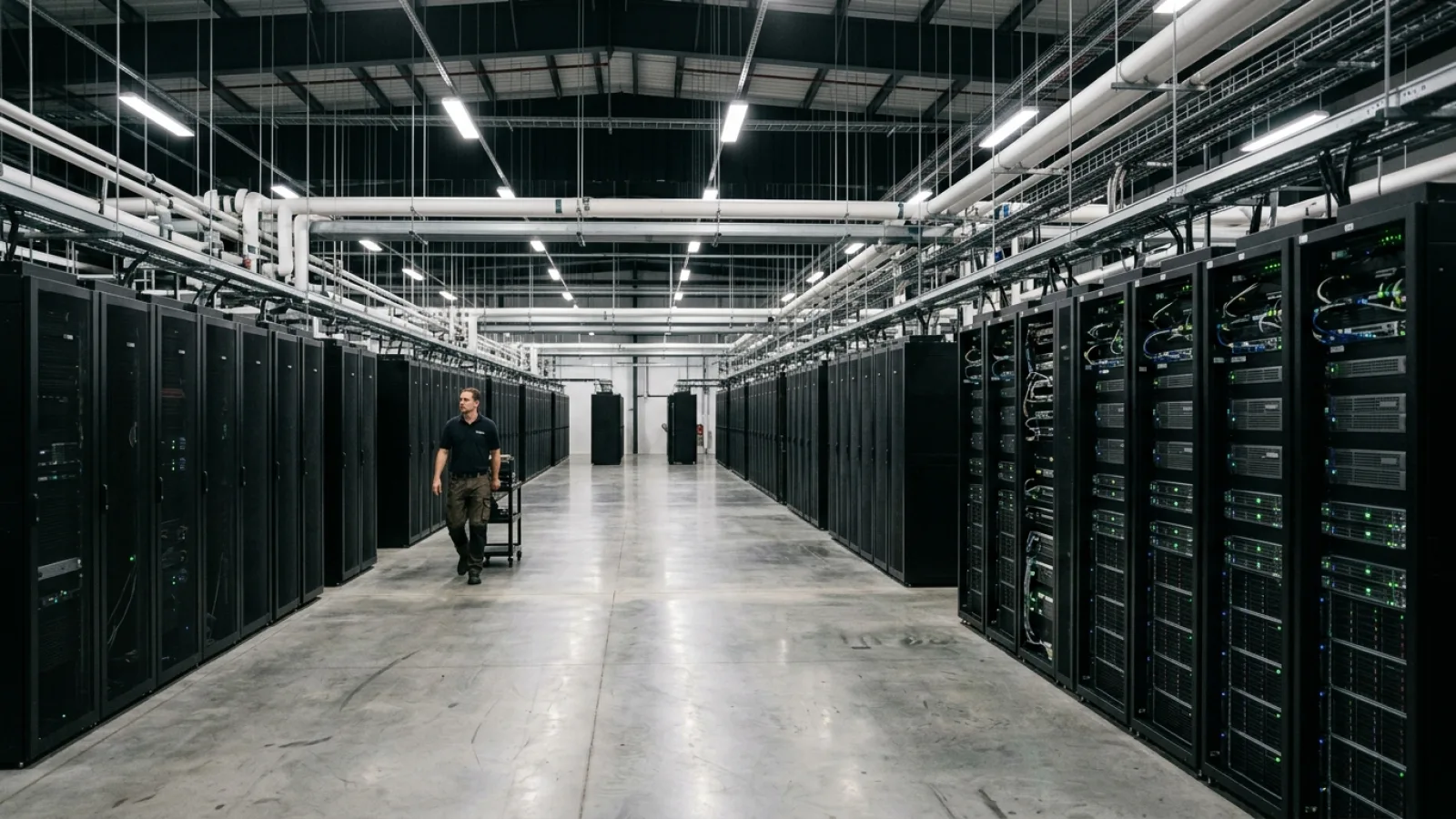
The Paradigm Shift: From Traditional CRE to Digital Infrastructure Real Estate
For centuries, the concept of prime real estate has been anchored in physical presence—a skyscraper in a financial district, a retail flagship on a bustling avenue, a logistics hub near a major port. While physical location remains important, the most valuable properties of the 21st century are increasingly defined by a different set of criteria: connectivity, power, and data processing capabilities. We are witnessing a fundamental paradigm shift where the physical backbone of the global digital economy—the data center—is emerging as the most critical real estate asset class. These facilities are the factories, warehouses, and highways of information, and leading global data center providers are constructing the foundational assets for this new era. This article explores the long-term investment thesis for digital infrastructure real estate, outlining why these specialized buildings represent an unparalleled opportunity for investors, developers, and enterprises over the next decade.
Redefining "Location, Location, Location" for the Digital Age
The classic real estate mantra has not disappeared; it has evolved. For data centers, a prime location is less about foot traffic or skyline visibility and more about technical and logistical advantages. The new pillars of a desirable location include proximity to dense fiber optic networks for low-latency connectivity, access to stable and abundant power grids capable of delivering hundreds of megawatts, and a favorable regulatory environment that supports large-scale development. Furthermore, geographic location is critical for mitigating risks from natural disasters and for complying with data sovereignty laws that dictate where user data must be stored. In this new landscape, a plot of land in rural Virginia or Oregon near major fiber routes and substations can be far more valuable than prime office space in a downtown core.
How Data Centers Underpin Every Modern Industry
It is a common misconception to view data centers as assets exclusive to the technology sector. In reality, they are core infrastructure for the entire modern economy. The financial services industry relies on them for high-frequency trading and secure transaction processing. Healthcare systems use them to store and analyze patient records and medical imaging. E-commerce platforms depend on their uptime and scalability to handle billions of transactions, while media companies stream terabytes of content from them every second. From precision agriculture to autonomous logistics, every industry is undergoing a digital transformation that generates, processes, and stores vast amounts of data. This makes data centers a non-discretionary utility, as essential to business operations as electricity and water.
Measuring Value Beyond Square Footage: Power, Cooling, and Security
Valuing a data center using traditional commercial real estate metrics like price per square foot is fundamentally flawed. The true value of this specialized asset class is measured in technical specifications. Investors and operators focus on metrics like power capacity, measured in megawatts (MW), and power density, measured in kilowatts (kW) per rack. Another critical metric is Power Usage Effectiveness (PUE), a ratio that measures energy efficiency by dividing the total facility power by the IT equipment power. A lower PUE indicates a more efficient—and therefore more valuable—facility. Furthermore, value is determined by operational resilience, often categorized by tier levels (Tier I-IV) that denote redundancy and fault tolerance, and multi-layered physical security protocols that protect the mission-critical hardware within.
Core Drivers Fueling the Data Center Construction Boom
The surging demand for data centers is not a cyclical trend tied to economic cycles; it is a secular shift driven by fundamental and permanent changes in technology, business operations, and consumer behavior. This sustained, long-term growth is powered by several powerful tailwinds that show no signs of slowing.
The Insatiable Demand from Cloud Computing (Hyperscalers)
The most significant driver of data center demand comes from the world’s largest technology companies, often called “hyperscalers”—Amazon Web Services (AWS), Microsoft Azure, and Google Cloud Platform. These giants are in a constant race to expand their global cloud footprint, requiring massive, hyper-efficient facilities known as hyperscale data centers. These buildings, often exceeding one million square feet and consuming over 100 MW of power, are built to achieve economies of scale that are impossible for individual enterprises. As more companies migrate their IT infrastructure from on-premise servers to the cloud, the demand for these colossal facilities continues to accelerate, fueling a global construction boom.
Artificial Intelligence and Machine Learning: The New Power Users
The rise of Artificial Intelligence (AI) and Machine Learning (ML) represents the next great catalyst for the data center industry. Training large language models and other complex AI algorithms is an incredibly compute-intensive process that requires unprecedented levels of power. This translates directly into a need for data centers equipped with high-density racks that can support and cool the latest generation of GPUs and specialized processors. This demand is creating a new, premium segment within the tech real estate market focused on AI infrastructure, where power density and advanced liquid cooling solutions command higher lease rates and drive new construction specifications.
The Internet of Things (IoT) and the Rise of Edge Computing
The proliferation of billions of connected devices—from smart home assistants and wearables to industrial sensors and autonomous vehicles—is generating a tsunami of IoT data. Sending all this information to a centralized cloud data center for processing is often inefficient and too slow for real-time applications. This has given rise to edge computing, an architecture that involves deploying smaller, localized data centers closer to where data is generated and consumed. These “edge” facilities reduce latency and bandwidth costs, enabling applications like smart city management, remote surgery, and factory automation. This trend is creating a new frontier of data center investment in secondary and tertiary markets.
5G Rollout and the Need for Low-Latency Infrastructure
The global deployment of 5G networks is inextricably linked to the growth of edge computing. The ultra-low latency promised by 5G is the key that will unlock a new generation of applications, including augmented reality, connected cars, and real-time industrial analytics. However, to deliver on this promise, the computational infrastructure must be located close to the end-user. A 5G signal is only as fast as the network's ability to process the data it carries. This symbiotic relationship means that as 5G coverage expands, so too will the demand for a distributed network of edge data centers, further cementing the role of digital infrastructure real estate.
Understanding the Data Center Investment Landscape
For investors and corporate real estate executives looking to capitalize on this trend, the data center market offers several distinct asset types and investment models. Navigating this landscape requires a specialized understanding of the technical and operational nuances that define this unique real estate asset class.
Key Asset Types: Hyperscale, Colocation, and Edge Facilities
The data center market is primarily composed of three asset types. Hyperscale data centers are massive facilities typically leased to a single tenant, such as a major cloud provider. Colocation facilities are multi-tenant environments where enterprises can lease space, power, and cooling for their own servers, ranging from a single rack to a private suite. Edge data centers are smaller, distributed facilities designed to bring compute and storage closer to end-users to support low-latency applications. Each type offers a different risk/return profile, with hyperscale providing stable, long-term income from credit-worthy tenants and colocation offering diversification across multiple clients.
Investment Models: REITs, Private Equity, and Direct Development
There are several primary avenues for investing in digital infrastructure real estate. Publicly-traded data center Real Estate Investment Trusts (REITs) offer liquidity and diversification for public market investors. Private equity funds have been increasingly active, acquiring existing operators or funding new development platforms to build portfolios of assets. For those with significant capital and expertise, direct development offers the highest potential returns but also carries the most risk. This involves acquiring land, securing power and permits, and managing the complex construction process from the ground up.
Critical Due Diligence Factors for Investors
Investing in data centers requires a rigorous due diligence process that extends far beyond a typical property assessment. Key factors include:
- Power Availability and Cost: Confirming the availability of scalable, reliable, and cost-effective power from local utilities is the most critical first step.
- Fiber Connectivity: Assessing the diversity and density of fiber optic networks from multiple carriers is essential for ensuring robust connectivity.
- Local Zoning and Permitting: Navigating local regulations can significantly impact project timelines and feasibility.
- Environmental Risk: Evaluating the potential for natural disasters such as earthquakes, floods, or hurricanes is crucial for ensuring operational uptime.
- Geopolitical Stability: For international investments, the political and economic stability of the region is a key consideration for long-term asset security.
Construction and Development Challenges in the Digital Era
While the demand for data centers is clear, building and scaling these critical facilities is fraught with complexity. This is where specialized expertise becomes a decisive competitive advantage, turning potential roadblocks into successful projects.
Securing Power: The Biggest Bottleneck for Growth
The single greatest constraint on new data center development today is power. The electrical grids in many prime markets are reaching their capacity limits. Securing a commitment for 50, 100, or even 200+ megawatts of power from a utility can take years of planning and negotiation. This power procurement process has become the primary gating factor for growth, often dictating where and when new facilities can be built. Developers who can successfully navigate this complex energy landscape will lead the market.
Sustainable Design: Meeting ESG Goals in a Power-Intensive Industry
With their immense energy consumption, data centers face increasing scrutiny regarding their environmental impact. In response, the industry is at the forefront of sustainable innovation. Operators are making massive investments in renewable energy procurement, such as solar and wind power purchase agreements. They are also pioneering advanced, water-efficient cooling systems and exploring ways to recapture waste heat for use in local district heating networks. For modern investors, strong Environmental, Social, and Governance (ESG) credentials are no longer a bonus but a requirement, making sustainable data centers a more attractive and future-proof investment.
The Specialized Skillset for Data Center Construction
Constructing a data center is one of the most complex challenges in the building industry. It is not analogous to building an office or a warehouse. It requires deep, integrated expertise in mission-critical electrical and mechanical engineering to design redundant power and cooling systems that guarantee near-100% uptime. Project management must be flawless to coordinate long-lead-time equipment procurement and manage a highly specialized workforce. The margin for error is zero, as even a minor flaw can lead to catastrophic downtime for tenants.
The Future Outlook: What's Next for Digital Infrastructure Real Estate?
The evolution of digital infrastructure is relentless. As we look to the next decade, several key trends will shape the design, operation, and investment strategy for this dynamic asset class.
The Emergence of Liquid Cooling and High-Density Racks
The extreme power demands of AI and high-performance computing are pushing the physical limits of traditional air cooling. To manage the heat generated by the next generation of processors, the industry is rapidly adopting liquid cooling technologies. These systems, which include direct-to-chip cooling and full immersion of servers in dielectric fluids, are far more efficient than air. This technological shift will require new facility designs and retrofits, creating opportunities for forward-thinking developers and investors.
AI-Driven Data Center Operations and Management
Just as AI is a primary driver of data center demand, it is also becoming a critical tool for managing them. AI-powered Data Center Infrastructure Management (DCIM) platforms can now optimize cooling systems in real-time, predict equipment failures before they happen, and enhance energy efficiency. This use of AI to manage AI workloads creates a virtuous cycle, improving operational reliability and reducing operating costs, thereby increasing the net operating income and value of the asset.
The Long-Term Viability of Data Centers as a Core Asset
The fundamental thesis for investing in data centers remains simple and powerful: as long as global data generation continues its exponential growth, the need for the physical infrastructure to store, process, and transmit that data will grow in tandem. Unlike other real estate sectors that may be subject to shifts in work habits or consumer preferences, the demand for data is a one-way street. This secures the data center's place as a core real estate asset for decades to come, akin to essential utilities like power plants and transportation networks.
Conclusion
Data centers have officially transcended their status as a niche, alternative asset. They are the foundational real estate of the digital economy, the non-negotiable infrastructure upon which every modern industry is built. The secular trends of cloud adoption, AI proliferation, IoT expansion, and 5G connectivity are not fleeting; they are long-term, structural shifts that will fuel demand for decades. For investors, developers, and corporate real estate executives, understanding the drivers, complexities, and opportunities within digital infrastructure real estate is no longer optional—it is essential for capitalizing on the most significant and durable shift in the property landscape in a generation.
FAQ
Q: What is the primary difference between investing in data centers and traditional commercial real estate?
A: The primary difference lies in the value drivers. Traditional CRE value is often tied to location, foot traffic, and tenant aesthetics. Data center value is driven by technical specifications: power availability (megawatts), cooling capacity, fiber connectivity, and operational reliability (uptime). Tenants are also typically long-term and mission-critical.
Q: How does the rise of AI specifically impact data center demand?
A: AI workloads, especially model training, are incredibly power-intensive. This creates demand for data centers with higher power densities (more kW per rack) and advanced cooling solutions, such as liquid cooling. It's not just about more space, but more powerful and specialized space.
Q: Are data centers a sustainable investment from an ESG perspective?
A: While data centers are energy-intensive, the industry is a leader in procuring renewable energy and innovating in efficiency. Leading operators are heavily focused on ESG goals, developing new cooling methods and designs to minimize their carbon footprint, making them an increasingly viable option for sustainability-focused investors.
Q: What are the main risks associated with digital infrastructure real estate?
A: Key risks include securing sufficient power in constrained markets, technological obsolescence if facilities aren't designed for future power densities, regulatory hurdles, and high upfront capital expenditure. Additionally, physical and cybersecurity threats are a constant operational risk that must be managed.