Powering the Future: Parker’s Role in Aviation Electrification
A deep dive into the engineering challenges and technological advancements of aviation electrification, highlighting Parker's critical contributions to flight control, energy management, and the development of next-generation aircraft.
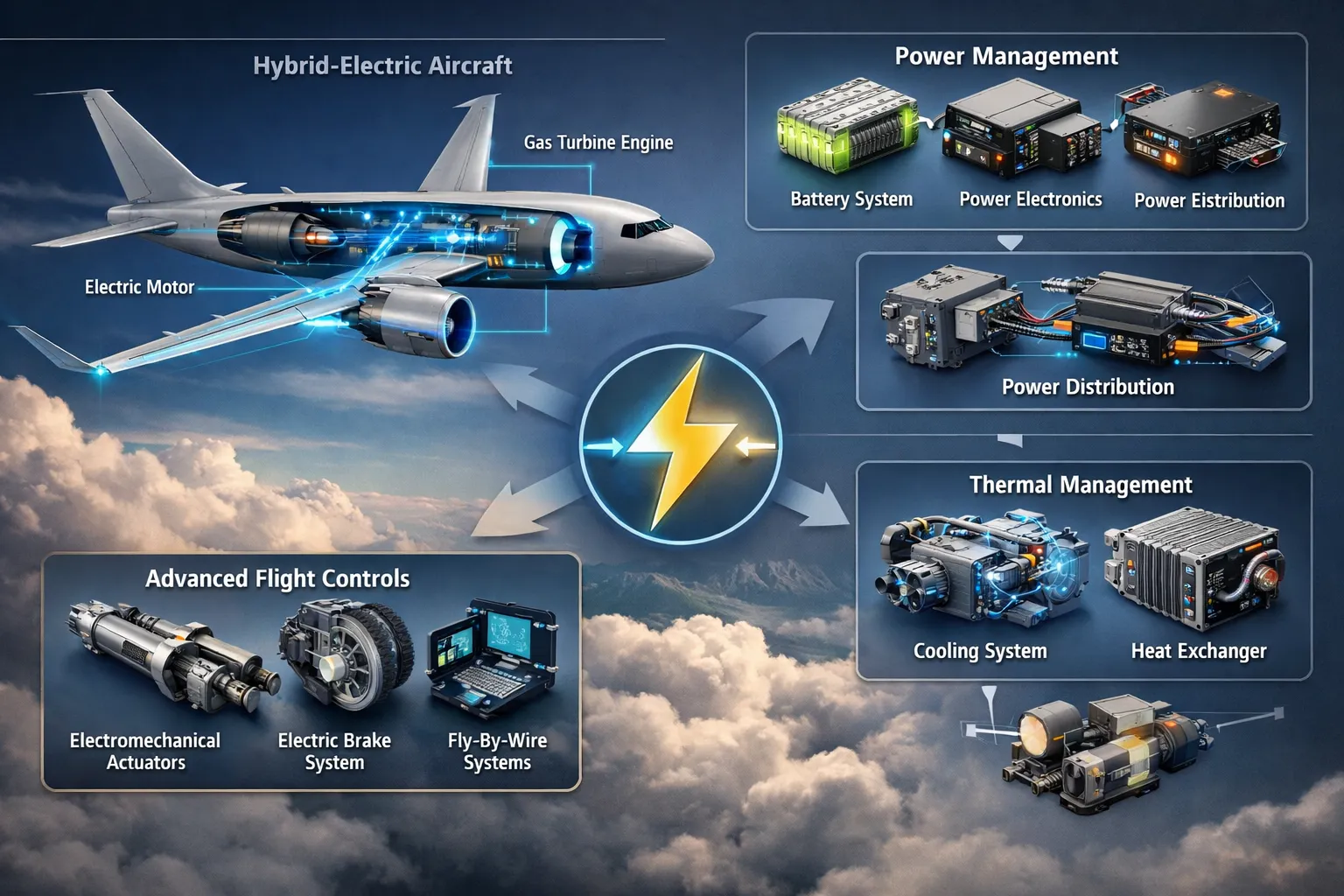
The aviation industry stands at a technological inflection point, embarking on its most significant transformation since the dawn of the jet age. Propelled by a global imperative for sustainability and a relentless pursuit of operational efficiency, the sector is progressively shifting from conventional hydraulic, pneumatic, and mechanical systems toward integrated electrical architectures. This transition, broadly termed aviation electrification, is not merely an incremental upgrade but a fundamental rethinking of how aircraft are designed, powered, and operated. Realizing this vision requires profound engineering expertise and robust technological solutions, placing established leaders like Parker Hannifin at the center of this evolution.
As aircraft become more complex and power-hungry, the limitations of traditional architectures become more apparent. Electrification offers a pathway to reduced emissions, lower noise, decreased maintenance costs, and enhanced aircraft performance. However, this path is laden with immense technical challenges, from energy storage and thermal management to system integration and certification. This article provides an analytical overview of the rise of aviation electrification, examines the foundational engineering contributions of Parker in enabling this shift, explores the critical challenges that must be overcome, and discusses the future outlook for an electrically powered aviation ecosystem.
The Inexorable Rise of Aviation Electrification
The concept of electrifying aircraft systems is not new, but its scope and ambition have expanded dramatically. The evolution from the More-Electric Aircraft (MEA) to concepts of All-Electric Aircraft (AEA) and hybrid-electric propulsion represents a paradigm shift driven by tangible benefits.
From More-Electric to All-Electric Architectures
The journey toward full electrification began with the More-Electric Aircraft (MEA) concept, which focuses on replacing traditionally powered systems with electrical counterparts. In a conventional aircraft, power is drawn from the engines through multiple means: bleed air for environmental control and anti-icing, mechanical shafts for generators and pumps, and hydraulic systems for actuation. The MEA architecture simplifies this by increasing reliance on a robust electrical power system. Key examples include:
- Flight Controls: Replacing bulky, complex hydraulic actuators with more efficient electromechanical actuators (EMAs) or electro-hydrostatic actuators (EHAs).
- Environmental Control Systems: Utilizing electric compressors instead of bleed air from the engines, improving engine efficiency.
- Braking and Landing Gear: Shifting to electric braking and actuation systems, reducing hydraulic fluid risks and maintenance.
The ultimate goal is the All-Electric Aircraft (AEA), where nearly all non-propulsive systems are electric, and propulsion itself is either fully electric or hybrid-electric. This architecture promises maximum efficiency, simplified maintenance, and greater design flexibility.
Electric and Hybrid-Electric Propulsion Systems
The most transformative aspect of aviation electrification is its application to propulsion. While pure battery-electric propulsion is currently feasible only for smaller, short-range aircraft due to battery energy density limitations, hybrid-electric systems offer a viable pathway for regional and even single-aisle aircraft.
Hybrid-electric propulsion architectures combine gas turbines with electric motors and generators. These can be configured in several ways:
- Series Hybrid: A gas turbine drives a generator, which powers electric motors that turn the propulsors (propellers or fans). The engine has no direct mechanical link to the propulsors.
- Parallel Hybrid: Both the gas turbine and electric motors can provide thrust simultaneously, with their power blended through a mechanical gearbox. This allows for electric power to supplement the engine during high-demand phases like takeoff and climb.
- Turboelectric: Gas turbines generate electrical power distributed to multiple electric motors driving an array of smaller, distributed fans. This enables novel aircraft designs with potential aerodynamic efficiency gains.
The Compelling Environmental and Efficiency Benefits
The motivation behind this complex engineering endeavor is a suite of significant benefits. Environmentally, electrification directly addresses aviation's carbon footprint. Hybrid-electric systems can optimize engine performance, reducing fuel burn and CO2 emissions by over 20% in some concepts. Furthermore, electric motors are significantly quieter than gas turbines, promising a drastic reduction in community noise during takeoff and landing. Operationally, replacing complex mechanical, hydraulic, and pneumatic systems with electrical components reduces weight, simplifies maintenance routines, and improves overall system reliability through advanced diagnostics and fault tolerance.
Parker’s Foundational Engineering Contributions
Realizing the benefits of electrification requires a deep portfolio of enabling technologies and the capability to integrate them into a cohesive system. Parker’s contributions span the critical domains of flight control, power management, and thermal systems, making it an indispensable partner in developing next-generation aircraft.
Advanced Flight Control Systems
Modern aircraft rely on fly-by-wire systems where pilot inputs are translated into electronic signals. The final link in this chain is the actuator that moves the control surfaces. Parker is a leader in the transition from hydraulic to electric actuation. Its expertise in electromechanical actuators (EMAs) and electro-hydrostatic actuators (EHAs) is fundamental to MEA. These systems offer higher efficiency, reduced weight, and easier integration with digital flight control computers. By developing high-power-density, reliable actuators, Parker enables the precision and responsiveness required for both conventional aircraft and novel Urban Air Mobility (UAM) vehicles.
Core Electromechanical Technologies
Beyond flight controls, Parker's electromechanical expertise extends across the aircraft. This includes the development of high-performance motors, generators, and power electronics that form the backbone of an electrified architecture. These components are engineered for the harsh aerospace environment, prioritizing power density, efficiency, and reliability. From electric motor-driven hydraulic pumps that create localized power to fully electric landing gear and braking systems, these technologies are crucial for systematically eliminating legacy power systems.
Intelligent Energy Management and Distribution
An electrified aircraft is, in essence, a flying microgrid. Managing and distributing high-voltage electrical power safely and efficiently is a paramount challenge. Parker engineers the "nervous system" of this grid, including:
- Power Distribution Units (PDUs): These units route power from generators and batteries to various subsystems, incorporating advanced circuit protection and switching technologies.
- High-Voltage DC Networks: Designing the architecture for high-voltage direct current (HVDC) systems, which are more efficient for power transmission over distance than traditional AC systems.
- Energy Storage and Conversion: Developing solutions for battery integration, power conversion electronics (inverters and converters), and ensuring the seamless flow of energy between different components.
Unifying Complexity: System Integration Capabilities
Perhaps Parker’s most critical contribution is its ability to function as a system integrator. Developing individual components is only part of the solution. The true engineering challenge lies in ensuring these components work together harmoniously. Parker leverages advanced modeling, simulation, and rigorous testing to validate entire subsystems, from flight controls to thermal management. This integrated approach ensures that the complete system is optimized for performance, weight, and reliability, de-risking the development process for airframers and enabling them to bring electrified aircraft to market faster.
Navigating the Technical Challenges in Aircraft Electrification
The path to a fully electrified aviation future is not without significant engineering hurdles. Overcoming these challenges is essential for the widespread adoption of these technologies.
The Weight and Energy Density Conundrum
The most significant barrier to all-electric long-haul flight is the energy density of current battery technology. Jet fuel contains approximately 40-50 times more energy per unit of mass than the best available lithium-ion batteries. This disparity severely limits the range and payload of battery-powered aircraft. While hybrid systems mitigate this, the weight of batteries, electric motors, generators, and power cabling remains a primary design constraint. Engineering efforts, including those at Parker, focus on creating ultra-lightweight components and highly efficient systems to minimize energy losses and maximize the useful work derived from every watt of power.
The Criticality of Thermal Management
High-power electrical systems generate substantial waste heat. A 1-megawatt electric motor operating at 95% efficiency still produces 50 kilowatts of heat—enough to heat several homes—that must be dissipated from a compact, power-dense package. Inefficient thermal management can lead to component degradation, reduced performance, and catastrophic failure. Parker specializes in advanced thermal management solutions, including liquid cooling systems, advanced heat exchangers, and cold plates specifically designed for power electronics, batteries, and motors. These systems are essential for maintaining optimal operating temperatures and ensuring the safety and reliability of the entire electrical architecture.
Ensuring System Reliability and Redundancy
Aviation operates under the most stringent safety standards of any industry. Electrical systems must meet or exceed the reliability of the mechanical and hydraulic systems they replace. This requires designing fault-tolerant architectures with multiple layers of redundancy. For critical systems like flight controls, this means redundant power sources, multiple data buses, and actuators with fail-safe mechanisms. Parker designs its systems with built-in health monitoring and diagnostics, allowing for predictive maintenance and ensuring that any single point of failure does not compromise the safety of the aircraft.
The Path to Certification
Introducing novel technologies like high-voltage DC systems and large-scale battery packs presents new challenges for certification authorities like the Federal Aviation Administration (FAA) and the European Union Aviation Safety Agency (EASA). New standards must be developed to address risks such as high-voltage arcing, electromagnetic interference (EMI), and battery thermal runaway. Companies like Parker work closely with regulators and airframers throughout the design process, leveraging their extensive experience in certifying aerospace systems to ensure these new technologies can be proven safe and compliant with rigorous airworthiness standards.
Future Outlook and Industry Adoption
Despite the challenges, the momentum behind aviation electrification is undeniable. The convergence of technological innovation, regulatory pressure, and market demand is accelerating its adoption across various aircraft segments.
Enabling Next-Generation Aircraft
Electrification is a key enabler for the next generation of regional and single-aisle aircraft. Hybrid-electric propulsion concepts being explored by major airframers rely on the mature, reliable electrical systems and components developed by partners like Parker. These technologies will allow for more efficient aircraft designs, potentially incorporating features like distributed propulsion for improved aerodynamic performance.
The Dawn of Urban Air Mobility (UAM)
The emerging market for Urban Air Mobility (UAM) and electric Vertical Takeoff and Landing (eVTOL) aircraft is entirely dependent on electrification. These vehicles require compact, lightweight, and highly reliable flight control, power management, and thermal systems. Parker's expertise in these areas is directly applicable, providing the foundational technologies that will make safe and efficient urban air travel a reality.
Aligning with Sustainable Aviation Goals
The aviation industry has committed to ambitious sustainability targets, including achieving net-zero carbon emissions by 2050. Electrification is one of the primary technological pillars for achieving this goal, alongside the development of Sustainable Aviation Fuels (SAFs) and more efficient gas turbines. Hybrid-electric technology, in particular, offers a pragmatic, near-term solution for significantly reducing the environmental impact of commercial aviation.
Market Growth and Continued Innovation
The market for aircraft electrification is projected to grow substantially in the coming decades. This growth is fueling a cycle of innovation, with ongoing research into next-generation technologies such as solid-state batteries, superconducting motors, and more integrated power and thermal management systems. Companies at the forefront of this evolution are continuously refining their offerings. For engineers and decision-makers tracking these developments, exploring comprehensive portfolios like the one detailed in Parker aerospace electrification solutions provides a clear view of the technologies shaping the industry's future.
In conclusion, the electrification of aircraft is a complex but essential transformation that promises a more sustainable, efficient, and quieter future for aviation. This journey requires a deep understanding of aerospace engineering principles and the development of highly reliable and power-dense technologies. As a key enabler, Parker's role extends beyond that of a component supplier; it acts as a critical systems architect and integration partner, providing the foundational building blocks that will power the next generation of aircraft and help the industry navigate its transition to a more electric future.