OT Cybersecurity for Manufacturing Plants: Network Segmentation, Remote Access, and Recovery Planning
Connected production environments require cybersecurity controls that account for safety, uptime, maintenance windows, and process integrity. This guide explains how manufacturing teams can build a practical OT security program through asset discovery, network segmentation, controlled remote access, monitoring, backups, incident response, and recovery testing.
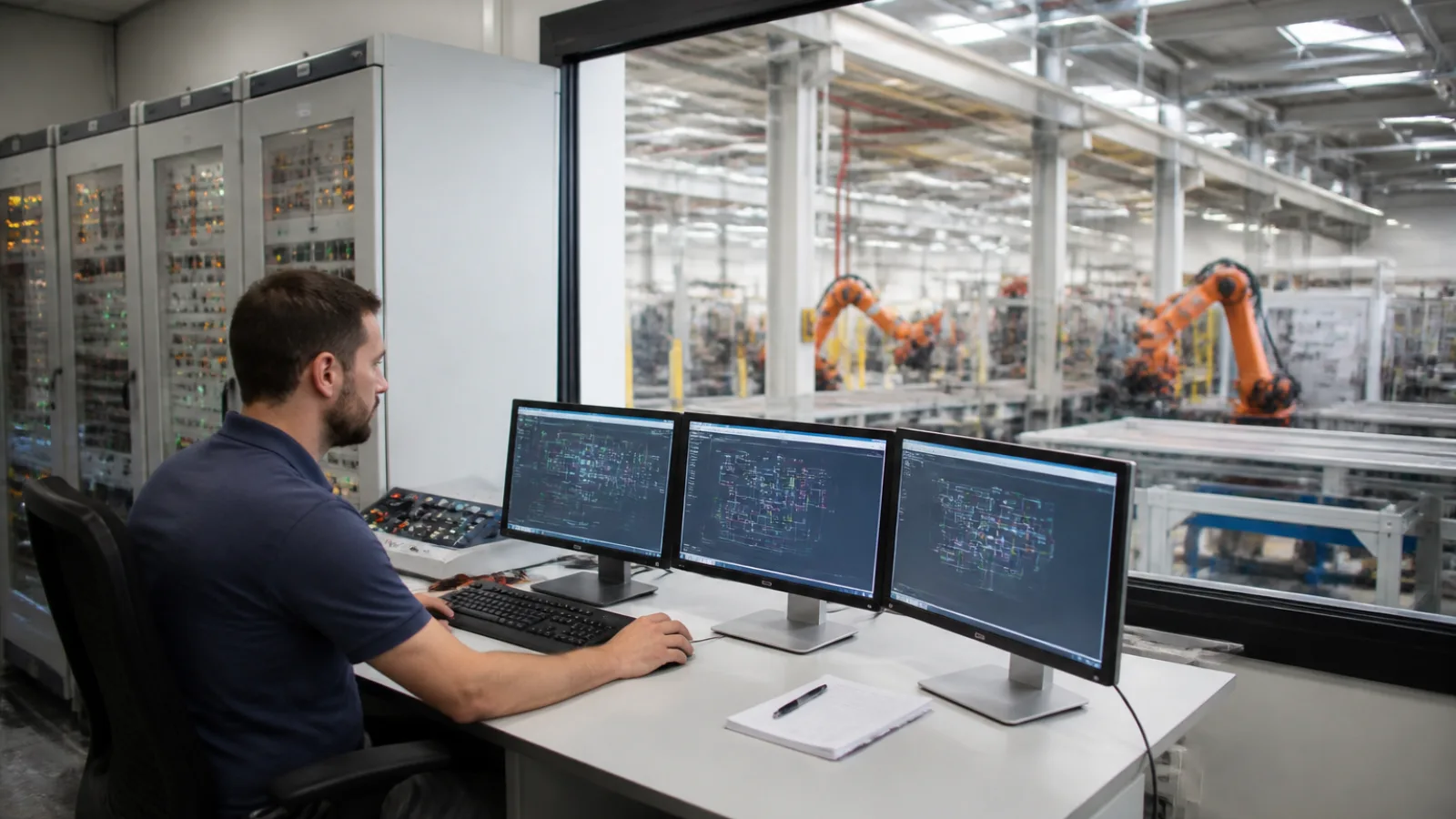
Manufacturing plants are increasingly connected. Production lines exchange data with enterprise systems, engineers troubleshoot equipment from remote locations, vendors support automation platforms over the internet, and cloud applications collect information from machines and sensors. These connections can improve productivity, but they also expand the number of paths into systems that control physical processes.
industrial cybersecurity resources can help teams understand the threat landscape, but a resilient plant program must also reflect the site’s equipment, operating procedures, safety requirements, and tolerance for downtime. The goal of OT cybersecurity for manufacturing plants is not simply to install more security tools. It is to reduce the likelihood and impact of an incident while preserving safe, reliable production.
Operational technology, or OT, includes the systems that monitor and control industrial processes. Examples include programmable logic controllers (PLCs), distributed control systems, supervisory control and data acquisition systems, human-machine interfaces, industrial PCs, safety systems, drives, robots, building controls, and the networks connecting them. These systems often have long service lives and cannot always be patched or restarted like ordinary office computers.
What OT cybersecurity means in a manufacturing plant
Information technology security often prioritizes confidentiality, data protection, and rapid replacement or rebuilding of affected devices. OT security must give equal or greater weight to safety, availability, process integrity, and predictable control. An action that is reasonable in an office environment, such as automatically isolating a computer or applying an emergency reboot, could interrupt a batch, stop a line, damage equipment, or create a hazardous condition on the plant floor.
A sound program therefore combines cybersecurity with engineering and maintenance decisions. It answers practical questions such as:
- Which assets are essential to safe operation and production?
- Which systems communicate with one another, and why?
- Who can change a controller program, recipe, setpoint, or safety configuration?
- How can a vendor connect without creating a permanent pathway into the plant?
- How quickly can the plant restore a failed HMI, PLC, historian, or network device?
These questions should be documented in a program with clear ownership. IT, OT engineering, maintenance, safety, operations, and management should agree on priorities before an incident forces rushed decisions.
Start with an accurate OT asset inventory
You cannot protect what you cannot identify. Begin with an inventory of hardware, software, communications links, accounts, and dependencies. Record the manufacturer, model, firmware or operating system, location, network address, owner, support contact, business function, and replacement or recovery requirements for each important asset.
The inventory should include more than servers and network switches. Capture PLCs, remote I/O, HMIs, engineering workstations, robot controllers, variable-frequency drives, safety instrumented systems, barcode equipment, cameras connected to production networks, wireless access points, historians, virtualization hosts, backup appliances, and vendor-managed devices. Document serial connections and older protocols as well as modern Ethernet-based communications.
Use passive discovery wherever possible on sensitive networks. Active scanning can overload older devices or produce unexpected behavior, so it should be tested and approved by controls and operations personnel before use. Network diagrams, control-system backups, cabinet inspections, maintenance records, and conversations with machine builders can fill gaps that automated tools miss.
Prioritize assets by consequence, not just technical age. A small controller that governs a critical interlock may deserve more attention than a newer workstation used for reporting. Classify systems according to safety impact, production impact, product quality, environmental risk, and recovery difficulty.
Build practical IT/OT network segmentation
Segmentation limits the movement of an attacker and reduces accidental access between business and control environments. It should be designed around how the plant actually operates, not around a diagram that nobody follows. At minimum, avoid placing PLCs and other controllers directly on a general corporate network or exposing them to the public internet.
A useful zone-and-conduit model
Divide the environment into logical zones with defined trust levels and communication requirements. A typical arrangement may include enterprise IT, an industrial DMZ, supervisory OT, cell or area zones, and separate safety systems.
The enterprise IT zone may contain email, finance, identity, and business applications. An industrial DMZ can host data brokers, jump servers, patch repositories, and remote-access gateways. Supervisory OT commonly includes SCADA servers, historians, HMIs, and engineering workstations. Cell or area zones contain PLCs, robots, drives, remote I/O, and machine networks. Safety systems should receive especially strict access, change approval, and recovery controls.
Connections between zones should use documented conduits, firewalls, access-control lists, and, where appropriate, one-way transfer mechanisms. Permit only the protocols, ports, source systems, and destinations needed for a defined function. A rule such as ‘any internal address to any internal address’ defeats the purpose of segmentation.
What segmentation should prevent
Effective segmentation should prevent a compromised office laptop from directly scanning controllers, stop a production cell from communicating freely with unrelated areas, and limit the damage from a compromised vendor account. It should also make abnormal traffic easier to detect.
Test the design during planned maintenance and keep an approved method for emergency access when normal routes are unavailable. Document firewall rules and review them when machines, production lines, or remote-support arrangements change. Segmentation is not a one-time infrastructure project; it is an operating control that must remain aligned with the plant.
Secure remote access for employees, integrators, and vendors
Remote access is one of the most common sources of unnecessary exposure in connected plants. Replace always-on remote desktop connections, shared modem lines, and unmanaged vendor VPNs with a controlled access process.
Use a dedicated remote-access gateway in an industrial DMZ. Require individual accounts, multifactor authentication where the technology supports it, time-limited authorization, and approval by an accountable plant owner. Access should be disabled by default and enabled for a specific person, system, task, and time window. Record session activity and, where feasible, capture commands or screen activity for sensitive work.
Vendors should connect to a jump host rather than directly to PLCs or machine networks. Do not allow a vendor account to retain broad access after a project ends. Maintenance teams should also avoid sharing administrator credentials. If an older device cannot support modern authentication, place compensating controls around it, such as a hardened jump server, network restrictions, stronger upstream authentication, and closer monitoring.
Remote work procedures should address more than cybersecurity. Define when remote changes are permitted, who must be present at the plant, how the technician confirms the correct asset, how backups are taken before changes, and how the change is tested and reversed if it causes an issue.
Strengthen accounts, identities, and change control
Account management is a basic but important layer of manufacturing cybersecurity. Maintain a list of authorized users and review it on a defined schedule. Remove accounts when employees or contractors leave, separate administrative accounts from everyday accounts, and prohibit shared credentials unless a legacy system leaves no alternative. Where shared accounts cannot be removed, store credentials securely, rotate them after use, and maintain an access log.
Use role-based permissions. An operator may need to acknowledge alarms and adjust approved settings, while a controls engineer may need to modify logic under a formal change process. Neither role should automatically receive unrestricted access to every plant system. Require documented approval for PLC logic changes, safety configuration changes, firewall-rule changes, and firmware updates.
Keep current copies of controller programs, HMI applications, recipes, configuration files, network diagrams, and vendor documentation. Version control helps the team determine what changed and restore a known-good configuration when necessary. Changes should include the affected asset, reason, approver, implementation window, validation method, and rollback plan.
Manage patching and vulnerabilities without destabilizing production
Unpatched systems can carry serious risk, but indiscriminate patching can also cause outages or compatibility problems. Establish a risk-based patching process that considers exploitability, network exposure, vendor guidance, system criticality, available redundancy, and the plant’s production schedule.
Before applying a patch, identify the affected asset and its dependencies, confirm that a tested backup exists, review release notes, and define a rollback method. Test patches in a representative environment when possible. For systems that cannot be patched promptly, reduce exposure through segmentation, application allowlisting, disabled unused services, restricted remote access, compensating monitoring, and a documented exception with an expiration date.
Do not limit vulnerability management to operating systems. Review firmware, engineering software, network appliances, remote-access tools, third-party applications, and unsupported devices. Coordinate with machine builders and automation suppliers when a fix could affect controller communications or validated production processes.
Monitor for abnormal activity in industrial networks
Monitoring gives the plant a chance to detect suspicious behavior before it becomes a production crisis. Establish a baseline of normal communications, login patterns, engineering activity, and controller changes. Useful alerts may include a new device appearing in a control zone, an HMI communicating with an unexpected external address, repeated failed logins, an engineering workstation connecting outside approved hours, or logic being changed without a scheduled work order.
Collect logs from firewalls, remote-access gateways, domain services, jump servers, engineering workstations, virtualization platforms, and critical OT systems where supported. Synchronize time across systems so investigators can reconstruct events. Alerts should be assigned to people who understand both cybersecurity and plant operations; a flood of unexplained notifications will be ignored.
Monitoring should not automatically trigger disruptive containment actions on safety- or production-critical systems. Define which events require immediate isolation, which require verification, and which should be reviewed during the next maintenance window. Clear escalation criteria are more useful than a large volume of unprioritized alerts.
Design backups and recovery around production dependencies
A backup is useful only if the plant can restore it under pressure. Protect more than business data. Back up PLC programs, HMI and SCADA configurations, historian databases, recipes, robot programs, drive parameters, firewall configurations, switch configurations, virtual machines, licensing information, and the documentation needed to rebuild or replace equipment.
Keep multiple copies using storage that is protected from unauthorized modification. Maintain at least one copy that is logically or physically separated from the production environment. Restrict backup administration, monitor backup jobs, and verify that files are complete rather than assuming a successful status message means recovery is possible.
Recovery priorities and testing
Create a recovery sequence based on safe operation and production dependencies. For example, the plant may need power and network infrastructure restored before supervisory servers, and supervisory services restored before operators can safely restart a process. Some equipment may require a machine builder or specialized controls engineer, so record contacts and replacement-part requirements in advance.
Test recovery at a level that matches the risk. Restore individual configuration files, rebuild a spare workstation, validate controller programs, and conduct tabletop exercises for ransomware or loss of remote access. Planned tests reveal missing licenses, obsolete passwords, unavailable software installers, and undocumented dependencies while there is still time to correct them.
Prepare an OT incident response plan
An OT incident plan should define who makes decisions and how safety takes priority. Include operations, engineering, IT, maintenance, safety, communications, legal, management, and relevant vendors. Establish contact information that remains available if email or corporate systems are unavailable.
The plan should cover scenarios such as ransomware on an engineering workstation, unauthorized PLC logic changes, loss of a control server, a compromised remote-access account, and suspicious activity that cannot yet be confirmed. For each scenario, document initial safety actions, evidence-preservation requirements, escalation thresholds, isolation options, notification responsibilities, and recovery steps.
Avoid making the first response an automatic shutdown. Operators and engineers should determine whether the process can continue safely, move to a controlled state, or require an orderly stop. Preserve logs and affected systems when doing so does not create additional safety or production risk. After recovery, conduct a review that identifies the access path, control weakness, decision delays, and improvements needed.
A phased implementation roadmap
Plants do not need to solve every issue at once. A phased approach can produce measurable risk reduction without overwhelming operations:
- First 30 days: Assign ownership, identify critical processes, inventory high-value assets, remove unnecessary internet exposure, disable abandoned accounts, and confirm that essential controller backups exist.
- Days 31-90: Document network flows, implement or improve the industrial DMZ, restrict remote access, establish change approval, centralize important logs, and prioritize high-risk unsupported systems.
- Days 91-180: Segment production cells, introduce stronger authentication, formalize patch exceptions, test restoration of critical systems, and run an incident-response tabletop exercise.
- Ongoing: Review access, update asset records, test backups, validate firewall rules, train personnel, and reassess controls whenever equipment or connectivity changes.
The most effective program is maintained as part of normal engineering and maintenance work. Every new machine, cloud connection, vendor relationship, or remote-support arrangement should have a security and recovery review before it becomes part of the production environment.
Focused FAQ
Why is OT cybersecurity different from ordinary IT security?
OT systems directly affect physical processes, safety, product quality, and uptime. They may use older technology, require specialized software, and have limited maintenance windows. Security controls must therefore be coordinated with operations and engineering rather than applied without testing.
Should manufacturing plants disconnect OT networks from the internet?
Direct internet exposure should generally be eliminated, but complete isolation is not always practical. Plants can use an industrial DMZ, controlled gateways, strict firewall rules, monitored remote access, and time-limited vendor connections to support necessary business and maintenance functions.
How often should OT backups be tested?
The schedule should reflect system criticality and how often configurations change. Critical controller programs and production configurations should be verified regularly, with restoration exercises performed often enough to expose outdated files, missing tools, licensing problems, and undocumented dependencies.
Can legacy PLCs be secured if they cannot be patched?
Yes, although compensating controls are necessary. Segment the device, restrict communications, remove unnecessary services, control physical and remote access, monitor for changes, maintain verified backups, and document the risk and replacement plan.
Conclusion
OT cybersecurity for manufacturing plants is fundamentally a resilience program. Asset visibility, segmented networks, controlled remote access, disciplined account management, risk-based patching, meaningful monitoring, verified backups, and practiced response procedures work together to protect production. Start with the systems that matter most to safety and continuity, involve the people who operate and maintain them, and improve the program through scheduled testing rather than waiting for an incident to expose its weaknesses.