Beyond the Giga-Project: A Developer's Guide to Capturing Ancillary Real Estate Opportunities
Astute developers know the real value of a giga-project lies in its supporting ecosystem. This guide provides a strategic framework for identifying and executing profitable ancillary real estate development, from logistics hubs to workforce housing, to build a resilient, high-demand portfolio.
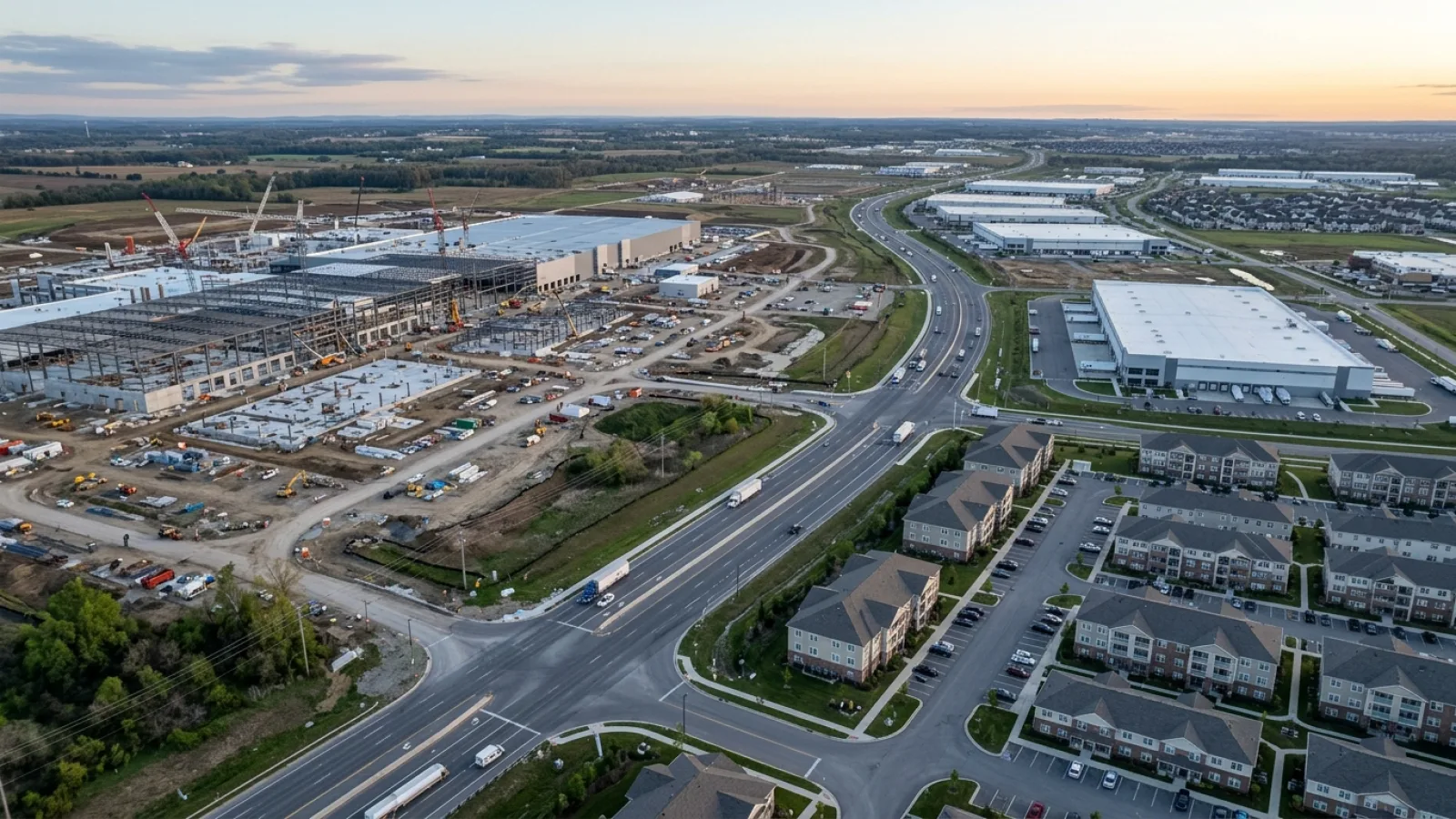
When a multi-billion-dollar giga-project is announced—be it a semiconductor fab, a new port, or a massive renewable energy facility—the public eye fixates on the impressive central structure. For astute developers and construction leaders, however, the real, long-term value lies not in the headline-grabbing centerpiece but in the sprawling ecosystem required to support it. This is the domain of ancillary real estate development: the strategic creation of essential infrastructure that enables the mega-project to function. It’s a shift from speculative investment to foundational development, focusing on the critical B2B and industrial needs that are often overlooked.
This guide moves beyond simplistic residential speculation to detail a framework for identifying and capturing these robust opportunities. For firms that understand the intricate operational needs of large-scale endeavors, ancillary development offers a chance to build a diversified portfolio of high-demand assets. By leveraging insights from logistics real estate experts and applying rigorous due diligence, developers can create the warehouses, workforce housing, and service depots that form the backbone of a mega-project's success. This is not about betting on a single outcome; it's about building the indispensable ecosystem that guarantees operational continuity.
The Ripple Effect: Why Mega-Projects Are Ancillary Opportunity Magnets
A mega-project is never a standalone entity. It acts as a powerful economic engine, creating a significant ripple effect that extends far beyond its physical footprint. Understanding the mechanics of this effect is crucial for identifying where the most valuable ancillary opportunities will emerge.
- Massive Workforce Influx: A project employing tens of thousands of workers during its construction and operational phases creates immediate and sustained demand for housing, services, and amenities. This includes temporary housing for construction crews and permanent communities for skilled technicians, engineers, and support staff.
- Complex Logistics and Supply Chains: Giga-projects require a constant, high-volume flow of raw materials, components, and equipment. This necessitates a sophisticated network of logistics hubs, warehouses, and last-mile distribution centers to ensure just-in-time delivery and prevent costly delays.
- Supporting Commercial and Social Infrastructure: The new workforce and the network of supplier companies create a secondary economy. This drives demand for everything from B2B service offices (engineering, legal, safety consulting) and equipment rental depots to essential retail like grocery stores, clinics, and restaurants that cater to the project's ecosystem.
Identifying High-Potential Ancillary Sectors
Successful ancillary real estate development requires a granular understanding of the specific needs generated by the primary project. The most resilient opportunities are found in sectors that provide essential, non-discretionary services to the project and its workforce.
Logistics and Supply Chain Infrastructure
This is often the most critical and lucrative ancillary sector. A mega-project's efficiency is directly tied to its supply chain.
- Warehousing and Distribution Centers: These facilities are needed for storing raw materials, pre-fabricated components, and finished goods. Developers should consider building facilities with high-bay storage, advanced dock systems, and sufficient marshalling yards to handle heavy vehicle traffic.
- Last-Mile Delivery Hubs: As the project becomes operational, the need for smaller, more agile logistics facilities to handle daily supplies, spare parts, and personnel-related deliveries increases. These hubs must be strategically located with excellent access to the main site.
- Specialized Storage: Depending on the nature of the giga-project, there may be demand for specialized facilities such as cold storage (for data centers or food processing), climate-controlled environments (for sensitive electronics), or secure yards for high-value equipment.
Workforce Accommodation and Services
While others focus on luxury condos, the real demand is for practical, well-located housing for the project's workforce.
- Purpose-Built Rental Communities: Develop multi-family housing targeted at engineers, project managers, and skilled technicians who require year-long or multi-year leases. These communities should include amenities that support a demanding work schedule, such as fitness centers, co-working spaces, and on-site maintenance.
- Temporary vs. Permanent Housing: Early opportunities exist in developing high-quality temporary or modular housing for the construction phase. The key is to design these with a long-term conversion strategy in mind, allowing them to be adapted into permanent housing or other commercial uses once the construction peak has passed.
- Essential Amenities: A concentration of workers creates a micro-economy. Ancillary developments that integrate essential services—such as a small grocery store, a primary care clinic, a pharmacy, or childcare facilities—will see high demand and stable occupancy.
Service-Based Commercial and Retail
Forget high-end shopping malls. The commercial opportunities here are functional and service-oriented, catering directly to B2B and workforce needs.
- B2B Service Hubs: These are office parks or flexible commercial spaces designed for the ecosystem of contractors and subcontractors. Tenants will include engineering consultants, safety inspectors, project management firms, and legal teams that need to be close to the main site.
- Equipment and Material Depots: Construction and operations require vast amounts of equipment. Opportunities exist for developing dedicated depots for equipment rental companies, material suppliers, and maintenance, repair, and operations (MRO) workshops.
- Convenience Retail and Food Services: Focus on necessity-based retail that serves the daily needs of the workforce. This includes quick-service restaurants, coffee shops, and convenience stores located on major access routes to the project site.
A Strategic Framework for Ancillary Development
A proactive, phased approach is essential to maximize returns and mitigate risks in ancillary real estate development. Waiting for the giga-project to break ground is too late.
Phase 1: Pre-Project Due Diligence
Success begins with deep analysis long before the first shovel hits the ground.
- Analyze the Master Plan: Obtain and scrutinize the mega-project's master plan, construction timeline, and workforce projections. Identify key milestones that will trigger demand for specific ancillary assets.
- Identify Infrastructure Gaps: Map out existing transportation networks, utility capacity (water, power, data), and social infrastructure. The biggest opportunities often lie in developing properties that solve a critical infrastructure deficit.
- Engage with Authorities: Build relationships with local planning departments, zoning boards, and economic development agencies. Understanding their long-term vision for the area can help you align your project and potentially unlock incentives or public-private partnership (P3) opportunities.
Phase 2: Land Acquisition and Entitlement
Strategic acquisition is paramount. The goal is to secure control of well-located parcels before widespread speculation drives prices to prohibitive levels.
- Location, Location, Logistics: Focus on land with superior access to major transportation arteries and proximity to the mega-project's primary gates. For logistics facilities, this is non-negotiable.
- Navigate Zoning and Permitting: Proactively work to get your target parcels zoned for the intended use (e.g., industrial, commercial, or high-density residential). A fully entitled property is significantly more valuable and less risky than raw land.
Phase 3: Phased Construction and Leasing
Your development timeline must be synchronized with the mega-project's progress to ensure your facilities are ready when demand peaks.
- Align with Project Milestones: Phase your construction to deliver assets just as they are needed. For example, have workforce housing ready as the first major construction crews arrive, and have logistics hubs operational before the main assembly line starts.
- Pre-Leasing and Anchor Tenants: Begin marketing your development to key suppliers, logistics providers, and major contractors early in the process. Securing a pre-lease from an anchor tenant can de-risk the project and make financing easier to obtain.
- Design for Flexibility: In a dynamic environment, needs can change. Design buildings with flexible floor plans, modular components, and adaptable infrastructure that can be repurposed if the primary project's needs evolve.
Mitigating Risks in Ancillary Projects
While lucrative, ancillary development is not without risk. The primary danger is over-reliance on a single economic driver—the giga-project itself.
- The Domino Effect Risk: The greatest threat is the delay, scaling-back, or cancellation of the main project. Your financial models must stress-test these scenarios.
- Diversify Your Tenant Base: While the giga-project is the catalyst, actively seek tenants from other regional industries. A logistics hub that serves the mega-project can also serve other local manufacturing or e-commerce businesses.
- Build for Long-Term Regional Demand: Ensure your development has intrinsic value beyond the project's lifecycle. A well-designed workforce housing community can become a desirable residential area for the wider region. A state-of-the-art warehouse will always be in demand in a growing economic corridor.
Conclusion: Building the Ecosystem, Not Just the Building
The most sophisticated developers see a giga-project not as a single structure but as the catalyst for a new, fully-fledged economic ecosystem. The true, sustainable value is created by building the critical infrastructure that allows this ecosystem to thrive. Ancillary real estate development is a discipline that rewards foresight, deep due diligence, and a focus on creating functional, in-demand assets.
By shifting focus from the skyline to the supply lines, developers, contractors, and investors can capture a more diverse and resilient stream of opportunities. The challenge is to look beyond the immediate glamour of the mega-project and commit to building the essential logistics hubs, workforce communities, and service centers that will support the region's economy for decades to come.
Frequently Asked Questions (FAQ)
How early should developers get involved in ancillary real estate opportunities?
Ideally, developers should begin their due diligence and land acquisition strategy as soon as a mega-project is credibly announced, often before final approvals are granted. The greatest cost advantages are secured before the project becomes common knowledge and land speculation begins. Early engagement with local authorities is also critical.
What is the most overlooked type of ancillary real estate development?
B2B service-based commercial properties are often overlooked. While many focus on large-scale logistics and housing, there is significant demand for smaller, flexible office and workshop spaces for the vast network of consultants, engineers, safety inspectors, and specialized contractors that a mega-project requires.
How does technology impact the development of these ancillary facilities?
Technology is crucial. For logistics hubs, this means incorporating automation, IoT for tracking, and sustainable energy solutions. For workforce housing, it involves smart home technology and high-speed connectivity. Using Building Information Modeling (BIM) during development helps align the ancillary project's infrastructure (e.g., utility connections) with the master plan of the main project.
Are ancillary developments as profitable as investing in the main project?
They can be more attractive from a risk-adjusted return perspective. While the potential upside of the main project might be higher, ancillary developments often involve lower capital costs, faster development timelines, and a more diverse tenant base, reducing dependency on a single outcome. They provide essential services, which translates to stable, long-term cash flow if planned correctly.