From Raw Land to a $500M Community: The Developer & Guide to Master-Planned Wealth Creation
This guide outlines the complete real estate development lifecycle for master-planned communities. Discover the strategic phases, from vision and acquisition to financial modeling, that transform raw land into high-value assets and drive long-term investor returns.
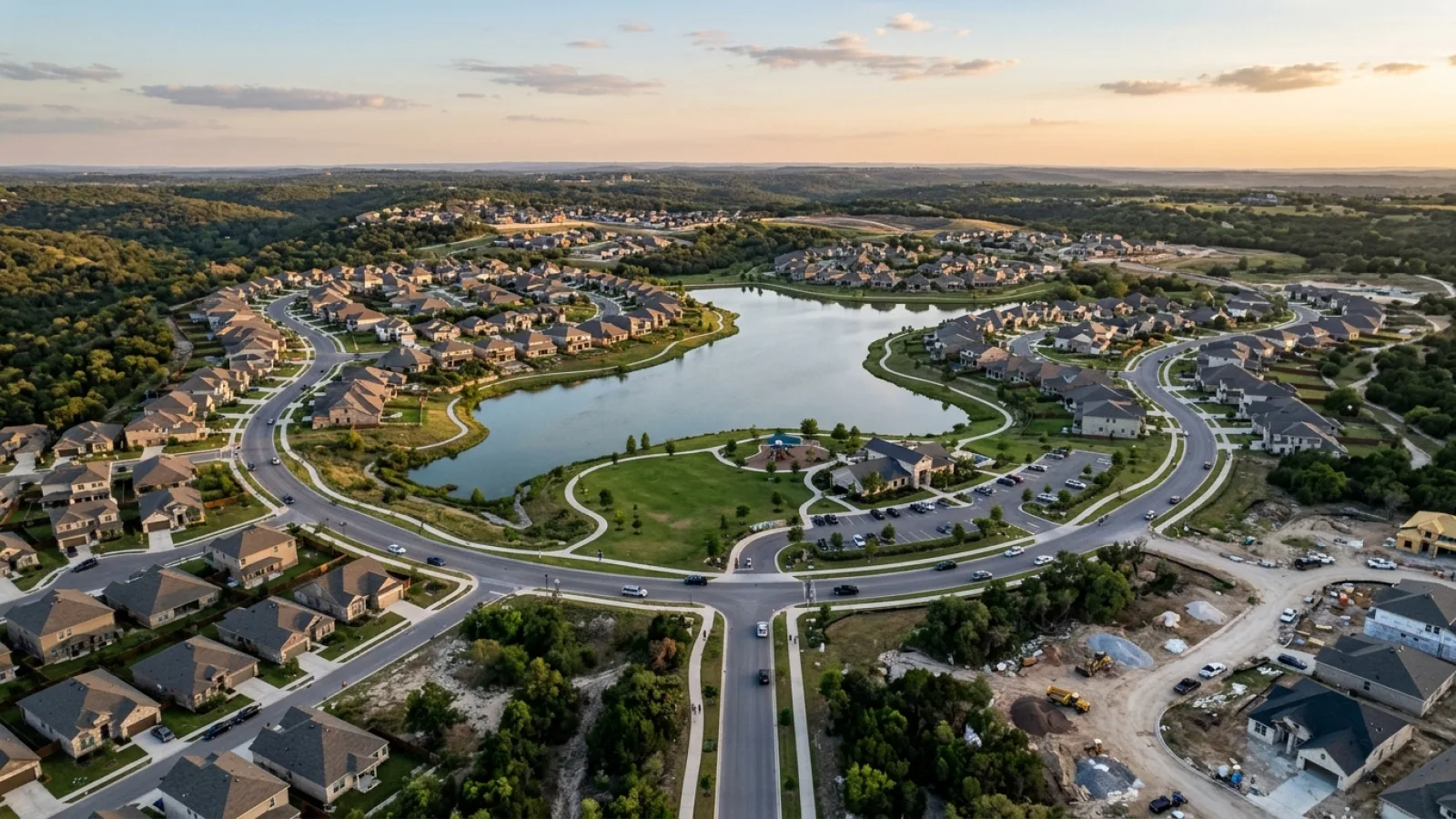
Transforming a vast expanse of raw land into a thriving, high-value community is the pinnacle of real estate development. Master-planned developments (MPDs) are not merely large-scale subdivisions; they are intricate, long-term ventures that create entire ecosystems of homes, businesses, schools, and recreational spaces. This complex process requires immense capital, patience, and a strategic vision that balances market demand with meticulous execution. Unlike speculative land plays, successful MPDs are about creating enduring value, a principle understood by the leading developers of master-planned communities who build legacies, not just properties.
For developers, investors, and private equity firms, the allure of an MPD lies in its potential for substantial, long-term wealth creation. By controlling a large land area, the master developer can orchestrate every element—from infrastructure to amenities—to enhance overall property valuation and capture appreciation over decades. This guide provides a strategic roadmap through the five critical phases of the real estate development lifecycle, detailing how to navigate challenges and maximize returns on the journey from an empty field to a multi-million-dollar asset.
Phase 1: Vision, Acquisition, and Due Diligence
The foundation of any successful master-planned development is laid long before the first bulldozer arrives. This initial phase is about identifying the right opportunity and mitigating risk through exhaustive research and strategic acquisition.
Identifying High-Potential Land Tracts
The search begins with macro-level analysis. Developers must identify regions with strong fundamentals: population growth, job creation, and a pro-business political climate. Key indicators include proximity to major transportation corridors, airports, and employment centers. A deep dive into demographic trends is crucial—are you targeting young families, active adults, or a diverse mix? The path of progress is a critical concept; acquiring land in the anticipated direction of urban expansion can yield the highest returns.
The Art of Assemblage and Acquisition
Securing a large, contiguous parcel of land often involves assembling multiple smaller properties from different owners. This is a delicate process requiring discretion and skilled negotiation. Developers may use different entities to acquire parcels without driving up prices. Deal structures can be complex, involving options, phased takedowns, or seller financing to manage upfront capital outlay. Land banking—acquiring and holding land for future development—is a common strategy, allowing developers to wait for optimal market conditions and entitlement approvals.
Comprehensive Due Diligence: Beyond the Survey
Once a property is under contract, the due diligence period is a race against time to uncover any potential deal-breakers. This goes far beyond a simple boundary survey. A thorough investigation includes:
- Geotechnical Studies: Analyzing soil composition, stability, and groundwater levels to determine development feasibility and foundation costs.
- Environmental Assessments (Phase I & II): Identifying any contamination from prior land use that could require costly remediation.
- Title and Legal Review: Ensuring a clean title free of liens, encumbrances, or restrictive covenants that could hinder the master plan.
- Utility and Water Rights Analysis: Confirming access to sufficient water, sewer, and power capacity is one of the most critical and often overlooked aspects of large-scale development.
Phase 2: The Entitlement Gauntlet – Securing the Right to Build
Entitlement is the legal process of obtaining approvals from government agencies for the right to develop a property for a specific use. This is often the riskiest and most time-consuming phase, where a vision on paper confronts the realities of public policy and community input.
Crafting a Compelling Master Plan
The master plan is the project's constitution. It's a comprehensive document that outlines land use allocation (residential, commercial, parks, schools), density targets, architectural guidelines, and the overall community vision. A successful plan is both aspirational and practical, creating a desirable lifestyle for future residents while meeting the financial pro forma. It must tell a compelling story to regulators, investors, and the public.
Navigating Zoning and Regulatory Hurdles
Most large land tracts are not zoned for the density and mix of uses required by an MPD. The developer must navigate a complex process of rezoning, plan amendments, and public hearings. This requires building strong relationships with local government staff, planning commissions, and elected officials. Success depends on demonstrating the project's benefits to the wider community, such as increased tax base, new public amenities, and thoughtful environmental stewardship.
Securing Environmental and Infrastructure Approvals
Beyond zoning, developers must secure a host of other permits. This includes environmental impact reports, traffic studies to mitigate congestion, and agreements with utility providers to extend services. These approvals can be subject to significant public scrutiny and potential legal challenges, making a proactive community outreach strategy essential.
Phase 3: Horizontal Development – Laying the Foundation for Value
With entitlements secured, the focus shifts from paper to dirt. Horizontal development involves installing the core infrastructure that transforms raw land into finished lots ready for vertical construction. This phase requires significant capital expenditure but is where the developer creates tangible value.
Engineering Core Infrastructure
This is the heavy civil work of building a city from scratch. It includes grading the land and constructing the backbone of the community: roads, bridges, and the underground network of water mains, sewer lines, and storm drainage systems. The scale is immense, and the logistics must be precisely managed to align with the phased rollout of the community.
The "Placemaking" Power of Amenities
Amenities are what differentiate an MPD from a standard subdivision. They are the heart of the community and a primary driver of lot premiums. Early investment in high-impact amenities like a central park, trail network, community pool, or clubhouse can accelerate sales velocity and establish the community's brand identity. The goal is to create a unique sense of place—or "placemaking"—that attracts buyers and justifies higher home prices.
Integrating Smart Technology and Sustainability
Modern MPDs are increasingly built with the future in mind. This means integrating a fiber-optic network for high-speed internet, planning for electric vehicle (EV) charging stations, and implementing sustainable practices like water-wise landscaping and green building standards. These features are not just marketing points; they enhance long-term value and appeal to a growing segment of environmentally conscious buyers.
Phase 4: Vertical Development and Phased Rollout
Once finished lots are available, the community begins to take shape with the construction of homes and commercial buildings. A disciplined, market-responsive phasing strategy is key to managing risk and optimizing financial returns.
The Phasing Strategy: Managing Risk and Maximizing ROI
No developer builds out a 2,000-home community at once. A phased development strategy allows the developer to match supply with market absorption rates, minimizing standing inventory and managing capital exposure. The first phase often includes model homes and a key amenity to generate initial momentum. Subsequent phases can be adjusted based on the sales performance of different product types.
Diversifying the Product Mix
To appeal to the broadest possible market, MPDs typically offer a diverse range of housing products. This can include entry-level single-family homes, move-up estates, townhomes, and multi-family apartments or condominiums. A mixed-use component with retail, office, or light industrial space can create a live-work-play environment and provide the developer with long-term, income-producing assets.
Partnering with Builders and Commercial Tenants
Master developers often function as "land developers," selling finished lots to a curated group of homebuilders. This strategy transfers the risk of vertical construction and allows the developer to focus on the overall community vision. Attracting anchor commercial tenants, such as a grocery store or major employer, early in the development process can act as a powerful catalyst for residential sales.
Phase 5: Long-Term Governance and Value Appreciation
The developer's role doesn't end when the last home is sold. Establishing a framework for long-term governance and community management is essential for protecting the initial investment and ensuring sustained value appreciation for all stakeholders.
Establishing Community Governance
A Homeowners Association (HOA) or a more robust structure like a Community Development District (CDD) is established to manage and maintain common areas and amenities. The developer typically controls the governing board in the early stages, gradually transitioning control to the residents as the community is built out. A well-run governance structure is critical for preserving the quality and aesthetic of the community over time.
Marketing the Community, Not Just the Homes
The marketing focus for an MPD is on selling a lifestyle and a brand, not just floor plans. This involves creating a strong community identity, hosting events, and fostering a sense of belonging among residents. A powerful community brand becomes a self-perpetuating marketing engine, driving demand through resident referrals and positive word-of-mouth.
The Exit Strategy: Monetizing the Mature Asset
The long-term nature of an MPD offers multiple exit strategies. The developer can sell remaining residential and commercial land parcels to other builders or investors. Alternatively, they can choose to retain ownership of income-producing commercial properties, creating a stable, long-term cash flow stream. A successful MPD becomes a highly desirable, de-risked asset for institutional investors once it reaches maturity.
Financial Modeling for a Master-Planned Community
The financial underpinnings of an MPD are complex, with a timeline that can span more than a decade. A sophisticated financial model is the developer's most critical tool for making strategic decisions.
Key Financial Inputs and Outputs
The pro forma for an MPD is a dynamic document that evolves over the project's life. Key inputs include:
- Costs: Land acquisition, soft costs (design, engineering, legal), and hard costs (infrastructure, amenities).
- Revenue: Projected lot and land sale prices, commercial lease rates, and builder profit-sharing agreements.
- Timing: Phasing schedules, absorption rates (the pace of sales), and the overall project timeline.
Risk Mitigation and Sensitivity Analysis
A robust financial model must account for risk. Developers run sensitivity analyses to understand how changes in key variables—such as interest rates, construction costs, or home prices—would impact profitability. This allows for the development of contingency plans and helps in structuring financing that can withstand market cycles.
Conclusion: The Marathon of Wealth Creation
The journey from raw land to a $500 million community is a marathon, not a sprint. It demands a rare combination of long-range vision, financial discipline, political acumen, and relentless execution. Each phase, from acquisition to entitlement and development, presents unique challenges and opportunities to create value. For those with the expertise and patience to orchestrate this complex process, master-planned developments represent one of the most powerful vehicles for generating generational wealth and leaving a lasting legacy on the built environment.
Frequently Asked Questions (FAQ)
What is the typical timeline for a master-planned development?
The timeline for an MPD is highly variable but is always a long-term endeavor. A small to medium-sized community might take 5-10 years from land acquisition to final build-out. Larger, more complex projects can easily span 20 years or more. The entitlement phase alone can often take 2-5 years before any construction begins.
How is financing structured for such large-scale projects?
Financing for MPDs is typically sourced from a combination of private equity, institutional investors, and specialized real estate lenders. It is often structured in phases. The initial high-risk capital for land acquisition and entitlement comes from equity partners. Once the project is de-risked with approvals in place, more traditional construction and development loans can be secured for the infrastructure and vertical building phases.
What are the biggest risks in developing a master-planned community?
The primary risks include entitlement risk (the inability to secure necessary government approvals), market risk (a significant economic downturn that slows home sales), and execution risk (cost overruns or construction delays). Because of the long timeline, MPDs are particularly vulnerable to changes in the economic cycle and shifts in housing market demand.
How do you create a sense of "place" and not just a collection of houses?
Creating a sense of "place" is a deliberate strategy known as placemaking. It involves thoughtful land planning that prioritizes human interaction and connection to nature. Key elements include creating a walkable environment with interconnected parks and trails, designing unique and high-quality amenities that act as social hubs, establishing a distinct architectural character, and programming community events that bring residents together.