Remote Work 2.0: A Guide to Investing in High-Growth Suburban and Rural Real Estate
The shift to permanent remote work has unlocked new opportunities in non-traditional markets. This guide provides a data-driven framework for investors looking to identify and capitalize on high-growth suburban and rural real estate.
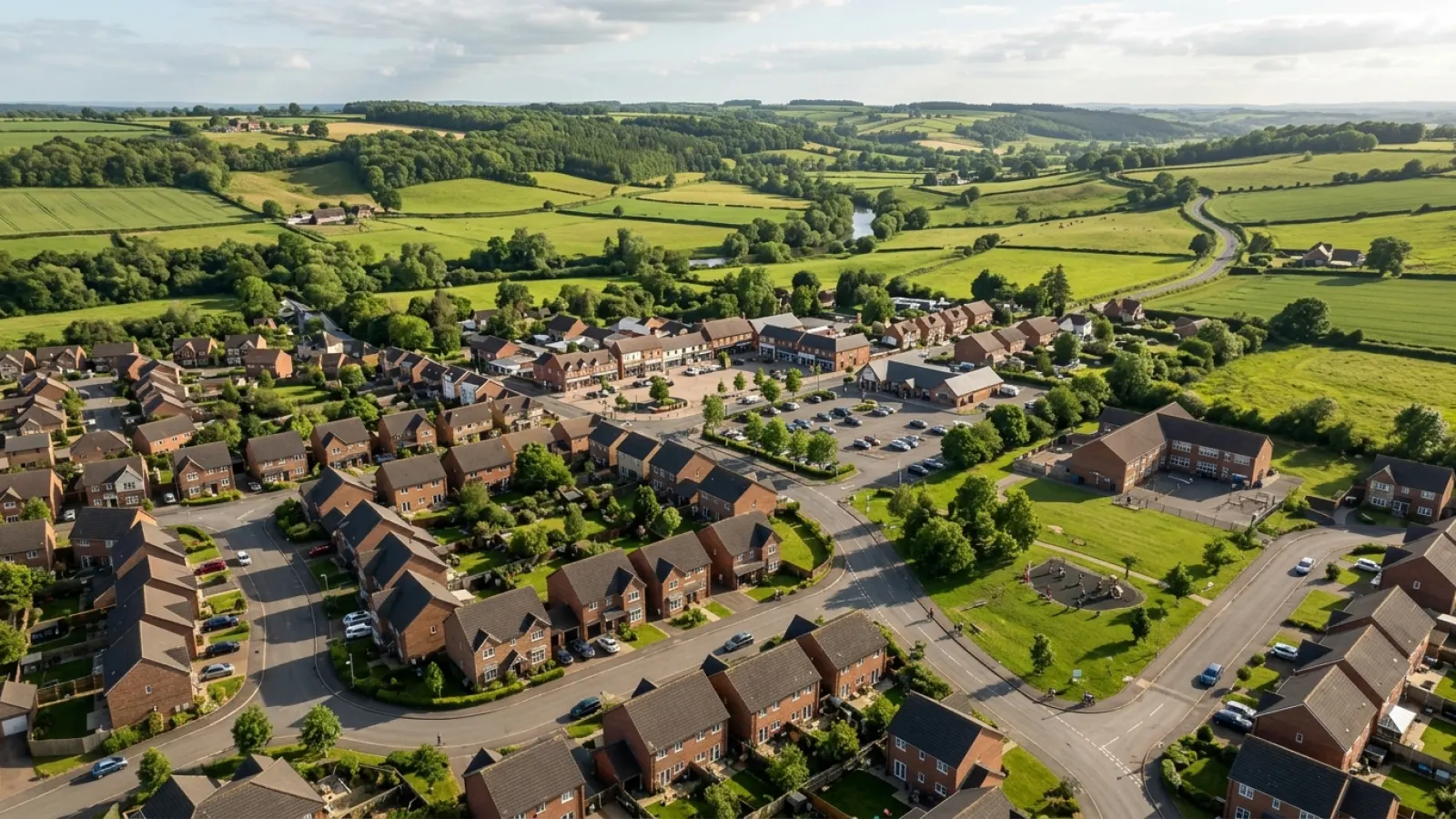
The landscape of work has fundamentally changed, and with it, the calculus of real estate investment. We are now firmly in the era of "Remote Work 2.0," a significant evolution from the frantic, reactive relocations seen at the pandemic's outset. This new phase is not about a temporary escape but a permanent, strategic lifestyle choice for a substantial and growing segment of the professional workforce. The second wave is characterized by more deliberate, long-term decision-making by homebuyers and renters, creating a durable demand shift. For astute investors and developers, this cements the investment thesis for suburban and rural markets, transforming them from alternative assets into core components of a forward-thinking portfolio.
From Temporary Escape to Permanent Lifestyle
The maturation of remote work is evident in corporate policy. What began as a crisis response has become a strategic talent acquisition and retention tool. Companies across major sectors are now formalizing hybrid and fully remote models, removing the uncertainty that once tethered employees to major metropolitan hubs. This newfound stability empowers households to make significant life changes with confidence. They are no longer just seeking a temporary refuge with a bigger backyard; they are planting roots, making permanent moves to locations that offer a better quality of life, a stronger sense of community, and more value for their housing dollar. This permanence is the engine driving sustained demand further from traditional city centers.
Key Differences: Remote Work 1.0 vs. 2.0
To understand the current opportunity, it's crucial to contrast the two phases of remote work. Remote Work 1.0 (2020-2021) was largely reactive. Decisions were often rushed, driven by an immediate need for more space for home offices and virtual schooling. Proximity to the old office was still a factor, as many assumed an eventual return. In contrast, Remote Work 2.0 is calculated and amenity-driven. Buyers are conducting extensive research, prioritizing factors beyond square footage. The checklist now includes community engagement, quality of local infrastructure, access to outdoor recreation, and a vibrant local culture. The simple desire for space has evolved into a sophisticated demand for a holistic lifestyle, a trend that savvy investors must recognize and cater to.
The "Zoom Town" Phenomenon Matures: What Investors Should Know
The initial boom created a new lexicon, with "Zoom Towns" becoming synonymous with explosive growth. Now, these early examples offer critical lessons as they mature. Some are grappling with the consequences of rapid, unplanned expansion, facing strained infrastructure, overcrowded schools, and a loss of the small-town charm that attracted residents in the first place. Others, however, are successfully navigating this transition, investing in smart growth and evolving into sustainable, high-amenity communities. Investors can learn from both outcomes. The key is to identify markets that are proactively managing growth, investing in infrastructure ahead of demand, and preserving the quality-of-life attributes that fuel their appeal. The most resilient markets will be those that transition from boomtowns to balanced towns.
The Data-Driven Investor's Toolkit: Key Metrics for Market Selection
In the Remote Work 2.0 era, successful investing in suburban real estate requires moving beyond anecdotal evidence and surface-level trends. A rigorous, analytical approach is essential to distinguish fleeting hotspots from markets with sustainable, long-term growth potential. Successful analysis requires access to comprehensive real estate data that can reveal underlying trends in migration, property values, and infrastructure development. By digging into granular data points, investors can build a robust model for identifying and vetting the next wave of high-growth locations.
Infrastructure and Connectivity: The New Non-Negotiables
For the modern remote worker, digital infrastructure is as critical as running water. However, simply having broadband is no longer enough. Investors must analyze the quality and competitiveness of connectivity. Look for markets with multiple gigabit fiber providers, as competition ensures better service and pricing. Beyond the digital realm, physical infrastructure remains paramount. Evaluate a location’s proximity to regional airports for business travel, its access to major highways for connectivity to larger hubs, and, critically, its pipeline of planned public works. A new hospital wing, a school expansion, or a downtown revitalization project are strong signals of long-term government investment and confidence in the area's future growth.
Demographic and Economic Shifts to Monitor
Demographics are destiny in real estate. Track in-migration patterns to understand not just how many people are arriving, but where they are coming from. Are they high-earning professionals from expensive coastal cities? This influx can significantly boost local spending and property values. Equally important is analyzing local job growth in non-remote sectors. A healthy market should not be solely dependent on remote workers. Growth in essential local industries like healthcare, skilled trades, and services indicates a resilient, diversified economy. Finally, monitor the ratio of median household income to median housing costs. Markets that maintain a degree of affordability are better positioned for sustained, healthy demand, avoiding the boom-and-bust cycles of overly speculative areas.
Quality of Life Indicators as Growth Drivers
In Remote Work 2.0, amenities are not a perk; they are a core driver of real estate value. Today's buyers are purchasing a lifestyle, not just a property. Therefore, assessing quality-of-life indicators is a critical part of due diligence. High-performing school districts are a powerful magnet for families, driving consistent housing demand. Access to quality healthcare, including hospitals and specialized clinics, is a top consideration for all demographics, from young families to retirees. Furthermore, evaluate the vibrancy of the local culture. The presence of well-maintained parks and trails, a thriving downtown with independent retail and restaurants, and community events all contribute to a location's appeal and its ability to attract and retain residents.
Strategic Framework for Investing in Suburban and Rural Real Estate
Once a promising market has been identified through data analysis, the next step is to formulate a precise investment strategy. This involves understanding the nuances of the local geography and aligning property type with the specific demands of the incoming population. A successful approach goes beyond simply buying or building; it's about contributing to the community's fabric in a way that generates both financial returns and long-term value.
Identifying High-Potential "Exurbs" and Rural Hubs
It's important to distinguish between generic suburban sprawl and strategic, high-potential locations. An "exurb" is typically a community on the outer ring of a metropolitan area, offering a blend of suburban amenities and rural character. The ideal exurb is close enough for an occasional commute (e.g., 45-75 minutes) but far enough to establish its own distinct identity and lifestyle. A self-sustaining rural hub, on the other hand, may be further afield but possesses a strong, walkable town center, a unique local culture (e.g., arts scene, outdoor recreation), and the essential services to support its population independently. The key is to find locations that offer a clear value proposition beyond just being cheaper or larger than city living.
Analyzing Property Types: Single-Family vs. Multi-Family vs. Commercial
The demand created by Remote Work 2.0 is not monolithic. Investors should analyze opportunities across various asset classes.
- Single-Family Homes: The demand for single-family residences, particularly those with dedicated home office space and private outdoor areas, remains robust. Both build-to-sell and build-to-rent models are viable, catering to new homeowners and those who prefer to rent before buying in a new area.
- Multi-Family Developments: An emerging opportunity exists for smaller, well-designed multi-family properties within the walkable cores of suburban and rural towns. These appeal to young professionals and empty nesters who want the community benefits without the maintenance of a large home.
- Commercial Real Estate: The influx of residents creates a secondary wave of demand for local services. This opens opportunities for small-scale commercial developments, such as boutique co-working spaces, neighborhood retail centers, and restaurants that cater to the new, more affluent population.
Due Diligence Checklist for Emerging Markets
Before committing capital, a thorough due diligence process is non-negotiable. This checklist can help mitigate risks in less-established markets:
- Zoning and Regulations: Deeply investigate local zoning laws, permitting processes, and any planned changes. A pro-growth municipal government can be a powerful ally, while restrictive regulations can stall a project indefinitely.
- Property Tax Trends: Analyze historical property tax rates and assess future liabilities. Rapid growth can lead to significant tax increases to fund new infrastructure, impacting net operating income and affordability.
- Infrastructure Capacity: Confirm that local utilities—water, sewer, and power—have the capacity to support new development. A moratorium on new connections can halt a project completely.
- Environmental and Climate Risk: Conduct a thorough assessment of risks such as flooding, wildfires, or other climate-related threats. These factors are increasingly influencing insurance costs and buyer decisions.
Case Study Comparison: Evaluating Two High-Growth Market Profiles
To illustrate the data-driven principles in action, consider two hypothetical but representative market types. This comparison highlights how different data profiles can point to distinct but equally valid investment strategies.
| Metric | Market A: The Connected Exurb | Market B: The Amenity-Rich Rural Hub | Investor Takeaway |
|---|---|---|---|
| Broadband Infrastructure | Multiple gigabit fiber providers | One primary fiber provider, expanding coverage | Market A offers lower risk for tech-reliant residents. Market B has higher growth potential if connectivity improves. |
| 5-Year Population Growth | 12% (Accelerating) | 8% (Steady) | Market A shows strong momentum. Market B indicates stable, sustainable growth. |
| Proximity to Metro Area | 45-60 minute drive | 90+ minute drive | Market A appeals to hybrid workers. Market B is for the fully remote seeking a distinct lifestyle. |
| Key Amenities | New schools, large retail centers | Historic downtown, outdoor recreation, local artisans | Investment in A might focus on new family homes. Investment in B could target vacation rentals or boutique commercial. |
Future-Proofing Your Investment: Risks and Mitigation Strategies
While the opportunities in suburban and rural markets are significant, no investment is without risk. A prudent strategy involves not only identifying potential but also understanding and mitigating the potential downsides. A balanced, realistic perspective is crucial for long-term success in these evolving markets.
The Risk of Market Oversaturation and "Bubble" Behavior
The allure of high-growth markets can sometimes lead to speculative frenzies. Investors should be wary of chasing markets that have already experienced multiple years of explosive, double-digit price growth. Key warning signs of an overheated market include a rapid and significant divergence between home price appreciation and local wage growth, a surge in speculative buying from iBuyers or institutional investors, and an oversupply of new construction relative to historical absorption rates. To mitigate this, focus on markets where growth is supported by fundamental economic and demographic shifts, not just momentum.
Navigating Economic Downturns and Shifting Work Policies
The long-term viability of these markets could be tested by a significant economic downturn or a large-scale, unexpected reversal of remote work policies by major employers. While a full-scale return-to-office mandate seems unlikely, a recession could temper housing demand. The best mitigation strategy is to invest in locations with diverse local economies. A town that has its own base of employment in healthcare, education, or light manufacturing, in addition to its remote workforce, is far more resilient than one that is entirely dependent on the paychecks of telecommuters.
The Importance of Diversification
Diversification remains a cornerstone of sound investment strategy. Rather than concentrating all capital in a single high-growth exurb, consider spreading investments across different types of suburban and rural geographies. A portfolio could include a property in a quiet coastal village, a lot in a booming mountain town, and a multi-family unit in a Midwest exurb near a growing university. This geographic diversification helps hedge against regional economic downturns, climate-related risks, or shifts in local lifestyle preferences, ensuring the overall portfolio is more stable and resilient over the long term.
Conclusion
The Remote Work 2.0 era represents a durable and fundamental realignment of where and how people want to live. This is not a fleeting trend but a structural shift in real estate demand that is creating profound opportunities for investors and developers. Success in this new landscape, however, will not come from speculation. It requires a rigorous, data-driven approach focused on identifying markets with strong fundamentals: robust infrastructure, diverse economies, and a high quality of life. By understanding the key metrics, performing meticulous due diligence, and implementing strategic risk mitigation, savvy investors can move beyond chasing headlines and begin building the high-value communities of the future.
Frequently Asked Questions (FAQ)
What is "Remote Work 2.0" in the context of real estate?
Remote Work 2.0 refers to the current, more stable phase of remote work where employees and companies make long-term, deliberate decisions about location, creating sustained demand for housing in suburban and rural areas with strong infrastructure and quality of life.
How can I find reliable data on broadband availability in rural areas?
Start with the FCC's National Broadband Map. Additionally, check the websites of local internet service providers (ISPs) and contact municipal or county economic development offices, as they often track infrastructure projects and service quality.
Are single-family homes the only good investment in these markets?
No. While single-family homes with office space are in high demand, there are growing opportunities in build-to-rent communities, smaller multi-family properties in walkable town centers, and commercial properties that support the new population, like co-working spaces and local retail.
What are the biggest red flags when evaluating a suburban or rural market?
Key red flags include poor or non-existent broadband infrastructure, a lack of investment in public services like schools and healthcare, a local economy entirely dependent on a single industry, and zoning laws that are overly restrictive to new development.
How does the rise of co-working spaces in suburbs affect investment strategy?
The presence of co-working spaces is a positive indicator of a thriving remote work community. For investors, it can signal demand for both residential properties nearby and opportunities to invest in or develop flexible office solutions, catering to professionals who want a dedicated workspace outside the home.