AI-Powered Energy Management Systems: The Brains Behind Real-Time Smart Building Optimization
Explore the advanced AI layer that transforms smart building operations. This technical guide explains how AI-powered energy management systems move beyond simple automation to deliver predictive analytics, autonomous control, and significant energy savings for modern facilities.
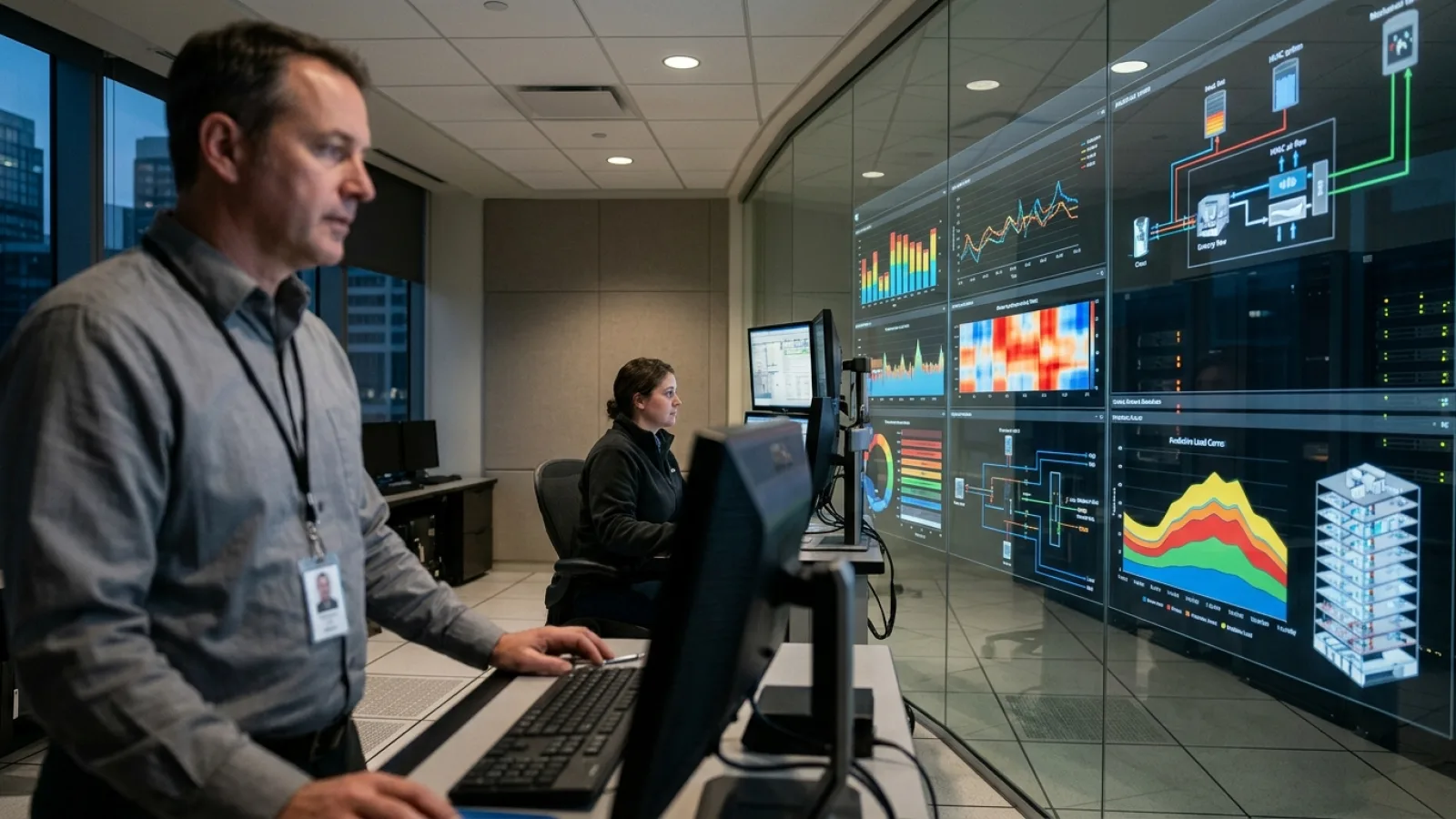
In the world of modern construction and facility management, the term "smart building" has evolved from a futuristic concept to a tangible reality. These intelligent structures promise unprecedented levels of efficiency, comfort, and sustainability. At their core, smart buildings rely on a vast network of Internet of Things (IoT) sensors collecting data on everything from occupancy to air quality. However, data alone is not enough. The true intelligence lies in the advanced AI layer that processes this information, enabling predictive analytics and autonomous control. This article moves beyond the sensors to explore the brain of the operation: the AI-powered energy management system (EMS).
This technology represents a monumental leap from traditional, reactive systems to proactive, intelligent environments that learn and adapt in real time. The goal is to achieve peak performance with minimal waste, a challenge being tackled by comprehensive building automation platforms that leverage this new wave of intelligence. By understanding how these AI systems function, building engineers and facility managers can unlock new levels of operational excellence and energy savings.
The Evolution from Automated to Autonomous: What Sets AI Apart?
Building automation is not a new concept. For decades, facilities have used timers for lighting and thermostats for climate control. These evolved into sophisticated Building Management Systems (BMS) that centralize control and operate based on a series of pre-programmed rules. A traditional BMS is highly effective at automation—executing a command based on a specific trigger. For example, if a sensor reads a temperature above 24°C, the BMS follows its rule and turns on the air conditioning.
However, this approach is fundamentally reactive and rigid. It cannot anticipate future needs, learn from past performance, or understand the complex interplay between different systems. This is where AI makes the critical distinction between automation and autonomy. An automated system follows orders. An autonomous system makes its own decisions. Instead of just reacting to a high temperature, an AI-powered EMS predicts it. It analyzes weather forecasts, historical thermal performance data, and meeting schedules to anticipate the heat load and pre-cool the space in the most energy-efficient way possible, long before occupants feel any discomfort.
Core Components of an AI-Powered Energy Management System
An AI-powered EMS is not a single piece of hardware but a sophisticated ecosystem of software and hardware working in concert. This system can be broken down into three fundamental layers.
Data Ingestion Layer: IoT Sensors and External Feeds
The foundation of any AI system is data. The EMS ingests a continuous stream of information from thousands of points. Internally, this includes data from IoT sensors measuring temperature, humidity, CO2 levels, occupancy (via motion sensors or even Wi-Fi connection counts), and ambient light. It also pulls performance data directly from equipment like chillers, boilers, and air handling units (AHUs). Crucially, it also integrates external data feeds, such as real-time weather forecasts, solar irradiance levels, and complex utility rate schedules that dictate the cost of energy at different times of the day.
The AI/ML Core: The Central Processing Unit
This is the software layer where raw data is transformed into actionable intelligence. Using a suite of machine learning (ML) models—such as regression analysis for prediction and reinforcement learning for control strategy—the AI core processes the vast amounts of ingested data. It identifies complex patterns that would be invisible to a human operator. For example, it might learn how a building's west-facing facade responds to afternoon sun on a cloudy vs. a clear day and adjust the HVAC strategy accordingly. This core engine is constantly learning and refining its models, meaning the building's performance improves over time.
The Control Layer: Executing Autonomous Actions
Once the AI core has determined the optimal strategy, its decisions must be translated into physical action. The control layer interfaces with the building's equipment, typically through the existing BMS. It sends updated setpoints and commands to HVAC dampers, variable frequency drives (VFDs) on pumps and fans, lighting control panels, and other controllable assets. This closed-loop system—sense, analyze, predict, act—operates 24/7, making thousands of micro-adjustments throughout the day to keep the building in a state of continuous optimization.
How Machine Learning Optimizes Key Building Systems in Real Time
The true value of AI energy management systems is demonstrated in their ability to holistically manage a building's most energy-intensive systems with a level of precision that is impossible to achieve manually.
Predictive HVAC Control: Anticipating Thermal Loads
HVAC systems often account for 40% or more of a commercial building's energy consumption. Traditional systems run hard to catch up with changing conditions. An AI EMS, however, operates proactively. By modeling the building's unique thermal dynamics and integrating weather forecasts, it can predict the temperature in a specific zone hours in advance. This allows it to initiate a slow, low-energy pre-cooling or pre-heating cycle, bringing the space to the desired temperature just as occupants arrive and effectively coasting through the hottest part of the day.
Intelligent Lighting Systems: Optimizing for Occupancy and Daylight
Modern lighting controls go far beyond simple on/off motion sensors. An AI system learns the typical occupancy patterns of different building zones throughout the day and week. It can proactively dim lights in an area that is usually empty on a Friday afternoon, rather than waiting for a sensor to time out. Furthermore, it seamlessly integrates with daylight harvesting. Sensors measure the amount of natural light entering through windows, and the AI continuously adjusts the artificial lighting to the precise level needed to maintain a consistent, comfortable illumination, minimizing electricity use without any perceptible change to occupants.
Peak Demand Management and Load Shifting
For many commercial facilities, utility bills are heavily impacted by "demand charges," which are based on the highest peak of electricity usage during a billing period. AI energy management systems are exceptionally skilled at managing this peak demand. The system constantly monitors the building's total load and, if it predicts consumption is about to cross a costly threshold, it can autonomously execute a load-shedding strategy. This could involve slightly raising the temperature setpoint by a degree for 15 minutes or dimming lights in non-critical areas—actions that are imperceptible to occupants but can save thousands on demand charges.
A Comparison: Traditional BMS vs. AI-Powered EMS
To fully appreciate the technological shift, a direct comparison highlights the fundamental differences in capability and approach.
| Feature | Traditional Building Management System (BMS) | AI-Powered Energy Management System (EMS) |
|---|---|---|
| Control Logic | Rule-based (e.g., "If temp 24°C, turn on AC") | Predictive & adaptive (e.g., "Predicting a 28°C afternoon and high occupancy, pre-cool the zone starting at 1 PM") |
| Data Usage | Reactive (responds to current sensor readings) | Proactive (analyzes historical data, weather forecasts, and usage patterns) |
| Optimization | Static setpoints, requires manual adjustments | Dynamic, continuous, and autonomous optimization |
| System Interaction | Operates systems in silos (HVAC, lighting separate) | Holistic control, understanding interplay between systems |
| Learning Capability | None; requires manual reprogramming for new conditions | Self-learning and improves its own performance over time |
Implementing an AI Energy Management System: Key Considerations
For facility managers and building engineers considering this technology, a successful implementation requires careful planning and assessment.
Assessing Your Building's "AI Readiness"
Before implementation, it's essential to evaluate your existing infrastructure. A building is generally "AI-ready" if it has a centralized BMS, robust network connectivity, and a decent coverage of sensors for key data points like temperature and occupancy. The quality and accessibility of data are paramount; the more granular the data, the more effective the AI will be. An audit of the existing control systems and data infrastructure is a critical first step.
Integration with Existing Infrastructure
Most modern AI EMS solutions are designed as "bolt-on" or overlay systems. They don't require ripping and replacing your existing BMS. Instead, they integrate with it using standard industry protocols like BACnet or Modbus. The AI platform acts as the intelligent decision-maker, reading data from the BMS and sending back optimized control commands. This approach minimizes disruption and leverages the investment already made in the building's control hardware.
Measuring ROI: Beyond Kilowatt-Hours
The primary return on investment (ROI) comes from direct energy savings, which can range from 15% to 30% on an annual basis. However, the value extends further. By continuously monitoring equipment performance, the AI can detect anomalies that indicate a potential failure, enabling predictive maintenance that prevents costly downtime. Furthermore, by maintaining a more stable and comfortable environment, these systems can lead to measurable gains in employee productivity and tenant satisfaction, while also providing the detailed data needed for ESG (Environmental, Social, and Governance) reporting.
The Future of AI in Smart Buildings
The technology behind AI energy management is still evolving, with several exciting trends on the horizon that will make buildings even smarter and more integrated.
Grid-Interactive Efficient Buildings (GEBs)
In the near future, buildings will not just be consumers of energy but active participants in the electrical grid. AI will enable buildings to intelligently respond to signals from the utility, reducing consumption during periods of high grid stress and even exporting power from on-site batteries or EV chargers. This grid-interactive capability will be essential for balancing a grid that relies heavily on intermittent renewable energy sources.
Hyper-Personalized Occupant Comfort
As AI and sensor technology become more sophisticated, the concept of a single temperature setpoint for an entire office floor will become obsolete. Future systems will allow for hyper-personalization, learning the comfort preferences of individual occupants and adjusting airflow and temperature in highly localized zones to create a perfectly tailored environment.
AI for Predictive Maintenance and Asset Longevity
The same AI that optimizes energy use can also protect the longevity of expensive capital equipment. By analyzing subtle changes in vibration, temperature, and energy consumption of a chiller or an AHU, the AI can predict a component failure weeks or even months in advance. This shifts the maintenance paradigm from reactive (fix when broken) or preventative (fix on a schedule) to truly predictive, saving money and extending the life of critical assets.
In conclusion, AI-powered energy management systems are the critical element that elevates a building from merely automated to truly smart. By harnessing the power of data and predictive analytics, they create self-optimizing ecosystems that deliver significant energy savings, enhance operational efficiency, and improve occupant well-being. For building owners and operators, adopting this technology is no longer a luxury but a strategic imperative for creating the sustainable, efficient, and resilient buildings of the future.
Frequently Asked Questions About AI Energy Management Systems
Q1: How does an AI EMS integrate with an existing Building Management System (BMS)?
A1: Most AI EMS solutions are designed as an intelligent overlay. They connect to the existing BMS via standard protocols like BACnet or Modbus. The AI platform ingests data from the BMS, performs its analysis and predictions, and then sends optimized setpoints and commands back to the BMS for execution. This approach leverages the existing control infrastructure while adding a powerful layer of intelligence.
Q2: What is the typical ROI for implementing an AI energy management system?
A2: While it varies based on building size, age, and utility rates, most commercial buildings see a return on investment within 1 to 3 years. The ROI is driven primarily by direct energy savings, which often range from 15% to 30% on HVAC and lighting costs, as well as reduced peak demand charges and lower maintenance expenses due to predictive analytics.
Q3: Can AI energy management systems work in older buildings?
A3: Absolutely. In fact, older buildings with less efficient systems often have the most to gain. As long as the building has a central BMS and a reasonable number of sensors to provide basic operational data, an AI overlay can be implemented. The system can identify and correct inefficiencies that have existed for years, delivering substantial savings without requiring a complete overhaul of the existing HVAC and control hardware.
Q4: How secure is the data collected by IoT sensors and processed by the AI?
A4: Reputable AI EMS providers prioritize cybersecurity. Data is typically encrypted both in transit (from the building to the cloud) and at rest (in the cloud database). Systems use secure APIs, multi-factor authentication, and adhere to industry best practices for cloud security. It's a critical consideration when vetting potential vendors, so facility managers should always inquire about a provider's specific security protocols and certifications.