Construction Project Case Studies: How to Publish Verified Results Without Exposing Confidential Information
A credible construction project case study is built on evidence, permissions, and proportionate disclosure—not attractive photographs and unqualified praise.
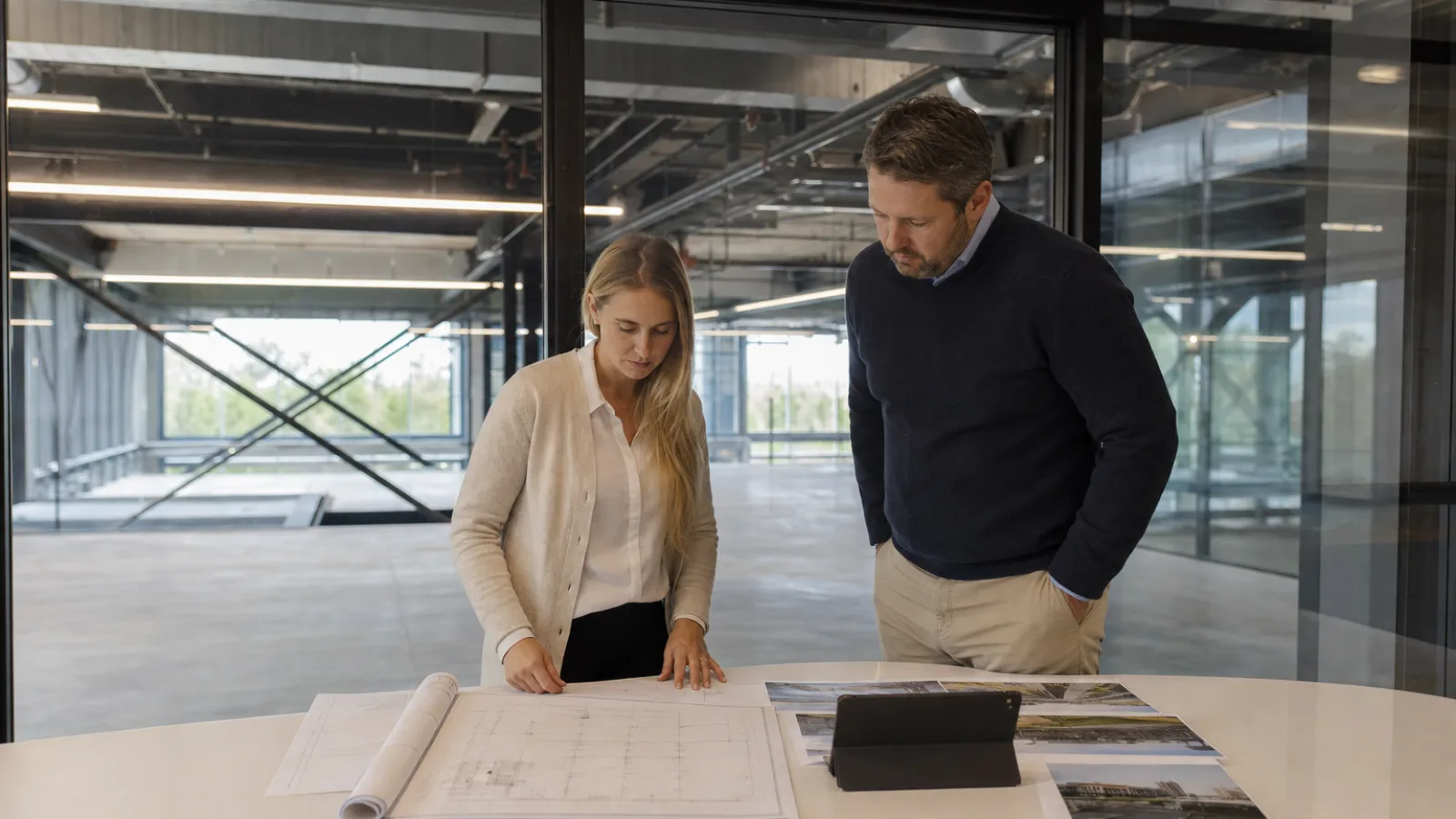
A construction project case study needs more than attractive photographs and a positive testimonial. It should explain what was delivered, the role the company played, the problem or requirement being addressed, and what happened after completion. Each important statement should be traceable to a project record, a responsible stakeholder, or an approved source.
That standard matters because case studies often combine commercial information, operational details, personal information, and intellectual property. Organized project records—including information maintained through construction project documentation tools—can make it easier to identify the source, owner, and approval status of each proposed claim before publication.
Key Takeaways
- Separate verified facts, approved qualitative statements, internal information, and unsupported claims before drafting.
- Build an evidence file that identifies the source, date, responsible person, and publication status for every material result.
- Obtain approval for names, numbers, quotations, photographs, drawings, partner credits, and sensitive operational details.
- Use ranges, generalized descriptions, or process-focused storytelling when exact disclosure is not authorized.
- Record the final approved version and schedule future reviews so an old case study does not outlive its permissions or accuracy.
What Makes a Construction Project Case Study Credible?
A credible construction case study gives readers enough context to understand the work without pretending to disclose everything. It normally identifies the project type, approximate location or market, delivery role, scope, principal constraints, and relevant outcome. It also distinguishes what the contractor directly delivered from what was influenced by the owner, design team, trade partners, operators, or later occupants.
Evidence and approval matter as much as narrative quality. A schedule claim may be supported by the approved baseline and completion records. A statement about reduced operating costs may require utility data, a defined comparison period, and an explanation of what changed besides the construction work. A testimonial requires the speaker's permission and should not be edited in a way that changes its meaning.
It is useful to distinguish four common formats:
- Portfolio caption: a short description of the project and the company's role, usually with limited results.
- Project announcement: news about an award, appointment, start, opening, or milestone.
- Testimonial: an approved statement from a client or stakeholder, generally focused on experience or satisfaction.
- Full case study: a structured account of context, scope, decisions, delivery, evidence, and outcomes.
This article focuses on the last category: a post-completion record designed to support business development while remaining accurate and appropriately confidential.
Select a Project That Can Support Verifiable Claims
Check project maturity and documentation
Completion alone does not mean every result is known. A newly handed-over facility may support claims about delivered scope and milestone achievement, but not necessarily long-term energy use, maintenance performance, occupant experience, or return on investment. Before selection, ask whether the relevant records exist and whether the people who can explain them are still available.
Review the closeout status, approved drawings where disclosure is permitted, final schedules, change documentation, commissioning records, handover materials, photographs, and relevant operating data. If the project had unresolved claims, defects, disputes, or pending corrective work, determine whether a public case study could create a misleading impression.
Match the project to the intended audience
A case study for healthcare clients may need to explain phasing, infection-control constraints, shutdown coordination, and user continuity. A case study for industrial clients may need to address process interfaces, commissioning, safety planning, and production requirements. The intended audience should determine which facts are useful, not the desire to include every available detail.
Identify confidentiality and reputational risks early
At intake, list information that may require restriction: the client's identity, project address, security systems, access arrangements, contract terms, pricing, tenant or occupant details, proprietary processes, personal information, unpublished problems, and pending disputes. Involve legal, risk, communications, security, or information-governance personnel when the project warrants it.
Build an Evidence File Before Writing
Do not begin with a polished story and search for support afterward. Create an evidence file first. It can be a controlled folder, spreadsheet, or project-specific review record containing the proposed claim, supporting source, source date, information owner, confidence level, and approval status.
Useful inputs may include approved project descriptions, contracts or scope summaries, baseline and actual schedules, change orders, meeting records, commissioning information, quality records, safety reports, approved photographs, drawings where permitted, and interviews with the project executive, superintendent, design partner, owner representative, or facility operator. Not every document belongs in the public case study. The evidence file is an internal control, not a publishing package.
Verify scope, role, and delivery method
Confirm the project type, approximate scale, delivery method, contract role, and actual responsibilities. Avoid implying that a company self-performed work that was subcontracted, designed work that it only coordinated, or managed the entire project when its role covered a defined package.
Scope language should be precise. “Delivered the interior build-out” is different from “constructed the entire facility.” If the company joined after design, say so. If the work occurred in phases or alongside an operating facility, explain that context only to the level approved for release.
Confirm schedule and milestone information
Schedule claims should identify the relevant starting point and endpoint. “Completed in eight months” is incomplete unless the reader knows whether that means notice to proceed to substantial completion, site mobilization to occupancy, or another measure. Check the approved baseline, authorized changes, milestone certificates, and any owner-caused or force-majeure adjustments before using an exact duration.
When the project record does not support a clean comparison, use qualified wording such as “delivered within the approved completion window,” provided that statement has been reviewed and approved.
Handle cost and value information responsibly
Budget, contract value, change-order totals, contingency use, and savings can be commercially sensitive. Never infer a project value from size, market assumptions, or a private conversation. Confirm whether the figure refers to the construction contract, total development cost, a trade package, or an approved budget.
If exact figures cannot be published, consider omitting them, using an approved range, or describing scale without suggesting false precision. A claim that a decision “saved money” requires evidence of the defined alternative, the calculation method, and who approved the conclusion.
Document challenges, decisions, and outcomes
A useful case study does not need to reveal confidential failures. It should, however, explain the relevant constraint and the decision that addressed it. For example, a project may have required phased access, prefabrication, logistics changes, or coordination around an operating facility. Verify who made the decision, what information informed it, and what outcome can reasonably be attributed to it.
Do not turn an internal lesson into a public accusation. Describe process and impact without naming individuals or assigning blame unless the parties have expressly approved that treatment.
Use the Right Level of Detail for Every Result
Claims should be stated at the highest level of precision the evidence and approvals can support. The following framework helps marketing teams choose safer wording.
| Claim type | Preferred evidence | Safer public wording | Common risk |
|---|---|---|---|
| Exact figure | Approved record, calculation, or certificate with a defined measurement basis | State the figure and explain what it measures, if disclosure is approved | Using a number from an outdated draft or unclear scope |
| Range | Approved financial, schedule, or quantity records | “Within the approved range” or an authorized approximate band | Choosing a range that allows readers to reverse-engineer a confidential value |
| Percentage | Documented baseline, calculation method, and comparison period | State the percentage with its baseline and limitations | Presenting a partial improvement as a total project result |
| Qualitative outcome | Approved stakeholder feedback, meeting record, or completion review | “Supported a smoother handover” or another approved description | Converting one person's opinion into a universal result |
| Unverified claim | No reliable source or approval | Do not publish | Repeating sales language, assumptions, or an unconfirmed testimonial |
Performance claims require particular care. Energy, water, carbon, schedule, safety, quality, productivity, and operational claims should identify the measurement boundary and relevant period. A construction company may accurately report that it installed a specified system, but that does not by itself prove a reduction in operating costs. Likewise, a low incident count does not automatically establish an exceptional safety performance claim without a defined project record and approved context.
Protect Confidential Information Without Making the Story Vague
Confidentiality is not limited to a client name or contract value. A project address can reveal a tenant, security posture, expansion plan, or sensitive infrastructure. Floor plans may expose access points. Images can show badges, screens, personal information, equipment serial numbers, or restricted areas. Descriptions of production methods may disclose proprietary operations.
Use a disclosure review that considers both direct and indirect identification. Removing the client's name may not be enough if the article combines a distinctive building type, exact location, unusual capacity, completion month, contract value, and recognizable photograph. Small details can combine to identify a project.
Appropriate controls may include:
- Using a broad market or region instead of an exact address.
- Describing scale approximately when exact area or capacity is confidential.
- Removing tenant, occupant, employee, customer, and visitor information.
- Omitting security, access-control, network, process, and proprietary technical details.
- Using a range only when the range itself does not expose the confidential value.
- Delaying publication until a transaction, occupancy change, or commercial restriction has passed.
- Blurring or cropping sensitive information in photographs and checking metadata before release.
Anonymization must not be used to make unsupported claims appear legitimate. If the evidence is weak, changing the project name does not solve the problem.
Create a Review and Approval Workflow
Complete internal fact-checking
Assign an internal owner who can reconcile the draft against project records. Ask project leadership to confirm scope, role, schedule, challenges, and outcomes. Ask commercial or legal reviewers to check contract-sensitive language. Ask safety, sustainability, or operations specialists to review technical performance claims in their areas.
Obtain client or owner approval
Client approval should cover more than a final request to “take a look.” Send a controlled draft that identifies the proposed project name, location, images, quotations, figures, results, and intended channels. Ask the approver to confirm what may be published, what must be removed, and whether approval applies to the website, proposals, social media, award submissions, and sales presentations separately.
Confirm partner credits and quotations
Verify the names and roles of designers, consultants, subcontractors, suppliers, and other delivery partners. Use the organization's preferred name and obtain permission before publishing a quotation. A credit should reflect actual participation and should not suggest endorsement of the contractor's marketing claims unless that endorsement is authorized.
Clear photography, video, drone, logo, and drawing rights
Determine who commissioned and owns each image, whether the photographer granted the required license, and where the image may be used. Check model or property releases where people or identifiable private property are involved. Drone imagery may require additional permissions, operational compliance, and an assessment of security or privacy risk. Remove logos, screens, plans, badges, and other protected details unless their use is authorized.
Record the final approved version and restrictions
Store the approved copy, image list, permissions, approver names or roles, approval date, permitted channels, and restrictions in a controlled location. Keep rejected claims and redactions visible to the internal review team so they are not accidentally restored in a later edit.
What to Do When a Client Will Not Approve Full Disclosure
A client may decline to publish its name, project address, budget, photographs, or detailed results. That does not necessarily end the case study, but it changes what can responsibly be said.
Possible alternatives include an unnamed owner, a generalized location, an approximate project scale, a broad building type, or a process-focused account. The story might explain how the team coordinated work around an operating facility without identifying the facility or revealing its security arrangements. It might describe a planning method, commissioning approach, or logistics decision rather than a confidential business outcome.
A private sales presentation can contain more detail than a public webpage, but it still requires authorization and access controls. It should not be treated as a place where unsupported claims are acceptable.
Composite content can be useful for teaching a repeatable method, but it must be clearly labeled as composite or illustrative. Do not combine several projects and present the result as one completed construction project. Readers should be able to tell whether a statement describes a real project, an anonymized project, or a generalized lesson.
A Pre-Publication Checklist for Construction Case Studies
- Project name, type, location description, dates, scope, delivery method, and company role are fact-checked.
- Every material result has a source, defined measurement basis, and responsible information owner.
- Exact figures, ranges, percentages, and qualitative claims have been reviewed for appropriate wording.
- Client identity, address, budget, contract terms, occupants, security details, and proprietary information are cleared or removed.
- Client or owner approval is documented for the copy, claims, quotations, and publication channels.
- Subcontractor, designer, consultant, supplier, and partner credits are accurate and authorized.
- Photography, video, drone, logo, drawing, and identifiable-person rights are confirmed.
- Images and documents contain no unintended personal, security-sensitive, or metadata information.
- Accessibility basics are addressed, including descriptive image text, readable headings, and meaningful link text.
- SEO elements describe the actual content and do not promise results the article cannot support.
- The approved version, restrictions, and next review trigger are stored in a controlled record.
Frequently Asked Questions
Do construction case studies require client permission?
Permission is strongly recommended and may be required by contract, confidentiality obligations, image licenses, or applicable privacy rules. Even where a company believes it can publish general project facts, client approval reduces identification, relationship, and reputational risk.
How can a company discuss results when the project budget is confidential?
Omit the budget, use an approved range, or describe the project's scale through non-sensitive characteristics. Do not infer value from area, building type, or market rates. Make sure any alternative description cannot be combined with other details to reveal the confidential figure.
Can an anonymous construction project case study still be credible?
Yes. It can remain credible when the scope, role, evidence basis, and limits of disclosure are clear. Approximate location and scale are acceptable when authorized, but anonymity should not create false precision or conceal a lack of supporting records.
What evidence is needed for a construction project performance claim?
The evidence depends on the claim. It may include approved schedules, commissioning records, measured utility data, quality records, safety documentation, stakeholder feedback, or a documented calculation. Define the baseline, period, boundary, and attribution before stating a result.
Who owns project photographs and drone images?
Ownership and publishing rights depend on the contract with the photographer, drone operator, client, or other commissioning party. Possessing a file does not necessarily grant unlimited marketing rights. Confirm the license, permitted uses, people and property permissions, and any security restrictions.
How often should published case studies be reviewed or updated?
Review them when project results change, a permission expires, an image is withdrawn, an organization changes its name, or a claim becomes outdated. A scheduled review is also useful for older pages, especially those containing operational results or time-sensitive performance comparisons.
Make Case Study Publishing a Repeatable Process
The strongest construction project case study is not the one with the most detail. It is the one in which the detail is proportionate, traceable, approved, and useful to the intended reader. Start with a completed project that has mature records, separate facts from opinions, test every performance claim, and treat confidentiality as a design requirement rather than a final legal check.
Construction marketing teams, project executives, and business-development professionals should establish a standard intake form, evidence register, approval workflow, image-rights record, and review schedule. That repeatable process makes future construction project case studies easier to produce—and more reliable when clients and prospective customers use them to assess capability.