Industrial Wastewater Pretreatment: How Factories Select Processes Before Discharge or Reuse
Industrial wastewater pretreatment starts with source mapping and representative sampling. Factories then match contaminant chemistry, hydraulic variability, permit conditions, and reuse goals to a practical treatment train.
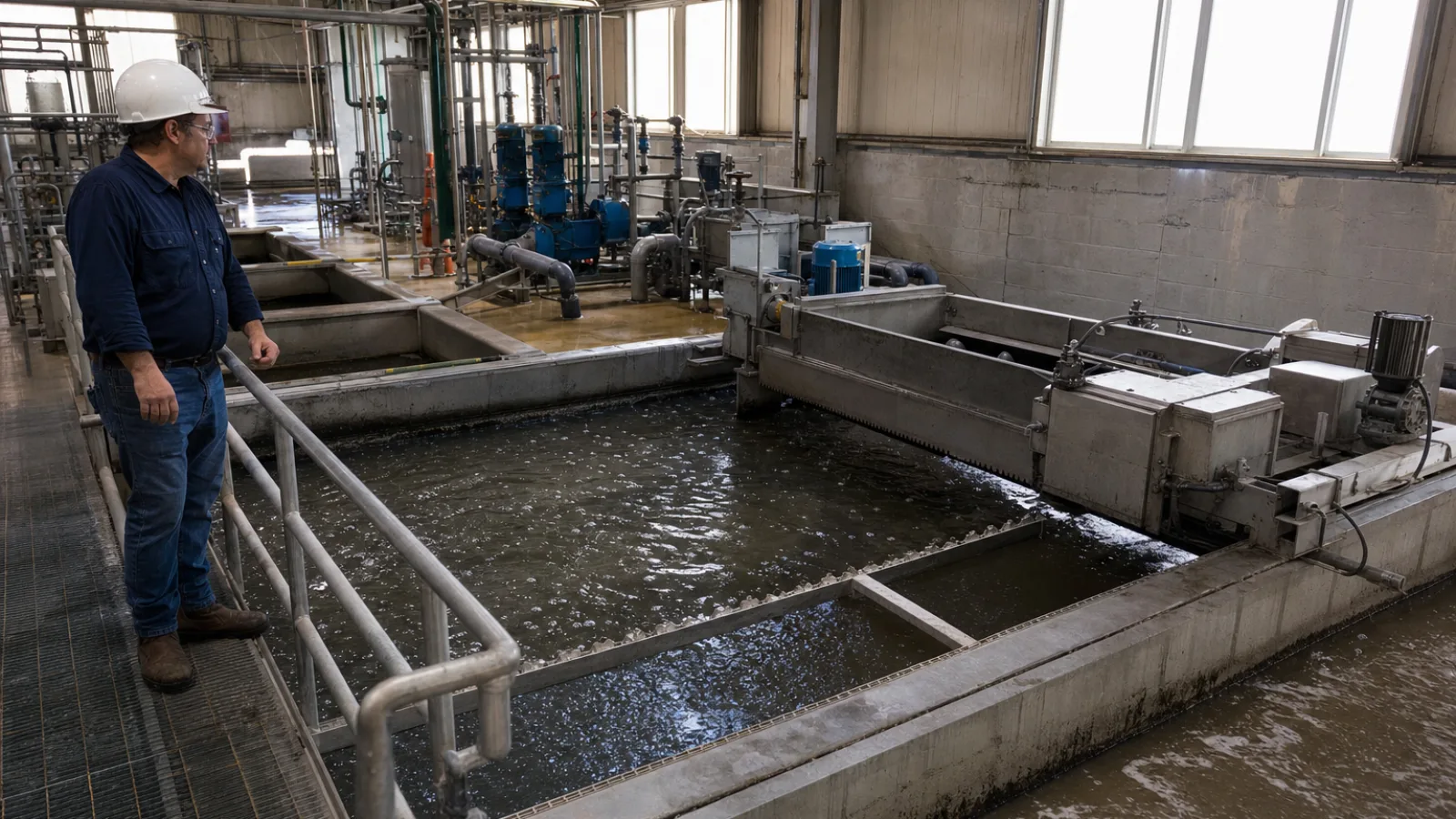
Factories rarely produce a wastewater stream with a stable composition throughout the day. Production changes, cleaning chemicals enter the drain, batches are emptied, and utility systems generate separate flows with different contaminant profiles. Industrial wastewater pretreatment therefore begins with understanding what is actually being discharged, when it changes, and what quality the water must achieve. Facilities evaluating industrial water treatment solutions from Veolia Water Technologies can use the same basic planning principle: treatment should follow measured wastewater characteristics and a defined water-quality objective, rather than a standard equipment package.
The final objective may be discharge to a municipal sewer, discharge under an applicable permit, or reuse within the plant. Each outcome creates different technical priorities. A process suitable for removing solids before sewer discharge may be inadequate for cooling-water makeup or process reuse. The treatment train must also account for hydraulic peaks, chemical compatibility, residuals, operator control, and applicable local requirements.
Key Takeaways
- Map and segregate wastewater sources before selecting treatment equipment.
- Use representative sampling that captures production changes, cleaning, batch releases, and peak hydraulic conditions.
- Select unit operations as a treatment train, with each stage protecting or improving the next.
- Define the final discharge or reuse objective before setting treatment requirements.
- Include monitoring, residuals management, chemical handling, and operator procedures in the initial design.
Why Industrial Wastewater Pretreatment Requires Process-Specific Planning
Production wastewater may contain suspended solids, dissolved chemicals, oils, metals, solvents, nutrients, or biodegradable organic matter. Utility blowdown can have a different concentration of dissolved minerals and treatment chemicals. Wash water may contain intermittent high-strength contaminants, while stormwater may be relatively clean or may contact raw materials, outdoor storage, and loading areas. Sanitary wastewater is a separate category and should not automatically be combined with industrial flows.
Combining incompatible streams can create avoidable problems. Acids and alkaline cleaners may react, oils can interfere with biological treatment, and high dissolved-solids loads can cause scaling or limit reuse options. Untreated variability may contribute to permit exceedances, corrosion, odor, biological-treatment upset, clogged pumps, or failure of downstream membranes and heat exchangers.
Source reduction and segregation are often the first practical controls. Facilities may be able to eliminate a contaminant at the process, recover a usable material, dry-clean equipment before washing, divert a concentrated batch discharge, or keep clean cooling water separate from contaminated production flows. These measures can reduce treatment demand and make the remaining wastewater more predictable.
Start With a Complete Wastewater Characterization
Wastewater characterization is more than collecting one grab sample. A representative program should reflect normal production, cleaning cycles, startup and shutdown, peak flow, batch discharge, and relevant abnormal conditions. Sampling locations should be selected so that results can be associated with specific sources, not only with a combined outlet.
Flow, production schedules, and hydraulic peaks
Measure average and peak flow where possible, and relate the data to shifts, campaigns, washdowns, and batch operations. Short-duration hydraulic surges can determine the required size of an equalization tank, lift station, screen, or chemical dosing system even when the daily average appears modest.
pH, alkalinity, temperature, and conductivity
pH affects chemical reactions, biological activity, corrosion, and discharge compatibility. Alkalinity indicates the water's ability to resist pH change and can influence biological treatment and neutralization demand. Temperature affects reaction rates, oxygen transfer, viscosity, and biological performance. Conductivity provides a useful indication of dissolved ionic material, although it does not identify individual contaminants.
Suspended solids, settleable solids, and turbidity
These measurements help distinguish particles that can settle from fine or colloidal material that may require coagulation, filtration, or flotation. Turbidity is useful for operational monitoring but does not replace laboratory analysis of solids or specific contaminants.
Oils, fats, grease, and emulsions
Determine whether oil is present as free product, dispersed droplets, or a stable emulsion. Gravity separation may work for free oil with sufficient density difference, while emulsified oil may require chemical conditioning and dissolved air flotation. Cleaning agents can stabilize emulsions and change the required process.
Metals and inorganic contaminants
Metals may be dissolved, attached to solids, or present in more than one oxidation state. Other inorganic concerns can include chlorides, sulfates, cyanide compounds, fluoride, phosphorus, and high dissolved-solids content, depending on the industry. The chemical form matters because treatment that removes particulate-bound material may not remove dissolved contaminants.
Nutrients and biodegradable or persistent organics
Biochemical oxygen demand and chemical oxygen demand can indicate biodegradable and oxidizable organic loads, but additional testing may be needed to identify persistent or inhibitory compounds. Nutrient concentrations, readily biodegradable fractions, and carbon-to-nutrient balance influence biological process selection.
Toxicity, inhibitors, and compatibility concerns
Some compounds inhibit microorganisms, damage membranes, react with treatment chemicals, or create worker-safety concerns. Toxicity screening and compatibility reviews may be warranted when the process uses solvents, biocides, strong cleaners, oxidants, or unusual metal-bearing chemicals.
| Wastewater characteristic | Why it matters | Processes it may influence |
|---|---|---|
| Flow and hydraulic peaks | Determines tank volume, pump capacity, contact time, and diversion needs | Screening, equalization, chemical treatment, biological treatment |
| pH, alkalinity, and temperature | Affects reactions, corrosion, biological activity, and control stability | Neutralization, precipitation, biological treatment |
| Solids and turbidity | Indicates settling, flotation, filtration, and sludge demands | Clarification, DAF, filtration |
| Oil and grease | Shows whether separation or emulsion breaking is required | Oil separation, coagulation, DAF, biological protection |
| Metals and dissolved inorganics | Determines chemical form, reaction requirements, and residuals | Precipitation, filtration, membranes, adsorption |
| Organic load and toxicity | Indicates biodegradability, inhibition risk, and oxygen demand | Biological treatment, oxidation, carbon adsorption |
Match Treatment Processes to the Contaminant Profile
A treatment train is a sequence of unit operations selected so that one stage protects or improves the next. Not every facility needs every process, and no single process removes all contaminants.
Screening and preliminary solids removal
Bar screens, strainers, baskets, and grit-removal devices capture large debris, fibers, packaging fragments, sand, and other abrasive material. Source capture at drains or wash stations is often more effective than relying on a central screen alone. Preliminary removal protects pumps, valves, mixers, flotation equipment, and membranes.
Equalization
An equalization tank balances flow and contaminant load before downstream treatment. Mixing can prevent settling and concentration gradients, while controlled aeration may help manage odor or maintain an aerobic condition when appropriate. Design must consider tank turnover, sludge accumulation, chemical compatibility, foaming, and the possibility that volatile or odorous compounds will be released.
Neutralization and pH control
Acid or caustic dosing can bring wastewater into a suitable range for discharge, precipitation, or biological treatment. Effective systems require adequate mixing and reaction time, reliable pH instrumentation, controlled chemical feed, and safeguards against rapid overcorrection. Operators also need procedures for sensor cleaning, calibration, and response to abnormal readings.
Oil separation and dissolved air flotation
Gravity separators are suited to free oil and solids that separate readily because of density differences. Dissolved air flotation, or DAF, introduces fine air bubbles that attach to suspended particles, oils, and chemically formed flocs, lifting them to the surface for removal. DAF can handle some emulsified oils and fine solids when chemical conditioning is properly selected, but it generates a float residual that must be managed.
Chemical precipitation and coagulation-flocculation
Precipitation chemicals can convert dissolved metals or phosphorus into less-soluble particles. Coagulants and flocculants then help small particles combine into larger solids that can settle or float. Jar testing is commonly used to compare chemical combinations and mixing conditions. The test program should evaluate both treated-water quality and the quantity and handling characteristics of the resulting sludge.
Biological treatment
Aerobic or anaerobic treatment may suit wastewater with a sufficiently biodegradable organic load. Selection depends on toxicity screening, nutrient balance, temperature, oxygen transfer, load stability, solids management, and the available footprint. Biological systems are vulnerable to shock loads from cleaners, biocides, solvents, metals, and extreme pH, so segregation and equalization may be essential.
Filtration and polishing
Multimedia filters, bag or cartridge filters, membranes, adsorption, disinfection, and other polishing processes are application-dependent. They may remove residual solids, dissolved constituents, microorganisms, color, or trace organics, but they also add pressure drop, maintenance, concentrate streams, spent media, or chemical demand. Polishing should be selected for a defined gap in water quality, not added as a universal final step.
Choose the Treatment Train Based on the Final Water-Quality Goal
Pretreatment requirements are determined partly by where the water is going. Discharge limits, sampling requirements, and permit conditions vary by jurisdiction, sewer authority, receiving system, industry, and discharge point. A facility should confirm applicable requirements with qualified environmental professionals and the relevant authority.
| Objective | Typical design focus | Key decision questions |
|---|---|---|
| Municipal sewer or industrial pretreatment system | pH control, solids and oil removal, flow management, protection of the receiving treatment plant | What materials are restricted? Are batch discharges or peak flows acceptable? What sampling and notification procedures apply? |
| Direct discharge under an applicable permit | Consistent control of regulated and site-specific pollutants, reliable monitoring, redundancy, and diversion capacity | What conditions govern the discharge point? How will off-specification water be contained? Which parameters require laboratory confirmation? |
| Internal reuse | Application-specific control of dissolved solids, hardness, organics, pathogens, scaling, corrosion, and fouling | Where will the water be used? What contact, temperature, hygiene, equipment, and reliability requirements apply? |
Reuse generally requires more than removing visible solids. Cooling systems may be sensitive to hardness, dissolved solids, corrosion, biological growth, and scaling. Washdown may require control of oils, pathogens, or odor. Process water may require tighter control of specific dissolved chemicals or trace contaminants. The end use should be defined before advanced treatment is specified.
Build Monitoring and Control Into the Design
Online instruments can track flow, pH, conductivity, turbidity, oxidation-reduction conditions where relevant, chemical feed status, and dissolved oxygen in biological systems. Periodic laboratory analysis remains important for metals, nutrients, organics, oil and grease, toxicity, and parameters that cannot be measured reliably online.
The control strategy should include alarm limits, sensor calibration, sample preservation, data logging, and clear operator responses. Facilities may use automatic diversion or retention of off-specification flow when a release could create a compliance or process risk. Monitoring verifies treatment performance and supports compliance, but it does not replace stable process control, preventive maintenance, or operator judgment.
Plan for Sludge, Residuals, and Chemical Handling
Screening debris, DAF float, biological solids, and precipitation sludge have different water content, dewatering behavior, contaminant concentrations, and disposal considerations. The design should address thickening, dewatering, temporary storage, characterization, permitted transport, beneficial use where allowed, and final disposal before equipment is procured.
Chemical systems also require compatible storage, secondary containment, access for delivery, instrumentation, worker protection, and a review of interactions among stored and dosed chemicals. Residuals planning is not an afterthought: inadequate storage or dewatering capacity can force a treatment system to operate below its intended rate.
A Practical Selection Workflow for Factory Projects
- Map every wastewater source, including production, utilities, wash water, stormwater, and sanitary flows.
- Separate clean, contaminated, and high-strength streams where practical.
- Define the discharge or reuse requirements and identify the receiving system.
- Develop a representative sampling and testing program.
- Identify variability, batch releases, and peak hydraulic and contaminant loads.
- Screen source-reduction, chemical substitution, recovery, and water-conservation options.
- Select candidate unit operations based on contaminant form and treatment sequence.
- Test chemical and biological assumptions through bench or pilot work when warranted.
- Confirm hydraulic, electrical, controls, footprint, maintenance, access, and residuals requirements.
- Establish commissioning, sampling, operator training, alarm response, and continuous-improvement procedures.
Common Process-Selection Mistakes to Avoid
Buying equipment before testing is one of the most expensive errors because a unit may be correctly sized for flow but poorly matched to contaminant chemistry. Designing only for average flow can cause overflow, short contact time, or chemical-feed instability during peak events. Combining incompatible streams may create emulsions, toxic shocks, scaling, or unnecessary treatment demand.
Other common problems include ignoring cleaning chemicals, overlooking sludge volume, treating monitoring as an afterthought, and specifying reuse without defining the end use. A system that produces visually clear water may still have dissolved salts, residual organics, pathogens, or corrosion potential that make it unsuitable for a particular application.
Frequently Asked Questions
What is industrial wastewater pretreatment?
It is the treatment applied to industrial effluent before discharge to a sewer, receiving water, or another treatment system, or before selected reuse applications. It may include physical, chemical, biological, and polishing processes.
How does a factory know which treatment process it needs?
The facility maps sources, measures flow and contaminants under representative conditions, defines the final water-quality objective, and evaluates candidate processes through engineering review and, when needed, bench or pilot testing.
When is equalization necessary?
Equalization is useful when flow, pH, contaminant concentration, or batch discharge varies enough to upset downstream treatment. It is not automatically required; tank operation must also address mixing, odor, settling, and chemical compatibility.
What is the difference between DAF and clarification?
Clarifiers primarily separate particles that settle by gravity. DAF uses fine air bubbles to float oils, suspended solids, and flocs. The better choice depends on density, particle size, emulsion stability, chemical conditioning, and residuals handling.
Can biological treatment remove metals or oil?
Biological treatment is mainly intended for biodegradable organic matter. It may not reliably remove dissolved metals and can be inhibited by oils or toxic compounds. Metals and oil often require source control or separate physical and chemical treatment.
What additional treatment is often needed for water reuse?
Reuse may require filtration, membranes, adsorption, disinfection, or other polishing to control dissolved solids, hardness, organics, pathogens, scaling, corrosion, and fouling. The exact combination depends on the end use.
Conclusion
Successful industrial wastewater pretreatment begins with source mapping and representative data. Factories can then connect contaminant chemistry and hydraulic variability to a treatment sequence, monitoring plan, and residuals strategy. The distinction between pretreatment for discharge and advanced treatment for reuse is especially important: the destination determines the required water quality.
Before final design or procurement, involve qualified process, environmental, controls, and safety professionals. A well-planned system is not simply a collection of tanks and equipment; it is an operating process that protects production, supports compliance, manages residuals, and can adapt as manufacturing conditions change.