Advanced Facade Inspection and Repair: How Drones, AI, and Robotics Are Protecting Modern Buildings
Modern buildings require advanced facade inspection techniques beyond traditional methods. This technical overview explores how drones, AI-powered analytics, and robotic systems are creating safer, more accurate, and cost-effective strategies for building envelope maintenance and repair.
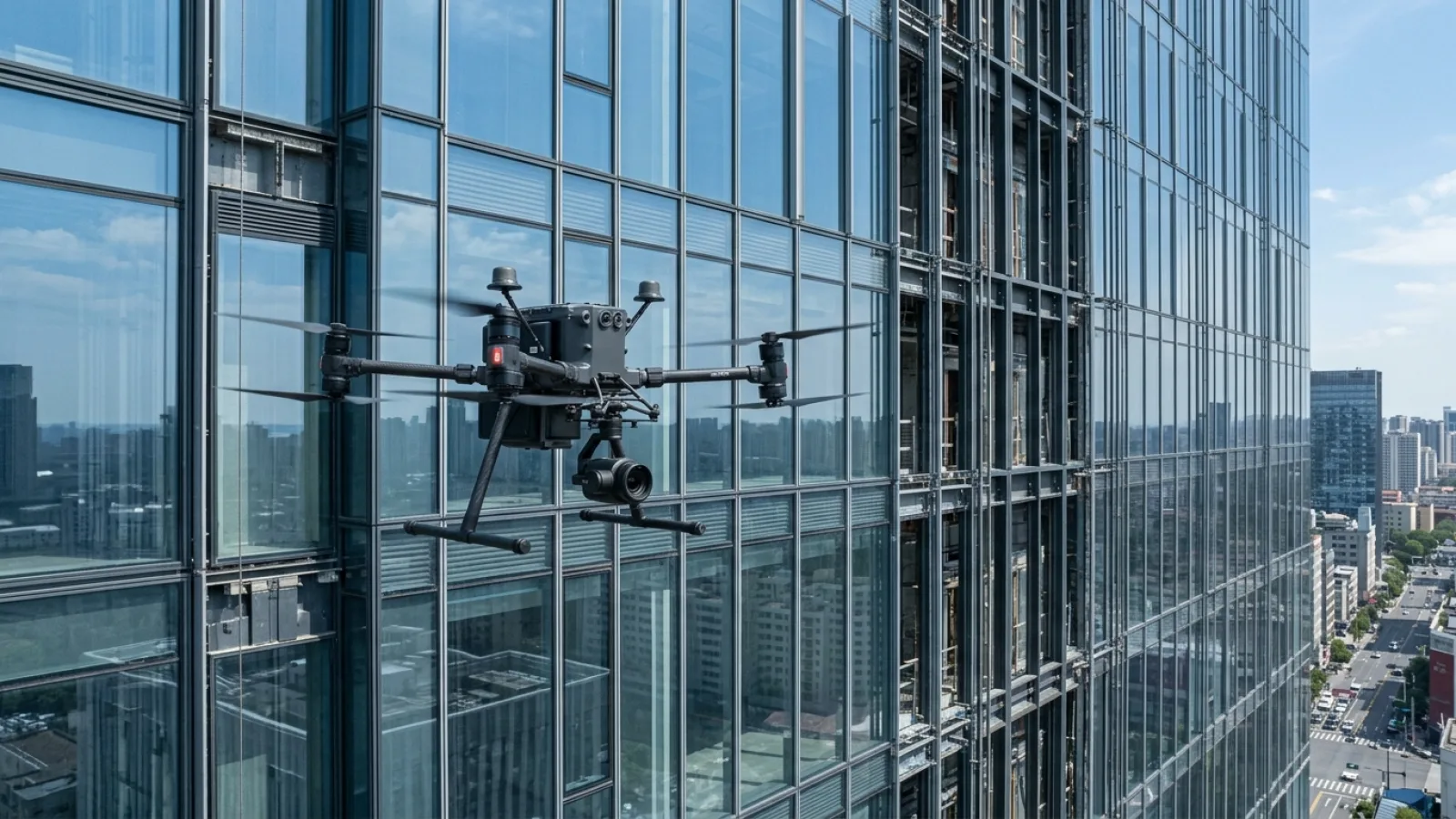
A building's facade is far more than its aesthetic signature; it is a complex, high-performance system integral to the structure's overall health. This building envelope serves as the primary barrier against environmental elements, playing a critical role in structural integrity, weather protection, and energy efficiency. The stakes associated with facade failure are exceptionally high, ranging from significant financial liabilities and operational disruptions to severe safety risks for occupants and the public. Historically, facade maintenance has been a reactive process, addressing issues only after they become visible and often problematic. Today, technology is fundamentally transforming this paradigm. We are witnessing a pivotal shift from reactive repairs to a proactive, data-driven approach to building envelope management, ensuring longevity and safety for modern architectural assets.
2. The High Cost and High Risk of Traditional Facade Inspections
For decades, the standard for facade inspection involved methods that were costly, disruptive, and inherently dangerous. Techniques such as extensive scaffolding, rope access for technicians, and motorized swing stages have been the industry norm. However, these traditional approaches are fraught with limitations. The financial outlay for erecting scaffolding around a high-rise building is substantial, often running into hundreds of thousands of dollars. Beyond the cost, these methods cause significant disruption to building occupants, blocking views, creating noise, and impeding daily operations for weeks or even months.
More importantly, these methods present major safety hazards. Inspectors working at extreme heights face constant risks, and the potential for falling debris poses a threat to pedestrians below. Furthermore, the data collected is often subjective and incomplete. An inspector's ability to identify defects is limited by their physical reach and visual acuity on a given day. The process relies heavily on manual notation and random sampling, making it difficult to create a comprehensive, quantifiable record of the facade's condition. This can lead to missed defects that evolve into major structural problems, undermining the very purpose of the inspection.
3. The Drone Revolution: How UAVs Provide Unprecedented Access and Data
The advent of Unmanned Aerial Vehicles (UAVs), or drones, marks a revolutionary step forward in advanced facade inspection. These sophisticated aircraft, equipped with high-resolution cameras, can safely and rapidly capture detailed visual data of the entire building envelope. This process eliminates the need for costly scaffolding and removes human inspectors from dangerous at-height situations. Drones can navigate complex building geometries, accessing areas that are difficult or impossible to reach with traditional methods. The speed of data acquisition is unparalleled; an inspection that once took weeks can now be completed in a matter of days, drastically reducing building downtime and associated costs. As the field matures, expert engineering firms like WJE and forward-thinking constructors are increasingly adopting these technologies to deliver superior diagnostics and asset management strategies to their clients.
4. Beyond Visuals: Integrating Thermal and Multispectral Imaging Payloads
The true power of drone building inspection is realized when we move beyond standard visual data. Modern inspection drones can be equipped with a variety of advanced sensor payloads, providing insights that are invisible to the naked eye. Thermal imaging cameras are among the most valuable tools in this arsenal. By detecting minute variations in surface temperature, a thermal scan can pinpoint hidden issues such as sub-surface water intrusion, which creates distinct thermal anomalies. It can also identify gaps in insulation, air leakage around windows, and thermal bridging in the building structure, all of which contribute to significant energy loss.
Similarly, multispectral imaging sensors capture data from different wavelengths of light beyond the visible spectrum. This technology is highly effective at identifying early signs of material degradation, chemical leaching from masonry, or the presence of organic growth like mold or algae before they become visually apparent. By fusing data from visual, thermal, and multispectral sensors, engineers gain a holistic, multi-layered understanding of the facade's condition, enabling them to diagnose problems with incredible precision.
5. AI-Powered Data Analysis: From Thousands of Images to Actionable Insights
A single drone inspection can generate tens of thousands of high-resolution images, creating a dataset far too large for efficient manual review. This is where Artificial Intelligence (AI) and machine learning (ML) become indispensable. Sophisticated AI platforms are now used to process this massive volume of visual data, transforming it into actionable intelligence. Trained on vast libraries of facade images, these algorithms can automatically detect, classify, and map a wide range of defects with a level of accuracy and consistency that surpasses human capability.
The AI system can identify and categorize issues such as concrete spalling, masonry cracks (down to the sub-millimeter level), sealant failures, efflorescence, and corrosion staining. Each detected anomaly is geo-tagged to its precise location on a 3D model or 2D elevation of the building. This replaces the subjective, error-prone process of manual review with an objective, quantifiable, and repeatable analysis. The output is not just a list of problems but a comprehensive digital twin of the facade, where facility managers can visualize every defect, assess its severity, and plan targeted repairs with surgical precision.
6. Common Facade Defects Detected by Modern Technology
The advantages of advanced facade inspection become clear when comparing how different defects are identified by old versus new methodologies. The following table illustrates the superior detection capabilities of modern technology.
| Facade Defect | Traditional Detection Method | Advanced Technology Detection Method |
|---|---|---|
| Micro-cracks in Concrete/Masonry | Close visual inspection from scaffolding (often missed) | High-resolution drone imagery with AI-powered crack detection algorithms |
| Sub-surface Water Infiltration | Visual signs of dampness, destructive testing (core samples) | Drone-based thermal imaging identifies temperature anomalies caused by trapped moisture |
| Failing Window/Joint Sealants | Manual tactile inspection, random sampling | Automated AI analysis of drone imagery to map every inch of sealant for gaps or deterioration |
| Insulation Voids or Failures | Often undetected until major energy loss or interior damage occurs | Thermal imaging reveals cold/hot spots indicating missing or compromised insulation |
7. Non-Destructive Testing (NDT) for Deeper Facade Integrity Analysis
While drone-based sensors provide an exceptional overview of the facade's exterior and near-surface condition, a complete structural assessment sometimes requires looking deeper. Non-Destructive Testing (NDT) encompasses a range of technologies that evaluate the properties of a material or component without causing damage. These methods are often used to complement and verify the findings of a drone inspection. For example, Ground Penetrating Radar (GPR) can be used to map the location and condition of steel rebar within concrete panels, detecting signs of corrosion. Ultrasonic Pulse Velocity (UPV) testing sends sound waves through concrete to assess its quality, density, and uniformity, identifying areas of weakness or internal voiding. These ground-based or robot-mounted tools provide critical data on what is happening beneath the surface, ensuring a truly comprehensive understanding of the building envelope's integrity.
8. The Rise of Robotics in Facade Repair and Maintenance
The technological revolution in building envelope management extends beyond inspection into repair and maintenance. Robotic facade repair systems are emerging as a safe and efficient alternative to manual labor. These wall-climbing robots, often utilizing suction or vacuum adhesion, can traverse a building's exterior to perform a variety of tasks. Equipped with specialized end-effectors, they can execute high-pressure cleaning, apply paint or waterproof coatings, and even dispense sealants into joints with remarkable consistency. The primary benefit of robotic systems is safety, as they completely remove human workers from hazardous heights. Additionally, they offer a level of precision and uniformity in application that is difficult to achieve manually, resulting in higher-quality, longer-lasting repairs. As this facade repair technology matures, it promises to automate routine maintenance, further reducing long-term costs and improving building resilience.
9. Case Study: A High-Rise Facade Inspection Using Drones and AI
Consider a fictional 40-story commercial office tower in a major metropolitan area, featuring a curtain wall system of glass and precast concrete panels. The building owner needed to comply with a local ordinance requiring a facade inspection and wanted to develop a 10-year capital expenditure plan. Instead of commissioning traditional swing stages, they opted for an advanced facade inspection. The process began with meticulous flight planning to ensure safety and comprehensive coverage. Over two days, a certified pilot flew a drone equipped with visual and thermal cameras, capturing over 25,000 images and thermal readings. This data was uploaded to an AI-powered analytics platform. Within 72 hours, the AI processed the entire dataset, identifying and classifying over 500 individual defects, from minor sealant gaps to areas of potential delamination. The final deliverable was an interactive 3D digital twin of the building. The facility manager could click on any point of the model to view the high-resolution image of a specific defect, read the AI's analysis of its severity, and see its exact dimensions and location. This geo-tagged data allowed the repair team to bypass exploratory work and proceed directly to the identified problem areas, saving significant time and money.
10. Structural and Safety Implications of Neglected Facades
The consequences of neglecting facade maintenance cannot be overstated. What begins as a small, undetected crack can allow water to penetrate the structure. During freeze-thaw cycles, this trapped moisture expands, exerting immense pressure that leads to spalling—where pieces of concrete or masonry break off. This spalling concrete poses a significant and potentially lethal risk to the public and property below. Progressive deterioration can compromise the integrity of facade anchors and connections, leading to the catastrophic failure of entire panels. A compromised building envelope also leads to chronic water leaks, fostering mold growth, damaging interior finishes, and ultimately degrading the structural steel and concrete that form the building's skeleton. Proactive, advanced inspection is the first line of defense against this chain of decay.
11. Legal and Regulatory Compliance for Facade Inspections
Many municipalities have recognized the public safety risks posed by aging buildings and have enacted stringent regulations. Jurisdictions like New York City, with its Facade Inspection Safety Program (FISP), also known as Local Law 11, mandate periodic inspections of facades for buildings over a certain height. Similar ordinances exist in Boston, Chicago, San Francisco, and other cities. Meeting these facade inspection legal requirements with traditional methods can be a logistical and financial burden. Advanced technologies provide a more efficient and thorough solution. The detailed, verifiable data captured by drones and analyzed by AI creates a robust and defensible record of compliance. The digital reports and 3D models serve as a permanent, time-stamped archive of the building's condition, simplifying reporting to regulatory bodies and providing a clear baseline for future inspections.
12. Choosing the Right Technology Partner for Advanced Facade Maintenance
Adopting these advanced technologies requires partnering with a qualified and experienced service provider. Building owners and facility managers should look for several key criteria when selecting a partner. Ensure their drone pilots are fully certified and insured for commercial operations in complex urban airspace. The provider should possess deep expertise not just in drone operations but also in building science and facade engineering to correctly interpret the data. Scrutinize the quality of their data analytics platform; it should be robust, intuitive, and provide quantifiable, actionable insights, not just raw images. Finally, inquire about their experience with different facade materials and building types, as a one-size-fits-all approach is rarely effective. A true technology partner will act as a consultant, helping you leverage the data to build a long-term asset management strategy.
13. Conclusion: The Future of Automated Building Envelope Management
The field of facade inspection and repair is undergoing a profound transformation. We are moving away from the costly, dangerous, and often incomplete methods of the past and embracing a future of proactive, data-driven building envelope management. Drones provide safe and rapid access, advanced sensors see beyond the visible spectrum, AI delivers objective analysis, and robotics offer precise repair solutions. This technological synergy results in safer buildings, extended asset lifespans, and optimized maintenance budgets. Investing in advanced facade inspection technology is not merely an operational expense; it is a strategic investment in asset preservation, regulatory compliance, public safety, and the long-term value of the structure.
14. Frequently Asked Questions (FAQ)
- How much does a drone facade inspection cost compared to traditional methods?
While the upfront cost for a comprehensive drone inspection can be comparable to some traditional methods, the overall value proposition is significantly higher. Drones drastically reduce costs associated with scaffolding, lane closures, and business disruption. The speed of data capture and the precision of AI-driven reports lead to a higher return on investment (ROI) by enabling targeted, efficient repairs and preventing minor issues from escalating into major capital projects.
- Are drone inspections accurate enough to replace hands-on inspections?
Drone inspections are an incredibly powerful tool for initial comprehensive assessment, efficiently mapping 100% of the facade to identify potential areas of concern. They are excellent for satisfying many regulatory requirements. However, they are best viewed as a complementary technology. The standard workflow often involves using the drone data to pinpoint specific locations that may require a targeted, hands-on verification by an engineer via rope access or a boom lift, eliminating the need for a full-building manual survey.
- What happens to the data collected during an advanced facade inspection?
The vast amount of data is processed and synthesized into highly usable formats. Typically, clients receive a comprehensive digital report featuring an executive summary, detailed defect categorization, and severity ratings. The cornerstone of the deliverable is often an interactive 3D model or a set of detailed elevation drawings where every identified issue is geo-tagged. This digital twin becomes a living document for planning and tracking maintenance and repairs over the building's lifecycle.
- Can drones be used for any type of building?
Drones are incredibly versatile and can be used on the vast majority of buildings. However, there are some limitations. The primary constraints are related to airspace regulations, particularly near airports, government facilities, or in no-fly zones. Extremely complex building geometries with many deep-set overhangs can pose navigational challenges. Finally, inspections are weather-dependent and cannot be conducted safely in high winds, heavy rain, or snow.