Residential Foundation Drainage: How Grading, Gutters and Downspouts Work Together
Effective foundation drainage is not one product or repair. It is a connected system that moves roof runoff, surface water and groundwater away from the house.
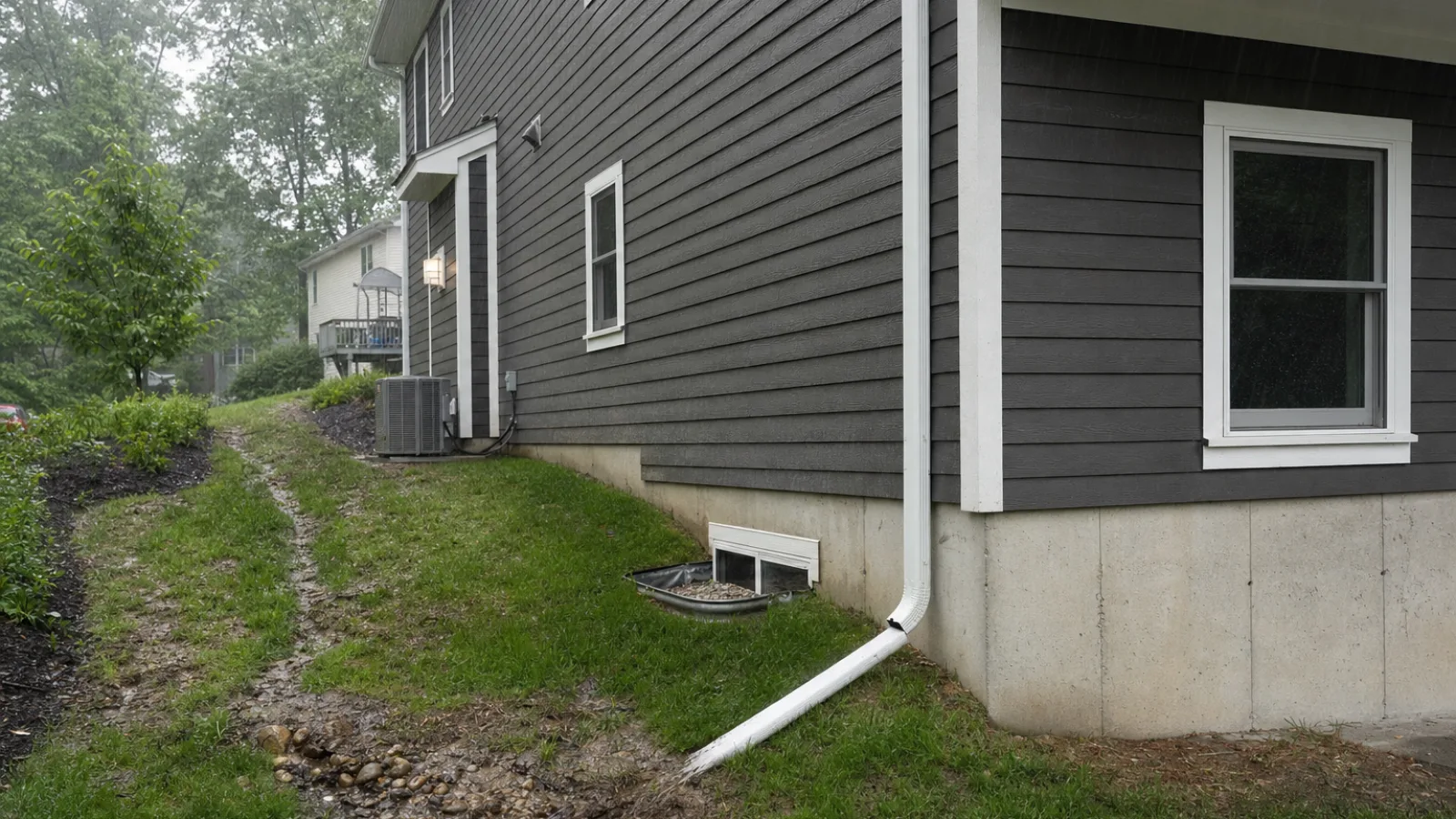
Water problems at a foundation rarely come from one component alone. Rain may run across a settled side yard, spill from an overflowing gutter, collect in a window well or enter through a crack after the surrounding soil becomes saturated. Effective residential foundation drainage connects these conditions into one water-management strategy: collect water, move it away from the structure and discharge it where it will not return.
A sump pump can remove water that reaches a collection pit, but it cannot correct a surface slope or a downspout that empties beside the wall. Homeowners comparing sump pump options from Zoeller Pump Company should therefore treat the pump as one part of a broader drainage system, not as a substitute for grading, roof-runoff control or sound below-grade drainage.
What residential foundation drainage is designed to do
The goal of a foundation drainage system is to collect, redirect and discharge water before it accumulates beside or beneath the foundation. This includes water flowing over the ground, runoff concentrated by the roof and, in some locations, groundwater moving through soil toward the building.
These sources behave differently. Surface water is visible and often responds to grading. Roof runoff can arrive in concentrated volumes through gutters and downspouts. Groundwater may rise seasonally or move laterally through permeable soil, even when the weather is dry. Plumbing leaks, meanwhile, may create wet areas unrelated to rainfall and require a different investigation.
A sump pump handles water collected in a pit by a footing drain, interior drainage channel or other system. It does not repair poor grading, clear a blocked pipe, stop a plumbing leak or determine where discharged water should go. Local soil, climate, foundation type, site slope, plumbing arrangements and building codes all affect the appropriate solution.
How the main drainage components work together
Lot grading and swales
Grading around a house is the shaping of soil and other site surfaces so water flows away from the foundation. A swale is a shallow, broad depression that guides runoff to a suitable discharge area. Both must direct water without creating a new problem for a neighboring property, walkway, retaining wall or detached structure.
Settlement can flatten or reverse the intended slope. Erosion can create channels that carry water toward the house, while new planting beds, mulch, patios and paving can change how quickly water reaches the soil. Adding raised landscape edging or impermeable hardscape against a wall may also trap runoff rather than redirect it. Grading should be assessed as part of the whole lot, not just by looking at the few inches immediately beside the foundation.
Gutters, leaders, and downspout extensions
A roof collects rainfall over a much larger area than the ground directly beside the wall. Gutters and leaders, also called downspouts, concentrate that runoff and give it a controlled route away from the building. When gutters overflow, are undersized for the roof area, separate at joints or become damaged, water can fall close to the foundation and saturate the soil.
A short or missing gutter downspout extension is a common weak point. Splashback can wet siding and foundation surfaces, while an underground outlet can clog and cause water to back up near the footing. Downspouts should not discharge toward a window well, stairwell, neighboring structure or eroding slope. The safe outlet depends on the lot, soil, local rules and available drainage path; a longer extension is not automatically appropriate if it creates a trip hazard or sends water onto another property.
Window wells and area drains
Below-grade windows create low points where runoff can collect. A sound window well may include a clear cover, free-draining gravel and a drain connected to an appropriate outlet. The exact arrangement varies by foundation and local construction practice.
Leaves, soil, ice and landscaping materials can block a window-well drain. A well that fills after ordinary rain, shows mud lines or has water against the window frame deserves attention. Covers can reduce debris and direct runoff, but they cannot compensate for a blocked or overwhelmed drain.
Footing drains and exterior foundation drainage
A footing drain is a perforated pipe installed near the footing to collect water moving through the surrounding soil. It is commonly placed with drainage aggregate and may be separated from fine soil by filter fabric or another filtering method. Collected water may flow by gravity to an approved outlet or to a sump pit.
An exterior foundation drain can also be part of a waterproofing or water-management assembly installed against the foundation wall. Because these components are buried, their condition cannot usually be confirmed from the surface. Persistent seepage may require drain-camera work, records review, test openings or excavation by qualified professionals rather than assumptions based only on visible soil.
Sump pits and sump pumps
A sump pit receives water from a drainage system and allows a pump to discharge it away from the building. The pump should start when the water reaches its operating level, move water through an appropriate discharge line and prevent backflow where the system requires it.
Homeowners should know where the discharge line ends and whether it remains open after rain, freezing weather or landscaping work. Power interruptions, a failed switch, a blocked line, a stuck check valve or a pump that cycles excessively can all reduce reliability. Backup planning may involve a secondary pump, an alternate power source or a high-water alarm, depending on the risk and the building’s drainage design. Electrical components should not be opened or handled in wet conditions.
Waterproofing and dampproofing
Dampproofing generally limits moisture transmission through a foundation surface, while waterproofing is intended to provide greater resistance to liquid water. Neither term means that a coating alone will solve every basement or crawl-space problem.
Hydrostatic pressure is water pressure against or beneath a foundation. If grading, footing drains or discharge routes leave water against the wall, a surface coating may deteriorate, leak at joints or force water through cracks and penetrations. Coatings are most reliable when used as part of a broader foundation water management plan.
Common signs that foundation drainage needs attention
Interior warning signs include damp walls, efflorescence—a powdery mineral deposit left as water evaporates—musty odors, peeling finishes, staining, recurring puddles and unusually frequent sump-pump cycling. In a crawl space, wet insulation, standing water, mold-like growth or persistently damp soil may indicate a drainage or moisture-control issue.
Outside, look for water pooling near the foundation, soil washout, eroded channels, cracked or displaced hardscape, overflowing gutters and wet soil near downspout outlets. The location, timing and weather pattern are useful clues. Water that appears only during heavy rain near one corner may suggest roof runoff or grading. Moisture that continues during dry weather may point toward groundwater, plumbing or a failed below-grade drain. These observations narrow the possibilities but do not by themselves establish a diagnosis.
Safe homeowner checks before calling a contractor
- Observe the property during or shortly after rain, but avoid standing water, lightning, unstable slopes and other unsafe conditions.
- Look for visibly clogged, disconnected, sagging or overflowing gutters and downspouts.
- Confirm that downspout outlets are not dumping directly beside the foundation or into a window well.
- Check for settled soil, standing water, erosion and hardscape that slopes toward the house.
- Clear loose leaves from window wells and note whether drains appear blocked or overwhelmed. Do not dismantle unknown drainage assemblies.
- Listen for sump-pump operation and check whether its discharge route is open, without opening wet electrical equipment.
- Review previous repair invoices, drainage plans, warranty information and inspection reports if available.
Do not enter an unsafe excavation, disturb buried utilities, remove structural soil or excavate beside a foundation without proper precautions. A wet electrical panel, exposed wiring or flooded mechanical area requires appropriate professional help rather than an improvised inspection.
Why common drainage fixes fail
Adding topsoil can hide a low area without correcting the underlying slope. The new soil may settle again, place soil too high against the wall or simply move the water problem a few feet away. Similarly, a short downspout extension may discharge beyond the visible splash zone but still leave water close enough to saturate the foundation soil.
Buried outlets can clog, disconnect or freeze. Impermeable landscaping can increase runoff, while disconnected drains may release water beneath patios or beside the footing. Sealing an interior wall may conceal the symptom while water continues to enter through the exterior or floor joint. A sump pump without a reliable discharge plan can also return water near the foundation or fail during a power interruption.
The more dependable approach is to trace water to its entry or collection point. Treating only the place where water appears indoors can leave the source unchanged.
Choosing the right level of intervention
The following table is general guidance, not a diagnosis. Site conditions and the building’s construction determine what work is appropriate.
| Situation | Possible first step | When professional evaluation is justified |
|---|---|---|
| Minor gutter overflow | Remove visible debris and inspect alignment, joints and outlet routing. | Overflow continues, components are undersized or roof drainage cannot be safely rerouted. |
| Isolated surface ponding | Observe the area after rain and check for settlement or changed landscaping. | Ponding recurs, soil is saturated near the foundation or correction may affect neighboring property. |
| Recurring basement seepage | Document location, timing and weather; check visible roof runoff routes. | Water returns after multiple events, finishes are damaged or the source is not clear. |
| Failed window-well drainage | Remove loose debris and inspect the visible cover, gravel and well condition. | Water reaches the window, the drain is inaccessible or the well repeatedly fills. |
| Suspected footing-drain blockage | Review records and visible sump behavior; avoid assuming the buried pipe is blocked. | Seepage persists and testing, camera inspection or excavation may be needed. |
| Foundation cracking with water entry | Photograph and document crack location, width changes and water timing. | Cracks are widening, displaced, horizontal or associated with settlement or structural concerns. |
| Repeated sump-pump failure | Check for obvious discharge blockage and note cycling or failure symptoms safely. | The pump will not start, backflow occurs, power reliability is poor or electrical/plumbing work is involved. |
When excavation or a professional drainage assessment is warranted
Professional evaluation is appropriate when water intrusion recurs, structural cracks or settlement are present, erosion is severe, soil remains saturated, drainage components are inaccessible or previous repairs have failed. Excavation may be justified when the likely source is outside the wall and buried components cannot be tested or repaired from inside, but it should be planned around utilities, access, soil stability and foundation safety.
A qualified assessment may include a review of roof runoff, site and grading observations, inspection of visible components, moisture tracing, drain or pipe assessment where appropriate and evaluation of the final discharge location. The right specialist depends on the symptom: a drainage or waterproofing contractor may address site and foundation water management, a plumber may investigate piping, and a structural professional or engineer may be needed for significant cracking, movement or settlement.
Residential foundation drainage maintenance checklist
- Routinely: Remove leaves and sediment from gutters, inspect downspout connections and verify that outlets remain open.
- Before heavy rain seasons: Check for settled grading, erosion, ponding and changes to swales or landscape beds.
- After landscaping or hardscape work: Confirm that new soil, paving, edging and retaining features still direct water away from the house.
- Seasonally: Clear window wells, inspect covers and look for signs of blocked or overwhelmed drains.
- During wet weather: Observe sump operation, discharge routing and any water returning near the foundation.
- Over time: Document recurring wet areas with photographs and retain repair records, drainage plans and inspection reports.
Frequently asked questions
How far should a downspout discharge from a foundation?
The appropriate distance depends on the site slope, soil, drainage design, local rules and where the water can safely go. A single distance is not a guarantee; the outlet must keep runoff from returning to the foundation without creating a hazard or sending water onto neighboring property.
Does grading alone solve foundation water problems?
Grading can reduce surface runoff when the ground has settled or slopes toward the house. It will not by itself resolve concentrated roof runoff, groundwater, a flooded window well, plumbing leakage or a failed below-grade drain.
Can waterproofing stop basement leaks without drainage?
Waterproofing can reduce water movement through foundation surfaces, but it does not necessarily relieve water pressure or redirect runoff. If drainage, grading or discharge conditions remain poor, a coating alone may not provide a durable solution.
How can I tell whether a sump pump is part of the problem?
Warning signs include excessive cycling, failure to start, a blocked discharge, backflow or water returning near the foundation. Power loss can also interrupt operation. Electrical and plumbing concerns should be inspected safely by a qualified professional.
When should foundation drainage be evaluated before buying a home?
Seek a qualified inspection when you see ponding, musty odors, efflorescence, foundation cracks, unexplained interior repairs or dependence on a sump pump. Repeated water intrusion, especially where its source is unclear, deserves investigation before purchase decisions are finalized.
Effective residential foundation drainage is a connected system. Start by controlling roof runoff and surface grading, then investigate window wells and below-grade drainage when symptoms persist. Prompt evaluation is wise when water intrusion is recurrent, structural concerns are present or safe access to the drainage components is not possible.