From Data Centers to Hospitals: Global Waste Heat Recovery Applications for More Sustainable Buildings
Waste heat recovery can turn rejected heat from cooling systems, process equipment, and ventilation exhaust into a useful energy resource. This guide compares practical applications in data centers, hospitals, manufacturing plants, and commercial offices while addressing safety, controls, maintenance, and verification.
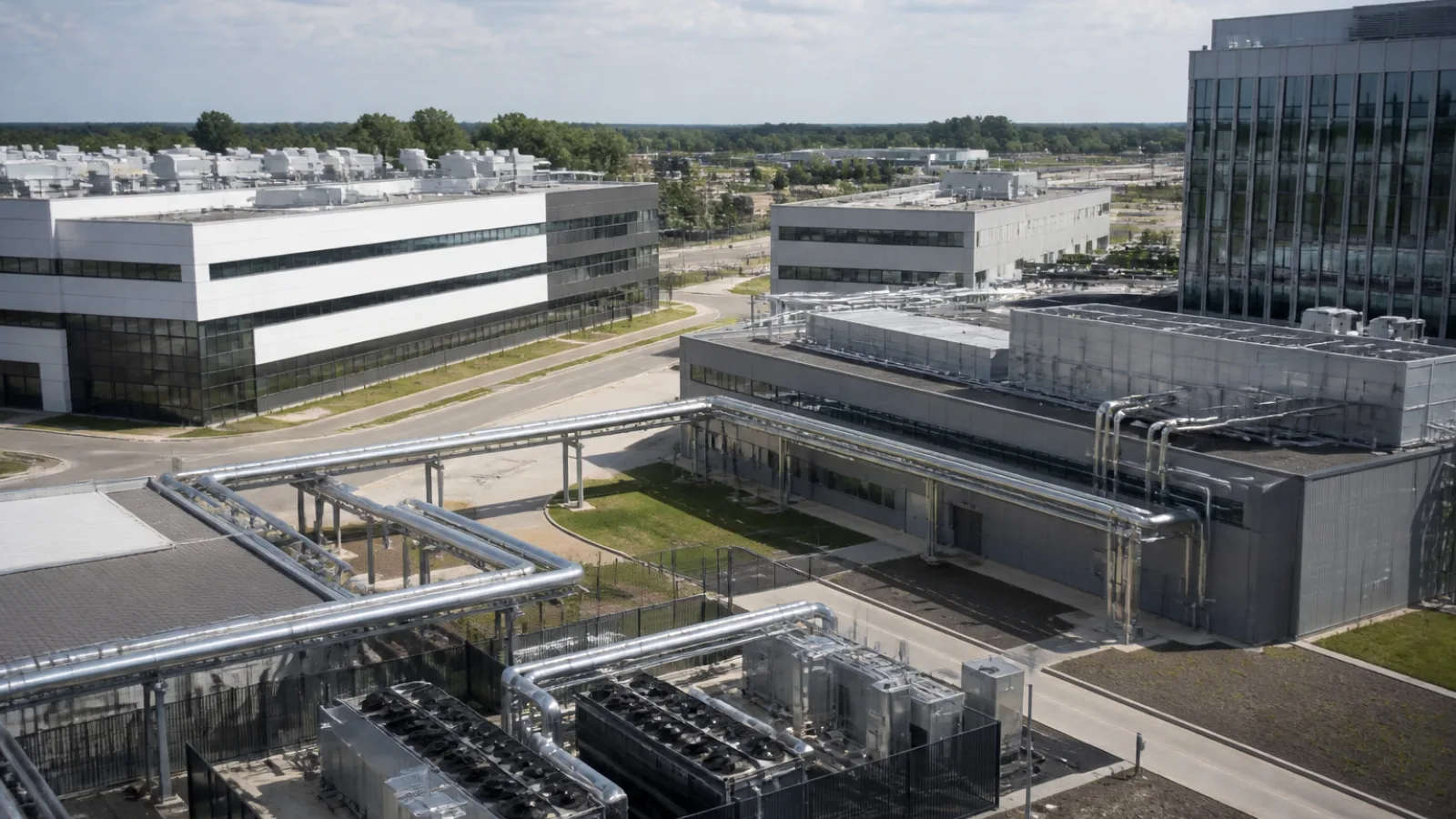
Waste heat recovery captures thermal energy that would otherwise be rejected to the outdoor air, drainage system, or another low-value sink and redirects it to a useful purpose. Depending on the facility, that purpose may include preheating ventilation air, producing domestic hot water, supporting a hydronic heating loop, or supplying a nearby process or building.
As building owners and operators pursue better efficiency without compromising reliability, technologies such as air-conditioning and ventilation solutions can form part of a wider heat recovery strategy. The most suitable approach differs by sector: data centers prioritize uptime and temperature stability, hospitals must protect clinical air quality, manufacturers manage variable process conditions, and offices often depend on retrofit practicality. Comparing these applications helps project teams identify opportunities that are technically useful rather than simply attractive on paper.
What Is Waste Heat Recovery?
Waste heat recovery is the planned transfer of thermal energy from a source that has more heat than it needs to a sink that can use it. It is different from ordinary heating or cooling, where equipment creates or removes heat to meet a load. It is also broader than heat reuse, which describes the operational act of using recovered heat. A heat recovery system provides the equipment, controls, and interfaces needed to make that reuse possible.
Common heat sources include condenser water from chillers, data center cooling systems, warm exhaust air, boiler flue gases, compressed-air systems, refrigeration equipment, process ovens, dryers, furnaces, wash water, and industrial wastewater. Potential heat sinks include incoming outdoor air, domestic hot water, space-heating circuits, make-up water, process fluids, nearby buildings, thermal storage, and district-energy networks.
Feasibility depends on more than the presence of heat. Temperature determines whether the energy can meet the required demand directly or whether a heat pump is needed. Timing matters because a continuous source may not align with a short daily demand. Flow rate determines the available capacity, while cleanliness and chemical composition affect heat-exchanger selection and maintenance. Proximity is also important: long pipe runs, duct routes, or distribution connections can add cost, pressure drop, heat loss, and control complexity.
How Heat Recovery Systems Work
Heat exchangers and indirect heat transfer
A heat exchanger transfers energy between two streams while keeping them physically separate. Plate-and-frame, shell-and-tube, coil, run-around loop, heat-pipe, and rotary configurations are all used in building services and industrial applications. Indirect transfer is often essential where the source fluid is contaminated, pressurized, chemically aggressive, or unsuitable for contact with occupied-space air or potable water.
Designers must consider approach temperatures, allowable pressure drops, fouling, corrosion, cleanability, drainage, and the consequences of a leak. A heat exchanger that performs well when clean may deliver much less useful capacity after fouling or when fans and pumps operate at excessive pressure. Materials, gaskets, coatings, and access arrangements should reflect the actual source conditions rather than a generic equipment schedule.
Energy recovery ventilators and energy recovery ventilation
An energy recovery ventilator, or ERV, transfers energy between exhaust air and incoming outdoor air. Depending on its configuration, it can recover sensible heat, which is associated with dry-bulb temperature, and latent heat, which is associated with moisture. In a heating climate, warm exhaust air can preheat cold outdoor air. In a cooling climate, cooler and often drier exhaust air can reduce the load on incoming ventilation air.
Energy recovery ventilation can use rotary wheels, fixed plates, heat pipes, or run-around coils. The right choice depends on airflow arrangement, contamination risk, pressure relationships, cleaning requirements, climate, and the acceptable level of transfer between airstreams. Bypass dampers may be needed when outdoor conditions make recovery undesirable, while filtration, frost protection, condensate management, and freeze control protect both performance and equipment.
Heat pumps, hydronic loops, thermal storage, and district-energy connections
When recovered heat is below the temperature required by the building, a heat pump can raise its useful temperature. This can make low-grade heat from a data center condenser loop, refrigeration system, or process stream suitable for domestic hot water or space heating. Hydronic loops provide a flexible way to collect and distribute energy, especially when several sources and sinks operate on different schedules.
Thermal storage can improve the match between supply and demand. A buffer tank, stratified hot-water vessel, or larger thermal store can absorb heat when the source is available and release it later. In some locations, a building may also connect to a district-energy system, exporting heat to nearby users or receiving a complementary heating or cooling service. Controls must coordinate pumps, valves, heat pumps, storage temperatures, safety limits, and backup equipment.
Pressure separation is critical where source and sink fluids have different water-quality, hygiene, or operational requirements. Controls should include reliable sensors, modulating valves, alarms, isolation capability, and safe bypass sequences. Recovery should never prevent essential cooling, ventilation, or process operation when the receiving load is unavailable.
Global Applications by Building and Industrial Sector
Data centers: recovering heat from cooling systems
Data centers produce a relatively steady internal heat load because servers and associated electrical equipment operate for long periods. Conventional air-cooled systems reject that heat through chillers, condensers, dry coolers, or rooftop equipment. Water-cooled and liquid-cooled designs may create a more concentrated, higher-quality heat source that is easier to connect to a hydronic recovery loop.
Recovered heat can support domestic hot water, office or warehouse heating, nearby buildings, or a district-heating network. In some regions, data centers are being considered as reliable heat sources for mixed-use developments and municipal energy systems. The technical opportunity is strongest when a nearby heat demand operates at the same time and at a compatible temperature.
Reliability remains the governing priority. Heat recovery equipment must not introduce a single point of failure into critical cooling infrastructure. Isolation valves, redundant pumps, independent heat rejection, emergency bypasses, and carefully sequenced controls allow the data center to reject heat normally if the recovery loop is unavailable. Separation between data center cooling water and building or domestic-water systems also protects against contamination and maintains operational independence.
Hospitals: balancing recovery with infection control
Hospitals have substantial ventilation, heating, cooling, hot-water, and process-energy demands. Exhaust air from general areas may provide an opportunity for heat recovery ventilation, while domestic hot water systems and central plant equipment can provide useful heat sinks. However, clinical function determines whether airstreams can be connected through a recovery device.
Operating rooms, isolation rooms, laboratories, sterile areas, and infectious-disease spaces require careful treatment of pressure relationships, filtration, airflow direction, and cross-contamination risk. A recovery wheel or other device that permits unacceptable transfer between exhaust and supply airstreams may not be appropriate for a particular application. Run-around loops or other fully separated arrangements can offer greater physical separation where required, although they may involve additional pumps and lower transfer efficiency.
Hospitals can also recover heat indirectly from exhaust systems, refrigeration equipment, boiler plant, and cooling systems to support domestic hot water or low-temperature heating. Clinical resilience is essential: bypass operation, standby equipment, alarms, maintenance access, and documented emergency sequences must be included from the outset. Energy recovery is valuable only when it works within infection-control procedures and does not compromise patient care.
Manufacturing plants: capturing process and HVAC heat
Manufacturing facilities often contain the widest range of heat sources. Furnaces, ovens, dryers, boilers, compressors, refrigeration systems, process exhaust, heated wash water, and hot product streams may all reject recoverable energy. Depending on the process, that heat can preheat combustion air, make-up water, process fluids, drying air, ventilation air, or domestic hot water.
Industrial HVAC integration requires a detailed understanding of production schedules and process interlocks. A source may be hot enough but available only during one shift, while the potential sink may operate at another time. Thermal storage, multiple heat sinks, or a heat pump can improve utilization. Variable production also means that controls should respond to changing temperatures, flow rates, and contaminant levels rather than assume a constant design condition.
Contamination and corrosion can be decisive. Process exhaust may contain dust, oils, solvents, acids, moisture, or combustible compounds. Heat exchangers may need special alloys, protective coatings, spark-resistant construction, explosion protection, wash-down access, or indirect loops. Recovery systems should be designed with process safety personnel and should not create unacceptable recirculation, ignition, exposure, or pressure risks.
Commercial office buildings: improving everyday building efficiency
Office buildings commonly benefit from energy recovery ventilation, particularly where outdoor-air requirements create a significant heating or cooling load. ERVs connected to air-handling units or rooftop units can transfer energy between exhaust air and outdoor air while supporting ventilation demand. Heat recovery from condenser water, refrigeration equipment, or server rooms may also contribute to domestic hot water or heating loops.
Occupancy variation is a central design issue. Tenant schedules, meeting rooms, hybrid work patterns, and seasonal conditions can produce substantial changes in airflow and load. Demand-controlled ventilation, variable-speed fans, and building management system integration can help the recovery system follow actual conditions. Comfort, acoustics, humidity, and indoor air quality must be evaluated alongside energy performance.
Existing offices may face limited plant-room space, constrained shafts, aging controls, incompatible ductwork, or insufficient electrical capacity. Retrofit solutions may include a dedicated ERV, a run-around coil, a heat-recovery chiller, or staged upgrades to air-handling equipment. The best option is usually the one that can be maintained and commissioned without disrupting tenants or reducing required ventilation.
Comparing Recovery Priorities Across Sectors
| Sector | Typical heat sources | Practical heat sinks | Main design constraint | Key performance priority |
|---|---|---|---|---|
| Data centers | Cooling loops, chillers, liquid-cooling systems, server exhaust | Domestic hot water, nearby buildings, district heating, low-temperature heating | Uptime, redundancy, temperature compatibility, source-to-sink separation | Reliable heat rejection with recoverable energy as a secondary benefit |
| Hospitals | Exhaust air, cooling plant, refrigeration, boiler and hot-water systems | Domestic hot water, heating loops, preconditioned ventilation air | Infection control, pressure relationships, filtration, clinical resilience | Safe ventilation and continuous patient-supporting operation |
| Manufacturing plants | Furnaces, ovens, dryers, compressors, boilers, process exhaust, wash water | Process preheating, combustion air, make-up water, industrial HVAC, hot water | Contaminants, corrosion, variable production, process safety | Useful recovery under real production conditions |
| Commercial offices | Exhaust air, condenser heat, refrigeration, server rooms | Outdoor-air preconditioning, space heating, domestic hot water | Retrofit access, occupancy variation, comfort, controls integration | Efficient ventilation with stable comfort and indoor air quality |
Design and Engineering Considerations
Match heat sources to useful demand
Start with measured source and sink profiles rather than nameplate capacity. Record temperatures, flow rates, operating hours, seasonal behavior, and shutdown periods. A source that appears large may have little value if its heat is available when the building has no corresponding demand. Conversely, a modest but consistent source may support a practical hot-water or ventilation application.
Select the right heat exchanger configuration
Configuration should reflect the fluids, temperature difference, hygiene requirements, contamination risk, pressure relationship, and maintenance method. Direct air-to-air recovery may suit clean office exhaust, while an indirect water loop may be more appropriate for a hospital or industrial process. Heat pumps can expand the range of usable sources, but they add electrical demand, controls, maintenance, and refrigerant-system considerations.
Protect indoor air quality and process safety
Recovery equipment must preserve required ventilation rates, pressure relationships, filtration, humidity control, and exhaust pathways. In industrial settings, designers must assess combustible dust, corrosive chemicals, oils, particulates, and toxic substances. In healthcare settings, the potential for contaminant transfer must be evaluated by infection-control and mechanical-engineering teams. Recovery should never be treated as a reason to bypass essential air-quality safeguards.
Integrate controls, metering, and commissioning
Effective controls determine when recovery is enabled, when it is bypassed, and how it coordinates with heating, cooling, ventilation, storage, and backup equipment. Metering should distinguish recovered energy from total plant energy and should capture temperatures, flows, runtime, valve positions, fan and pump power, alarms, and bypass status. Functional testing and seasonal commissioning are needed to confirm that sequences work under occupied, unoccupied, high-load, low-load, and fault conditions.
Plan maintenance, redundancy, bypass operation, and future expansion
Lifecycle performance depends on cleanliness, pressure drops, filter replacement, coil and heat-exchanger access, sensor calibration, pump and fan condition, and the ability to isolate equipment safely. Designers should provide bypasses and fallback modes so essential cooling, heating, ventilation, or production can continue when recovery is unavailable. Data centers and hospitals may require additional redundancy, while manufacturing sites may need cleaning systems and corrosion monitoring. Allowance for future loads can prevent a useful system from becoming a constraint as a building or process expands.
Sustainability and Building Performance Benefits
Waste heat recovery can reduce heating demand, fuel use, rejected heat, and ventilation loads. It may improve building efficiency by allowing existing boilers, chillers, heat pumps, and air-handling equipment to operate more effectively. In industrial facilities, recovered energy can reduce the need to generate heat separately for process and building services. In dense developments, shared systems can support sustainable buildings by connecting reliable sources with nearby demands.
These benefits are not universal. Results depend on climate, operating schedules, temperature levels, airflow and fluid quality, equipment efficiency, controls, maintenance, and the availability of a useful sink. Energy and carbon outcomes should be verified using measured operating data, an agreed baseline, and appropriate energy or carbon accounting methods. A system that transfers heat efficiently but runs when there is no useful demand may deliver less value than its design calculations suggest.
A Practical Feasibility Checklist
- What is the source temperature, flow rate, and usable heat capacity across the year?
- How many hours is the heat source available, and how does that schedule change by season or production shift?
- When does the potential heat sink operate, and how closely do the source and demand coincide?
- Are the source air or fluids clean, corrosive, pressurized, combustible, or otherwise difficult to handle?
- What distance, pipework, ductwork, pumping, fan power, and heat loss separate the source from the sink?
- Can the system integrate with existing controls, building management systems, process interlocks, and emergency sequences?
- What healthcare, ventilation, fire, pressure, hygiene, refrigerant, environmental, or industrial codes apply?
- How will filters, coils, heat exchangers, pumps, valves, sensors, and storage equipment be accessed and maintained?
- Do capital cost, plant-room space, outage requirements, and future expansion support the proposed solution?
- What meters, baselines, commissioning tests, and measurement-and-verification procedures will confirm performance?
Frequently Asked Questions About Waste Heat Recovery
What is the difference between waste heat recovery and heat recovery ventilation?
Waste heat recovery is the broader practice of capturing and reusing rejected thermal energy from buildings or industrial processes. Heat recovery ventilation is a specific application that transfers heat, and sometimes moisture, between exhaust air and incoming outdoor air.
How does an ERV recover heat and moisture?
An ERV passes exhaust and outdoor air through a heat-transfer core or wheel. It transfers sensible heat through temperature differences and may transfer latent heat by exchanging moisture, helping reduce the energy needed to condition ventilation air.
Which facilities usually have the best waste heat recovery opportunities?
Facilities with continuous, warm, concentrated sources and nearby steady demands are often strong candidates. Data centers, hospitals, process plants, food facilities, laboratories, and large commercial buildings may offer opportunities, but site-specific temperatures, schedules, contamination risks, and codes determine feasibility.
Can hospitals use heat recovery systems safely?
Yes, when the system is designed around infection-control requirements, pressure relationships, filtration, separation of airstreams, and clinical resilience. Indirect systems such as run-around loops may be preferred where direct transfer could create an unacceptable cross-contamination risk.
Does waste heat recovery work in existing commercial buildings?
It can, although retrofit constraints may include limited duct or plant space, inadequate controls, access limitations, and disruption to occupied areas. A dedicated ERV, run-around loop, heat-recovery chiller, or staged air-handling upgrade may be suitable depending on the building.
What should be measured before designing a system?
Measure source and sink temperatures, flow rates, operating hours, seasonal variation, equipment power, ventilation rates, pressure conditions, and existing heating and cooling performance. Also document contaminant levels, maintenance conditions, control sequences, and periods when backup or bypass operation is required.
Conclusion
Waste heat recovery is most effective when it is treated as a systems-engineering exercise rather than an equipment purchase. Data centers can connect dependable cooling loads to nearby heating demands, hospitals can recover energy while protecting clinical air quality, manufacturers can integrate process and HVAC sources, and offices can reduce ventilation loads through well-controlled ERV systems.
The strongest opportunities are those where the heat source is reliable, the demand is useful and reasonably close, and safety, reliability, indoor air quality, and maintainability can be protected. With accurate load data, suitable heat recovery systems, robust controls, and measured verification, waste heat recovery can support more efficient and sustainable buildings without compromising the performance standards each sector requires.