Hydrogen HVAC Systems: Engineering Feasibility, Efficiency, Safety, and the Future of Building Heating
Hydrogen could support selected building-heating and integrated energy applications, but it is not automatically a clean or efficient replacement for electrification. This guide examines hydrogen boilers, fuel cells, infrastructure, safety, emissions, demonstration projects and the engineering conditions required for practical adoption.
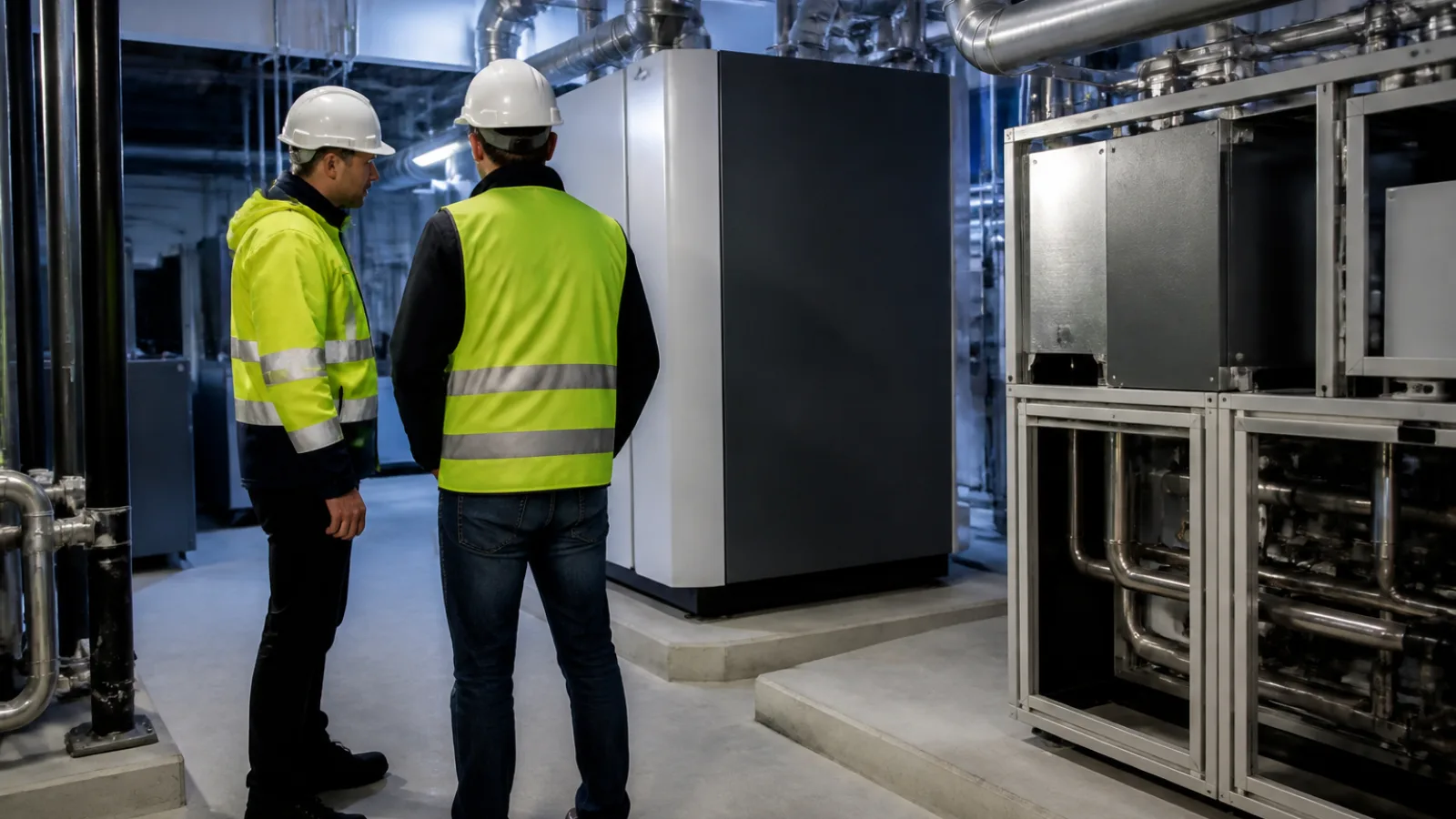
Hydrogen HVAC systems use hydrogen as an energy carrier for building heat, electricity generation or thermally driven equipment. The central engineering question is not simply whether hydrogen can burn in a boiler, but whether it can be produced, delivered, stored and used with acceptable efficiency, safety, cost and lifecycle emissions.
Heating manufacturers, researchers and network operators are testing different pathways, including hydrogen-ready heating technologies from Vaillant Group. These developments are important, but demonstrations should not be confused with universal commercial readiness. For most buildings, hydrogen heating must be assessed alongside heat pumps, district energy, improved building fabric and other low-carbon options.
What Are Hydrogen HVAC Systems?
Hydrogen is an energy carrier rather than a primary energy source. It must be produced using another energy input, such as natural gas, renewable electricity or nuclear power, before it can be stored and used. Its environmental performance therefore depends heavily on how it is made and transported.
In buildings, hydrogen may be combusted in a boiler to produce hot water for radiators, underfloor heating or domestic hot-water systems. It may also feed a fuel cell, which converts the chemical energy of hydrogen into electricity and useful heat. A further possibility is using hydrogen-derived electricity or heat to operate equipment such as absorption or adsorption chillers.
This distinction matters because hydrogen heating is more straightforward than hydrogen-powered cooling. Hydrogen is not normally a direct cooling medium. Cooling generally requires electricity to run a vapour-compression chiller, or heat supplied to thermally driven equipment. A hydrogen system can support cooling indirectly through fuel cells, combined heat and power, or absorption chillers, but it does not provide conventional cooling simply by supplying hydrogen to an air-conditioning unit.
The term hydrogen HVAC can therefore describe several different arrangements: a hydrogen boiler serving a hydronic heating system; a fuel-cell system producing electricity and heat; a combined heat and power installation; or hydrogen-derived energy integrated with broader mechanical systems for heating, hot water and cooling.
How Hydrogen Energy Could Heat Buildings
Hydrogen boilers and hydrogen-ready appliances
A hydrogen boiler mixes hydrogen with combustion air and burns the mixture in a controlled burner. The heat transfers to water, which then serves radiators, underfloor circuits, air-handling coils or hot-water cylinders. The basic principle resembles a gas boiler, but the fuel properties are different enough to require dedicated engineering.
Hydrogen has a lower volumetric energy density than natural gas. More gas volume is required to deliver the same heat input, affecting flow rates, metering, storage, regulators and potentially the capacity of distribution pipework. Hydrogen also has different flame speed, ignition behaviour and combustion characteristics. Burner geometry, valves, controls, flame monitoring, seals and flue arrangements must be designed and tested accordingly.
A hydrogen-ready boiler may be designed for later conversion, or for operation with a specified hydrogen blend. That label does not necessarily mean the appliance is already approved for 100% hydrogen. The permitted fuel composition, conversion procedure, certification and local regulations must be confirmed before any change is made. Existing natural-gas boilers should never be assumed to operate safely on pure hydrogen.
Hydrogen combustion at the appliance produces water vapour rather than carbon dioxide from the fuel itself. However, high-temperature combustion can produce nitrogen oxides, or NOx. Low-NOx burner design, flame-temperature control, flue dilution and effective commissioning remain important for indoor and local air quality.
Fuel cells, combined heat and power, and district systems
Fuel cells generate electricity through an electrochemical reaction rather than direct combustion. When hydrogen is supplied to a suitable fuel cell, the system can provide electricity and recoverable heat for space heating or hot water. This combined output may be useful where a building has a relatively steady demand for both electricity and heat.
Potential applications include multifamily buildings, hospitals, campuses, industrial facilities and district-energy networks. Fuel cells can also provide a degree of resilience when integrated with storage, backup generation and carefully designed electrical controls. In some systems, recovered heat may drive an absorption chiller to provide cooling during warmer periods.
These systems are not simple replacements for boilers. Their performance depends on the heat-to-power balance, operating temperature, part-load behaviour, maintenance requirements, hydrogen quality and continuity of supply. A fuel cell producing useful heat that the building cannot use may have lower practical value than its nominal efficiency suggests. System controls, thermal storage and heat-rejection equipment may therefore be necessary.
Hydrogen Heating Compared With Heat Pumps and Other Future Heating Systems
Hydrogen boilers convert chemical energy into heat, while heat pumps use electricity to move heat from the air, ground or another source into a building. District heating transfers heat from a central network, and resistance heaters convert electricity directly into heat. The most suitable option depends on the building and energy network rather than on the equipment label alone.
| Technology | Main energy input | Building-side equipment | Key advantages | Main limitations |
|---|---|---|---|---|
| Hydrogen boilers | Hydrogen | Boiler, hydronic distribution, flue, gas controls and detection | Can provide high-temperature heat and may resemble familiar boiler systems | Fuel production losses, infrastructure requirements, NOx and uncertain supply |
| Electric heat pumps | Electricity plus ambient or ground heat | Heat-pump unit, refrigerant circuit, emitters and electrical controls | High building-side efficiency and compatibility with low-carbon electricity | Electrical capacity, outdoor space, refrigerant issues and possible high-temperature constraints |
| District heating | Central heat source, which may include waste heat or renewable energy | Heat exchanger, controls, pipe connection and distribution system | Limited on-site plant and potential access to large-scale heat sources | Network availability, connection cost, losses and dependence on the heat supplier |
| Direct electric resistance heating | Electricity | Resistance heaters, electric boilers or radiant panels | Simple installation, rapid response and no combustion equipment | High electricity demand and usually lower whole-system efficiency than heat pumps |
At the point of use, a modern hydrogen boiler can convert much of the fuel energy into useful hot water. Across the full energy chain, however, hydrogen may involve electricity generation, electrolysis, compression, storage, transport and final conversion. Each stage consumes energy. A heat pump generally avoids some of these conversion steps by using electricity directly to move heat, although its performance varies with outdoor conditions, flow temperature, defrosting and system design.
Hydrogen may still have a role where electrification is difficult, such as sites with high-temperature demand, constrained electrical connections, limited space for heat-pump equipment or an existing local hydrogen supply. Before selecting any fuel, designers should assess envelope improvements, heat recovery, controls, thermal storage and demand reduction. Lowering the heat load can change the preferred system entirely.
Efficiency and Emissions: Is Hydrogen Heating Actually Clean?
Appliance efficiency and source-to-service efficiency are different measures. Appliance efficiency describes how effectively a boiler or fuel cell converts hydrogen into useful heat or electricity. Whole-life or well-to-building assessment also includes hydrogen production, conditioning, distribution, leakage, maintenance and eventual equipment replacement.
Grey hydrogen is usually made from natural gas without capturing the resulting carbon emissions. Blue hydrogen is also commonly produced from natural gas, with carbon capture intended to reduce emissions. Its performance depends on capture effectiveness, upstream methane emissions and the energy used by the process. Green hydrogen is produced by electrolysis using electricity. It can have low lifecycle emissions when supplied by genuinely low-carbon electricity, but electrolysis, compression and distribution still require substantial energy.
Using renewable electricity for electrolysis also raises the question of additionality. If electrolysis increases demand on a constrained electricity system without additional clean generation, the wider emissions outcome may be less favourable than the project description suggests. The source, timing and location of electricity all matter.
Hydrogen leakage is another consideration. Hydrogen does not behave like carbon dioxide in the atmosphere, but leakage can affect atmospheric chemistry and may contribute to climate impact indirectly. Leakage control across production, storage, valves, pipelines, meters and appliances should therefore form part of lifecycle assessment.
Hydrogen combustion does not release carbon dioxide from the hydrogen molecule at the building, but this does not make every hydrogen system carbon-free. A credible assessment should consider feedstock, electricity sources, methane and hydrogen leakage, transport, infrastructure, NOx emissions and equipment efficiency. Whole-life carbon analysis is more informative than tailpipe or flue emissions alone.
Infrastructure Requirements for Hydrogen HVAC
Production, storage, and distribution
Green hydrogen is commonly produced through electrolysis, in which electricity separates water into hydrogen and oxygen. The hydrogen may be compressed, stored in vessels, transported by road or pipeline, blended into a gas network, or supplied through a dedicated hydrogen network. Each pathway has different pressure, purity, safety and cost requirements.
On-site production can reduce transport requirements and may suit a campus or industrial site with renewable electricity, water and sufficient space. It also introduces electrolyser maintenance, water treatment, compression, storage, ventilation and electrical-integration requirements. Delivered hydrogen avoids some on-site production equipment but creates dependence on logistics, storage capacity and supply continuity.
Repurposed gas infrastructure may be technically possible in some locations, but natural-gas networks cannot automatically be assumed suitable for pure hydrogen. Materials, joints, compressors, valves, metering, pressure control, odorisation and leakage performance must be assessed. Building operators also need confidence that the fuel pressure and quality will remain within the operating range of connected appliances.
Building and mechanical-system changes
A hydrogen HVAC installation may require modified burners, valves, regulators, pipework, meters, ventilation, flues, combustion-air systems, controls and leak-detection equipment. Plant rooms may need revised zoning, pressure relief and safe discharge arrangements. The design must account for both normal operation and foreseeable faults, maintenance activities and emergency isolation.
These requirements call for coordinated design across mechanical, electrical, fire-protection, controls and facilities-management teams. A boiler replacement cannot be considered in isolation if the fuel network, meter, flue, ventilation openings and emergency systems are also changing. Equipment certification and local approval requirements should be established at concept stage rather than after installation.
Safety Considerations for Hydrogen HVAC Systems
Hydrogen is highly diffusive, has a wide flammability range in air and requires careful control of leaks and ignition sources. These properties do not make safe operation impossible, but they do demand appropriately engineered systems and disciplined procedures.
Design measures may include continuous or strategically located leak detection, effective ventilation, equipment-room zoning, pressure relief, isolation valves and safe discharge locations. Electrical equipment may need appropriate classification, and ignition sources must be controlled around hydrogen-containing components. Pipe joints, seals, flexible connections and storage vessels require suitable materials and inspection regimes.
Flues and combustion-air arrangements must be designed for the approved appliance and fuel condition. Controls should be able to detect abnormal pressure, flame failure, ventilation loss and gas concentration, then isolate the supply where necessary. Emergency procedures should identify isolation points, alarm responses, evacuation arrangements and notification responsibilities.
Safety depends on approved components, competent installation, commissioning, inspection, maintenance and staff training. Applicable local codes and standards must be followed, and requirements may differ between domestic, commercial, industrial and district-energy settings. The relevant lesson is not that one fuel is inherently risk-free, but that risk must be addressed through documented design and operational controls.
Global Examples and Demonstration Projects
H100 Fife Project in Scotland
The H100 Fife project in Scotland has demonstrated the supply of 100% hydrogen to selected homes, alongside hydrogen appliances and network operation. Its value lies in testing how a dedicated hydrogen network behaves in practice, how appliances perform in occupied properties, how customers interact with the system and how safety processes operate.
A pilot of this type can provide useful evidence on distribution, metering, appliance response, maintenance and public acceptance. It does not, by itself, prove that hydrogen heating is ready for universal commercial deployment. Replication would require assessment of local resources, network conditions, regulation, costs and alternatives.
UK hydrogen heating pilots
The United Kingdom has used trials and feasibility studies to examine hydrogen blending, network conversion, appliances, public acceptance and the operation of hydrogen heating in domestic and commercial contexts. These pilots are valuable because they generate information that laboratory testing cannot provide, particularly around customer behaviour, maintenance and the practical management of converted infrastructure.
The wider UK debate includes questions about the availability of low-carbon hydrogen, competition with industrial uses, the cost of network conversion and the relative performance of electrification. Pilot activity should therefore be read as evidence gathering rather than as confirmation of one predetermined national heating pathway.
European hydrogen energy projects
Across Europe, hydrogen projects connect renewable production with industry, transport, power generation, district energy and selected building applications. Some systems use hydrogen in combined heat and power, while others examine storage and sector coupling, in which surplus renewable electricity is converted into hydrogen for later use.
Hydrogen may be prioritised for sectors with fewer direct electrification options, such as certain industrial processes, heavy transport and long-duration energy storage. That prioritisation could affect the availability and cost of hydrogen for buildings, particularly where heat pumps or district heating are practical.
German hydrogen initiatives
Germany’s hydrogen strategy and demonstration activity address industrial decarbonisation, renewable-energy integration, infrastructure planning and the development of hydrogen technologies. Heating technologies and building applications form part of a wider energy-system discussion rather than a standalone boiler replacement programme.
National strategy does not automatically translate into confirmed building-level deployment. Local network planning, building standards, equipment certification, energy prices, climate conditions and competing uses for hydrogen all determine whether a particular German project or concept is relevant to another building.
Where Hydrogen HVAC Could Make Engineering Sense
Hydrogen HVAC could be considered for buildings with high-temperature heat demand, constrained electrical capacity, limited space for large heat pumps, or a need for resilient and hybrid energy systems. Industrial campuses, hospitals, remote facilities and district-energy systems may have stronger technical cases where hydrogen is locally produced or already available for another process.
Suitability depends on carbon intensity, delivered cost, storage, grid conditions, building load profile, required supply temperatures, plant-room space, regulations and the performance of alternatives. A hybrid strategy could use heat pumps for base-load heating and hydrogen or another fuel for peak demand, but this remains a project-specific design option rather than a universal recommendation.
Fuel cells may be more attractive where a building has simultaneous electricity and heat demand, while hydrogen boilers may be more familiar where high-temperature hydronic distribution is already installed. In both cases, the system should be sized around actual load profiles rather than maximum theoretical demand.
What Could Limit Adoption?
Adoption may be limited by the supply of genuinely low-carbon hydrogen, electrolysis and storage costs, conversion losses, network investment, appliance availability and the development of consistent safety regulations. Public acceptance, leakage management and the availability of trained maintenance personnel also matter.
Buildings may compete with industry, shipping, aviation, heavy transport and power-sector uses for a limited hydrogen supply. Future tariffs, network charges and codes remain uncertain in many markets. A hydrogen-ready label indicates technical preparation or conversion potential; it does not guarantee that affordable hydrogen service will be available at the site.
Practical Evaluation Checklist for Building Owners and Engineers
- Reduce heating and cooling demand through envelope upgrades, controls, heat recovery and efficiency measures.
- Establish the building’s heat-load profile, hot-water demand and required supply temperatures.
- Compare heat pumps, district energy, hydrogen and hybrid options on a whole-life technical, carbon and cost basis.
- Confirm the hydrogen source, carbon intensity, pressure, quality, reliability and delivery pathway.
- Verify equipment certification, code compliance, ventilation, flues, detection systems and emergency planning.
- Assess electrical capacity, hydrogen storage, plant-room space, access and maintenance skills.
- Model lifecycle emissions, operating cost, resilience and future fuel availability under realistic assumptions.
- Use qualified mechanical engineers and competent contractors for concept design, installation and commissioning.
Conclusion: Can Hydrogen Become the Future of Building Heating and Cooling?
Hydrogen can serve selected heating and integrated energy applications, but it is unlikely to be a universal replacement for natural gas or the default solution for every building. Its strongest cases may involve high-temperature demand, constrained electrification, resilience requirements, industrial campuses, district systems or locations with a reliable supply of genuinely low-carbon hydrogen.
The future of Hydrogen HVAC Systems depends on low-carbon production, safe and affordable infrastructure, certified appliances, effective leakage control and system-level efficiency. Heat pumps and direct electrification can often avoid the conversion losses associated with making and distributing hydrogen, while district heating may offer a better solution where a suitable network exists.
Hydrogen addresses heating more directly than cooling. Cooling normally requires electricity or thermally driven equipment integrated into a broader energy system, such as a fuel cell, combined heat and power plant or absorption chiller. Building owners should therefore compare complete energy systems rather than treating hydrogen as a standalone answer to every HVAC requirement.
Frequently Asked Questions
Are hydrogen HVAC systems carbon-free?
Not necessarily. Point-of-use hydrogen combustion does not release carbon dioxide from the hydrogen fuel, but total climate impact depends on the production method, electricity source, transport, storage, hydrogen leakage and nitrogen-oxide control. Grey, blue and green hydrogen have different lifecycle profiles, so a whole-life assessment is essential.
Can existing natural-gas boilers run on hydrogen?
Compatibility depends on the appliance, blend percentage, certification, burner, controls, pipework and local regulations. An existing natural-gas boiler must never be assumed to operate on pure hydrogen without explicit approval from the manufacturer and relevant authorities.
Are hydrogen boilers more efficient than heat pumps?
This depends on which efficiency boundary is used. A hydrogen boiler may have high combustion efficiency at the building, but hydrogen has upstream production, compression and distribution losses. A heat pump can deliver more heat per unit of electricity at the building, although its performance depends on source conditions, flow temperatures and system design.
Can hydrogen be used for building cooling?
Hydrogen is not normally a direct cooling medium. It may support cooling indirectly by generating electricity in a fuel cell or combined heat and power system, or by providing heat to an absorption or adsorption chiller. Conventional cooling still requires an integrated mechanical system.
Is hydrogen safe for commercial buildings?
Hydrogen can be managed through suitable design, certified equipment, ventilation, leak detection, controls, maintenance and emergency procedures. It introduces specific hazards that require specialist engineering, competent installation and compliance with applicable local codes and standards.
What should a building owner do before choosing hydrogen heating?
The owner should commission a whole-life energy and carbon assessment comparing demand reduction, heat pumps, district energy, hydrogen and hybrid options under realistic assumptions about supply, regulation, operating cost and future fuel availability.