How Infrastructure Can Make or Break a National Economy
Infrastructure determines how efficiently businesses operate, workers reach jobs, and goods move through domestic and international markets. This article explains how reliable systems support growth—and how failures in energy, transport, water, housing, and digital networks can weaken an entire economy.
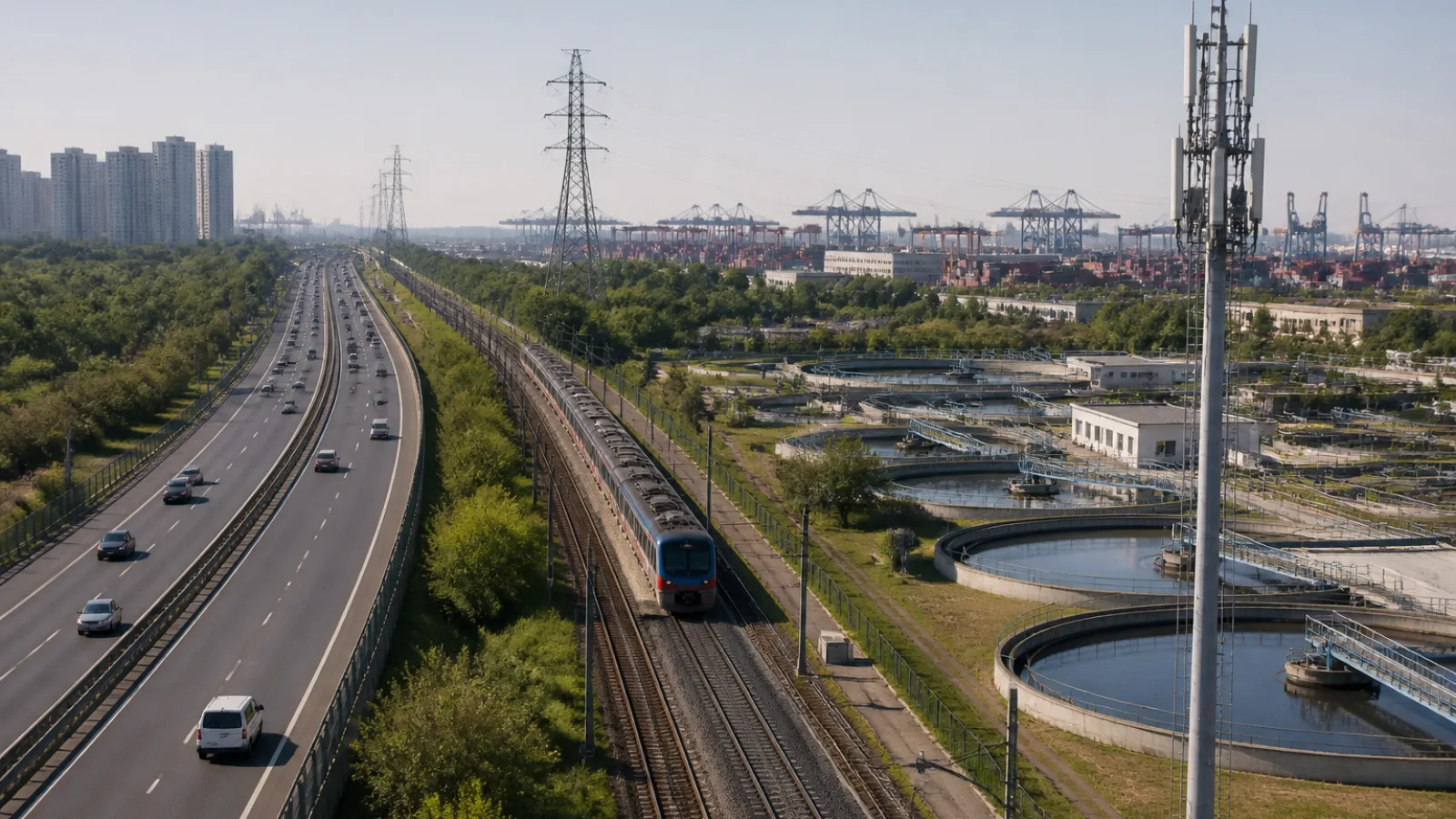
When a country is being built, should it prioritize infrastructure or industries? The strongest answer is that neither can succeed alone. Industries create jobs, products, exports, and tax revenue, while infrastructure provides the roads, power, water, ports, communications, and public services that allow those industries to operate. In most cases, infrastructure must come first—or at least develop alongside industry—because factories and businesses cannot remain competitive without dependable systems around them. The quality of infrastructure engineering and consulting can therefore influence not only individual projects but also the wider economic prospects of a country.
The infrastructure impact on economy is not limited to the visible value of a bridge, railway, airport, or power station. Infrastructure changes the cost and reliability of almost every economic activity. Good infrastructure reduces travel time, protects production, connects workers with employers, and helps goods reach domestic and international markets. Poor infrastructure does the opposite. It raises operating costs, interrupts production, discourages investment, and can turn otherwise promising industrial plans into financial burdens.
What Infrastructure Means in an Economic Context
Infrastructure is the physical and organizational foundation that supports daily life and economic production. It includes more than roads and buildings. A country’s economic infrastructure commonly includes:
- Transport: roads, bridges, railways, airports, ports, warehouses, and public transit.
- Energy: electricity generation, transmission grids, fuel networks, and renewable-energy systems.
- Water and sanitation: reservoirs, treatment plants, drainage, irrigation, and wastewater systems.
- Digital networks: broadband, mobile communications, data centers, and secure information systems.
- Buildings and urban systems: housing, hospitals, schools, industrial parks, and commercial districts.
- Public services: emergency response, waste management, administrative systems, and community facilities.
These systems function as productive assets. A road does not manufacture a product, but it determines whether raw materials can reach a plant on time. A reliable grid does not employ factory workers directly, but it allows machines, refrigeration, lighting, and digital systems to function. A water network supports households, agriculture, food processing, mining, construction, and many other activities.
How Infrastructure Creates the Conditions for Industries
It lowers the cost of production
Businesses need to pay for materials, labor, energy, transportation, storage, communications, and compliance. Infrastructure affects nearly all of these costs. A well-connected industrial area can reduce delivery distances and waiting times. Reliable electricity limits the need for expensive backup generation. Adequate water treatment protects production quality and reduces health risks.
Lower operating costs make local businesses more competitive. They can offer better prices, invest in equipment, hire more workers, or enter export markets. This is one reason infrastructure development is often a prerequisite for industrial development rather than a separate policy goal.
It expands access to markets and workers
Industry depends on access to customers and employees. Transport infrastructure allows a manufacturer in one region to serve other cities and ports. Public transit enables workers to reach employment centers without spending an excessive share of their income or time on commuting. Digital networks allow small businesses to sell, coordinate, advertise, and provide services beyond their immediate location.
Infrastructure also connects rural areas to urban markets. Farmers can sell perishable products more efficiently when roads, cold storage, electricity, and logistics services are available. This can increase household income and create demand for processing, packaging, retail, and financial services.
It encourages private investment
Investors generally look for predictable conditions. They want confidence that a facility can receive inputs, access utilities, move goods, communicate with suppliers, and continue operating during ordinary disruptions. Strong infrastructure reduces uncertainty and makes long-term investment easier to justify.
Infrastructure can also attract industries that require specialized systems. Technology companies need high-quality connectivity and dependable electricity. Food and pharmaceutical manufacturers need controlled environments and reliable logistics. Heavy industry needs transport links, water, energy, and waste-management capacity. Without the right foundation, a country may have labor and natural resources but still struggle to attract productive investment.
How Poor Infrastructure Damages an Economy
Unreliable energy causes cascading losses
Electricity failures can stop production, damage equipment, spoil food, disrupt hospitals, and interrupt digital services. Companies may purchase generators, fuel storage, batteries, or redundant systems to compensate. Those expenses raise prices without necessarily improving the product.
Unreliable energy also changes investment decisions. A company may choose a different country or limit the size of a planned facility if it cannot depend on the grid. Small businesses are especially vulnerable because they often lack the capital to install backup systems.
Weak roads, railways, and ports increase supply-chain costs
Poor transport infrastructure creates delays, vehicle damage, congestion, cargo losses, and higher fuel consumption. A shipment that should take hours may require days. Businesses then need more inventory to protect against uncertainty, increasing storage and working-capital costs.
At ports and border crossings, slow processing can make exports less attractive and imports more expensive. Domestic producers may lose access to essential machinery or components. Even a business with efficient internal operations can become uncompetitive if the wider logistics system is unreliable.
Water shortages limit production and public health
Water infrastructure affects agriculture, construction, mining, manufacturing, tourism, and urban development. Shortages may force facilities to reduce output or pay for costly private supply. Contaminated water can create health problems, interrupt operations, and damage a region’s ability to attract residents and investors.
Flooding presents the opposite problem. Inadequate drainage and stormwater systems can destroy roads, warehouses, homes, and industrial equipment. Repeated damage diverts public and private funds from development into emergency repair.
Housing and public-service gaps reduce labor productivity
Industries need a stable workforce, but workers also need affordable housing, healthcare, education, sanitation, and safe transportation. If a city attracts factories without planning for these needs, housing costs may rise sharply and commuting times may lengthen. Employers may struggle to recruit or retain staff, while households face greater financial pressure.
Overloaded schools and hospitals can weaken long-term productivity. Infrastructure is therefore closely connected to human capital: people cannot contribute fully to the economy when basic services are inaccessible or unreliable.
Digital weaknesses reduce modern competitiveness
Many industries now depend on cloud systems, digital payments, automation, remote collaboration, real-time logistics, and online customer service. Slow or insecure networks can exclude businesses from global supply chains and limit the growth of technology-enabled services.
Digital infrastructure also affects public administration. Slow permitting, disconnected records, and unreliable government platforms increase the time required to start or expand a business. These costs may not appear on a construction invoice, but they still reduce economic efficiency.
The Infrastructure Impact on Economy: Businesses and Households
| Infrastructure area | Strong performance | Weak performance | Economic consequence |
|---|---|---|---|
| Electricity | Stable production and predictable operating costs | Shutdowns, equipment damage, and backup expenses | Lower productivity and reduced investment |
| Transport | Fast access to suppliers, workers, and customers | Delays, congestion, damage, and high freight costs | Higher prices and weaker trade competitiveness |
| Water and drainage | Reliable production and healthier communities | Shortages, contamination, and flood losses | Lower output and higher repair costs |
| Housing and transit | Workers can live near and reach jobs | Housing stress and long commutes | Labor shortages and weaker household spending |
| Digital networks | Efficient transactions and modern services | Disconnection, delays, and cybersecurity exposure | Lower innovation and reduced market access |
Can Industries Develop Before Infrastructure?
Sometimes industries emerge before major infrastructure is in place. A resource-extraction project may begin near a mine, or a small manufacturing cluster may grow using existing roads and private utilities. Businesses can also create their own power, water, transport, or communications systems when expected returns are high enough.
However, this approach has limits. Private infrastructure may serve one company but fail to benefit surrounding communities. It may also produce fragmented systems, duplicated costs, or unequal access. Industries that develop without broader planning can overwhelm roads, housing, water supplies, and public services.
The better principle is coordinated sequencing. A government does not need to build every road or utility before any industry begins. Instead, it should identify sectors with realistic demand and build the enabling infrastructure in stages. Early industrial activity can generate revenue and skills, while infrastructure investment expands the conditions for further growth.
How Countries Can Prioritize Infrastructure and Industry Together
Start with economic bottlenecks
Governments should identify what most limits production and trade. In one region, the priority may be electricity transmission. In another, it may be a port connection, irrigation, broadband, or urban transit. The most visible project is not always the most valuable project; the priority should be the bottleneck that prevents many businesses from operating efficiently.
Match infrastructure to credible demand
Large projects can become expensive liabilities when they are built without sufficient users, maintenance funding, or economic purpose. Planning should consider population growth, industrial demand, freight volumes, climate risks, and the ability of households and businesses to pay for services.
Build networks, not isolated projects
A new factory is more useful when it connects to roads, power, water, telecommunications, suppliers, workers, and customers. Likewise, a new highway creates more value when it links productive regions to markets rather than ending at an underused facility. Economic value often comes from how infrastructure systems interact.
Protect maintenance budgets
Construction attracts attention, but maintenance preserves economic value. A neglected road becomes slower and more dangerous. A poorly maintained grid becomes less reliable. Deferred maintenance eventually requires expensive reconstruction and causes avoidable disruption.
Use transparent procurement and sound governance
Infrastructure can damage an economy when projects suffer from corruption, weak feasibility studies, poor design, land disputes, cost overruns, or unclear ownership. Transparent procurement, independent oversight, realistic schedules, lifecycle costing, and professional operations help ensure that public investment produces lasting value.
What Makes Infrastructure Investment Economically Successful?
Infrastructure is not automatically beneficial simply because it is large or expensive. Successful investment usually has five characteristics:
- It solves a real constraint: the project addresses a documented need rather than a symbolic ambition.
- It is financially sustainable: construction, operation, maintenance, and eventual renewal are considered together.
- It is resilient: the design accounts for floods, heat, storms, drought, cyber threats, and other foreseeable risks.
- It is inclusive: benefits reach smaller businesses, lower-income households, and regions beyond the main economic center.
- It is connected to skills and industry policy: workers and businesses have the training, finance, and regulatory conditions needed to use the infrastructure productively.
Good infrastructure can raise productivity for decades, but poorly planned infrastructure can lock a country into high debt and low returns. Borrowing for a project is not inherently harmful when the asset supports productive growth. The danger appears when debt finances an underused, badly managed, or rapidly deteriorating system while taxpayers remain responsible for the payments.
Frequently Asked Questions
Is infrastructure more important than industry?
Infrastructure and industry are interdependent. Infrastructure normally provides the foundation for reliable industrial activity, while industries create demand, jobs, exports, and revenue that help justify further infrastructure investment. The most effective strategy develops both in coordination.
How does infrastructure affect economic growth?
It affects growth by changing productivity and the cost of doing business. Reliable transport, energy, water, housing, and communications help companies produce more efficiently, reach larger markets, hire workers, and attract investment.
Why can poor infrastructure cause inflation?
Transport delays, power interruptions, water shortages, and port congestion increase the cost of producing and delivering goods. Businesses may pass those costs to consumers, contributing to higher prices.
Can infrastructure projects hurt a country?
Yes. Projects can harm public finances and economic performance when they are unnecessary, badly designed, poorly procured, unaffordable to operate, or exposed to major climate and technical risks. The problem is not infrastructure spending itself but weak planning and management.
What infrastructure should developing countries prioritize?
Priorities depend on local bottlenecks, but reliable electricity, safe water, basic roads, digital connectivity, sanitation, logistics links, and affordable urban transport often deliver broad economic benefits. Decisions should be based on evidence and expected use.
Conclusion
The infrastructure impact on economy can be positive or destructive. Strong systems reduce costs, connect markets, support human productivity, attract investment, and give industries room to grow. Weak systems create delays, waste, inequality, inflationary pressure, lost jobs, and public financial stress.
Industries are essential because they generate economic value, but they cannot flourish in isolation. Roads without productive users may be underused, while factories without power, water, workers, and logistics may fail. Countries build durable prosperity when infrastructure and industry are planned as parts of one economic system—and when construction is matched by maintenance, sound governance, resilience, and inclusive access.