Key Considerations for Large-Scale Commercial Concrete Modification and Demolition
Explore key considerations for commercial concrete cutting, structural modification, demolition, dust control, safety, and efficient project execution.
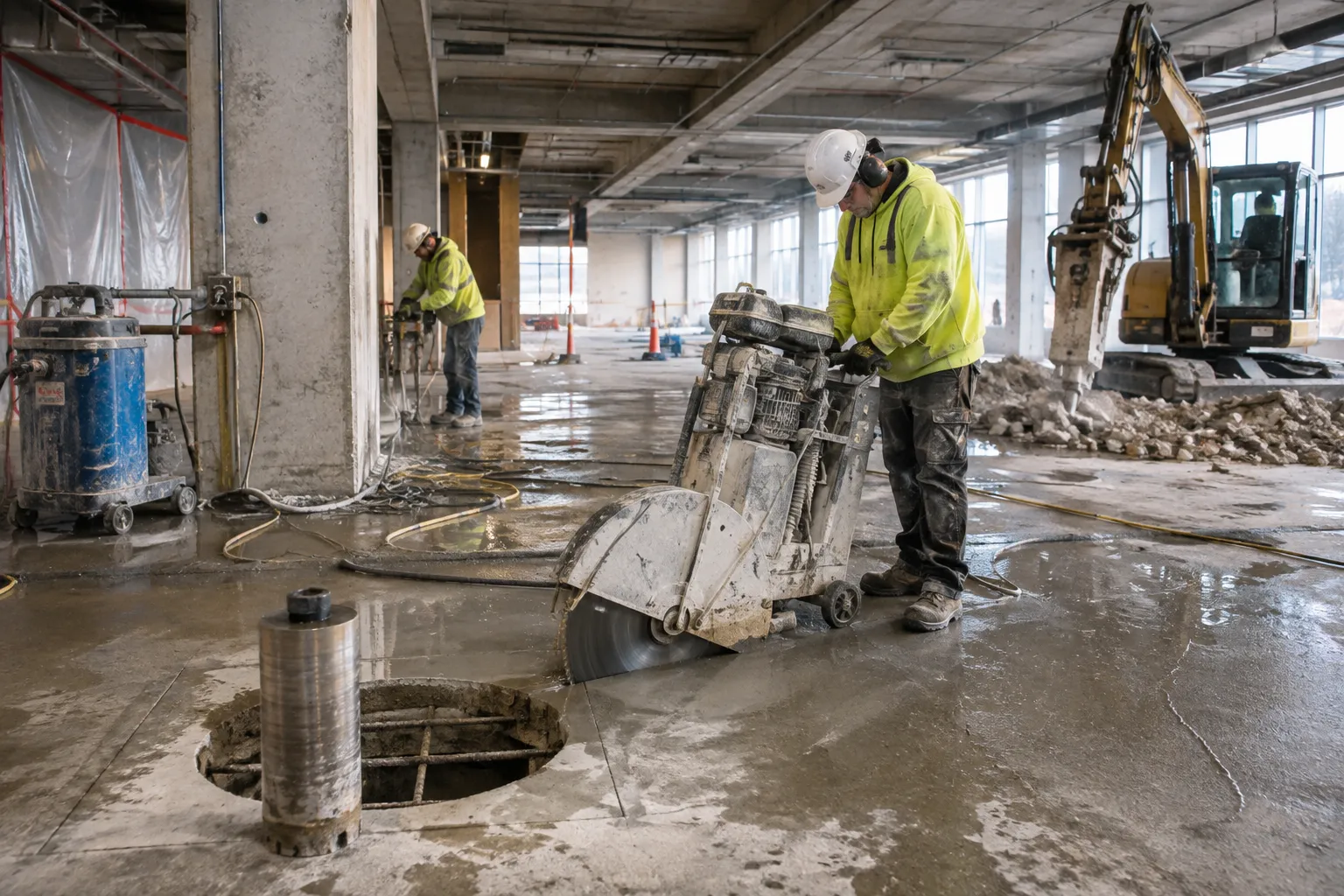
Modern commercial renovations, structural retrofits, and adaptive reuse projects frequently require substantial modifications—whether expanding floor plans, installing utility shafts, or removing outdated reinforced foundations. Unlike standard residential tasks, commercial site work demands strict adherence to engineering standards, tight project timelines, and rigorous safety compliance.
Precision Cutting for Structural Alterations
When modifying existing slab floors or load-bearing concrete walls, accuracy is vital to maintain the structural integrity of surrounding areas. Utilizing specialized Commercial Concrete Cutting techniques—such as wall sawing, floor sawing, and diamond core drilling—allows contractors to create clean, exact openings without generating harmful structural vibrations or micro-fractures. Advanced diamond tooling cuts cleanly through heavily reinforced rebar, keeping dust and noise levels controlled on active job sites.
Heavy Demolition and Debris Management
For projects requiring complete removal of old slabs, footings, or structural supports, precision cutting is often combined with controlled tearing operations. Partnering with a certified concrete demolition service in Colorado ensures that high-risk removal tasks are executed using heavy-duty hydraulic breakers, wire saws, and proper rigging equipment. Experienced teams manage every phase—from initial structural assessment and safety containment to debris haul-off and site preparation.
Environmental Compliance and Dust Suppression
A critical aspect of indoor concrete cutting and removal is silica dust control. Heavy modification of concrete produces fine airborne particles that pose health hazards and can damage HVAC systems or sensitive equipment. Professional contractors employ continuous wet-cutting machinery, industrial HEPA air scrubbers, and local exhaust ventilation to meet strict OSHA crystalline silica standards. These containment measures safeguard active job sites, ensuring clean air quality and zero cross-contamination in surrounding operational areas.
Minimizing Disruption in Operational Commercial Facilities
For active facilities such as commercial centers, medical complexes, or industrial plants, construction work cannot interfere with regular operations. Advanced concrete modification utilizes zero-emission electric and hydraulic equipment, eliminating toxic exhaust fumes indoors while dramatically lowering decibel levels compared to traditional impact demolition. Executing high-impact tasks during off-peak hours or planned downtime ensures project milestones are met without impacting business operations or tenant safety.
Partnering with the Right Subcontractor
To keep multi-phase commercial builds on schedule and within budget, general contractors should prioritize specialized partners who offer:
-
Certified Safety Standards: Full compliance with OSHA guidelines, engineered dust containment, and comprehensive site risk management.
-
Advanced Equipment Fleet: High-performance electric, hydraulic, and diamond-tipped machinery designed for deep penetration and heavy commercial loads.
-
Turnkey Execution: End-to-end capability covering core drilling, precision sawing, structural removal, and bollard or anchor installations.