Saudi Vision 2030 Construction Progress: Is the Kingdom on Track Before 2030?
Saudi Arabia has made substantial progress in housing, transport, tourism, utilities, logistics and industrial development since launching Saudi Vision 2030 in April 2016. However, announced project value is not the same as completed construction, and many major developments will be phased, resized or delivered beyond 2030.
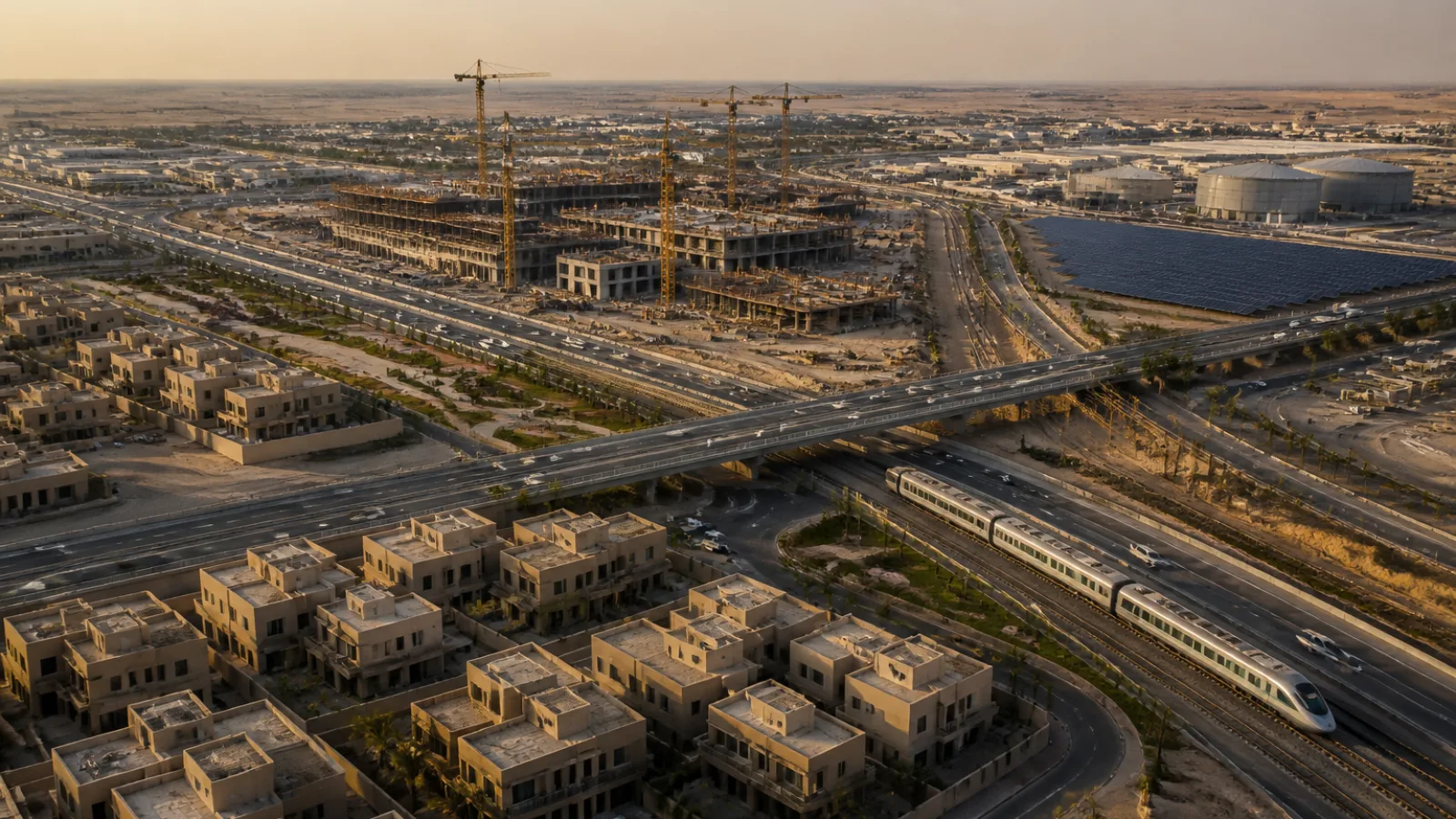
Saudi Vision 2030 construction progress is visible across housing, transport, tourism, utilities, logistics and industrial development. Since the national transformation program was launched, Saudi Arabia has moved from a predominantly oil-led investment model toward a broader development platform that combines public spending, private participation and large-scale urban planning. Readers seeking global infrastructure and construction expertise should also understand that a project pipeline is not the same as completed or operational infrastructure.
The central question is therefore more complex than asking whether every announced Saudi Arabia megaproject will be finished by 2030. A fair assessment must separate policy targets, master plans, investment commitments, contract awards, active construction, completed assets and measurable economic outcomes. On that basis, the Kingdom has made substantial progress, but the 2030 target horizon is better understood as a major milestone than as a final delivery deadline for every project.
Saudi Vision 2030 in Brief: When Was It Launched?
Saudi Vision 2030 was launched in April 2016, with 2030 established as the target horizon. The framework was designed to reduce the Kingdom’s dependence on hydrocarbons by developing a more diversified economy, improving public services and increasing the participation of citizens and private companies in national development.
Its three broad pillars are a vibrant society, a thriving economy and an ambitious nation. These pillars cover quality of life, culture, tourism, health, housing, education, investment, industrial development, government effectiveness and national capability.
Vision 2030 is not one construction project and it does not have one unified completion percentage. It is a national transformation framework supported by programs, ministries, sovereign-backed development companies, infrastructure owners and private-sector partners. Construction is an important delivery mechanism, but the ultimate objectives also include employment, housing access, non-oil growth, tourism receipts, investment, productivity and better public services.
How Should Saudi Vision 2030 Construction Progress Be Measured?
Announced projects are not completed projects
Large headline figures can create a misleading impression of progress. An announced project may represent a concept, a master-planned capacity or a long-term investment ambition. It may not yet have secured land, financing, design approval, a contractor, a final business case or a confirmed delivery schedule.
There are several distinct stages to track:
- Announced value: an initial public estimate or investment intention.
- Master-planned capacity: the potential scale shown in a development plan, which may be delivered in phases.
- Awarded contracts: work formally committed to a contractor, although contract award does not mean completion.
- Construction activity: physical works under way, with progress affected by design, procurement and site conditions.
- Completed facilities: assets that have reached practical completion and passed required approvals.
- Operational performance: whether an airport, hotel, housing district, railway, utility or industrial facility is being used effectively.
- Economic impact: whether the asset creates jobs, attracts investment, improves connectivity or supports non-oil activity.
Project owners may report capital commitments, construction packages or development capacity, while government statistical releases measure completed housing, passengers, visitors, employment or economic output. These figures answer different questions and should not be combined into a single measure of Saudi Vision 2030 construction progress.
A practical progress scorecard
| Area | Original ambition | Visible progress | 2030 outlook |
|---|---|---|---|
| Housing | Increase home access and expand supply through public programs and private development. | Strong growth in residential delivery, serviced land, mortgages and mixed-use communities. | Broadly on track for continued supply growth, although affordability and location remain important tests. |
| Transport | Improve airports, roads, rail, public transit and national connectivity. | Major airport, road, rail and urban-transit programs are completed, operating or under construction. | Strong momentum, with selected corridors and networks likely to continue beyond 2030. |
| Tourism and culture | Build destinations, hospitality capacity, cultural venues and visitor infrastructure. | New museums, resorts, hotels, events infrastructure and heritage upgrades are progressing at different speeds. | Mixed but positive; operating demand will determine later phases and project scale. |
| Utilities and energy | Expand power, water, wastewater, cooling, renewable energy and resource efficiency. | Large utility and renewable-energy procurements are active, alongside conventional network expansion. | Strong long-term demand, with water, energy and climate resilience shaping priorities. |
| Logistics and industrial development | Position Saudi Arabia as a manufacturing, trade and logistics hub. | Industrial zones, ports, warehouses, data infrastructure and supply-chain facilities are expanding. | Likely to remain a core growth area, especially where projects have clear commercial demand. |
| Urban regeneration | Improve city quality, public space, mobility and livability. | Public-realm works, entertainment districts and mixed-use regeneration are visible in major cities. | Continued delivery, with greater emphasis on occupancy, maintenance and operating performance. |
Where Is Saudi Arabia Making the Strongest Construction Progress?
Housing and residential supply are among the clearest areas of progress. The Housing Program and Ministry of Municipalities and Housing have supported new residential communities, home-finance access, serviced land and private development. Official housing reporting has shown a material increase in homeownership since the launch of Vision 2030, although the exact result depends on the year, definition and data source used. The practical test is no longer only how many homes are announced, but whether completed homes are affordable, connected to employment and supported by schools, clinics, utilities and public transport.
Airports, roads and rail have also benefited from sustained public investment. Existing airports have been expanded or upgraded, while road, metro and rail programs are improving links between cities and economic zones. The Haramain high-speed railway is an operational example of infrastructure completed during the transformation period, while Riyadh’s public transport system illustrates how major urban mobility projects can move from construction into testing, commissioning and operations. Other transport programs remain at different stages, so a national network should not be judged by one flagship asset.
Tourism and hospitality have moved from policy ambition to physical delivery. Heritage areas, cultural venues, hotels, resorts, visitor facilities and events infrastructure are being developed in Riyadh, Jeddah, AlUla, the Red Sea region and other destinations. Some assets are open and operating, some are under construction, and others remain part of longer-term master plans. Visitor numbers and hotel performance will be more meaningful measures than the total number of rooms shown in early development plans.
Industrial and logistics infrastructure is central to economic diversification. Ports, special economic zones, warehouses, manufacturing facilities, food-processing plants, mining-related infrastructure and data centers can generate recurring commercial activity rather than one-time construction spending. The Saudi Industrial Development Fund, the Ministry of Industry and Mineral Resources, the Ministry of Transport and Logistics Services and other public bodies have supported this wider ecosystem. Projects with a clear tenant, export market or supply-chain role are generally easier to prioritize than purely speculative developments.
Utilities and renewable energy are another area of measurable activity. The Saudi Power Procurement Company and related public entities have advanced independent power and renewable-energy procurements, while water and wastewater authorities continue to expand networks, treatment capacity and desalination infrastructure. These assets are essential to new housing, tourism and industrial zones. Their delivery also exposes the physical constraints of the program: energy demand, water scarcity, cooling requirements and network resilience are not secondary considerations in the Saudi climate.
Public-realm improvements, parks, sports facilities, cultural projects and urban regeneration have further changed the appearance and use of major cities. However, a completed building is only one part of quality-of-life progress. Reliable operations, maintenance, accessibility, occupancy and community use determine whether these investments deliver their intended benefit.
What Has Changed in the Saudi Construction Industry?
From isolated projects to program delivery
The market is increasingly shaped by development companies, infrastructure programs and public-sector clients managing multiple connected assets. Instead of treating every building as an isolated contract, owners are using phased master planning, repeatable design standards, framework procurement and coordinated infrastructure packages. This approach can improve consistency and reduce duplication, but it also demands stronger interfaces between planners, designers, contractors, utilities providers and operators.
Companies such as the Public Investment Fund’s portfolio entities, the Royal Commission for Riyadh City, the Royal Commission for AlUla and other government-linked owners have different mandates and delivery models. NEOM is one important part of this wider national program, not a synonym for Vision 2030. Its developments provide examples of advanced planning and large-scale infrastructure delivery, but national progress also depends on ordinary housing, municipal services, industrial facilities and upgrades in established cities.
More demand for specialized capability
Saudi construction opportunities are becoming more varied. General contractors remain important, but major programs also require civil and infrastructure specialists, MEP contractors, façade and building-material suppliers, modular and off-site manufacturers, cost consultants, BIM and digital-construction providers, commissioning teams and facilities-management firms.
As assets become more technologically complex, value is shifting toward organizations that can control interfaces, manage data, test systems and support operations. In a hot and dusty environment, building-envelope performance, cooling efficiency, water management and maintainability can be as important as structural construction speed.
Local content and workforce development
Localization is influencing how companies approach tendering, procurement and partnerships. Saudi clients increasingly value domestic manufacturing, Saudi employment, training, technology transfer and the development of local subcontractor capacity. The specific requirements vary by client, procurement route and current regulation, so businesses should verify tender conditions rather than rely on general assumptions.
This shift does not eliminate the role of international expertise. It changes the partnership model. International firms may contribute specialist systems, project controls, design knowledge or delivery experience, while Saudi partners provide market understanding, workforce networks, approvals support and local supply-chain capability.
Is Saudi Arabia on Track to Achieve Vision 2030?
The balanced answer is that Saudi Arabia appears to be on track in several enabling areas, progressing unevenly in others and unlikely to complete every early-stage construction ambition by the end of 2030. This is not necessarily a failure. Large national programs routinely change sequence, scope and timing as demand, financing, technology and public priorities develop.
Social and economic outcomes should also be separated from physical delivery. A country can make progress in non-oil activity, employment, tourism, housing access or private investment without completing every planned district. Conversely, it can build impressive assets without achieving the expected occupancy or economic return. Both dimensions matter.
| Assessment | Examples of evidence | Likely implication by 2030 |
|---|---|---|
| Strong momentum | Housing supply, road and rail connectivity, renewable-energy procurement, utilities expansion and industrial-support programs have clear institutional backing. | A substantial number of useful, operating or near-complete assets is likely, particularly where demand and funding are established. |
| Mixed progress | Tourism, culture, hospitality and urban regeneration projects are advancing, but delivery schedules, visitor demand and operating models differ by location. | Some destinations will be mature while others will open in phases or have later completion dates. |
| Longer-term delivery | Very large new-city concepts, remote destinations and complex integrated districts require extended infrastructure, population growth and multiple development cycles. | Master plans may be resized, reprioritized or delivered beyond 2030 without ending the broader program. |
The most defensible conclusion is not that the Kingdom will complete everything shown in the original pipeline. It is that Saudi Arabia is likely to reach 2030 with a much larger and more diversified built environment, a stronger project-delivery ecosystem and a significant number of long-term developments still in progress.
What Could Accelerate or Delay Construction Before 2030?
Factors that could accelerate delivery
- Stable public-sector funding and clearer prioritization of projects with strong public or economic value.
- Stronger program governance, early design coordination and reliable decision-making.
- Repeatable construction systems, modular methods and standardized components.
- Expanded local supply chains for steel, cement, equipment, building systems and specialist services.
- Digital project controls, common data environments, BIM coordination and accurate progress reporting.
- Experienced international partnerships combined with capable Saudi delivery teams.
- Early planning for commissioning, operations, maintenance and long-term asset performance.
Factors that could create delays or scope changes
Financing pressure is one constraint, even where public capital remains available. A project may be technically feasible but phased if its demand forecast, operating revenue or wider economic case changes. Inflation, material costs, equipment lead times and contractor capacity can also affect budgets and schedules.
Labor and skills availability remains important, particularly for specialist engineering, commissioning, digital systems and facility operations. Procurement complexity, permitting, design changes and coordination between overlapping megaproject schedules can create interface risk. Local-content requirements may strengthen domestic capability over time, but they can also expose temporary gaps in manufacturing or subcontracting capacity.
Climate and geography add further challenges. Extreme heat, dust, remote sites, water demand, cooling loads and environmental controls affect productivity and lifecycle cost. Demand uncertainty is equally relevant: hotels, retail districts, offices and entertainment venues must be supported by real users, not only attractive renderings. These pressures make phased delivery and scope adjustment normal tools of responsible project management.
What Will Saudi Arabia’s Construction Sector Look Like in 2030?
By 2030, Saudi Arabia’s construction sector is likely to be larger, more specialized and more operationally mature. The visible market should include completed landmark assets alongside active urban expansion, infrastructure upgrades, industrial facilities, tourism developments, renewable-energy projects, data infrastructure and long-term megaproject phases.
Likely priorities include:
- Transport connectivity, airports, intercity rail, roads and public transit.
- Housing and mixed-use communities linked to employment and social infrastructure.
- Hospitality, culture, sports and entertainment venues supported by viable operating models.
- Water, wastewater, district cooling, power and renewable-energy infrastructure.
- Logistics platforms, manufacturing facilities and industrial zones.
- Smart-city systems, telecommunications, cloud, data and digital infrastructure.
- Sustainable, climate-resilient and resource-efficient buildings.
The most important change may be the shift from announcement-led growth to operations-led performance. Once major assets are open, owners will need facilities management, maintenance, retrofit, energy optimization, tenant support, cybersecurity and lifecycle planning. Construction companies that can deliver the whole asset journey may be better positioned than those focused only on initial works.
What Does Vision 2030 Mean for Construction Companies?
Contractors, consultants, suppliers and investors should treat the Saudi construction market outlook as a program-management opportunity rather than a simple volume forecast. Practical priorities include:
- Maintain disciplined market intelligence and distinguish funded tenders from concepts, announcements and master plans.
- Build local partnerships where they add genuine capability, while checking ownership, procurement and compliance requirements for each client.
- Use robust cost, schedule, risk and interface controls from preconstruction through commissioning.
- Plan for heat, dust, water, logistics and remote-site conditions before mobilization.
- Invest in Saudi workforce development, technical training and qualified local subcontractor networks.
- Develop BIM, data management, digital field controls and transparent reporting capability.
- Offer lifecycle thinking, commissioning, maintenance and operational support rather than only construction execution.
- Assess demand, phasing and payment structures carefully; a large project announcement is not by itself a guarantee of immediate work.
For suppliers, product durability, local availability, technical support and compliance documentation can matter as much as price. For consultants and engineers, integration across architecture, infrastructure, energy, water and operations is increasingly valuable. For investors, the quality of cash flow, occupancy, utilization and asset management deserves more attention than headline development value.
Conclusion: Progress Is Real, but 2030 Is a Milestone—Not a Finish Line
Saudi Vision 2030 construction progress is substantial, but the headline value of announced Saudi Vision 2030 construction projects should never be mistaken for completed transformation. The Kingdom has built momentum in housing, transport, utilities, tourism, logistics, manufacturing and urban development, while also creating institutions and supply chains capable of delivering more complex programs.
By 2030, readers should expect a visible portfolio of completed and operational assets alongside major projects still being delivered in phases. Some ambitions will be resized, reprioritized or extended beyond the target horizon. Success should therefore be judged by whether infrastructure is useful, occupied, connected, financially sustainable, resource-efficient and well maintained, as well as by the volume of construction activity. The 2030 deadline marks an important point of assessment, not the end of Saudi Arabia’s development cycle.
Frequently Asked Questions
When did Saudi Vision 2030 begin?
Saudi Vision 2030 was launched in April 2016. The framework uses 2030 as its target horizon for economic, social, public-service and development objectives.
Is Saudi Arabia likely to complete every Vision 2030 construction project by 2030?
No reliable assessment should assume that every announced project will be complete by the end of 2030. Some announcements describe long-term master plans or potential capacity rather than funded construction. Phasing, reprioritization, redesign and later delivery are normal for a program of this scale.
What are the main construction sectors supporting Vision 2030?
The main sectors include housing, transport, tourism, utilities, power, renewable energy, water, wastewater, logistics, manufacturing, technology infrastructure and urban development. Facilities management, retrofit and infrastructure maintenance will also become increasingly important.
What is the biggest risk to Saudi Vision 2030 construction progress?
There is no single risk. Delivery capacity, financing and prioritization, labor and specialist skills, supply-chain resilience, procurement complexity, climate conditions, project interfaces and uncertain demand can all affect progress. Effective governance and disciplined phasing are essential to managing these pressures.
Will construction opportunities remain after 2030?
Yes. Infrastructure operations, maintenance, expansion, retrofit, housing, industrial development, tourism, sustainability upgrades and long-term megaproject phases can continue well beyond 2030. The market is likely to evolve from rapid initial construction toward asset performance, renewal and recurring delivery.