Warren Bechtel and the Origins of Bechtel: How a Construction Company Became a Global Engineering Giant
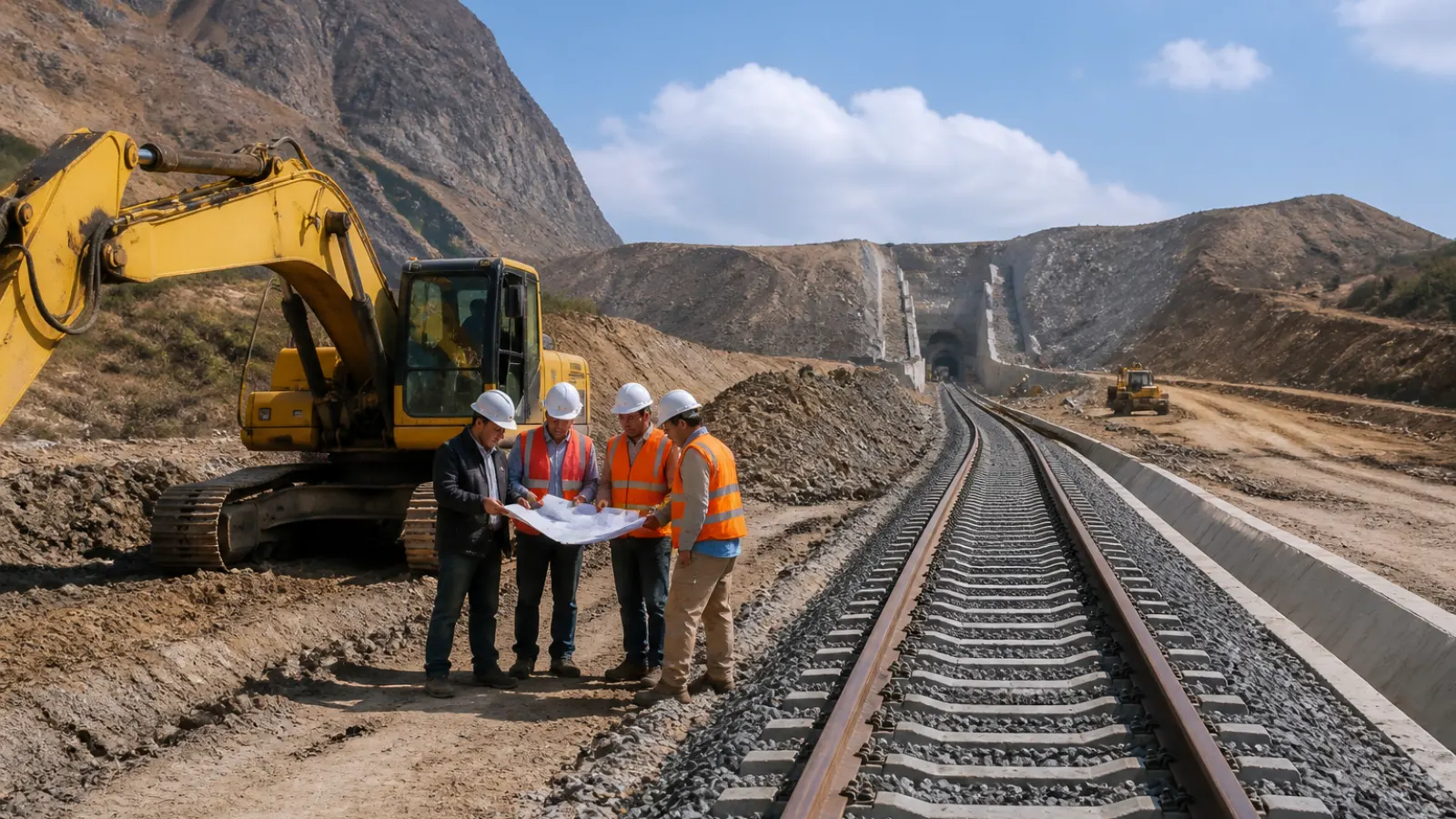
Warren Bechtel’s early railway work gave the family business more than revenue: it created practical experience in logistics, field execution, equipment, and difficult project environments. Over time, Bechtel extended those capabilities into infrastructure, engineering, procurement, construction, partnerships, and international project delivery.
Why Bechtel’s Rise Matters to Construction Leaders
Bechtel did not become a global engineering company through size alone. Its growth came from accumulating capabilities that made it trusted with increasingly complex projects: field execution, equipment management, technical problem-solving, procurement, project controls, and the coordination of many parties under difficult conditions.
That is the central lesson in understanding how Bechtel became a global engineering company. Its early work in railway construction created practical experience that could be transferred to other forms of infrastructure. The ability to control demanding jobsites, including through construction equipment and jobsite solutions, helped establish an execution-oriented culture. Later, engineering depth, partnerships, geographic reach, and formal systems expanded what the company could undertake.
This was not a single strategic decision or the achievement of Warren Bechtel alone. The Bechtel story reflects successive family leadership, employees, engineers, project managers, partners, and institutional practices. Its significance for construction leaders lies in the pattern: develop a capability on real projects, turn experience into repeatable systems, and enter adjacent markets where that capability remains valuable.
Warren Bechtel and the Origins of Bechtel
Warren Bechtel emerged from the practical world of American contracting, where success depended on solving physical problems under pressure rather than simply preparing plans. His early career exposed him to the demands of construction work, including labor coordination, material movement, equipment, changing site conditions, and the commercial consequences of delay.
The United States offered substantial opportunities for contractors during the expansion of rail transportation and related infrastructure. Railways connected developing regions, opened remote areas to commerce, and required work across difficult terrain. Contractors had to perform grading, excavation, structures, crossings, and other tasks while managing long supply lines and workforces spread across large distances.
These conditions made railway construction a demanding school for a young contractor. A firm could not succeed by relying only on technical drawings or a headquarters-based management process. It needed supervisors who understood the field, equipment that could be deployed effectively, systems for moving people and materials, and leaders capable of making decisions when plans met unforeseen conditions.
The origins of Bechtel therefore belong to a period when the enterprise was a family construction business shaped by direct project experience. That early identity should not be confused with the later global corporation. The modern Bechtel organization developed over decades as the family business added technical specialists, management systems, new sectors, partners, and international operations.
Warren Bechtel’s importance was foundational rather than solitary. His contractor’s perspective helped establish an emphasis on execution and responsibility for difficult work. Later leaders and employees built on that foundation, adapting the business as infrastructure projects became larger, more technical, more regulated, and more geographically diverse.
Railway Construction as the First Growth Platform
Railway work was more than an initial source of revenue. It was a platform for building capabilities that could later be applied to other infrastructure assignments. A railway project required the coordination of earthworks, structures, equipment, labor, logistics, safety, scheduling, and often remote-site operations. Each element created experience that had value beyond the specific line or contract.
Grading and excavation developed competence in managing quantities of material and changing ground conditions. Structures work required coordination between design requirements and construction methods. Equipment use taught the importance of productivity, maintenance, deployment, and operating discipline. Labor coordination developed the ability to organize teams across large sites, while remote work tested supply chains and field decision-making.
Those capabilities were transferable, but transfer was not automatic. A contractor had to recognize which practices were fundamental and which were specific to railway work. The durable capabilities included planning, cost and schedule control, site supervision, procurement, safety, equipment management, and the ability to resolve interfaces between disciplines.
Railway construction also created opportunities to build relationships and references. Reliable delivery could give clients, engineers, financiers, and public authorities confidence that a contractor could manage difficult work. Such confidence did not eliminate competition or guarantee future contracts, but it could improve a firm’s position when larger infrastructure assignments became available.
In this sense, railway work functioned as a training ground for complex project delivery. The projects were physical, interconnected, and exposed to conditions that could quickly affect cost and schedule. A company that learned to organize those risks was better prepared to pursue adjacent forms of infrastructure.
From Specialist Contractor to Infrastructure Builder
Bechtel’s expansion beyond railway work followed a broad construction company growth strategy: move into sectors where existing capabilities can be reused while developing the additional expertise required by the new market. Over time, the company became involved in areas such as power, civil infrastructure, industrial facilities, transportation, and other major projects.
The logic of this expansion was adjacency rather than simple diversification. Railway experience could support other heavy civil work because both required large-scale logistics, construction equipment, field supervision, and control of interdependent activities. Industrial and power projects introduced new technical requirements, but they also created a need for disciplined construction management and coordination among owners, designers, suppliers, and contractors.
Infrastructure expansion increased the company’s addressable market while preserving an execution-focused identity. Instead of treating every new sector as an unrelated business, Bechtel could build on common capabilities such as estimating, scheduling, procurement, quality management, commissioning, and project controls.
The progression was not perfectly linear. Different markets had different commercial structures, technical risks, regulatory expectations, and client requirements. A contractor successful in one field still had to develop new knowledge before entering another. Expansion could also increase exposure to contract complexity, financing conditions, political change, and specialized safety obligations.
What mattered was the ability to combine continuity with adaptation. The company retained a core discipline around project execution while adding the engineers, systems, partnerships, and market knowledge needed for more technically demanding work. That combination helped transform a contractor rooted in railway construction into a broader engineering and construction company.
The Bechtel Project Delivery Model
Combining Engineering, Procurement, and Construction
As projects became more complex, the separation between design and construction created more opportunities for coordination failures. Engineering decisions affected procurement. Procurement decisions affected construction sequencing. Construction discoveries could require design changes, and commissioning depended on choices made throughout the project.
An integrated engineering, procurement, and construction approach can bring those relationships under stronger coordination. Design teams can consider constructability earlier. Procurement specialists can align equipment and materials with the schedule. Construction leaders can provide field feedback before decisions become difficult or expensive to change. Project controls can connect scope, cost, schedule, risk, and progress in a common management framework.
This integration can reduce handoff problems and clarify accountability on complex projects. It does not guarantee success, however. Combining responsibilities increases management responsibility and requires technical depth, reliable information, disciplined governance, and clear authority. If integration is poorly managed, the same structure can concentrate problems instead of solving them.
Bechtel’s development into a major project delivery organization therefore involved more than adding engineering services to construction. It required the ability to coordinate technical disciplines and commercial decisions throughout the project life cycle. That capability became important as clients sought organizations able to manage interdependent work rather than isolated construction packages.
Self-Performed Construction and Field Control
Self-performed construction means retaining direct control over selected activities, methods, equipment, and site execution rather than outsourcing every task. For a major contractor, this approach can protect schedule and quality when the work is central to project performance or especially difficult to coordinate.
Direct field control can help a contractor understand actual productivity, respond quickly to site conditions, and preserve practical knowledge within the organization. It can also improve coordination between construction methods and engineering decisions. These advantages are especially relevant on remote, technically demanding, or high-risk infrastructure projects where delays in communication can have large consequences.
Self-performance does not mean doing everything internally. Specialist subcontractors may provide essential expertise, local capability, labor capacity, or equipment. The strategic question is which activities are critical to the project’s risk profile and should remain under direct control, and which can be assigned to qualified partners under effective supervision.
The balance requires judgment. Excessive self-performance can burden a contractor with unnecessary fixed costs or unfamiliar work. Excessive outsourcing can weaken field visibility and increase interface risk. Bechtel’s broader growth model illustrates the value of maintaining control over critical interfaces while using external specialists where they add capability.
Technical Expertise as a Commercial Capability
Engineering knowledge is not only a design resource; it is also a commercial capability. Technical expertise helps a contractor identify risks earlier, assess constructability, compare alternatives, and solve site-specific problems before they become claims or schedule crises.
On complex projects, disciplines are interdependent. Civil work may affect mechanical installation. Electrical systems may depend on procurement decisions. Environmental requirements may alter construction methods. A company with technical depth can help clients understand those relationships and can take greater responsibility for coordinating them.
This creates a practical differentiator when clients need one organization to manage multiple disciplines. The value is not simply the number of engineers employed. It is the ability to connect engineering decisions with procurement, field execution, commissioning, cost, schedule, and operational requirements.
Partnerships, Risk Management, and Client Trust
Large projects often require capabilities that no single organization should provide alone. Partnerships and joint ventures can bring local knowledge, specialist expertise, labor access, financing relationships, supply-chain reach, or entry into a market with unfamiliar regulations. Used strategically, they allow a contractor to extend its delivery capacity without pretending to possess every capability internally.
Partnerships also create risks. Responsibilities must be defined, decision rights must be understood, and commercial incentives must be aligned. A technically strong partner may have a different approach to reporting, safety, quality, or escalation. Effective collaboration therefore depends on governance rather than goodwill alone.
Risk management is similarly broader than avoiding risk. It includes defining scope, testing assumptions, planning procurement, identifying schedule constraints, managing safety, controlling interfaces, structuring contracts, and preparing for changing site or market conditions. International work can add regulatory, currency, political, cultural, and logistics considerations.
Bechtel did not eliminate project risk. A more defensible interpretation is that its growth depended partly on organizing and managing risk at scale. That includes recognizing issues early, assigning ownership, maintaining project controls, and communicating changes clearly enough for decisions to be made before problems become crises.
Dependable delivery and transparent issue management can strengthen institutional trust. Clients may not expect every project to proceed without difficulty, but they do need confidence that problems will be identified, explained, and managed. Over time, that confidence can support repeat business and relationships across multiple infrastructure programs.
Geographic Expansion Without Losing Operational Discipline
International expansion requires more than opening offices or pursuing large contracts. A contractor entering a new country must understand local regulations, permitting practices, labor markets, tax and commercial requirements, supply chains, community expectations, and cultural approaches to business.
Local relationships can improve market understanding and execution, but they must be combined with consistent standards for safety, quality, ethics, reporting, and project governance. Workforce development is also important. A project may depend on building local skills, adapting training, and creating a workforce structure suited to the operating environment.
Supply chains require similar adaptation. Materials, equipment, transportation routes, customs requirements, and supplier reliability can differ widely between markets. A delivery model that works in one country may need significant changes elsewhere, particularly when projects are remote or exposed to political and logistical uncertainty.
The challenge is to keep the core operating model consistent while adapting execution to local conditions. Consistency can provide a common language for project controls, risk management, safety, and accountability. Adaptation makes the model workable in different regulatory, cultural, technical, and commercial environments.
Bechtel’s geographic growth can therefore be understood as an organizational challenge as much as a market opportunity. Global infrastructure projects require the transfer of institutional knowledge without assuming that every project can be managed in exactly the same way.
What the Bechtel Growth Model Teaches Modern Contractors
- Build depth before pursuing scale. A strong reputation is more durable when it rests on real competence in field execution, management, safety, and technical problem-solving.
- Turn project experience into repeatable systems. Lessons from individual projects create lasting value only when they become methods, standards, training, and controls that can be used again.
- Expand into adjacent markets. Growth is more manageable when new sectors use capabilities the organization already understands while allowing room for deliberate technical development.
- Treat engineering and construction as connected disciplines. Better coordination between design and field execution can improve constructability, procurement, cost control, and accountability.
- Control critical interfaces and field execution. Self-performance should be selective, but the contractor should retain visibility and authority over activities that materially affect project risk.
- Use partnerships strategically. Joint ventures and specialist relationships should fill clear capability or market gaps, with governance established before problems arise.
- Manage risk before it becomes a crisis. Early scope definition, procurement planning, schedule analysis, and transparent escalation are central to reliable project delivery.
- Preserve accountability as reach increases. Geographic expansion should not create a distance between senior responsibility and site-level facts.
These lessons do not form a universal formula. Project type, contract structure, market conditions, and organizational resources all matter. They do, however, show why scale is usually an outcome of capability rather than a substitute for it.
Conclusion: A Family Business Built on Transferable Capabilities
Warren Bechtel’s career in railway construction provided an important foundation for the origins of Bechtel. Railway work developed practical experience in logistics, equipment, labor coordination, structures, remote-site management, and difficult field conditions. That foundation helped the company pursue broader infrastructure assignments.
The larger story of how Bechtel became a global engineering company lies in what followed. Successive family leaders, employees, technical specialists, partners, and institutional systems expanded the company’s capabilities into engineering, procurement, construction, project controls, infrastructure expansion, and international delivery.
Self-performed work supported field control. Technical expertise improved problem-solving and constructability. Partnerships extended market and specialist capability. Risk management organized uncertainty rather than pretending to remove it. Geographic expansion transferred a core operating discipline while adapting execution to local conditions.
For construction and infrastructure leaders, the practical takeaway is clear: sustainable scale comes from capabilities that can be transferred across projects and markets, not from expansion alone. A company grows more reliably when each demanding project strengthens the systems, expertise, relationships, and accountability required for the next one.
Frequently Asked Questions
Who was Warren Bechtel?
Warren Bechtel was an American contractor whose early career was shaped by practical construction work, including railway contracting. His field experience helped establish the execution-focused foundation of the family business that later became Bechtel.
How did railway construction influence Bechtel’s early growth?
Railway projects developed transferable capabilities in grading, structures, equipment, logistics, labor coordination, scheduling, and remote-site management. Successful delivery also helped build relationships and credibility for larger infrastructure assignments.
How did Bechtel expand beyond railway contracting?
Bechtel moved into adjacent sectors such as power, civil infrastructure, industrial facilities, and transportation. These markets required new technical knowledge, but they also relied on construction management, project controls, procurement, and field execution capabilities developed earlier.
Why is integrated project delivery important to Bechtel’s growth model?
Integrated delivery connects engineering, procurement, construction, commissioning, and project controls. It can reduce handoff problems and improve accountability, although it also requires strong technical systems, governance, and management discipline.
What can modern contractors learn from Bechtel’s expansion?
Modern contractors can learn to build depth before scale, convert project experience into repeatable systems, expand into adjacent markets, control critical interfaces, use partnerships carefully, and manage risk before it disrupts delivery.