The two lights a finished home still needs
A practical guide to finishing residential lighting with well-placed floor lamps, pathway lighting, warm color temperatures, dimmers and properly planned outlets.
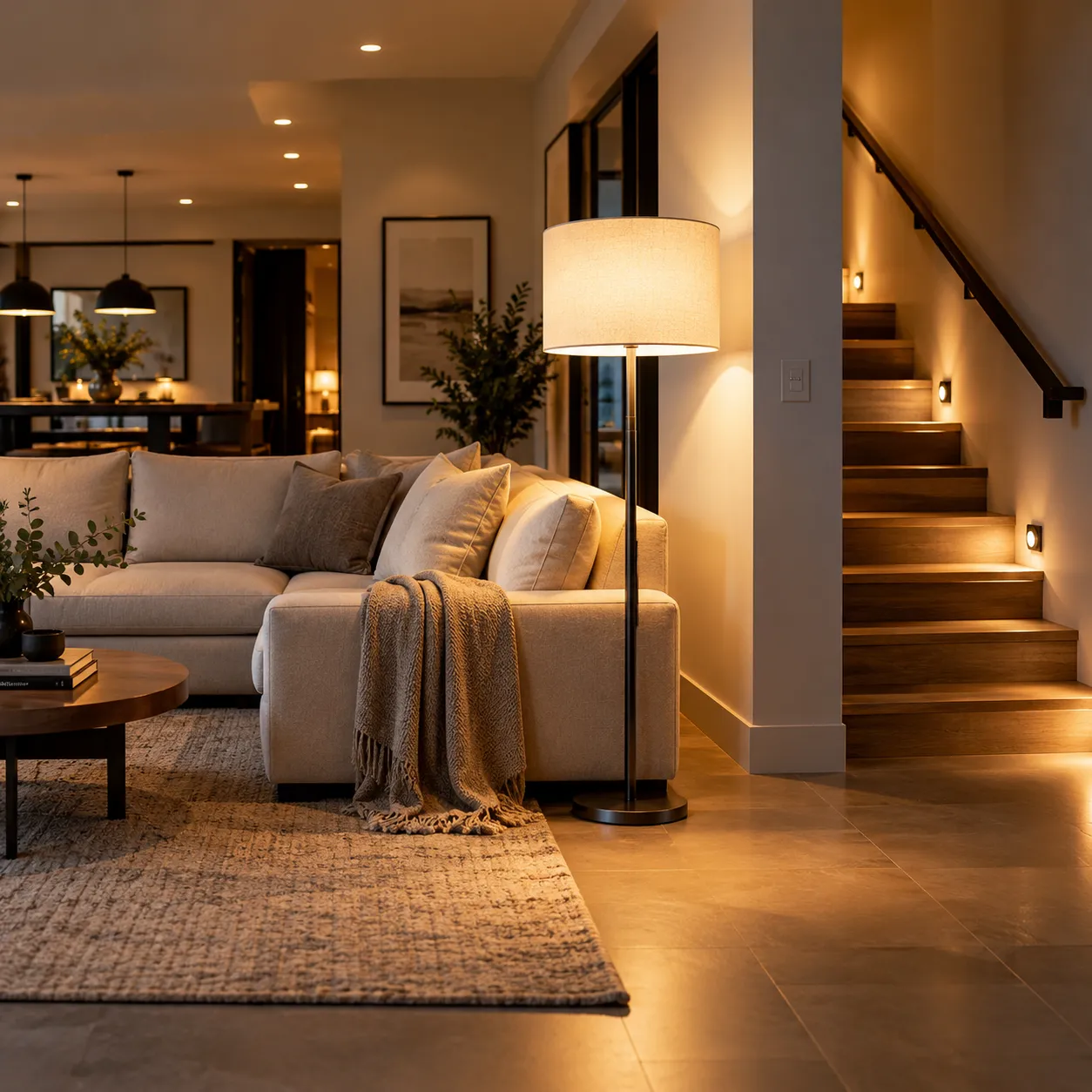
A home can be painted, floored, and signed off, and still feel like a job site on the first night. The ceiling is bright. The chair is not. The hall past the sofa is a dark slot. The owner says it still feels like a job site. They are usually right, and it is no longer a construction problem.
The punch list said the lighting was done because the cans and the pendant were in. That is only the fixed list. Drawings often stop at the reflected ceiling plan. That plan gets you through rough-in. It does not get you through a Tuesday night.
Split the package in two
When someone says the lighting fixtures are in, they usually mean what the electrician owns. Recessed lights. A dining pendant. Maybe a bath bar. All of it sits overhead. Overhead light shows the floor. It does not make a chair usable. Rooms with a full grid of cans still end up with a lamp dragged in from a bedroom during the first week.
The second list is furniture. It can move once people learn where they sit. If that list is empty, the home feels unfinished the week the work lights leave.
Light the path, not another ceiling row
A bright living room with a dark stair is how people miss a step. A small light at the landing, on the stair switch, matters more than a second decorative piece in a room that is already lit. Coat hooks, the turn into a bedroom corridor, the first step down: these need light you can see before you step, not after.
Check it with the temporary lights unplugged. Can you read in the chair? Can you see the next step? Can you find the switch without crossing a dark room? If any answer is no, the package is not finished, even if the invoice says it is.
The Illuminating Engineering Society defines a footcandle as one lumen per square foot. Use that as a plain test, not a lab exercise. The chair and the stair are the surfaces that have to be readable. Flooding the ceiling does not raise the light on a lap or on a tread. If the page is grey, move the lamp or open the shade. Do not add another row of cans.
Lock the bulbs and the outlets before handover
ENERGY STAR puts color appearance on the Kelvin scale. Lower numbers look more yellow. Light made to match an old incandescent bulb sits around 2200K to 3000K. Whiter light is about 3500K to 4100K. Living areas should stay in the warmer band and stay consistent. A cool lamp over a warm lamp makes the ceiling feel like an office and the chair feel like a different house. Kitchens and baths can go a step whiter where the task needs it. Do not mix those in one view from the sofa.
Dimmers belong on the overheads. The floor lamp keeps its own switch. You want to drop the ceiling without losing the chair. If everything is on one switch, people leave it on full, and the layout never gets used. ENERGY STAR also notes that not every LED works with every dimmer. Check the dimmer list before the walkthrough, or the cans will flicker the night you hand over the keys.
Outlets are part of the lighting even when they sit on another drawing. A lamp planned for the left of the sofa is useless if the only socket is behind a built-in. Tape the cord route on the floor during the walk. If the tape crosses a door swing, move the socket or move the chair. Do not solve it later with a cord under a rug.
A floor standing lamp beside the sofa or the reading chair fills the gap. Place it where someone sits, not in a corner chosen so a photo looks balanced. The shade hides the bulb. The cord does not cross the path from the door. One lamp in the right spot beats two that exist only to match each other. In a narrow room, symmetry is how you block a doorway.
What the handover should say
Write two lists on one page. Fixed: cans, pendant, bath bar, stair light, switches, dimmers, bulb code. Movable: the lamp, which side of the sofa, which outlet. If the movable line is blank, do not call the lighting done.
Walk in the order a person uses the home. Door, hall, chair, stairs, bedroom. Do not start in the kitchen because the kitchen usually passes. The failures are the chair and the path.
If the ceiling budget is already spent, say so and still name the lamp. A plug-in later is cheaper than opening the ceiling. Label it in words a buyer can read. "Lamp, left of sofa" beats a symbol nobody opens. The person moving in should not have to rediscover the dark corner you already stood in.
A short list for the walk
Fixed items first, then the lamp, then the path, then the bulb code written in words. If a corner is still dark, move the lamp before anyone prices another ceiling row. Moving a lamp is an hour. Adding cans is a change order. Most dark corners are a placement problem.
Phone photos will lie if the Kelvin numbers do not match. Take one picture with only the finished lights on. If the ceiling looks blue and the chair looks orange, fix the bulbs before handover, not after the buyer complains. Keep the code on a card in the lampshade so the next replacement does not drift.
One lamp at the chair and one light on the stair will outperform a ceiling full of cans nobody dims. Call the package done when those two work, not when the fixture count looks impressive on the drawing.
Before you call it finished
Walk the home in use order one last time with the owner, not from the plan. Door, chair, stair, bed. Book open. Temporary lights off. If the page is grey, the lamp moves today. If the next tread is dark, the landing light is not optional decor. Write what you changed on the same handover page so the note matches the room they will sleep in.
Resist a third fixture "for balance." Balance is why cords cross doorways. The chair has a pool of warm light. The path shows the next step. The ceiling dims. That is a finished lighting package for a home this size. Anything more is taste, and taste can wait until they have lived in it for a week.
Count the switches the owner will actually touch. Overhead dimmer. Lamp switch. Stair switch. Three is plenty. A fourth decorative light that shares the ceiling switch will stay on full and wash out the chair. Leave it off the list.
If insulation will touch a new recessed housing, that is a separate ceiling question. It does not change the lamp beside the sofa. Finish the two lights people use at night. Then the inspection lights can stay as they already are.