Donald Bren and the Irvine Company: The Verified Timeline Behind Irvine’s Master-Planned Communities
Donald Bren’s influence on Irvine grew from a combination of land control, phased planning, infrastructure coordination, and long-term ownership of commercial and residential assets. This verified timeline separates Bren’s documented role from the work of the Irvine family, public agencies, planners, builders, and other development partners.
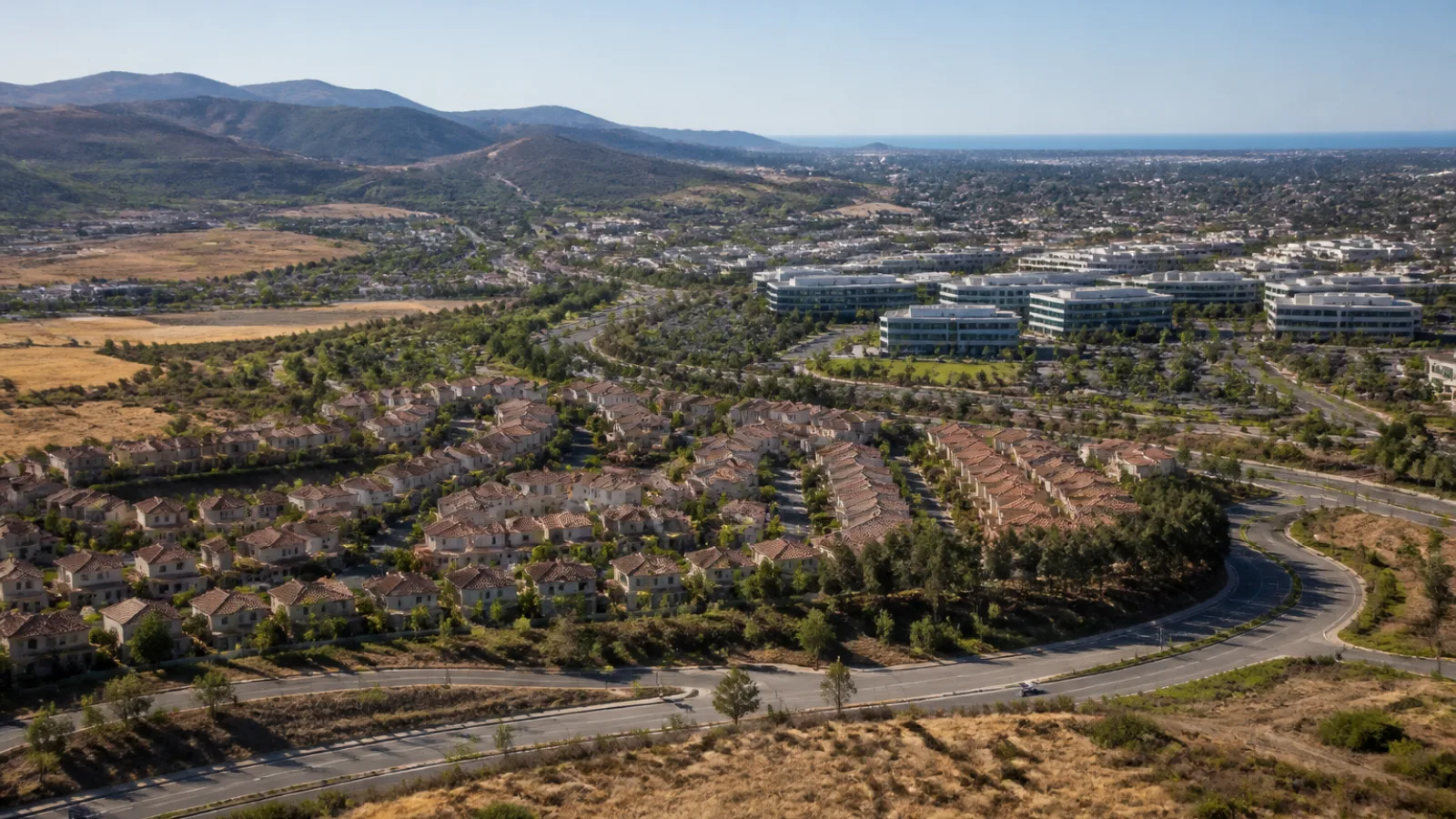
Donald Bren’s significance in Southern California real estate lies in combining long-term land control, phased planning, infrastructure coordination, and ownership of income-producing real estate. His role in Irvine was not the creation of a city from nothing, but the later direction of a large, historically assembled landholding through decades of urban development.
The Irvine Company’s land history predates Bren by generations, beginning with the Irvine family and continuing through earlier corporate ownership. Bren eventually became the central figure in the company’s modern development story. The company’s own historical record and public materials provide useful context through the Irvine Company's official website, although ownership claims, project attributions, and public responsibilities still need to be distinguished carefully.
Who Is Donald Bren?
Donald Bren was born in Los Angeles in 1932 and grew up in a family connected to business and construction. He attended the University of Washington, graduating in the 1950s, and entered real estate through residential development and construction work in Southern California. Historical accounts generally identify the Bren Company, formed in the late 1950s, as the platform through which he developed early housing projects and built operating experience.
Those early projects helped establish the capabilities that later defined Bren’s approach: assembling or controlling land, coordinating design and construction, managing timing, and retaining influence over major development decisions. The precise structure of early partnerships and projects varies across published accounts, so it is more accurate to describe this period as the growth of a residential development business than to attribute every early project to Bren personally.
His later strategy reflected several recurring principles. A large and coherent land position could support planning beyond a single subdivision. Infrastructure could be sequenced with demand. Residential development could be connected to offices, retail, schools, parks, and open space. And assets that remained under ownership could produce income after construction rather than generating value only when sold.
The Irvine Company Before Donald Bren
The Irvine Ranch originated with land acquired by James Irvine and other partners in the nineteenth century. The Irvine family and its successors operated the property for generations, with agriculture and ranching playing major roles. Over time, the ranch became one of the largest continuous privately held land positions in the region, creating conditions that were unusual in metropolitan development.
Ownership and management changed during the twentieth century. The Irvine Company was incorporated in the 1890s, and the Irvine family’s interests later passed through corporate arrangements and estate-related transactions. In 1961, the company was sold to the Weyerhaeuser Company. That transition occurred before Bren’s eventual control and is important because it shows that Irvine’s urbanization was not founded solely by one modern developer.
The movement toward planned urban development accelerated in the 1960s. Irvine’s early planning involved professional planners, architects, engineers, public officials, school districts, transportation agencies, homebuilders, and other institutions. The City of Irvine was incorporated in 1971, after development had already begun. The city is a public municipal government; the Irvine Company is a private landowner and development organization. They are not interchangeable.
The scale and continuity of the ranch made it possible to plan across broad areas rather than treating each neighborhood as an isolated project. It also allowed roads, employment districts, schools, parks, conservation areas, and housing to be considered within a wider framework. That opportunity was a product of historical land assembly and ownership continuity, not simply an outcome of Bren’s personal design.
Donald Bren and the Irvine Company: A Verified Timeline
The following sequence uses broad periods where accounts differ on exact transaction dates or ownership percentages. It distinguishes Bren’s documented participation from the work of corporate partners, public agencies, and development professionals.
| Period | Event | Why It Mattered |
|---|---|---|
| 1950s–1960s | Bren entered residential real estate and developed the Bren Company, building experience in construction, housing, land management, and project timing. | These activities gave him an operating base before the Irvine Company investment. |
| 1960s–early 1970s | The Irvine Ranch moved from primarily agricultural use toward planned urban development. Early communities, employment areas, roads, schools, and public institutions began taking shape. | The basic framework for Irvine preceded Bren’s control and involved many professional and public partners. |
| Late 1970s | Contemporary accounts report that Bren acquired a substantial minority interest in the Irvine Company as part of an investment partnership after the company had been owned by Weyerhaeuser. | This gave Bren a direct position in one of the region’s most important long-term land assets. |
| 1980s | Bren bought out or consolidated interests held by investment partners and became the company’s dominant owner and decision-maker. Sources describe the transition in slightly different ways, but his increasing control during this decade is well established. | Management influence and ownership became more closely aligned under Bren. |
| 1980s–1990s | Residential villages, office campuses, retail centers, hotels, schools, parks, and transportation connections expanded across Irvine and nearby areas. | The company developed a complete district rather than relying only on individual housing sales. |
| 1990s | Bren completed the consolidation of the Irvine Company’s ownership, according to company and established historical accounts. Irvine Spectrum-area development and additional employment and residential districts also advanced. | Full ownership supported a long-term holding and reinvestment model. |
| 2000s–present | The Irvine Company continued to develop and operate residential, office, retail, apartment, hotel, and coastal assets, while participating in later planning and development phases. | The strategy remained oriented toward land stewardship, recurring income, and control over future land-use decisions. |
The timeline should not be read as a claim that Bren personally designed, entitled, financed, or built every project. His importance was primarily strategic and organizational: ownership decisions, capital deployment, land-use direction, and the ability to maintain a consistent approach over decades.
How the Irvine Development Strategy Worked
The Irvine model can be understood as a long-duration real-estate operating system rather than a single construction program.
- Retain a large land base: Control over contiguous or strategically connected land allows planning decisions to extend beyond one project cycle. It can also preserve future options when market conditions change.
- Establish a long-range framework: Land uses, road networks, employment centers, schools, parks, housing, and open space can be coordinated before individual neighborhoods are released.
- Phase entitlements and construction: A long-range plan does not require every building to be constructed at once. Phasing allows supply, infrastructure, and investment to respond to market demand and public approvals.
- Coordinate public-serving uses: Schools, parks, trails, roads, utilities, and community facilities influence the usefulness and value of private development. Their delivery usually requires public agencies and partnerships, not just private construction.
- Combine sales and recurring income: Depending on the asset and transaction, the company has used residential sales, apartment ownership, office leasing, retail income, hotel operations or ownership, and other property revenues. Not every property is held by the same entity or operated under identical terms.
- Preserve optionality: Long-term ownership can allow a landowner to adjust density, uses, design standards, leasing strategy, and development timing as the surrounding region changes.
This approach can capture value created by infrastructure and neighboring development over time. It also requires capital, governance, operating expertise, and patience. Long-term ownership is not a substitute for sound underwriting or effective public coordination.
Master-Planned Communities and Major Development Areas
Irvine’s village structure emerged through multiple development phases and professional planning efforts. University Park was among the early villages. Woodbridge, Eastbluff, Turtle Rock, Northwood, and later communities such as Portola Springs illustrate how residential areas were organized around schools, parks, local shopping, roads, and open-space systems. The timing and ownership of individual neighborhoods varied, and some communities extend into jurisdictions or institutional settings that should not be attributed solely to the Irvine Company.
Woodbridge is particularly associated with a planned residential community built around lakes, recreation, schools, and neighborhood facilities. University Park and Turtle Rock demonstrate earlier approaches to neighborhood identity and the relationship between housing, educational institutions, hillsides, and open space. Northwood and Portola Springs represent later phases in the continuing development of Irvine’s broader land base.
Newport Coast is another important example of development associated with the Irvine Company, although it is located in the City of Newport Beach rather than the City of Irvine. Coastal development involved complex planning, environmental, transportation, and public-approval issues. The existence of a common developer or landowner does not erase the separate roles of municipal governments, regional agencies, infrastructure providers, builders, and community stakeholders.
A master plan is therefore more than a collection of subdivisions. It is a coordinated framework for land use, infrastructure, public facilities, mobility, open space, and long-term place management. The framework may be implemented by several builders over many years, with the landowner retaining varying levels of control over design standards, timing, and community amenities.
Commercial Real Estate and the Value of a Complete District
The Irvine Company’s commercial real-estate strategy helped connect residential growth with employment, shopping, hospitality, and entertainment. Newport Center and Fashion Island in Newport Beach became major commercial and retail destinations associated with the company’s development activity. Their role extended beyond serving nearby residents; they also functioned as regional destinations and employment centers.
The Market Place, located near the Irvine and Tustin border, illustrates the importance of large-format retail and mixed commercial planning in a growing metropolitan district. The Irvine Spectrum area developed into another major employment, retail, entertainment, and residential node. Ownership, development, and management arrangements can differ by property, so it is inaccurate to treat every building in these areas as owned or constructed by the Irvine Company alone.
Irvine’s office campuses and employment districts supplied workplaces near housing and supported demand for restaurants, retail, hotels, and transportation infrastructure. Apartments, hotels, shopping centers, and office properties also created income-producing assets that could be held and operated over time. This diversified the company beyond the economics of selling finished homes or raw residential lots.
Commercial properties can support a master plan in several ways. They create daily destinations, diversify revenue, provide employment, and strengthen the usefulness of surrounding housing. They can also increase the value of infrastructure investments by generating activity throughout the day and week. The tradeoff is that commercial assets require leasing, tenant management, capital improvements, and continued adaptation to changing consumer and business patterns.
Long-Term Ownership Versus Short-Term Project Sales
The contrast below is a useful analytical distinction, not a claim that one model is always superior. Many developers use a mixture of land sales, joint ventures, development fees, and long-term ownership.
| Factor | Ownership-oriented model | Typical merchant-developer model |
|---|---|---|
| Primary revenue timing | Income and appreciation may accumulate through leasing, operations, and later asset sales. | Revenue is generally realized sooner through land, home, or completed-project sales. |
| Market-cycle exposure | The owner remains exposed to vacancies, operating conditions, interest rates, and long downturns. | The developer may reduce exposure after selling, although construction and sales risk remain significant. |
| Design and tenant control | Long-term ownership can support greater influence over standards, tenant mix, and reinvestment. | Control may diminish after disposition to buyers, investors, or independent operators. |
| Infrastructure and amenities | Long-term value can justify reinvestment in shared infrastructure, public-facing amenities, and property upgrades. | Investment is more closely tied to the delivery requirements and expected sale value of a specific project. |
| Liquidity and capital needs | Capital remains tied up for longer and assets may be difficult to monetize quickly. | Capital can be recycled sooner, subject to market demand and successful project completion. |
| Long-term risks | Obsolescence, tenant turnover, governance complexity, maintenance, and changing land-use conditions persist for decades. | Risks may be concentrated in acquisition, approvals, construction, and disposition periods. |
The Irvine Company’s long-term ownership orientation helped preserve control, but it also created ongoing obligations. Holding assets for decades requires balance-sheet capacity, professional property management, market research, maintenance, and willingness to invest when returns are not immediate.
What Developers Can Learn From Donald Bren’s Strategy
- Secure a coherent land position or partnership structure. A developer does not need an Irvine-sized ranch, but fragmented control can make infrastructure and land-use coordination more expensive. Clear partnership rights and a realistic assembly strategy are essential.
- Plan infrastructure and public-serving uses early. Roads, schools, utilities, parks, stormwater systems, and transit connections shape project feasibility. Treating them as late additions can undermine both approvals and market performance.
- Sequence development instead of treating a master plan as one construction event. Phasing helps align capital spending with absorption, public capacity, and changing demand. It also creates opportunities to revise later phases using lessons from earlier ones.
- Match housing, employment, retail, mobility, and open space. A residential project is more resilient when it functions within a broader district. The exact mix will vary by market, but single-use planning can increase transportation costs and reduce daily convenience.
- Build an operating model, not just a construction pipeline. Leasing, property management, tenant relationships, maintenance, and amenity programming can create value after construction ends. Developers should decide early which assets they can competently own and operate.
- Protect flexibility for future market changes. Long-range plans should establish structure without making every future decision irreversible. Demographics, technology, mobility, climate conditions, and workplace patterns can change substantially over a multi-decade project.
- Separate documented strategy from mythology. Prominent developers are often credited with outcomes produced by teams, institutions, and historical conditions. Reliable analysis identifies the roles of planners, architects, builders, public agencies, investors, and residents.
- Account for approvals, community interests, environmental constraints, and infrastructure costs. Private land ownership does not eliminate public review or social obligations. Contemporary projects must address entitlement risk, affordability, environmental impacts, transportation, and community trust.
These lessons are principles rather than a blueprint. Few markets offer a comparable land position, and public expectations, regulations, financing conditions, and housing needs differ widely.
Limits and Criticisms of the Model
Large-scale land control can create efficiencies in planning and infrastructure, but it can also raise questions about market power, access, housing affordability, and the influence a private owner has over place-making. A coordinated design language may improve consistency while limiting the range of housing types, retail formats, or neighborhood evolution.
Master-planned communities can deliver parks, schools, amenities, and predictable infrastructure. Depending on their period and location, however, they may also face criticism involving car dependence, long commutes, segregation by price, or limited organic street life. These outcomes are not identical across Irvine’s communities and should be assessed by neighborhood and development phase.
Finally, private ownership and public governance are different. The City of Irvine retains responsibility for municipal services, public decisions, regulations, and accountability to residents. Those functions should not be attributed solely to the Irvine Company or to Bren.
Frequently Asked Questions
Who is Donald Bren?
Donald Bren is a Southern California real-estate developer and the central owner and decision-maker associated with the Irvine Company’s modern development era. He began in residential construction and development before acquiring an interest in the Irvine Company. His documented significance comes from long-term land control, phased planning, ownership of commercial and residential assets, and sustained influence over development decisions rather than from personally designing or constructing every Irvine project.
When did Donald Bren gain control of the Irvine Company?
Records indicate that Bren acquired a substantial interest in the company in the late 1970s as part of an investment partnership. He consolidated ownership and management influence during the 1980s, and established accounts generally place the acquisition of the remaining interests in the 1990s. Because published histories describe the transactions differently, the safest summary is that Bren became the dominant owner during the 1980s and achieved full control later.
Did Donald Bren found Irvine?
No. The Irvine Ranch and the Irvine Company predated Bren by generations, and urban planning and development began before he gained control. The City of Irvine incorporated in 1971. Bren later became the dominant figure in the Irvine Company and influenced the scale, phasing, and long-term ownership strategy of subsequent development, but Irvine was produced by the Irvine family’s land history, corporate owners, planners, builders, public agencies, and residents.
What is the Irvine Company’s business model?
The Irvine Company’s model has combined land planning and development with ownership or operation of income-producing real estate. Depending on the asset, activities have included residential development, apartment ownership, office leasing, retail, hotels, and related property operations. The company has also used long-term land control and phased development to preserve future options. Individual properties can involve separate builders, partners, investors, or ownership arrangements.
Which communities and commercial projects are associated with the Irvine Company?
Associated residential areas include early Irvine villages such as University Park and later communities including Woodbridge, Turtle Rock, Northwood, and Portola Springs. Newport Coast is a related coastal development outside the City of Irvine. Commercial examples include Newport Center and Fashion Island, The Market Place, Irvine Spectrum-area development, office campuses, hotels, apartments, and retail centers. Attribution should be checked by project because ownership and development roles vary.
How does long-term ownership differ from selling completed projects?
Long-term ownership keeps capital invested after construction and allows the owner to earn rent, operating income, and potential appreciation over time. It can also preserve influence over design, tenants, maintenance, and future redevelopment. Selling completed projects recycles capital sooner and reduces some long-term operating obligations, but it also gives up future income and control. Neither approach is automatically better; the choice depends on capital, expertise, risk tolerance, and market conditions.
What can modern developers learn from the Irvine model?
Developers can learn to coordinate land use with infrastructure, phase construction, connect housing to employment and services, and treat property operations as part of the business model. They should also recognize the limits of imitation: most projects lack Irvine’s land scale and historical continuity. Contemporary development must additionally address affordability, environmental constraints, public approvals, mobility, community participation, and the accountability that accompanies large-scale place-making.
Conclusion
The verified sequence is relatively clear. Irvine’s land history began with the Irvine family and earlier corporate ownership. Urban development and city formation started before Donald Bren’s control. Bren entered through a late-1970s investment, consolidated influence during the 1980s, and ultimately directed an ownership-oriented strategy that continued across residential, commercial, coastal, hospitality, and office development.
His influence came less from a single project than from sustained control of land, planning, capital deployment, development phasing, and income-producing assets over decades. For developers, the central lesson is practical: successful master planning depends on governance, infrastructure, market timing, professional teams, and public accountability as well as land ownership.