T.Y. Lin: How Prestressed Concrete Became Global Practice
Tung-Yen “T.Y.” Lin helped transform prestressed concrete from a specialized engineering development into a practical global design system. Through his research, consulting, teaching, and load-balancing method, he influenced bridge engineering, building design, and structural education for generations.
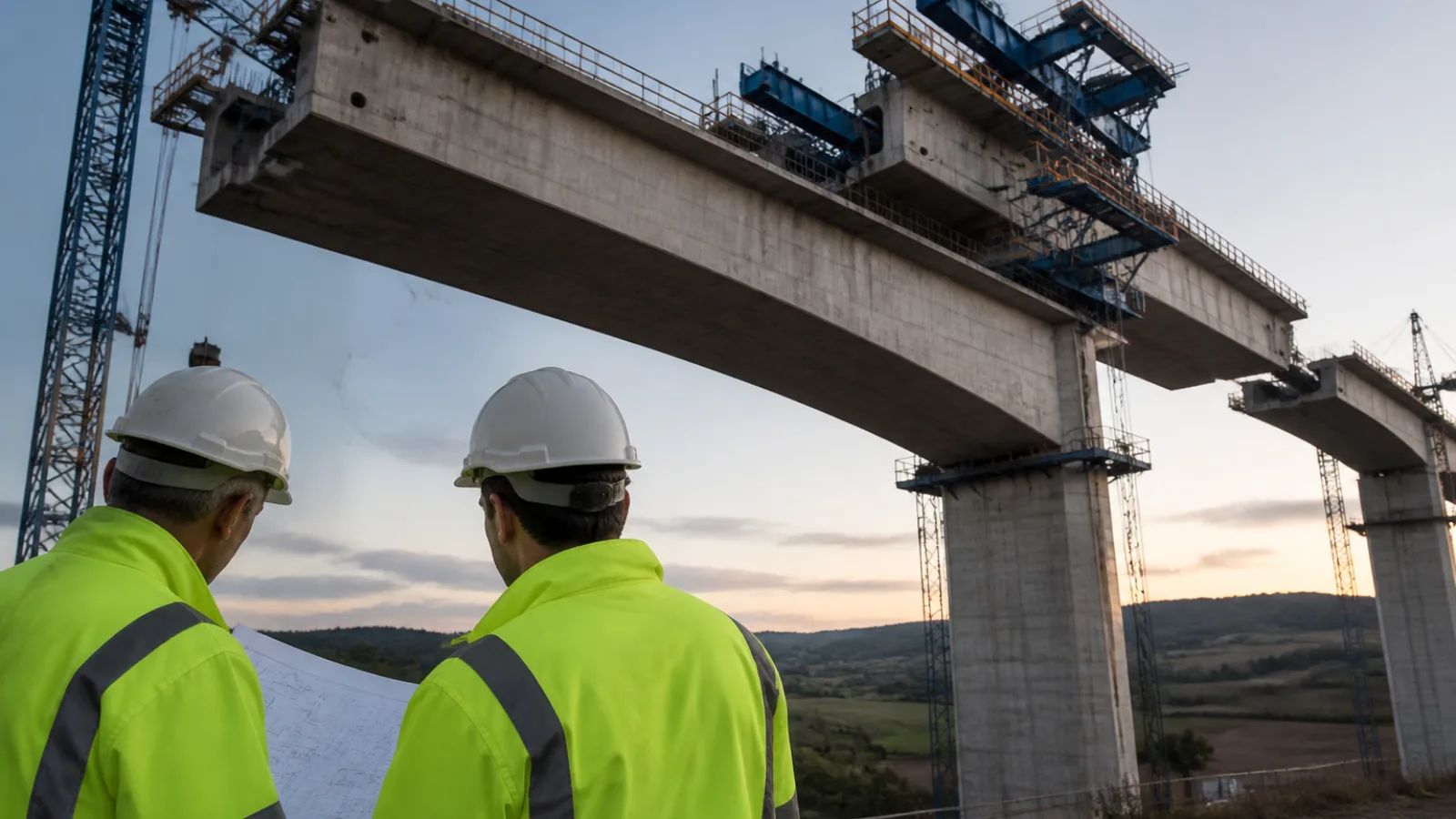
Few engineers did more to connect structural theory with the realities of construction than Tung-Yen “T.Y.” Lin. His career helped turn prestressed concrete from a specialized European development into a practical design language used by bridge engineers, building designers, contractors, and educators around the world. The continuing relevance of Freyssinet’s prestressing expertise reflects the wider professional field that Lin helped explain and advance.
Lin was not the sole inventor of prestressed concrete. Earlier researchers and designers, including Eugène Freyssinet, made foundational contributions to the technology. Lin’s distinctive achievement was to develop clear analytical methods, apply them to ambitious structural problems, teach them to generations of engineers, and promote prestressed concrete as an integrated design and construction system.
From China to Berkeley: Forming an Engineer
Tung-Yen Lin was born in 1912 in Fuzhou, China. He studied civil engineering at Tangshan Engineering College, an institution with a strong railway and infrastructure tradition, before continuing his education in the United States. He earned advanced degrees at the University of California, Berkeley, where he later became a professor and one of the school’s most influential structural-engineering educators.
Lin’s early development took place during a period when concrete construction was expanding rapidly but engineers were still working to understand its long-term behavior. Concrete is strong in compression but comparatively weak in tension. Reinforcing steel helps carry tensile forces, yet ordinary reinforced concrete can still crack under service loads, and large spans can require substantial depth and weight.
Lin approached these challenges as both a mechanics problem and a design problem. He was interested not only in calculating whether a member would remain safe, but also in how an engineer could shape internal forces so that a structure used its materials more efficiently. That perspective became central to his work in prestressed concrete.
Why Prestressed Concrete Needed a New Way of Thinking
In conventional reinforced concrete, loads create internal stresses after the concrete and reinforcement are placed. Steel bars resist tension while the concrete carries compression and protects the reinforcement. The resulting cracks may be acceptable within design limits, but they must be controlled through detailing, material selection, and serviceability checks.
Prestressed concrete changes the starting condition. High-strength steel tendons are tensioned before or after the concrete member becomes structurally active. The tendons then introduce compression into the concrete. When the member later experiences service loads, part of that compression offsets the tensile stresses produced by bending.
The result is not concrete that never experiences tension. Instead, the engineer controls when and where tension develops, how much cracking is acceptable, and how the structure behaves through construction and service. This can reduce deflection, improve crack control, enable longer spans, and produce slimmer members when the design, materials, anchorage, and construction process are properly coordinated.
| Design consideration | Conventional reinforced concrete | Prestressed concrete |
|---|---|---|
| Initial internal stress | Generally introduced by self-weight, imposed loads, and reinforcement interaction | Compression is deliberately introduced through tensioned tendons |
| Crack control | Cracks are commonly expected and controlled within design limits | Prestress can delay or limit tensile cracking under service conditions |
| Span potential | Effective for many spans, but depth and self-weight can increase as spans grow | Can improve span efficiency and reduce deflection when appropriately designed |
| Primary design concern | Reinforcement, cracking, deflection, shear, durability, and strength | All conventional concerns plus losses, anchorage, tendon profile, stressing, and sequencing |
| Construction requirements | Standard reinforcement placement and concrete operations | Additional stressing equipment, skilled installation, inspection, and quality control |
T.Y. Lin’s Core Innovation: The Load-Balancing Method
Lin became especially well known for the load-balancing method. In simple terms, the method treats the curved path of a post-tensioning tendon as a controlled source of equivalent forces. A tendon draped through a beam does more than place steel where tension is expected. Its curvature can create upward forces that counteract some of the downward effects of gravity loads.
This way of thinking gave engineers a practical bridge between tendon geometry and structural response. Rather than viewing prestressing only as an initial compression operation, designers could examine how the tendon profile actively balanced selected loads. A parabolic tendon in a beam, for example, can generate an uplift effect that is related to its curvature and stressing force.
The method did not eliminate the need for conventional structural analysis. Engineers still have to check strength, shear, service stresses, deflection, fatigue, anchorage zones, losses, durability, and construction stages. Its value was that it made the behavior of prestressed members easier to visualize and apply, particularly for continuous beams, slabs, frames, and bridges.
Lin’s approach also supported an important design habit: begin with the forces a structure must resist, then select a tendon arrangement that produces a useful counteraction. That is different from simply adding more material after a structural form has already been chosen. It encourages the engineer to coordinate form, force flow, materials, and construction from the beginning.
From Equations to Bridges, Buildings, and Long-Span Ideas
Lin’s work extended beyond classroom theory. Through teaching, consulting, research, and professional practice, he helped apply prestressed concrete to bridges, buildings, industrial structures, and ambitious long-span proposals. His firm, T.Y. Lin International, became associated with bridge and structural engineering work in the United States and internationally, while Lin himself became a prominent advocate for efficient concrete structures.
Bridge engineering offered an especially clear field for his ideas. Bridges must carry repeated moving loads, resist environmental exposure, accommodate construction constraints, and remain serviceable for decades. Prestressing can help control cracking and deflection in girders, segmental construction, balanced-cantilever work, and other bridge systems. It can also reduce the amount of dead weight that a bridge must carry across its own span.
Lin was also interested in the relationship between structural form and construction method. A bridge designed for cast-in-place construction may have a different force flow from one assembled from precast segments. Temporary supports, tendon stressing stages, creep and shrinkage, and access for inspection can all influence the final design. His engineering philosophy treated those factors as part of structural design rather than as issues to be considered only after the calculations were complete.
His professional influence included building structures as well. Prestressed concrete floors can provide useful spans, reduce column interference, and improve flexibility in buildings where open interior space matters. Roofs, tanks, industrial facilities, parking structures, and special structures can also benefit from controlled compression and tendon placement. The appropriate solution depends on span, loading, repetition, fire and durability requirements, construction access, and the availability of qualified specialists.
Lin also developed and promoted bold long-span concepts, including proposals for very large bridges and crossings. Some remained conceptual rather than becoming constructed landmarks. Their value was still significant: they challenged engineers to consider how concrete, prestressing, geometry, and construction technology might work together at scales that conventional approaches made difficult.
The Global Spread of Prestressed Concrete
Prestressed concrete became an international technology through the combined work of inventors, researchers, design firms, contractors, material producers, code writers, and educators. No single engineer could establish the system worldwide. Lin’s contribution was to make its principles more systematic and transferable.
His books and lectures gave students and practicing engineers a framework for understanding prestress losses, tendon profiles, load effects, service stresses, ultimate strength, and construction stages. His professional relationships also helped connect academic knowledge with the practical requirements of design offices and construction sites.
The spread of prestressing depended on more than formulas. It required high-strength concrete, reliable steel tendons, anchorage systems, stressing jacks, grouting practices, inspection procedures, and appropriate standards. Engineers had to understand how prestress changes over time because of creep, shrinkage, relaxation, friction, anchorage seating, and temperature effects.
Lin’s work helped establish the idea that prestressed concrete should be treated as a complete structural system. A successful design must account for the tendon, concrete, anchorage, construction sequence, tolerances, protection against corrosion, and future inspection. That systems perspective remains important in modern bridge and building practice.
Teaching Structural Engineering as a Design Discipline
Lin’s influence on education may be as lasting as his influence on projects. He was known for presenting structural mechanics in a way that connected mathematical analysis with physical intuition. Students were encouraged to understand how forces traveled through a structure, why a particular form was efficient, and how construction decisions affected performance.
His textbooks and teaching materials helped make prestressed concrete accessible to a broad engineering audience. They did not treat design as an exercise in applying isolated equations. Instead, they showed how an engineer could move from a conceptual structural model to assumptions, analysis, detailing, checking, and construction planning.
This approach matters because structural engineering requires judgment. Software can calculate stresses and deflections, but it does not independently decide whether the structural model is appropriate, whether a tendon profile is buildable, whether a detail can be inspected, or whether a design remains robust when construction varies from the ideal sequence.
Lin’s educational legacy therefore extends beyond prestressed concrete. He demonstrated the value of teaching engineers to combine mechanics, economy, architecture, constructability, and communication. That combination is essential for civil infrastructure, where a technically adequate design must also be durable, maintainable, and practical to build.
What Modern Engineers Can Learn From T.Y. Lin
Design the force flow, not just the member
Lin’s work encourages designers to think about the complete path of forces. Tendon location, curvature, anchorage, member geometry, and support conditions should work together rather than being selected independently.
Include construction in the structural concept
Prestressed members can behave differently during casting, lifting, stressing, erection, and final service. A design that ignores temporary conditions may be difficult or unsafe to construct even if its final-stage calculations appear satisfactory.
Use materials efficiently and responsibly
Efficient structural design is not simply about using less material. It is about placing the right material where it performs the most useful function, while maintaining durability, redundancy, fire performance, inspectability, and resilience. Prestressing can support that goal when its additional complexity is justified.
Communicate technical ideas clearly
Lin’s load-balancing explanation remains powerful because it gives engineers a mental model as well as a calculation method. Clear explanations improve coordination among engineers, architects, contractors, owners, and students.
Frequently Asked Questions
Who was T.Y. Lin?
Tung-Yen Lin was a Chinese-American structural engineer, educator, consultant, and author who became one of the leading figures in the development and teaching of prestressed concrete. He was a professor at the University of California, Berkeley, and helped connect structural theory with professional practice.
What is T.Y. Lin best known for?
He is best known for advancing the analysis, design, teaching, and practical use of prestressed concrete. His load-balancing method provided a clear way to understand how post-tensioning tendons can counteract selected structural loads.
Did T.Y. Lin invent prestressed concrete?
No. Prestressed concrete developed through the work of multiple engineers and researchers, including important early contributions from Eugène Freyssinet and others. Lin’s major contribution was to advance its theory, application, education, and worldwide professional adoption.
What is the load-balancing method?
The load-balancing method represents the forces generated by a curved, stressed tendon as equivalent loads acting on the concrete member. This allows engineers to select tendon profiles that counteract part of the effects created by gravity or other applied loads.
Why is T.Y. Lin important to structural engineering education?
Lin showed how structural mechanics could be taught through physical understanding, design judgment, and construction awareness. His books, lectures, students, and professional work influenced how engineers approach prestressed concrete and structural design more broadly.
Conclusion: From Theory to Global Practice
T.Y. Lin’s legacy is not limited to a single bridge, building, equation, or company. His importance lies in the way he connected several parts of engineering: mechanics, structural form, construction, materials, education, and professional practice. He helped engineers see prestressing as a deliberate method for shaping structural behavior rather than merely as a specialized reinforcement technique.
By clarifying the load-balancing concept, applying prestressed concrete to demanding structural problems, and teaching generations of engineers, Lin helped move the technology from theory into global practice. Modern structural engineers continue to build on that foundation whenever they coordinate tendon geometry, concrete behavior, construction sequence, durability, and long-term performance in a single design.