How high-rise buildings are constructed in modern metropolises
Explore modern high-rise construction methods, from BIM design and geotechnical surveys to advanced foundations, precast concrete, modular systems and self-climbing formwork.
Although the overall pace of urbanization has slowed, major cities continue to attract new residents. According to UN projections, around 68% of the world's population will live in urban areas by 2050. The reasons for moving to large cities are understandable, but this trend places additional pressure on urban infrastructure, transport networks, and housing stock. Existing housing does not always meet the demand for modern, high-quality homes, and in some cities, demand exceeds supply. One of the construction industry's key challenges is therefore to build new homes faster without compromising quality or safety.
Which technologies help speed up construction?
The construction of high-rise residential complexes starts with an idea and a project, with the initial drawings eventually translated into work on site. Developers are already adopting more advanced solutions at this early stage. Building Information Modeling (BIM) is widely used in the design of high-rise buildings. A detailed digital model makes it possible to visualize the building's structures and engineering systems, as well as determine what equipment will be needed for construction. It also makes it easier to organize and monitor each stage of the process.
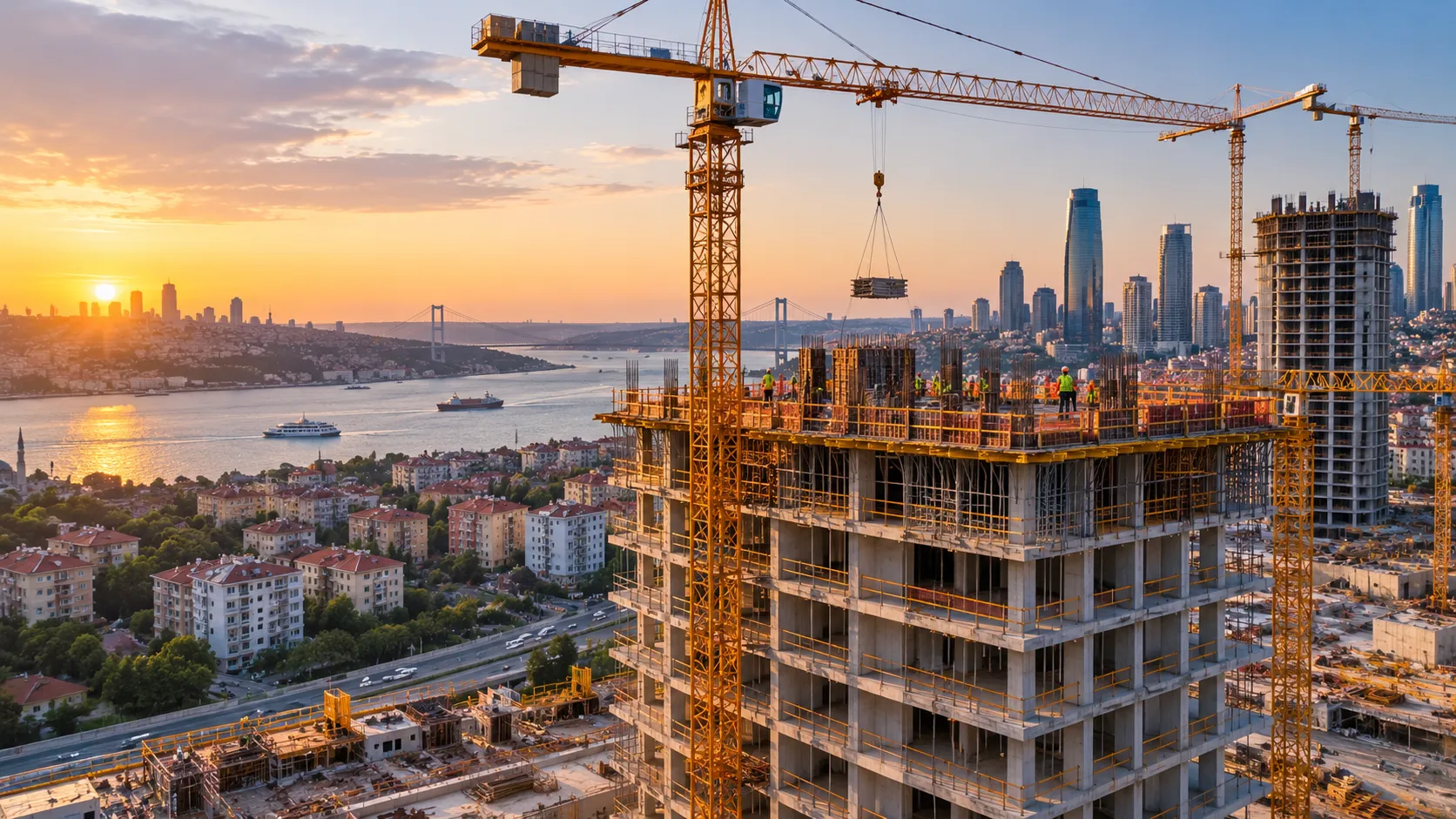
Turkey offers an interesting example of modern approaches to high-rise construction, particularly in the development of new real estate in Istanbul https://myestateinvest.com/en/istanbul/. Building design here must account for local climate conditions and ground instability, while strong housing demand provides an additional incentive to develop the construction industry. The city's historic areas, including Sultanahmet, retain their architectural character, while other parts of Istanbul continue to expand, with new residential complexes, neighborhoods, and entire districts taking shape. Turkey's Building Earthquake Code (TBDY 2018) has been in force since 2019, while construction work is also subject to oversight by independent organizations under Law No. 4708 on Building Inspection. Before construction begins, engineers conduct geotechnical surveys to determine the most suitable foundation type. Depending on site conditions, this may be a large raft foundation, a pile foundation, or a combination of the two.
As for other concrete work, concrete remains one of the most widely used materials in high-rise construction despite advances in the industry. Developers increasingly move as much work as possible from the construction site to factories. This applies to panels, structural elements, stair flights, and other components. The approach reduces dependence on weather conditions and makes it easier to maintain consistent product quality. In Japan, for example, precast concrete components are used in various types of buildings, with manufacturers continuing to develop off-site production and standardized elements. Singapore has taken this approach further: entire building modules, including parts of their engineering systems, are assembled in factories and delivered to construction sites largely ready for installation.
For operations that must still be carried out on site, developers use reusable formwork, mechanized concrete placement, and carefully planned floor-by-floor construction cycles. These methods speed up repetitive tasks and help ensure that structural elements meet the required dimensions. Skyscrapers also make use of self-climbing formwork, which moves upward as construction progresses. This technology was used in the construction of the Burj Khalifa in Dubai, where concrete was pumped to heights of more than 600 meters.
Concrete work accounts for only the structural phase of construction, but it illustrates the industry's broader approach. Traditional methods are being reassessed in favor of greater efficiency, and similar solutions are being adopted at every subsequent stage of the building process.