How Wearable Technology and IoT Sensors Are Creating Proactive Construction Safety Systems
The construction industry is shifting from a reactive to a proactive safety model, driven by real-time data from wearable devices and IoT sensors. This technology enables continuous site monitoring, instant hazard alerts, and data-driven insights to prevent accidents before they happen, fundamentally transforming how we protect workers on the jobsite.
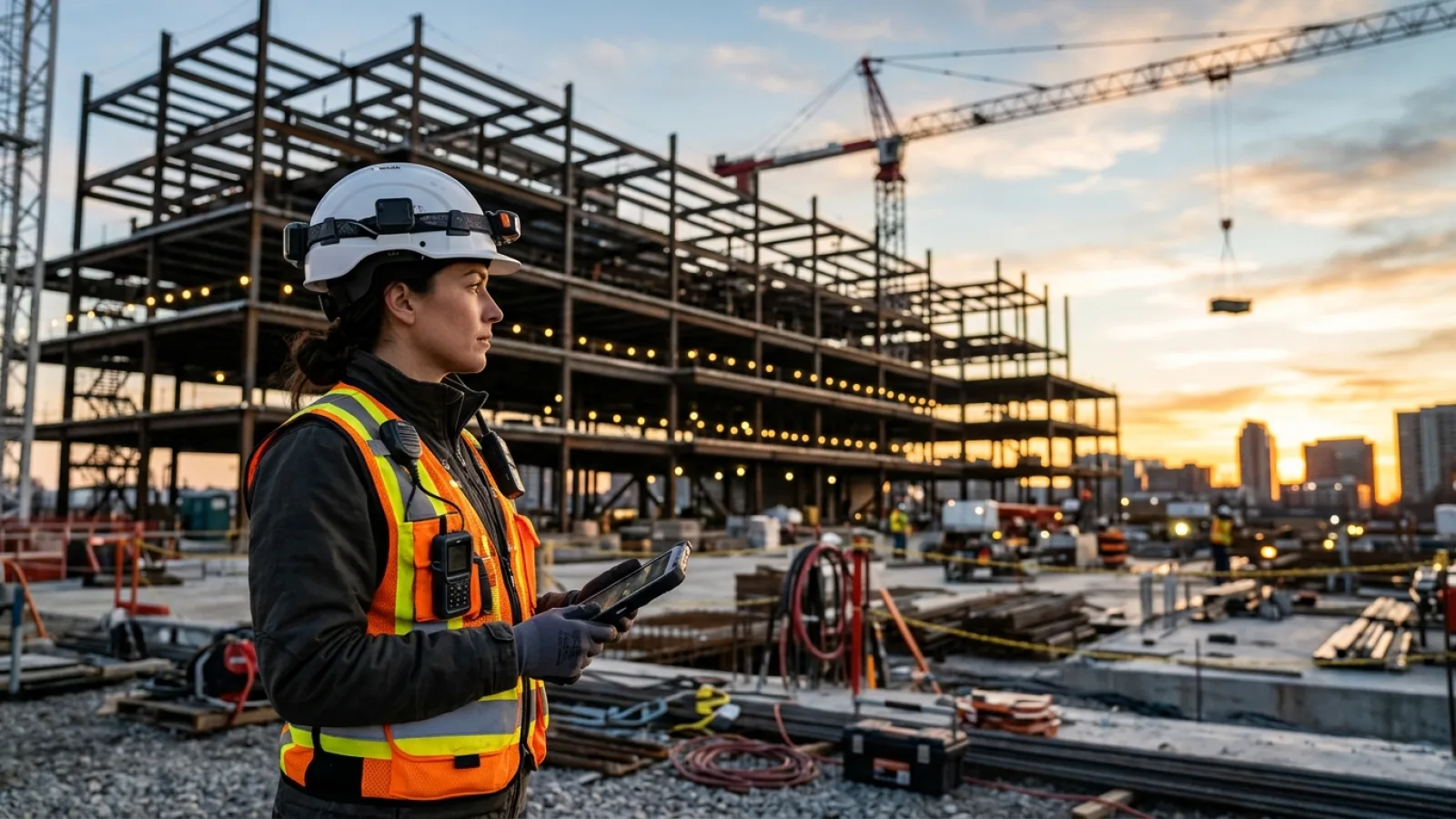
1. Introduction: The Shift from Reactive to Proactive Safety in Construction
For decades, construction safety has operated on a reactive model. An incident occurs, it is investigated, and new protocols are implemented to prevent a recurrence. This cycle of incident-report-react, while crucial, inherently means that an injury or near-miss must happen first. The industry's goal, however, is not to learn from accidents but to prevent them entirely. This requires a fundamental shift in mindset—from reactive compliance to proactive prevention.
This new paradigm is being powered by a convergence of technologies: wearable devices and the Internet of Things (IoT). By collecting and analyzing real-time data directly from workers and the jobsite environment, these systems create a digital safety net that can identify hazards and predict risks before they escalate into incidents. This approach integrates technology not just as a reporting tool but as an active participant in on-site safety, creating comprehensive safety monitoring solutions that are dynamic and intelligent. The era of smart construction safety is here, and it’s focused on keeping every worker safe, every single day.
2. What Is Wearable Construction Technology?
Wearable construction technology refers to electronic devices that can be worn by workers as accessories, embedded in clothing, or attached to personal protective equipment (PPE). These devices are equipped with sensors that capture and transmit data about the worker's location, physical state, and immediate environment. They are the frontline data collectors in a proactive safety management system.
Key types of wearable devices include:
- Smart Hard Hats: More than just head protection, these devices are integrated with sensors that can detect impacts from falls or falling objects. Many are also equipped with GPS for location tracking, proximity sensors to alert workers of nearby heavy equipment, and built-in communication systems for hands-free contact.
- Connected Vests: These smart vests are hubs for various sensors. They often feature biometric monitors to track heart rate and body temperature, proximity alerts that vibrate when a worker nears a hazardous zone or vehicle, and GPS/RFID tags for precise location tracking.
- Smart Boots: Footwear is evolving to include pressure sensors that can detect if a worker has slipped or fallen, even if they are unable to call for help. Embedded location trackers also provide another layer of location data, critical in large or complex jobsites.
- Wearable Tags/Badges: These simple, clip-on devices are a versatile solution for location tracking and access control. They can be used to create geofences, automate site mustering during emergencies, and ensure only certified personnel enter restricted areas.
Each device serves as a node in a larger network, collecting critical data points that, on their own, are useful but become transformative when aggregated and analyzed.
3. The Role of IoT in Creating a Connected Jobsite
Wearable devices are only one part of the equation. The Internet of Things (IoT) provides the essential infrastructure that connects these devices to each other and to a central management platform, creating a truly connected and intelligent jobsite. An IoT in construction safety system is composed of several core components working in unison:
- Sensors: These are the data-gathering endpoints. This includes the wearable sensors for construction workers as well as stationary sensors placed around the site to monitor environmental factors like air quality, noise levels, and structural stability.
- Gateways: Positioned strategically across the construction site, gateways are communication hubs. They securely collect data from multiple sensors via low-energy protocols like Bluetooth or LoRaWAN and transmit it, often via cellular or Wi-Fi, to the cloud.
- Cloud Platform: This is the central brain of the system. In the cloud, massive amounts of data from the jobsite are stored, processed, and analyzed in real time. Sophisticated algorithms identify patterns, flag anomalies, and trigger alerts based on pre-set safety rules.
- Dashboard/Alert System: This is the user interface for safety managers and project supervisors. Through a web or mobile application, they can access a live dashboard visualizing worker locations, environmental conditions, and equipment status. Most importantly, this system pushes instant alerts via text, email, or app notification when a potential hazard is detected.
Together, these components create a single, unified view of jobsite safety, transforming disparate data points into a cohesive and actionable intelligence network.
4. Key Applications of Wearables and IoT for On-Site Safety
The integration of wearable construction technology and IoT infrastructure unlocks a range of powerful applications designed to address the industry's most persistent safety challenges. These applications move beyond simple tracking to provide context-aware, real-time interventions that actively prevent incidents.
5. Application 1: Real-Time Location Systems (RTLS) for Geofencing and Evacuations
Real-Time Location Systems (RTLS) in construction use a combination of GPS, RFID, Bluetooth beacons, or Ultra-Wideband (UWB) to pinpoint the exact location of every worker and tagged asset on site. This capability is foundational for several critical safety functions:
- Geofencing: Safety managers can draw virtual perimeters around hazardous areas, such as a crane's swing radius, an open excavation, or a zone with high voltage. If a worker wearing a sensor crosses into this restricted zone, an immediate alert is sent to both the worker (via a vibration or sound on their device) and the site supervisor.
- Automated Headcounts: In an emergency requiring evacuation, accounting for every individual is a chaotic and time-consuming process. With RTLS, a digital muster point can be established, and as workers arrive, their tags are automatically checked in. The safety dashboard shows a real-time list of who is safe and, crucially, the last known location of anyone who hasn't been accounted for.
- Lone Worker Monitoring: For individuals working in remote or isolated sections of a site, RTLS provides a vital lifeline. The system can monitor their location and, when combined with man-down alerts, ensure a rapid response if they become incapacitated.
6. Application 2: Fall Detection and Man-Down Alerts
Falls from height remain one of the leading causes of fatalities in the construction industry. Preventing falls with wearable technology is a primary focus of these systems. Wearables like smart hard hats or clip-on tags contain accelerometers and gyroscopes that monitor a worker's movement and orientation. If the device detects a sudden, rapid descent followed by an impact and a period of no movement—the signature of a serious fall—it automatically triggers a 'man-down' alert. This alert is instantly sent to supervisors with the worker's name and precise GPS coordinates, shaving critical minutes or even hours off emergency response times.7. Application 3: Monitoring Environmental Hazards
Construction sites are dynamic environments with constantly changing hazards. IoT sensors provide continuous, 24/7 monitoring of conditions that are invisible to the human eye but pose significant health risks.
- Air Quality: Stationary and wearable sensors can detect harmful particulates like crystalline silica dust, volatile organic compounds (VOCs), or carbon monoxide from machinery. When concentrations exceed permissible exposure limits set by OSHA, alerts are triggered, allowing for immediate ventilation or evacuation.
- Noise Levels: Prolonged exposure to high noise levels can cause permanent hearing damage. IoT sound sensors can map noise levels across a site in real time, alerting managers and workers when specific areas require hearing protection or when certain noisy activities should be rescheduled.
- Extreme Temperatures: Heat stress monitoring in construction is a growing concern. Wearable biometric sensors can monitor a worker's core body temperature and sweat rate, while environmental sensors track ambient temperature and humidity. The system can flag when conditions are dangerous and prompt supervisors to enforce mandatory water and shade breaks.
8. Application 4: Tracking Heavy Equipment and Preventing Collisions
'Struck-by' incidents, where a worker is hit by moving equipment, are another major cause of serious injury. IoT solves this by creating a vehicle-to-person (V2P) communication network. IoT tags are placed on heavy machinery like excavators and haul trucks, and workers wear compatible sensors. When a worker on foot comes within a pre-defined danger zone around a piece of equipment, both the equipment operator and the ground worker receive an immediate alert—a flashing light and alarm in the cab, and a vibration on the worker's vest or tag. This provides a crucial warning that can prevent a collision.
9. Application 5: Biometric Monitoring to Prevent Worker Fatigue and Heat Stress
Some of the most advanced wearable sensors for construction workers can track physiological data. By monitoring metrics like heart rate, heart rate variability (HRV), skin temperature, and motion, these systems can identify early indicators of physical strain, dehydration, and fatigue. An algorithm can detect when a worker's vitals deviate from their personal baseline, suggesting they are over-exerting or approaching heat exhaustion. This allows a supervisor to intervene proactively—before a worker’s cognitive function is impaired, increasing their risk of making a critical error or suffering a health emergency.
10. How Data Analytics Turns Sensor Information into Actionable Safety Insights
The real power of smart construction safety isn't just in the real-time alerts; it's in the long-term data analysis. Every piece of information collected—every near-miss from a proximity alert, every entry into a geofenced zone, every high-temperature reading—is aggregated in the cloud. Over weeks and months, this data reveals powerful insights.
Data analytics platforms can identify patterns that would be impossible for a human to spot. For example, the system might reveal that a specific intersection on the site has a high frequency of near-misses between vehicles and pedestrians, prompting a redesign of traffic flow. It might show that worker fatigue indicators spike during the last two hours of a shift on hot days, leading to a policy of adjusted work schedules. This use of AI for construction site safety allows managers to move beyond reacting to incidents and start making data-driven decisions to engineer risk out of the jobsite itself.
11. Table: Comparing Traditional Safety Monitoring vs. IoT-Enabled Systems
| Aspect | Traditional Safety Monitoring | IoT-Enabled Safety System |
|---|---|---|
| Data Collection | Manual observation, paper forms, periodic checks. | Automated, continuous, and real-time data from sensors. |
| Incident Reporting | Reactive; reports are filed after an incident occurs. | Proactive; real-time alerts are triggered by leading indicators. |
| Hazard Identification | Relies on scheduled inspections and worker reporting. | Continuous monitoring of environmental and situational hazards. |
| Emergency Response | Delayed communication, relies on verbal reports or phone calls. | Instant, automated, location-based alerts to all key personnel. |
| Decision Making | Based on historical data, lagging indicators, and intuition. | Based on live analytics, predictive insights, and objective data. |
12. Implementation Challenges: Data Privacy, Connectivity, and User Adoption
Deploying a proactive safety management system is not without its challenges. Success requires careful planning to address three key areas:
- Data Privacy: Workers may be concerned about being 'watched'. It is critical for management to be transparent. A clear policy must be established, explaining what data is being collected (e.g., location and biometrics for safety purposes only), who has access to it, and how it is being used to protect them. The focus must always be on safety, not surveillance.
- Connectivity: Construction sites are often challenging environments for wireless communication. A reliable network is the backbone of any IoT system. This may require setting up a dedicated on-site network, such as a private LTE or a mesh Wi-Fi network, to ensure sensors and gateways have uninterrupted connectivity.
- User Adoption: Technology is only effective if people use it correctly. Proper training is essential for both workers and managers. It’s important to demonstrate the direct safety benefits to the workforce—showing them how a proximity alert can prevent an accident or how a man-down alert can save a life—to build trust and ensure consistent adoption.
13. The Business Case: Calculating the ROI of Smart Safety Technology
While the primary goal is worker well-being, the financial benefits of investing in wearable construction technology provide a compelling business case. The return on investment (ROI) is realized through several channels:
- Reduced Insurance Premiums: Many insurance carriers offer significant discounts on workers' compensation premiums for companies that can demonstrate a robust, technology-driven safety program. The data from these systems provides verifiable proof of proactive risk mitigation.
- Fewer Project Delays: A single serious safety incident can lead to stop-work orders, OSHA investigations, and a loss of morale, causing significant project delays and cost overruns. Proactive prevention keeps projects on schedule.
- Improved Compliance and Reduced Fines: Continuous monitoring and data logging create an unimpeachable record of safety compliance, drastically reducing the risk of costly regulatory fines.
- Enhanced Reputation: A company known for its commitment to cutting-edge safety becomes an employer of choice and a more attractive partner for clients, enhancing its brand and competitive advantage.
14. The Future of Construction Safety: AI Integration and Predictive Analytics
The evolution of smart construction safety is moving towards true prediction. The next frontier involves leveraging Artificial Intelligence (AI) and machine learning to analyze the vast datasets collected by IoT systems. An advanced AI for construction site safety will not just react to a present danger but will predict future ones.
For example, an AI model could analyze real-time data (worker fatigue levels, time of day, current weather, equipment density in an area) against historical incident data. It could then calculate a dynamic 'risk score' for different zones of the jobsite, predicting that a specific area has a 75% higher probability of a slip-and-fall incident in the next hour. This would allow a safety manager to take preemptive action, such as re-routing foot traffic or sending a crew to clean a potential spill, before anything happens. This is the ultimate goal: a system that anticipates and neutralizes risk, creating a truly zero-incident jobsite.
15. FAQ about Wearable and IoT Safety Technology in Construction
Are wearable safety devices an invasion of worker privacy?
This is a valid concern that must be addressed with transparency. Reputable systems are designed for safety, not surveillance. Data collection is typically limited to location, environmental conditions, and safety-related biometrics, and is often anonymized for analysis. A clear company policy that explains what data is collected and how it's used to protect workers is essential for building trust.
How much does it cost to implement an IoT safety system on a construction site?
Costs can vary widely based on the size of the site, the number of workers, and the specific technologies deployed (e.g., basic location tags vs. advanced biometric vests). Many providers now offer a 'Safety-as-a-Service' model with monthly subscription fees per worker, making it more accessible without a massive upfront capital investment.
What happens if the internet connection on-site goes down?
Many modern systems are designed with built-in redundancy. On-site gateways can often store data locally and continue to operate critical functions, like proximity alerts, even without a cloud connection. Once connectivity is restored, the stored data is uploaded. However, a reliable network is crucial for real-time dashboard monitoring and alerts.
Can this technology replace the need for a human safety manager?
No. This technology is a powerful tool that augments, not replaces, the expertise of a human safety professional. It automates data collection and provides instant alerts, freeing up safety managers from routine monitoring to focus on higher-level tasks like training, safety planning, and addressing the complex issues that the data uncovers.
16. Conclusion: Building Safer, Smarter Construction Sites
The integration of wearable construction technology and IoT sensors represents a monumental leap forward in our ability to protect our workforce. This technology is fundamentally changing safety management, shifting it from a reactive, paper-based compliance exercise into a proactive, data-driven, and intelligent strategy. By providing a real-time, comprehensive view of the jobsite, these systems empower us to see risks as they develop and intervene before they lead to harm. Adopting these smart construction safety systems is not just an investment in technology; it is a critical investment in our people and a definitive step toward achieving the industry's ultimate goal of zero incidents.