Brunel Engineering Failures and Lessons for Modern Engineers
Isambard Kingdom Brunel’s career combined remarkable technical innovation with costly decisions, construction uncertainty and commercial disappointment. His railways, tunnels, bridges and ships offer practical lessons in risk, constructability, funding, interoperability and long-term project value.
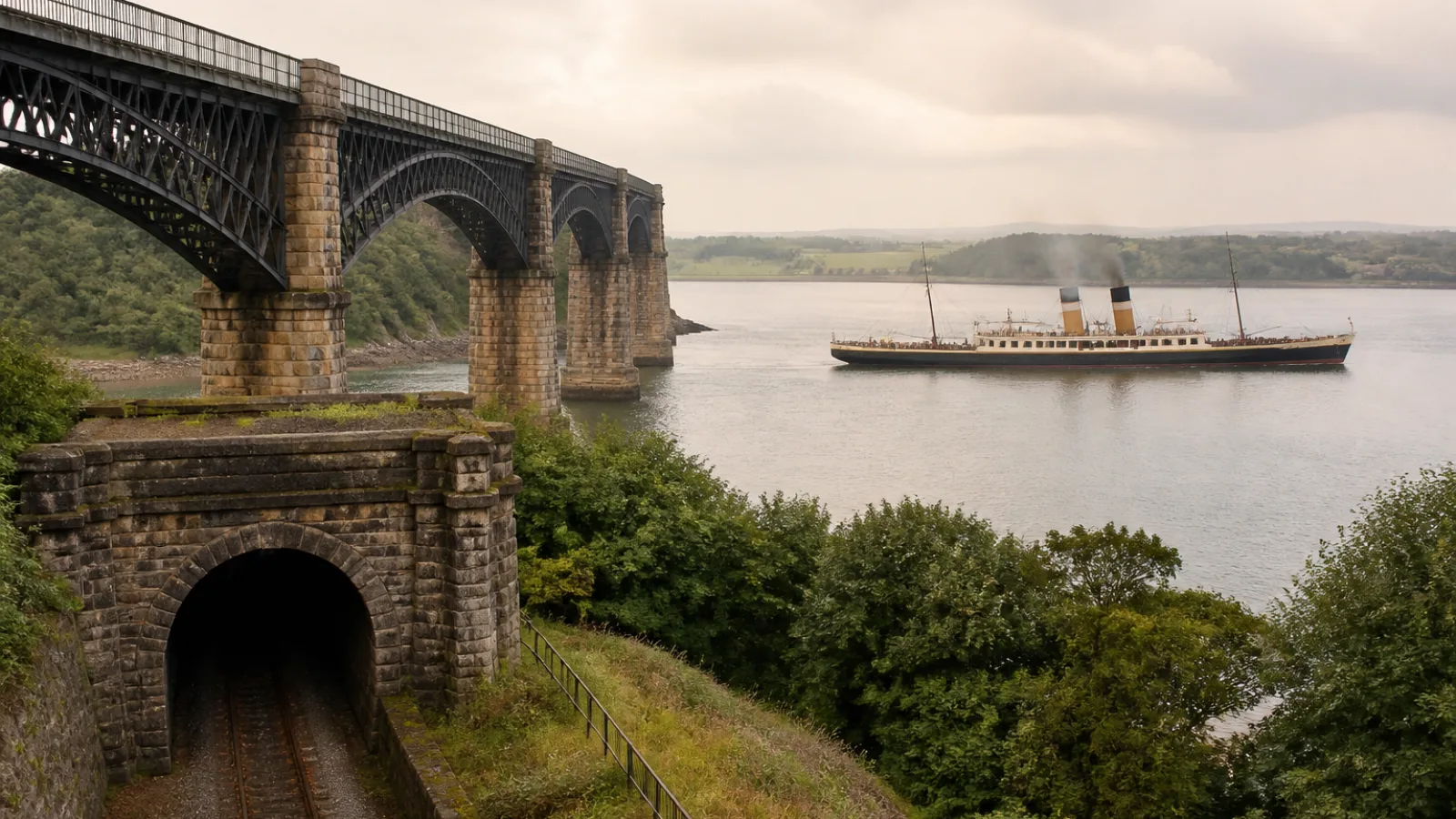
Isambard Kingdom Brunel is often remembered as the Victorian engineer who made extraordinary structures appear possible. That reputation is deserved, but it can obscure the uncertainty behind his work: incomplete financing, difficult geology, unproven technologies, political pressure and projects whose commercial logic did not survive changing markets. Those same issues remain central to modern infrastructure risk management.
Brunel’s career therefore offers more than a catalogue of bridges, railways, tunnels and ships. It shows how a technically impressive decision can create long-term operational consequences, how construction risk can be underestimated, and how an engineer’s influence can be limited by investors, legislation, contractors and public opinion. Some projects failed outright; others were delayed, overextended or commercially disappointing. Studied together, they provide a more useful engineering biography than a simple story of triumph.
Brunel’s ambition created unusual exposure
Brunel worked during a period when railway networks, steam navigation and large-scale iron construction were developing together. Design standards were still emerging, surveying information was incomplete by modern standards, and financing often depended on optimistic forecasts. The engineer was expected not only to design a structure but also to persuade investors, defend routes before Parliament, manage contractors and promote the commercial case.
That combination increased exposure. A choice made for speed, comfort or technical performance could affect land acquisition, earthworks, rolling stock, maintenance and future interoperability. Brunel’s willingness to pursue ambitious solutions produced genuine advances, but it also meant that weaknesses in one part of a project could spread across the whole system.
The Great Western Railway: innovation with a strategic cost
Broad gauge and the problem of path dependence
Brunel selected a seven-foot-and-a-quarter-inch broad gauge for the Great Western Railway rather than the narrower gauge becoming common elsewhere in Britain. The wider track offered potential advantages in stability, vehicle space and high-speed running. At the time, the decision was not irrational: the railway was being designed as a new system, not merely connected to an established national network.
The difficulty was strategic rather than immediately structural. Other railway companies adopted standard gauge, and the growing network increasingly required trains and freight to move between incompatible systems. Transfers, mixed-gauge track and eventual conversion created cost and disruption. The broad gauge was progressively abandoned, with the last broad-gauge services ending in 1892.
This is a classic example of path dependence. A technically defensible choice can become a liability when interfaces, market growth and future users are considered. Modern engineers face similar risks when selecting proprietary platforms, unusual dimensions or systems that cannot easily integrate with surrounding infrastructure. The lesson is not that innovation should be avoided; it is that interoperability and conversion costs must be treated as part of the original business case.
Steep gradients, difficult terrain and construction risk
The Great Western route also reflected Brunel’s preference for comparatively gentle gradients and sweeping geometry. That approach could support smooth, fast operation, but it demanded extensive earthworks, viaducts, cuttings and tunnels. A route that performs well in service may be much harder and more expensive to construct.
Construction risk was distributed across numerous sites, each with different ground conditions, labour challenges and access constraints. Delays or cost growth at one location could affect the opening and revenue of the wider railway. The project illustrates why route selection cannot be judged only by the finished alignment. A modern feasibility review should compare operational benefits with quantities, temporary works, logistics, land risk, environmental constraints and contingency requirements.
Box Tunnel and the limits of confidence in site conditions
Box Tunnel, near Bath, was one of the Great Western Railway’s most demanding works. Its length, position through challenging ground and construction methods made it a major undertaking. Contemporary accounts and later interpretations differ on some details, but the broader lesson is clear: the tunnel involved uncertainty that could not be eliminated by confidence in the design alone.
Tunnelling in the nineteenth century relied on limited geological investigation, manual excavation, temporary support and methods that were still developing. Water ingress, unstable ground, ventilation, spoil removal and worker safety all affected productivity and cost. The finished tunnel became an important part of the railway, but the process demonstrates the difference between design completion and construction readiness.
For current projects, the equivalent controls include staged ground investigation, independent interpretation of geological data, realistic production assumptions, contingency for changed conditions and clear decision points for changing the method. A risk register is useful only when it changes procurement, design or site behaviour.
Tunnels: the Thames Tunnel and the price of working at the edge of knowledge
Before leading the Great Western Railway, Brunel worked with his father, Marc Brunel, on the Thames Tunnel. The project used a pioneering tunnelling shield beneath the river, but repeated flooding interrupted progress and placed workers in danger. Public money was required, and the tunnel was not completed until after a long suspension.
The Thames Tunnel was ultimately completed and became an important engineering milestone, but it was not a straightforward commercial success. Its history shows how innovation can solve one technical problem while exposing another. A shield improved control of the excavation face, yet water pressure, compressed working conditions, financing and access remained difficult.
The modern lesson is to separate proof of concept from deliverable project design. A novel method may be technically valid but still require a different programme, funding model, emergency plan and level of supervision from a conventional method. Early trials, constructability reviews and explicit exit criteria can prevent a promising technique from becoming an open-ended commitment.
Bridges: when design ambition meets funding and delivery
Clifton Suspension Bridge: an unfinished success
Brunel became associated with the Clifton Suspension Bridge after winning a design competition for a crossing over the Avon Gorge. The proposed bridge was elegant and technically ambitious, but funding difficulties and wider economic conditions repeatedly interrupted the work. Brunel died in 1859, before the bridge was completed. The structure was later completed by William Henry Barlow and Sir John Hawkshaw and opened in 1864.
Calling Clifton a failure would be misleading. The bridge became a landmark and remains in service. However, as a project-delivery case, it demonstrates that winning a competition is not the same as securing a buildable, funded and deliverable scheme. A strong concept can remain dormant when the funding model, political support or construction sequence is not resilient.
Modern project teams should therefore test the route from concept to completion: who owns the land, who carries cost growth, what happens if fundraising slows, and which design changes can be made without undermining safety or value? These questions are not administrative details. They determine whether an engineering idea can become an asset.
Saltash Bridge: a stronger model of delivery under constraint
The Royal Albert Bridge at Saltash, completed in 1859, shows a different side of Brunel’s practice. Its unusual tubular spans carried the railway across the River Tamar, with difficult foundations and a demanding site. The bridge required careful erection and close coordination between design and construction.
Saltash was still an ambitious project, but its purpose, route and funding were more clearly connected to the railway system. Its example suggests that ambition is safer when the project has a defined operational need, a committed client and a delivery strategy suited to the site. Technical originality is not automatically risky; unmanaged interfaces are.
Ships and commercial risk: Great Britain and Great Eastern
Great Britain: technical innovation and operational vulnerability
SS Great Britain combined an iron hull with a screw propeller, helping demonstrate the potential of large ocean-going steamships. The design was a major technical step, but the vessel also revealed how innovation interacts with operations. In 1846, it ran aground off Ireland and required extensive recovery and repair. The incident did not erase the ship’s engineering importance, but it exposed the consequences of placing a novel system into demanding service before operational experience had matured.
For modern engineers, the lesson is to plan commissioning as a risk phase rather than a ceremonial endpoint. Training, maintainability, spare parts, operating procedures and failure response should be tested alongside the physical asset. A technically successful handover can still become an operational failure if users and maintainers are not ready.
Great Eastern: scale, finance and market failure
Great Eastern was Brunel’s most famous commercial problem. The ship was vast for its time and incorporated advanced propulsion and construction ideas. Its scale was intended to support long-distance travel, including routes to Australia, but the market, infrastructure and business assumptions did not align as expected.
The vessel suffered from financial difficulties, construction disruption and operational problems. It was eventually used for other purposes, including cable-laying, but its original commercial promise was not fulfilled. This was not simply a case of bad engineering. The ship’s technical capability exceeded what its business model and market could reliably support.
Great Eastern demonstrates the danger of confusing maximum technical performance with optimum project value. Before committing to unprecedented scale, teams should test demand, financing, supply chains, maintenance facilities, regulatory requirements and alternative uses. Scenario planning matters most when the asset is too large to adapt cheaply.
What Brunel’s projects teach modern engineers
| Project or decision | Principal risk | Outcome | Modern lesson |
|---|---|---|---|
| Great Western Railway broad gauge | Limited interoperability and future network dependence | Operational advantages followed by costly conversion | Assess interfaces, standards and whole-life transition costs |
| Box Tunnel | Ground, water, labour and construction uncertainty | Completed, but through demanding works | Link investigation quality to method, contingency and programme |
| Thames Tunnel | Flooding and immature tunnelling practice | Delayed completion with substantial financial pressure | Separate technical feasibility from delivery readiness |
| Clifton Suspension Bridge | Funding and continuity of delivery | Unfinished during Brunel’s life; completed later | Secure governance, finance and succession before construction |
| Great Eastern | Extreme scale and weak commercial alignment | Technically notable but commercially disappointing | Test demand, adaptability and lifecycle value before scaling up |
A practical risk-review checklist inspired by Brunel
Brunel’s projects can be translated into a practical review process for contemporary work:
- Challenge the system boundary: include interfaces with roads, railways, utilities, operators, suppliers and future upgrades.
- Test the unusual choice: quantify the benefit of a novel specification against training, maintenance, replacement and compatibility costs.
- Investigate the ground and the assumptions: identify which uncertainties can be reduced before construction and which require contingency.
- Review commercial resilience: test what happens if funding, demand, material supply or programme assumptions change.
- Plan for handover and operation: confirm that the asset can be inspected, repaired, staffed and used safely.
- Define stop and change points: establish objective criteria for redesign, resequencing or cancellation before sunk costs dominate decisions.
- Protect independent challenge: ambitious leaders need reviewers who can question scope, evidence and optimism without being treated as opponents.
Conclusion
Brunel’s legacy is not weakened by examining his failures and risks. It becomes more useful. The Great Western Railway shows how a local technical decision can create a network-wide legacy. Box Tunnel and the Thames Tunnel reveal the cost of incomplete knowledge. Clifton demonstrates that engineering quality cannot overcome fragile funding indefinitely, while Great Eastern shows that technical scale is not the same as commercial value.
The central lesson is disciplined ambition. Modern engineers should pursue difficult ideas, but they must connect design decisions to constructability, interfaces, finance, operation and long-term adaptation. Brunel’s achievements deserve admiration; his setbacks deserve study because they expose the conditions that allow bold engineering to deliver lasting value.
Frequently asked questions
Was Brunel a failure?
No. Brunel was an exceptionally influential engineer whose projects changed transport and construction. However, several ventures experienced delays, financial pressure, operational problems or commercial disappointment. Studying those outcomes gives a more accurate view than treating him as either an infallible genius or a failure.
Why was the Great Western Railway’s broad gauge abandoned?
Broad gauge created compatibility problems as Britain’s railway network expanded around the narrower standard gauge. Although it offered potential operational benefits, the cost and disruption of maintaining separate systems eventually outweighed those advantages.
Why was Clifton Suspension Bridge unfinished during Brunel’s life?
Funding difficulties and wider economic conditions interrupted construction. Brunel died in 1859, before completion. William Henry Barlow and Sir John Hawkshaw later helped complete the bridge, which opened in 1864.
What is the most important modern lesson from Brunel’s projects?
Technical ambition must be tested against the entire project system. Engineers should evaluate constructability, funding, interfaces, operation, maintenance and future adaptability—not only whether the proposed design can work in principle.