Beyond Strength: How UHPC Is Redefining Architectural and Structural Possibilities
Ultra-High Performance Concrete (UHPC) is more than just a stronger material; it's a new palette for design expression. This article explores how UHPC's unique properties enable architects and engineers to create slender profiles, complex forms, and innovative structures previously thought impossible.
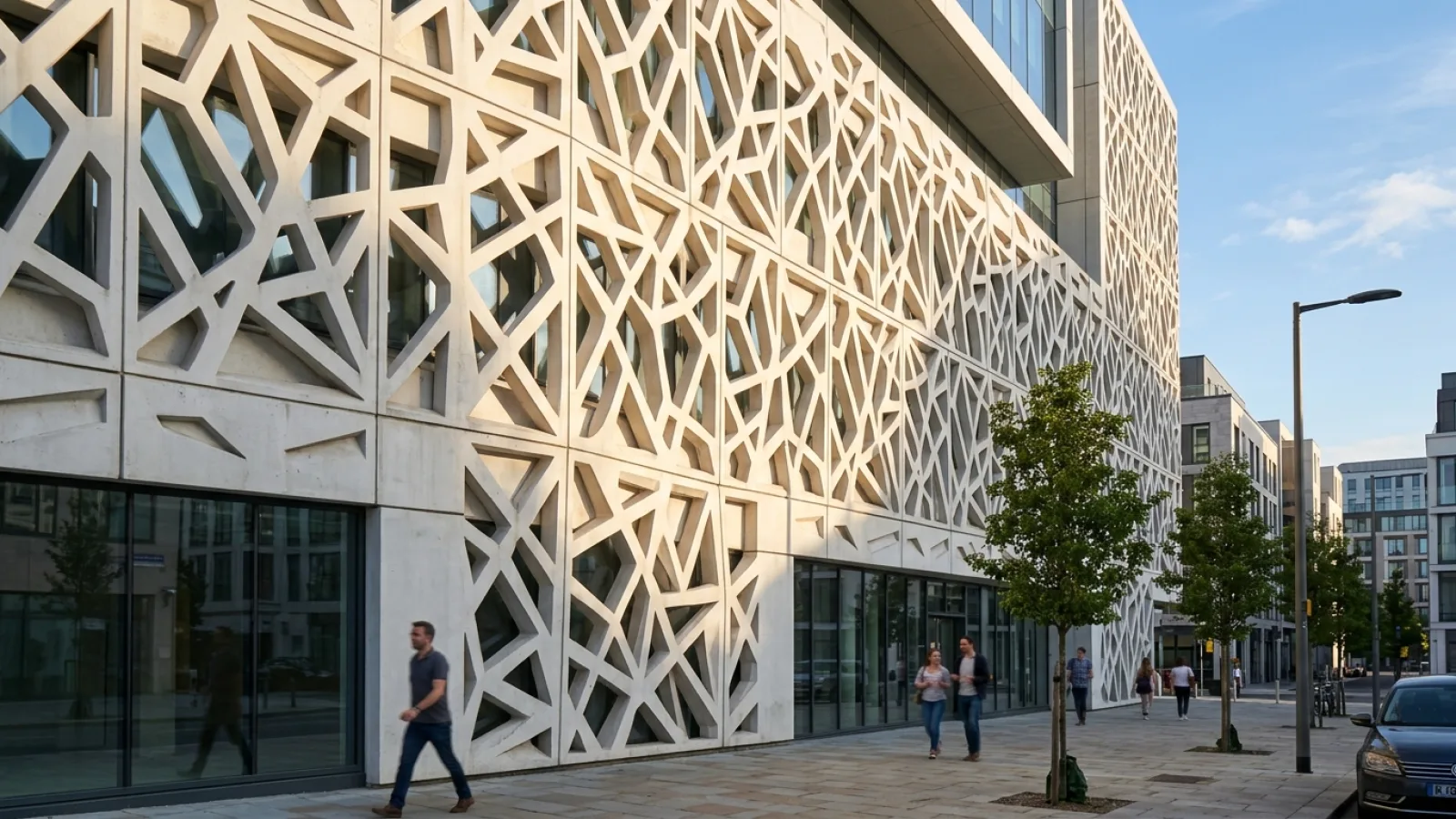
For decades, concrete has been the bedrock of modern construction, celebrated for its strength and affordability. Yet, it has often come with inherent design compromises: mass, weight, and a certain formal rigidity. Architects and engineers have traditionally designed around these limitations, accepting bulky columns and heavy panels as necessary trade-offs for structural integrity. But a revolutionary material is rewriting these rules. Ultra-High Performance Concrete (UHPC) is emerging not merely as a stronger version of concrete, but as a new medium for architectural expression, liberating designers from the constraints of the past.
The true potential of UHPC lies in its unique synthesis of properties—compressive strength rivaling steel, ductility that allows it to bend without breaking, and unparalleled durability. This combination empowers designers to create structures that are simultaneously slender, complex, and resilient. The material's capacity for fine detail and perfect finishes allows for the fabrication of custom-engineered UHPC elements that were once thought impossible to achieve with a cementitious material. This isn't just an upgrade; it's a paradigm shift in how we perceive and utilize concrete in the built environment.
What Makes UHPC a Game-Changer for Design?
The exceptional capabilities of UHPC stem from its meticulously engineered composition. By eliminating coarse aggregates and using a precise blend of fine powders, superplasticizers, and steel or organic fibers, UHPC achieves an incredibly dense, low-porosity matrix. While the material science is complex, the design benefits are clear and transformative.
Unprecedented Compressive and Flexural Strength
With compressive strengths exceeding 150 MPa (22,000 psi)—five to ten times that of conventional concrete—UHPC allows for a dramatic reduction in element size and weight. For an architect, this means creating impossibly thin profiles for facades, railings, and shells. For an engineer, it means designing lighter structures that require less foundation support and enable longer, more graceful spans.
Superior Ductility and Durability
The inclusion of microfibers is key to UHPC's ductility. Unlike the brittle failure of traditional concrete, UHPC can deform and absorb significant energy before cracking, behaving more like a metal. This property enhances seismic performance and impact resistance, allowing for more delicate and seemingly fragile designs without compromising safety. Its dense matrix also provides exceptional resistance to abrasion, freeze-thaw cycles, and chemical ingress, ensuring that the intended aesthetic endures for decades with minimal maintenance.
Exceptional Surface Finish and Moldability
Because UHPC lacks large aggregates, it can perfectly replicate the surface of its formwork. This allows for an unprecedented level of detail, from sharp, crisp edges to intricate, embossed textures and patterns. The result is a flawless surface quality directly from the mold, minimizing the need for post-finishing and opening a new world of aesthetic possibilities for building envelopes and interior elements.
The New Language of Form: UHPC in Architectural Expression
UHPC architectural design moves beyond simple structural optimization; it introduces a new vocabulary of form that is fluid, intricate, and efficient. Designers are leveraging its properties to create buildings that are both visually stunning and structurally innovative.
Slender Profiles and Thin-Shell Structures
Imagine a facade panel just 20-30mm thick, spanning several meters while retaining its rigidity and strength. This is standard for UHPC. This thinness translates into significant weight savings, reducing the load on the primary structure and foundations. It also enables the creation of elegant, lightweight roof shells and canopies that appear to float, defining spaces with minimal visual mass.
Complex Geometries and Intricate Textures
The fluid consistency of UHPC before curing allows it to be cast into highly complex and customized shapes. Architects are using it to design perforated, lace-like screens (brise-soleil) that filter light and create dynamic shadows. Organic, biomorphic forms and panels with deep, articulated textures are now achievable, giving architects the freedom to craft building skins that are as expressive and detailed as a sculpture.
Longer Spans and Cantilevers
The remarkable strength-to-weight ratio of UHPC is profoundly impacting structural engineering. It enables the design of slender pedestrian bridges that span long distances with an elegant, minimalist aesthetic. In buildings, it allows for dramatic cantilevers and balconies that project daringly into space. This capability helps create vast, column-free interiors, offering greater programmatic flexibility and a more open, uncluttered feel.
Practical Applications: Where UHPC Shines in Modern Projects
The theoretical advantages of UHPC are being proven in a growing number of cutting-edge projects across the globe. Its versatility makes it suitable for a wide range of applications where both performance and design are paramount.
Innovative Facade and Cladding Systems
UHPC is a preferred material for high-performance rainscreens and curtain wall systems. The lightweight panels are easier and faster to install, reducing crane time and labor costs. Their durability ensures a long-lasting, low-maintenance building envelope that can be customized with an array of colors, textures, and finishes.
Structurally Efficient Pedestrian and Vehicular Bridges
From gracefully arched pedestrian bridges to durable, waffle-deck slabs for highway bridges, UHPC is extending lifespans and reducing maintenance cycles. Its impermeability protects the internal steel reinforcement from corrosion, a major issue in conventional bridge construction, leading to more sustainable and resilient infrastructure.
Resilient and Aesthetically Pleasing Public Furniture and Art Installations
In the urban realm, UHPC is used to create benches, planters, and public art that can withstand heavy use and harsh weather. Its moldability allows designers to craft ergonomic and artistic forms that enhance public spaces while offering extreme resistance to vandalism and wear.
Long-Lasting Infrastructure and Coastal Defenses
Beyond buildings, UHPC structural applications include critical infrastructure components like wind turbine towers and protective coastal barriers. Its ability to resist chloride ion penetration makes it ideal for marine environments, where it provides a durable and effective defense against erosion and storm surges.
UHPC vs. Conventional Concrete: A Designer's Comparison
For architects and engineers considering UHPC, a direct comparison highlights its transformative advantages over traditional materials.
| Feature | Conventional Concrete | Ultra-High Performance Concrete (UHPC) |
|---|---|---|
| Minimum Element Thickness | Relatively thick (e.g., 100-150mm for precast panels) | Extremely thin (e.g., 20-40mm for facade panels) |
| Form Complexity | Limited to simpler geometries; sharp details are difficult | Can be cast into highly complex, intricate, and organic shapes with sharp details |
| Achievable Span Length | Standard spans, often requiring bulky sections or post-tensioning | Significantly longer spans with slender, lightweight profiles |
| Surface Aesthetics | Often requires secondary finishing; prone to bug holes and imperfections | Exceptional, high-quality finish directly from the mold; can replicate fine textures |
| Durability & Lifecycle | Good, but susceptible to corrosion, abrasion, and chemical attack over time | Exceptional longevity with superior resistance to environmental stressors, reducing lifecycle costs |
| Weight-to-Strength Ratio | Low; requires significant mass to achieve strength | Extremely high; provides immense strength with minimal material and weight |
Design and Specification Considerations for UHPC
Successfully integrating UHPC into a project requires a shift in mindset and process. It is not a drop-in replacement for conventional concrete but a specialized material that thrives on thoughtful design and collaboration.
The Importance of Early Collaboration
The most successful UHPC projects involve close collaboration between the architect, structural engineer, and a specialized UHPC fabricator from the earliest stages. This synergy ensures that the design leverages the material's full potential while remaining feasible and cost-effective to produce.
Understanding Material Behavior and Formwork
Designers must understand UHPC's unique flow characteristics and the critical role of formwork. The mold is not just a container but a tool that defines the final aesthetic. High-quality, precisely engineered formwork is essential to achieving the desired surface finish and geometric complexity, and its cost must be factored into the project budget.
Cost-Benefit Analysis Beyond Initial Price
While the upfront cost per cubic meter of UHPC is higher than traditional concrete, a holistic cost-benefit analysis often reveals it to be the more economical choice. Savings are realized through reduced material volume, lighter foundations, faster installation, elimination of secondary finishes, and drastically lower long-term maintenance and replacement costs.
Conclusion: A New Frontier in Design
Ultra-High Performance Concrete is fundamentally changing the relationship between structure and form. It is no longer just a material of brute strength but one of finesse, elegance, and boundless potential. By enabling slender profiles, complex geometries, and unprecedented spans, UHPC empowers architects and engineers to design buildings and infrastructure that are more efficient, more resilient, and more inspiring. As we continue to push the boundaries of what is possible in construction, UHPC stands ready as a key material for shaping a more innovative and sustainable built environment.
Frequently Asked Questions (FAQ)
What is the primary difference between UHPC and high-strength concrete for an architect?
While both offer high compressive strength, the primary difference for an architect is UHPC's superior ductility and moldability. This allows for the design of thin, complex, and intricate elements like perforated screens and slender panels that would not be feasible with conventional high-strength concrete, which tends to be more brittle.
Can UHPC be integrally colored or textured?
Yes. UHPC can be integrally colored with high-quality pigments to achieve a consistent, through-body color. Its fine-particle matrix allows it to perfectly capture a wide variety of textures from form liners, ranging from wood grain and stone patterns to custom geometric or organic designs.
Is UHPC considered a sustainable building material?
UHPC's sustainability profile is multifaceted. While it is cement-intensive, its superior strength allows for the use of significantly less material to achieve the same or better structural performance. Its exceptional durability leads to much longer service lives (100+ years) and reduced maintenance, which contributes positively to its overall lifecycle assessment.
What are the main challenges when specifying UHPC for an architectural project?
The main challenges include its higher initial material cost, the need for specialized knowledge in design and production, and the requirement for high-precision formwork. Early collaboration with an experienced UHPC fabricator is crucial to mitigate these challenges and ensure a successful outcome.
How does the cost of a UHPC facade system compare to materials like precast concrete or natural stone?
The installed cost of a UHPC facade can be competitive with high-end precast concrete or natural stone systems. While the material itself is more expensive, savings are often found in reduced structural support requirements (due to its lighter weight), faster installation, and lower long-term maintenance costs, making it a valuable option on a total project cost basis.