Mechatronics in Construction Equipment: How Smarter Machines Perform Better
Mechatronics brings mechanical systems, hydraulics, sensors, electronic controllers, actuators, and software together in modern construction machinery. This article explains how these systems work, where they are applied, how they affect maintenance, and what buyers should evaluate.
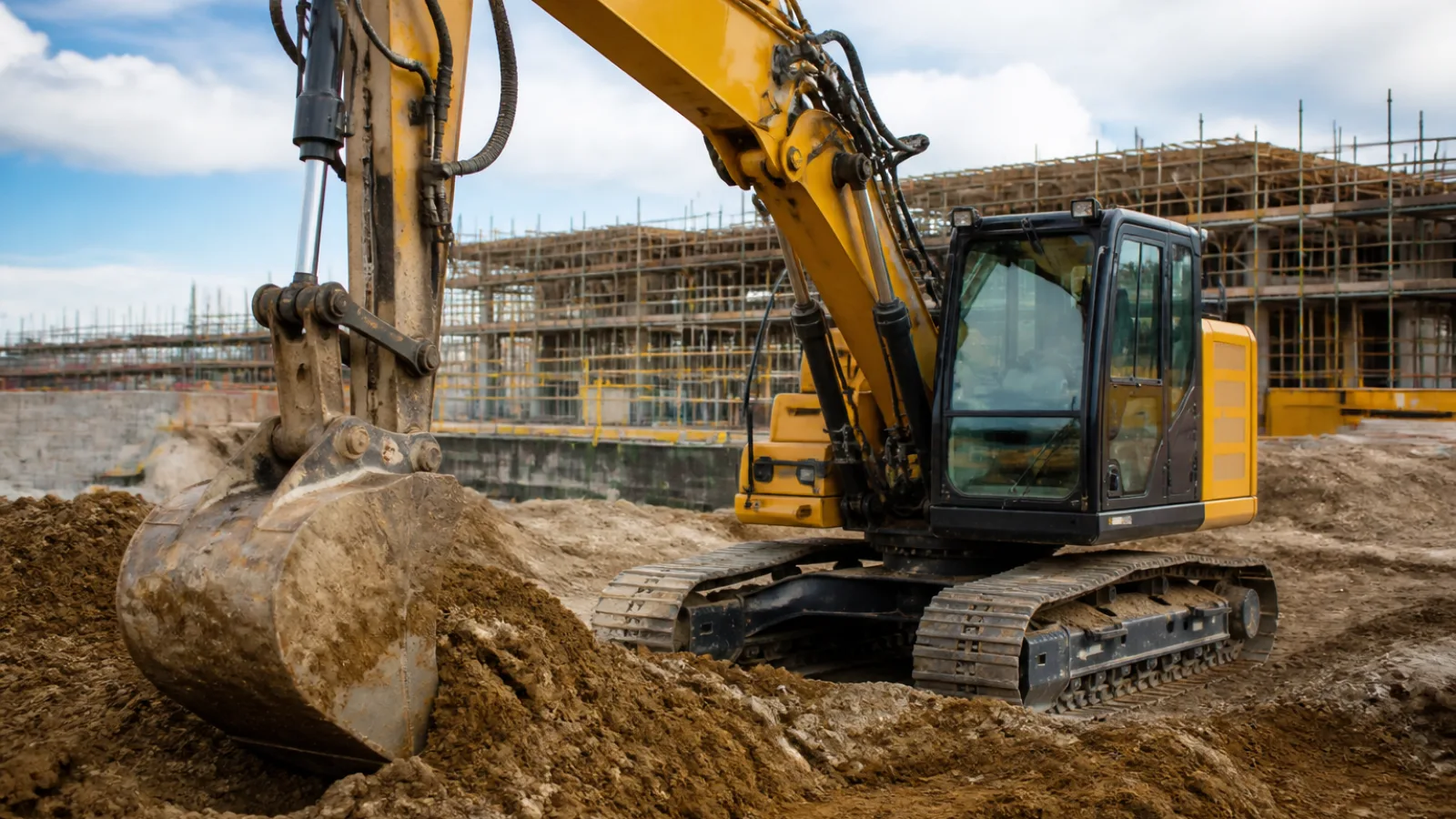
Modern construction machines do more than convert engine power into movement. They measure loads, position, pressure, temperature, speed, and operator commands, then use that information to adjust how the machine works. This integration of mechanical engineering, hydraulics, electronics, control systems, and software is known as mechatronics in construction equipment.
Mechatronic design is now central to equipment that must deliver precise movement, efficient power use, easier diagnostics, and safer operation. Components such as industrial hydraulics and automation solutions. illustrate how fluid power and electronic control can work together. Understanding that relationship helps equipment engineers, fleet managers, and machinery buyers evaluate both the capabilities and the limitations of modern construction equipment.
What Is Mechatronics in Construction Equipment?
Mechatronics is an engineering approach that treats mechanical, electrical, electronic, hydraulic, and software elements as one coordinated system. In a construction machine, the boom, pump, valve, motor, sensor, controller, display, and control algorithm are not isolated parts. Their performance depends on how they exchange power and information.
For example, an excavator operator may move a joystick to request a boom movement. Position sensors and pressure sensors report the machine’s condition to an electronic control unit. The controller interprets the request, adjusts hydraulic valves, and monitors the response. If the boom moves too quickly, encounters an unexpected load, or reaches a programmed limit, the system can modify the hydraulic command.
| Characteristic | Conventional equipment | Mechatronic equipment |
|---|---|---|
| Machine response | Primarily determined by mechanical and hydraulic settings | Adjusted continuously through sensing and control software |
| Operator feedback | Often limited to gauges and physical feel | Supported by displays, alerts, cameras, and system messages |
| Fault detection | Relies heavily on inspection and operator experience | Uses fault codes, recorded parameters, and condition monitoring |
| Control flexibility | Mostly fixed by component design | Can be configured through software, sensors, and electronic settings |
The Main Building Blocks of a Mechatronic Machine
Mechanical systems and power transmission
The mechanical structure remains the foundation of every construction machine. Frames, booms, buckets, gears, bearings, tracks, axles, linkages, and counterweights carry loads and transfer motion. Mechatronics does not replace these elements. Instead, it adds measurement and control so the machine can use them more effectively and within defined limits.
Mechanical design also determines what the control system can achieve. A controller cannot compensate indefinitely for a weak linkage, excessive wear, poor alignment, or a component that is incorrectly sized for the intended duty cycle. Effective mechatronic engineering therefore begins with sound mechanical and hydraulic design.
Sensors and measurement
Sensors provide the information required for closed-loop control. Depending on the machine, they may measure hydraulic pressure, oil temperature, engine speed, fuel level, cylinder position, boom angle, bucket angle, wheel speed, vibration, load, or geographic position.
Common sensor types include pressure transducers, rotary encoders, linear position sensors, inertial measurement units, temperature sensors, proximity sensors, cameras, and load cells. Each sensor has a measurement range, accuracy, response time, and environmental tolerance. Dust, water, vibration, heat, electrical interference, and damaged wiring can all affect its reliability.
Electronic control units and software
Electronic control units, or ECUs, receive sensor signals and apply programmed logic. They may regulate an engine, hydraulic pump, transmission, steering system, attachment, or safety function. Several controllers can communicate over an equipment network so that a machine’s subsystems coordinate their actions.
Software determines how the controller responds to operator input and changing conditions. It can define operating modes, speed limits, pressure limits, automatic adjustments, diagnostic rules, and data-recording functions. Software updates may improve compatibility or correct known issues, but they must be managed carefully because an incorrect configuration can affect machine behavior.
Actuators and hydraulic control
Actuators turn electrical commands into physical action. They include hydraulic cylinders, hydraulic motors, electric motors, solenoid valves, proportional valves, servos, and electronically controlled pumps. In heavy equipment, hydraulics remain especially important because they can deliver high force and tolerate demanding loads.
Electronic controls allow hydraulic flow and pressure to be adjusted more precisely than a purely mechanical arrangement. The result may be smoother attachment movement, better load management, reduced energy waste, or coordinated motion between several functions. The hydraulic circuit still requires clean fluid, suitable filtration, correct pressure settings, and properly maintained seals.
How the Control Loop Works on a Jobsite
A mechatronic system commonly operates through a control loop:
- Input: The operator moves a joystick, presses a pedal, selects a mode, or activates an attachment.
- Measurement: Sensors report the position, speed, load, pressure, and temperature of relevant components.
- Processing: A controller compares the requested action with the measured condition and applies programmed logic.
- Actuation: Valves, motors, pumps, or other actuators change the machine’s physical behavior.
- Feedback: Sensors measure the result, allowing the controller to maintain or correct the action.
Consider an excavator lifting a loaded bucket. The control system can use engine speed, hydraulic pressure, boom position, and operator input to manage the lift. If the load approaches a defined operating limit, the machine may provide an alert, restrict a function, or change its response depending on the design. The operator remains responsible for the work, but the system supplies information and assistance that would be difficult to obtain through mechanical controls alone.
Applications Across Construction Equipment
Excavators and backhoe loaders
Excavators use mechatronic systems for hydraulic flow control, boom and arm positioning, attachment management, swing control, engine coordination, and machine guidance. Some systems help maintain a defined digging depth or grade by comparing the attachment position with a digital work plan or an operator-selected target.
Backhoe loaders can use similar technologies to coordinate loader arms, stabilizers, backhoe controls, and travel functions. Electronic attachment recognition may also help configure hydraulic flow for breakers, augers, compactors, or other tools.
Wheel loaders and dozers
Wheel loaders benefit from transmission controls, traction management, automatic bucket functions, payload measurement, and engine-hydraulic coordination. These features can make repeated loading cycles more consistent and help operators avoid unnecessary wheel spin or excessive hydraulic demand.
Dozers use sensors and control software for blade positioning, slope control, machine guidance, and power management. Automated blade adjustments can support consistent grading, although the quality of the result still depends on correct setup, site conditions, sensor calibration, and operator oversight.
Cranes and lifting equipment
Cranes use load, angle, radius, boom length, wind, and position information to support safe lifting decisions. Controllers can compare real-time operating conditions with configured limits and warn operators when a permitted envelope is approached. These systems are safety aids, not substitutes for lift planning, inspection, competent operation, or adherence to applicable requirements.
Compaction, paving, drilling, and specialized machines
Compactors may use vibration sensors, speed measurement, and material-response data to help achieve consistent passes. Pavers coordinate material feed, screed position, temperature information, and travel speed. Drilling equipment can monitor torque, feed force, depth, rotation, and ground response to improve process control and identify abnormal conditions.
Practical Benefits for Performance and Operations
More precise machine control
Feedback from position and pressure sensors enables finer control than an open-loop system. This is useful when placing material, grading surfaces, positioning a load, or operating an attachment close to existing structures. Smooth control can also reduce shocks transmitted through the machine and attachment.
Better power and energy management
Controllers can coordinate engine output, pump displacement, transmission behavior, and auxiliary functions. Instead of operating every subsystem at maximum output, the machine can respond to actual demand. This may reduce unnecessary energy consumption and heat generation, but the result depends on the machine design, work cycle, maintenance condition, and operator behavior.
Operator assistance and consistency
Displays, cameras, guidance systems, automatic functions, and configurable operating modes can reduce cognitive workload. They can also make repeated tasks more consistent between operators with different experience levels. Assistance features should be clear and predictable so that operators understand what the machine is doing and when manual intervention is required.
Faster troubleshooting
Diagnostic systems can identify abnormal pressures, temperatures, voltages, communication faults, or sensor readings. A fault code does not always identify the failed part, but it can narrow the investigation and help technicians determine whether the issue is electrical, hydraulic, mechanical, or software-related.
Maintenance, Diagnostics, and Reliability
Mechatronic equipment does not eliminate maintenance. It changes the maintenance task by adding electronic and software-related checks to traditional mechanical and hydraulic service.
Technicians may need to inspect connectors, harnesses, grounds, sensor mounting, network communication, software versions, calibration values, hydraulic cleanliness, and actuator response. A machine can appear to have a hydraulic problem when the actual cause is a faulty pressure sensor or damaged control wire. Conversely, a diagnostic warning may be triggered by a genuine mechanical or hydraulic fault.
Condition monitoring is most useful when data is interpreted alongside service history and physical inspection. Trends such as rising temperature, unusual vibration, inconsistent pressure, or repeated fault events may indicate developing wear. Maintenance teams should define which alerts require immediate shutdown, which allow limited operation, and which can be addressed during scheduled service.
Implementation Limits and Selection Considerations
More electronics and software introduce additional dependencies. Sensors can drift or fail. Connectors can corrode. Software may not communicate with an older attachment. A replacement controller may require configuration or calibration. Technicians may need specialized diagnostic tools and training.
Construction environments also expose equipment to dust, moisture, vibration, shock, temperature changes, and electromagnetic interference. Buyers should ask how components are protected, how faults are reported, and whether critical functions have practical fallback modes.
Data connectivity creates another consideration. Fleet telematics can support utilization and maintenance planning, but companies should understand data ownership, access controls, cybersecurity practices, update procedures, and how the system behaves when cellular or satellite communication is unavailable.
Compatibility is equally important. A machine may work well with its original attachment but require additional valves, wiring, software, or calibration for a third-party tool. Before purchase, confirm connector standards, hydraulic flow and pressure requirements, communication protocols, service support, and the availability of replacement components.
How to Evaluate Mechatronic Construction Equipment
- Define the work cycle: Identify the loads, movements, attachments, terrain, and environmental conditions the machine will encounter.
- Review control functions: Separate useful operator assistance from features that are unnecessary for the intended work.
- Check sensor coverage: Ask what the machine measures, how those measurements are displayed, and how sensor faults are identified.
- Assess serviceability: Confirm access to diagnostic tools, technical documentation, calibration procedures, and trained technicians.
- Verify attachment compatibility: Check hydraulic, electrical, mechanical, and software interfaces before purchasing tools.
- Examine data policies: Understand telematics access, cybersecurity responsibilities, software updates, and offline operation.
- Consider total ownership: Include training, calibration, connectivity, replacement sensors, software support, and downtime in the evaluation.
Frequently Asked Questions
What is mechatronics in construction equipment?
It is the integrated use of mechanical components, hydraulics, sensors, electronic controllers, actuators, and software to monitor and control construction machinery.
How do sensors improve heavy equipment operation?
Sensors provide information about position, pressure, load, temperature, speed, and other conditions. Controllers use that information to adjust machine behavior, provide warnings, support automation, and record diagnostic data.
Is mechatronic equipment harder to maintain?
It can require broader skills because technicians must understand mechanical, hydraulic, electrical, and software systems. However, onboard diagnostics and condition monitoring can make some faults easier to identify when the system is properly supported.
Can older construction equipment be upgraded?
Some machines can accept aftermarket sensors, guidance systems, telematics, or electronic attachment controls. The feasibility depends on the machine’s electrical architecture, hydraulic capacity, available mounting points, safety requirements, and compatibility with the proposed system.
What skills do technicians need?
Technicians increasingly need competence in hydraulics, electrical testing, wiring diagrams, sensor diagnosis, controller communication, software configuration, calibration, and conventional mechanical repair.
Conclusion: Integrating Machine Hardware and Intelligence
Mechatronics in construction equipment connects the physical strength of mechanical and hydraulic systems with the responsiveness of electronic control and software. Sensors reveal what the machine is doing, controllers interpret that information, and actuators adjust the machine’s response. The result can be more precise operation, useful operator assistance, better diagnostics, and more consistent maintenance decisions.
The technology is not a replacement for sound engineering, trained operators, inspections, or preventive service. Its value depends on reliable sensors, compatible components, robust software, clear diagnostics, and a maintenance team prepared to support the complete system. When those conditions are addressed, mechatronic design becomes a practical tool for improving construction equipment performance and reliability.