Water Hammer in Plumbing: Causes, Prevention, and Repair
Water hammer is the bang, thump, or vibration that can occur when flowing water stops or changes direction suddenly. This guide explains the causes, warning signs, diagnostic process, prevention methods, and repair options for residential and commercial plumbing systems.
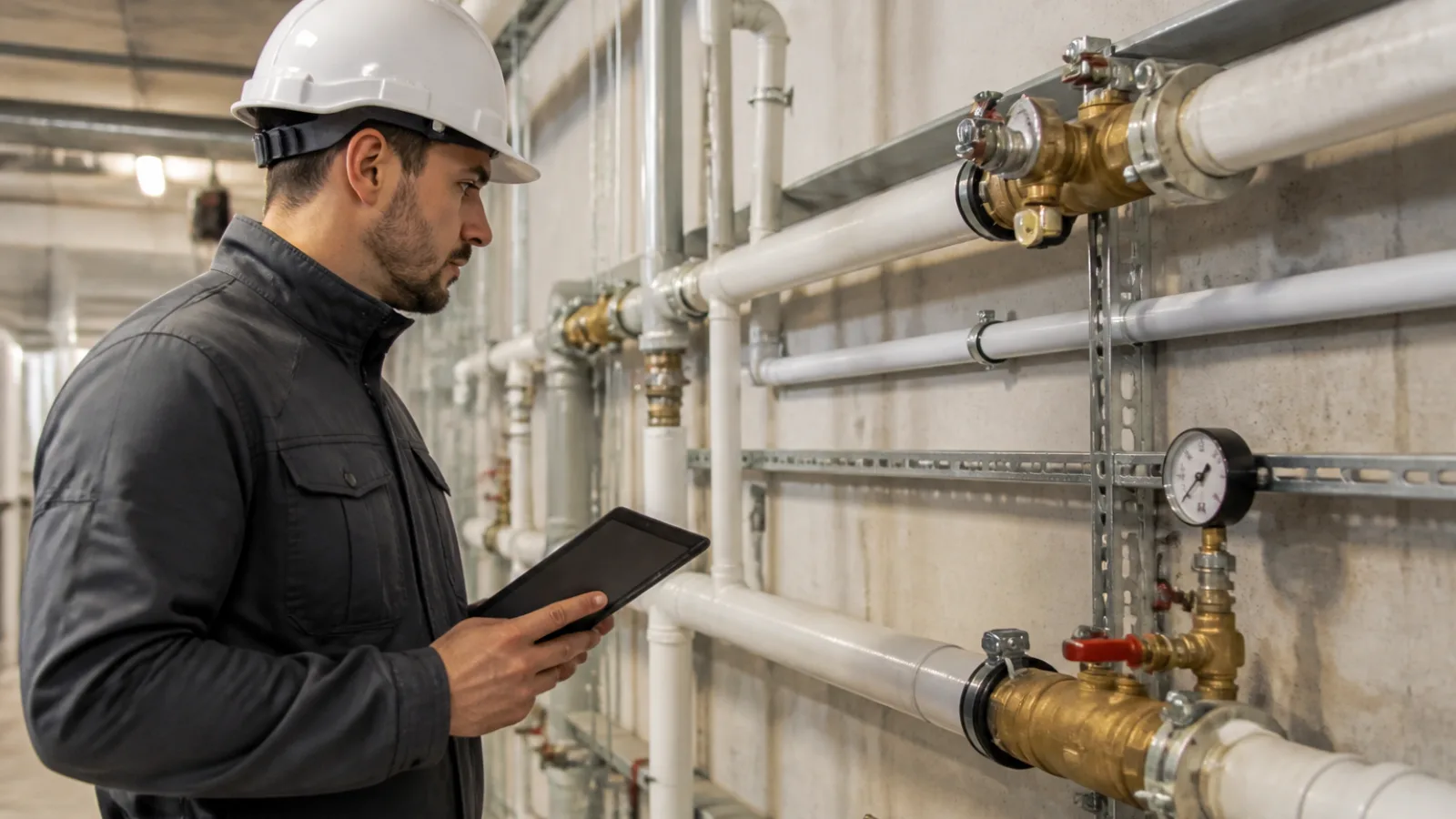
A bang, thump, or vibration after a faucet, toilet valve, washing machine, dishwasher, or appliance valve closes is a familiar plumbing complaint. The sound may be brief, but repeated pipe banging when water shuts off can indicate a hydraulic pressure surge that is stressing valves, fittings, supports, and connected equipment.
Water hammer in plumbing occurs when flowing water stops or changes direction rapidly, creating a transient pressure wave that moves through the piping system. It can affect a single home, a multifamily building, or a complex commercial facility. In some systems, water-hammer arrestor solutions may be appropriate, but the correct remedy depends on the trigger, pressure, pipe layout, valve type, and manufacturer requirements. This guide explains what causes water hammer, how to diagnose it, and how to select practical prevention and repair measures.
What Is Water Hammer in Plumbing?
Water hammer is a transient pressure surge caused by a rapid change in water velocity. While water is flowing, it has momentum. If a valve closes suddenly, that moving water cannot stop instantly. Its momentum is converted into a pressure wave that travels through the pipe and may cause the pipe, fittings, valves, or supports to move.
The wave can reflect at changes in pipe size, elbows, tees, closed valves, and other boundaries. The resulting movement may produce a sharp bang, knocking sound, vibration, or a series of impacts. The effect is more noticeable in long pipe runs, high-flow systems, rigid piping, and installations with inadequate support.
A small operating sound is not always evidence of serious damage. However, repeated or severe hydraulic shock is different from ordinary flow noise. Noise synchronized with valve closure, visible pipe movement, recurring leaks, or failed components deserves investigation rather than being dismissed as a normal plumbing sound.
What Causes Water Hammer?
Rapid-closing valves and fixtures
The most common trigger is a valve that closes faster than the piping system can accommodate. Quarter-turn ball valves, toilet fill valves, washing machine valves, dishwasher valves, and solenoid-operated appliance valves can all create a sudden stop in flow. Automatic control valves and some check valves may also close abruptly.
Modern appliances frequently use electrically controlled solenoids that open and close quickly. A fixture may therefore produce a localized pressure surge even when the rest of the building plumbing is operating normally. A worn faucet cartridge, defective toilet fill valve, or incorrectly adjusted actuator can make the event more noticeable.
Excessive water pressure or high flow velocity
High system pressure increases the energy available when flow changes suddenly. Excessive flow velocity can have a similar effect, particularly where pipe sizes are too small for the required demand or where a branch serves several fixtures at once.
Long straight runs, undersized piping, high-demand equipment, and abrupt changes in pipe size can increase noise and stress. A pressure reducing valve may be present but incorrectly adjusted, fouled, undersized, or failing to control downstream pressure consistently. Pressure must be evaluated against the plumbing design, applicable code requirements, fixture needs, and equipment limitations rather than adjusted by guesswork.
Poorly supported or loose piping
A pressure wave does not always create a severe problem by itself. Inadequate pipe support can turn a manageable event into a loud impact. Missing or loose clamps, widely spaced hangers, unsupported valves, poorly restrained risers, and pipes that contact framing can allow movement.
Pipe supports, guides, anchors, and isolation materials should be selected and spaced for the pipe material, size, configuration, and expected movement. Supports must also accommodate thermal expansion and contraction where applicable. A loose pipe can make a moderate surge sound much worse and can amplify fatigue at joints.
Air, check-valve, and system-design conditions
Trapped air can affect how a piping system responds to changing flow, but air is not the explanation for every banging pipe. A malfunctioning check valve may slam shut, allowing reverse flow to stop abruptly. Pumps that start or stop suddenly, control valves with unsuitable actuator settings, and abrupt changes in direction or pipe size can also produce a plumbing pressure surge.
In larger systems, the interaction between pumps, control valves, check valves, risers, and branches may require an engineering review. The source may be a combination of operating conditions rather than one defective fixture.
Signs That a Plumbing System Has Water Hammer
Common signs include:
- Banging, knocking, clunking, or hammering when a valve closes.
- Visible movement or vibration in exposed pipe.
- Noise that occurs at the same time as a toilet, faucet, appliance, or automatic valve operation.
- Recurring leaks at threaded joints, compression fittings, valves, or flexible connectors.
- Loose, bent, or damaged pipe supports.
- Premature failure of cartridges, fill valves, solenoid valves, check valves, or equipment connections.
Water hammer is more likely when the noise occurs immediately after flow stops. Pipe expansion usually produces creaking, ticking, or rubbing sounds as hot water piping heats and cools. Pump vibration often continues while the pump operates rather than occurring only at valve closure. Cavitation may sound like gravel or crackling near a pump and is associated with inadequate suction conditions. Drain noise typically occurs as wastewater flows through the drainage system, while a loose fixture may move or rattle independently of a pressure event.
Common symptoms and first diagnostic checks
| Symptom | Likely cause | Recommended first check |
|---|---|---|
| Single bang immediately after a washing machine or dishwasher stops | Fast-closing solenoid valve or loose branch piping | Run the appliance and inspect the nearby branch, valves, and supports. |
| Repeated knocking after a toilet flush | Fast-closing or defective fill valve | Observe the fill valve and check for movement in the supply pipe. |
| Noise throughout a building when a control valve closes | High velocity, pressure surge, pump interaction, or inadequate restraint | Review operating sequence and measure static and dynamic pressure. |
| Vibration with recurring joint leaks | Pressure instability, unsupported piping, or valve malfunction | Inspect joints and supports; do not rely on sound level alone. |
| Creaking or tapping as hot water is used | Thermal expansion or pipe-to-structure contact | Check insulation, penetrations, guides, and hot-water piping movement. |
Can Water Hammer Damage Building Plumbing?
Repeated surges can fatigue joints, stress valves, loosen supports, damage flexible connections, and contribute to leaks. Fixtures and appliances may also experience shortened service life if pressure changes are severe or frequent. In a commercial building, an unexpected valve failure can interrupt occupancy, production, healthcare services, laboratory work, or other critical operations.
Noise severity alone does not quantify the pressure involved. A loud bang may result partly from a loose pipe, while a less noticeable pressure transient may still stress concealed components. Persistent symptoms should therefore be investigated based on operating conditions, piping arrangement, pressure measurements, and equipment requirements.
Elevated risks may exist in high-rise buildings, hospitals, hotels, multifamily properties, laboratories, industrial facilities, and buildings with automated process valves. These systems often have longer risers, higher static pressure, booster pumps, multiple control zones, or equipment that cannot tolerate unstable flow.
How to Diagnose Water Hammer
Identify the triggering event
Begin by recording what happens immediately before the noise. Note which fixture, appliance, pump, or valve is operating; whether the sound occurs during opening, closing, or both; and whether the event affects one branch, one floor, or the entire building. A safe recording of the sound can help a qualified professional understand its timing.
Inspect visible piping and supports
With the system operating normally, observe exposed pipe for movement or vibration. Look for missing or loose clamps, inadequate hangers, unsupported valves, contact with framing, failed isolation pads, and heavy components that are not independently supported. Do not place hands near moving or pressurized components.
Check whether pipe movement is being transferred into walls, ceilings, equipment, or other services. The correct repair may involve support or isolation rather than a new valve or arrestor.
Check operating pressure and pressure changes
Measure static and dynamic pressure with suitable gauges at relevant locations. Compare readings while fixtures operate and when the suspected valve closes. Inspect pressure-reducing valves, booster systems, pump controls, and pressure zones for unstable operation.
Pressure readings should be interpreted against the system design, applicable plumbing codes, building height, pipe material, fixture requirements, and equipment manufacturer instructions. A single gauge reading may not capture a short-duration transient, so complex systems may require specialized monitoring or engineering analysis.
Test valves, check valves, and appliances
Look for fast-closing valves, worn cartridges, defective toilet fill valves, malfunctioning check valves, and appliance solenoids. Isolate branches methodically where possible, changing one condition at a time. Replacing parts at random can conceal the real cause and leave the pressure problem unresolved.
Escalate complex cases
Obtain professional assessment when the source is unclear, leaks are present, the system serves critical operations, or a pressure transient may affect a large building. Concealed piping, high-rise risers, major pumps, and automated process systems require particular care.
How to Prevent and Fix Water Hammer
Install a properly selected water-hammer arrestor
A water-hammer arrestor uses a sealed, compressible gas chamber to absorb part of the transient energy when a valve closes. It is commonly installed near a fast-closing valve or appliance, but the precise location, connection method, capacity, and orientation depend on the system design and manufacturer instructions.
An arrestor must be selected for the application and connected in a way that allows it to respond effectively. Incorrect sizing, excessive distance from the triggering valve, poor access, or installation on the wrong branch can reduce its benefit. Local plumbing codes and product requirements also apply.
Control excessive pressure
Inspect, adjust, or replace a pressure-reducing valve where appropriate. Confirm that the valve is correctly sized and that downstream pressure remains stable under changing demand. Lowering pressure may reduce the energy in a surge, but pressure should not be reduced below fixture, equipment, building-height, or code requirements.
Reduce abrupt valve closure
Where compatible with the equipment, use slower-closing fixture valves, correctly adjusted toilet fill valves, soft-close controls, or revised actuator settings. Appliance valves should not be modified in a way that interferes with their operation, safety controls, warranty requirements, or manufacturer instructions.
Improve pipe support and isolation
Install or repair correctly spaced hangers, clamps, guides, and anchors. Prevent pipe-to-structure contact with suitable isolation materials, while ensuring the pipe remains properly restrained. Supports must allow thermal movement where required; rigidly restraining piping that needs to expand can create a different problem.
Correct check-valve and air-related problems
A defective check valve, poorly located valve, or trapped-air condition may require targeted correction rather than a generic air chamber. Old-style air chambers can lose effectiveness when the air becomes absorbed into the water, and they may require maintenance or replacement with a different engineered solution.
Air-related remedies should be based on the actual system condition. Adding an air chamber without confirming the cause may provide little benefit and can create a maintenance issue.
Address pumps and larger mechanical systems
Larger systems may require pump ramping, variable-frequency-drive adjustments, properly selected control valves, surge-control devices, or coordinated commissioning. Pump starts and stops should be reviewed with the valve sequence, check-valve performance, tank arrangement, and building pressure zones. These changes should be designed and commissioned by personnel familiar with the system.
Air Chambers vs. Water-Hammer Arrestors
Both solutions provide a compressible volume, but they do not have identical performance or maintenance requirements. The appropriate choice depends on the cause, system layout, pressure, valve characteristics, and applicable requirements.
Comparison of air chambers and water-hammer arrestors
| Solution | Operating principle | Best-fit applications | Limitations | Maintenance considerations |
|---|---|---|---|---|
| Air chamber | Provides a pocket of trapped air that compresses when flow stops. | Simple, accessible arrangements where an air chamber is appropriate and serviceable. | Air can dissolve into the water, reducing effectiveness; performance may be inconsistent. | May require draining or other maintenance, depending on the design and local practice. |
| Water-hammer arrestor | Uses a sealed gas chamber and piston or equivalent mechanism to absorb transient energy. | Fast-closing fixture, appliance, and branch-line applications where a selected arrestor is suitable. | Requires correct sizing, location, connection, and compatibility with the system. | Generally requires inspection for condition, access, and leakage in accordance with manufacturer guidance. |
An arrestor is not automatically required for every noisy pipe. If the actual cause is a loose support, excessive pressure, a faulty check valve, or pump control problem, that cause should be corrected instead of relying on a device to mask it.
Practical Repair Sequence
- Make the system safe. Keep people away from moving components, leaking joints, and electrical equipment exposed to water. Isolate equipment only through an appropriate procedure.
- Confirm the trigger. Identify the fixture, appliance, pump, or valve and determine whether the noise occurs on opening or closing.
- Inspect supports and valves. Check exposed pipe, clamps, hangers, guides, anchors, valve bodies, and flexible connections for movement or damage.
- Measure pressure. Take suitable static and dynamic readings and review pressure-reducing valves, booster systems, and pump controls.
- Correct obvious mechanical faults. Repair loose supports, replace defective fill valves or cartridges, correct failed check valves, and address pipe-to-structure contact where appropriate.
- Install or size protection where required. Select an arrestor, control device, or surge-control measure based on the actual design rather than a generic assumption.
- Restore service gradually. Reopen isolation valves carefully, check for leaks, and bring pumps and automated equipment back into operation in a controlled sequence.
- Verify operation. Repeat the triggering event, observe the piping, confirm stable pressure, and document the final condition.
Do not open pressurized piping, remove a valve, or alter building plumbing without proper isolation, verification of zero pressure, and qualified personnel. Building systems may contain stored pressure, hot water, chemicals, or connected equipment that creates additional hazards.
When to Call a Licensed Plumber or Plumbing Engineer
Professional help is appropriate when there are recurring leaks, high or unstable pressure, concealed piping, high-rise risers, critical facilities, commercial process systems, major pump systems, or uncertainty about code compliance. A licensed plumber can address fixture-level and branch-level faults, while a plumbing engineer may be needed for system-wide transients, complex hydraulic conditions, major renovations, or critical operations.
Before the visit, collect useful information such as piping diagrams, valve locations, pressure readings, equipment schedules, maintenance records, and a recording of the noise if it is safe to obtain. Note when the problem occurs, which fixtures are operating, whether recent work preceded the issue, and whether leaks or support damage are present.
Frequently Asked Questions About Water Hammer in Plumbing
Is water hammer dangerous?
A single mild noise may not indicate immediate failure, but repeated surges can stress components, loosen supports, and contribute to leaks. Investigate persistent or worsening symptoms, especially in high-rise, commercial, healthcare, industrial, and other critical systems.
Will lowering water pressure stop water hammer?
Pressure reduction can help when excessive or unstable pressure is contributing to the surge. It will not correct every cause. A fast-closing solenoid, loose piping, defective check valve, pump-control problem, or abrupt valve action may still require a separate repair.
Are air chambers still effective?
Air chambers can be effective in suitable applications, but their performance depends on maintaining a usable air pocket. Air may dissolve into the water over time. Properly selected arrestors provide a sealed compressible chamber and may offer a more consistent solution, subject to design and manufacturer requirements.
Where should a water-hammer arrestor be installed?
Placement is generally close to the fast-closing valve or appliance that creates the surge. The exact location and connection arrangement depend on the branch layout, valve characteristics, system pressure, product instructions, and applicable code requirements.
Why does water hammer happen only at one fixture?
A localized event is often caused by a fast-closing valve, loose branch piping, a nearby check valve, or excessive flow through that fixture. Isolating and observing the branch can help distinguish a local problem from a building-wide pressure condition.
Can pipe insulation fix water hammer?
Insulation may reduce contact noise, rubbing, and condensation, but it does not usually eliminate the hydraulic surge itself. The pressure event, valve action, pipe support, or check-valve condition must be addressed separately.
Conclusion
Water hammer in plumbing results from a rapid change in water flow, most often when a valve closes quickly. The best solution is to identify the trigger, control excessive pressure and abrupt valve action, provide proper pipe support, correct defective valves or pump controls, and use a correctly selected protective device when needed.
For persistent, concealed, commercial, high-rise, or damaging problems, obtain qualified plumbing or MEP assistance. A professional assessment can distinguish hydraulic shock from other plumbing noises and help ensure that the repair matches the building design, local requirements, and equipment instructions.