Steel +27.6%, Concrete +4%: The Great Construction Material Price Split
Construction material inflation is no longer moving as one market. Steel and aluminum are rising sharply faster than cement and concrete, changing how estimators should price risk, negotiate contracts, and decide what to buy early.
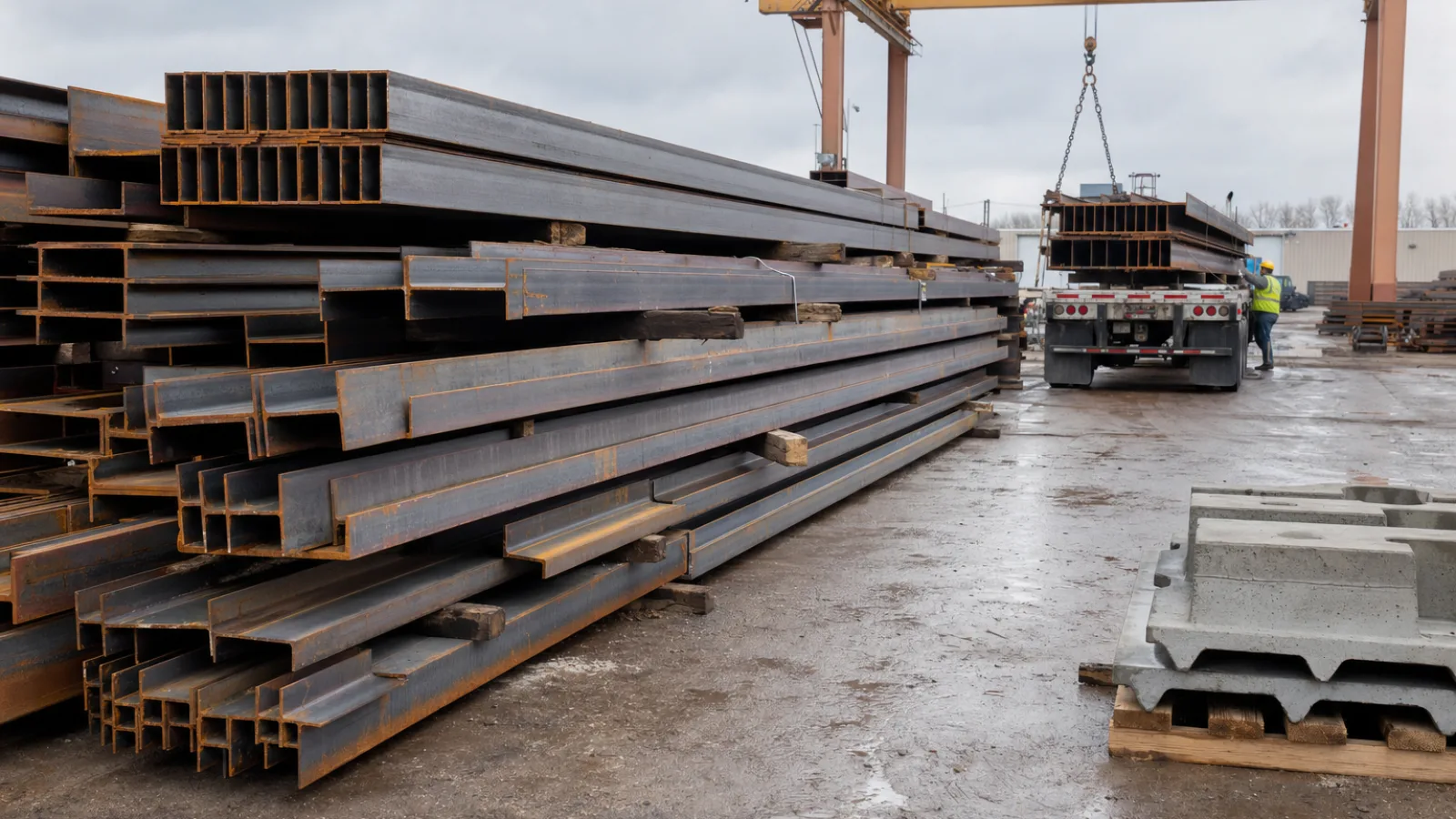
Construction material prices in 2026 are not moving in a single direction. The figures supplied for this analysis show steel mill products up 27.6% year over year and aluminum up 25.2%, while cement and concrete products rose only 4.1%. The broader construction-material measure increased 11.0%.
For owners, quantity surveyors, estimators, and contractors, the practical conclusion is straightforward: a project should not be protected with one blanket escalation assumption. A building with a large structural frame, metal envelope, or mechanical-equipment package may face materially different exposure from a concrete-intensive project. The contract should identify the vulnerable packages, define the index used to measure change, and allocate the risk deliberately.
The apparent conflict between the steel figures and a separate structural-steel reading is also important. One index reports steel mill products, while the other reports a modeled or observed price for structural steel. They are related, but they do not measure the same transaction.
Key takeaways
- Steel mill products and aluminum are showing much stronger inflation than cement and concrete in the cited data.
- A 27.6% mill-product increase should not be applied automatically to a fabricated, delivered, and erected structural-steel package.
- The cited structural-steel index of $2,721.31 per ton, up 9.85% year over year, measures a narrower downstream market than a mill-products index.
- On a hypothetical $5 million building with $500,000 of steel exposure, a 27.6% steel increase adds $138,000 before secondary effects.
- Early buy-outs work only when design, specification, quantity, delivery, storage, and payment conditions are sufficiently controlled.
What the construction material prices 2026 split is telling estimators
The headline is not simply that materials are expensive. It is that material categories are experiencing different supply, energy, trade, and manufacturing pressures.
Steel and aluminum are highly exposed to mill capacity, scrap and ore inputs, electricity, freight, trade restrictions, and tariffs. The exposure extends beyond the primary material. A steel price increase can flow into reinforcing steel, structural shapes, joists, deck, cold-formed framing, miscellaneous metals, doors and frames, curtain wall components, roofing, façade panels, and mechanical equipment with significant metal content.
Cement and concrete have a different cost structure. Local quarry reserves, cement-plant capacity, regional trucking, ready-mix dispatch, and jobsite distance often matter more than international metal markets. Concrete can still experience sharp local increases or availability problems, but a national or broad index may show a smoother rate than steel.
That difference matters when a cost plan uses a single construction cost index. An overall index is useful for benchmarking the general market, but it can conceal the volatility of a specific package. Estimators should supplement the headline index with trade-level quotations and a procurement schedule.
How to reconcile the two steel indexes
The two reported steel numbers answer different questions:
| Measure | Reported movement | What it generally captures | Best use |
|---|---|---|---|
| Steel mill products | +27.6% year over year | A broad upstream or commodity-oriented group of mill-made steel products | Stress-testing exposure to steel input markets and trade-sensitive products |
| Structural steel | $2,721.31 per ton; +9.85% year over year | A narrower structural-steel price measure, potentially reflecting fabrication, market mix, or delivered scope | Benchmarking a structural package when its scope and geography are comparable |
These readings are not contradictory. A mill-products index can rise faster than a structural-steel index because the latter may include fabrication margins, labor, freight, project mix, purchasing timing, and other downstream components. Structural steel is also bought under project-specific contracts, so a quoted package may lag a rapidly moving mill market.
The difference may also reflect timing. A mill price can respond quickly to a tariff announcement or a change in producer pricing. A structural package may have been quoted earlier, hedged through a supplier agreement, or based on material already in inventory. Index methodology, geographic coverage, product grades, and unit conversion can create additional differences.
For cost reporting, the solution is not to choose whichever number appears more favorable. Map the index to the scope. Use the mill-product figure for an upstream stress case, and use the structural-steel figure only where the index definition, location, specification, and delivery basis resemble the project package. The U.S. Bureau of Labor Statistics Producer Price Index program explains why producer-price series must be read by detailed commodity or industry classification rather than treated as one universal material price.
Worked example: a $5 million building under three steel scenarios
The following is an illustrative calculation, not a project estimate. Assume a $5 million building budget contains $500,000 of steel-related cost at the baseline date. This represents 10% of the budget. The example holds every other cost constant and measures only the direct change in the steel allowance.
| Scenario | Assumed steel movement | Steel cost | Direct budget increase | Revised building budget |
|---|---|---|---|---|
| Low or protected exposure | 0% | $500,000 | $0 | $5,000,000 |
| Structural-steel index case | +9.85% | $549,250 | $49,250 | $5,049,250 |
| Steel mill-products stress case | +27.6% | $638,000 | $138,000 | $5,138,000 |
The calculation is simple: $500,000 multiplied by the applicable increase. It does not add possible effects on fabrication labor, coatings, freight, fasteners, equipment, financing, schedule delay, or contractor contingency. Nor does it assume that every steel-related line item moves by the same percentage.
If the project has only $250,000 of exposed steel, the direct stress-case impact falls to $69,000. If it has $1 million of exposed steel, the same scenario adds $276,000. The correct risk allowance therefore depends more on the project’s procurement breakdown than on the total construction value alone.
What an escalation clause should define
An escalation clause is a risk-allocation mechanism, not a promise that the final price will track a headline number. It should identify the baseline, the adjustment date, the index, the relevant material basket, the threshold, and the evidence required.
A workable clause should answer six questions:
- What price is fixed at bid or contract execution?
- Which index and subcategory measure the change?
- What month or quarter is the baseline?
- When does the adjustment apply: purchase order, fabrication, delivery, or installation?
- Is the adjustment symmetrical for decreases as well as increases?
- Who bears changes caused by late procurement, substitution, owner-directed changes, or supplier default?
Illustrative escalation-clause wording
For the identified structural-steel materials listed in Schedule A, the Contract Sum shall be adjusted for changes in the published price index between the Base Index Date and the Adjustment Date. The Base Index shall be the index value published for the month preceding the Contractor’s bid submission. The Adjustment Date shall be the month in which the Contractor places a conforming purchase order, provided that the order is placed in accordance with the approved procurement schedule. The adjustment shall apply only to the material component identified in Schedule A, shall operate upward or downward, and shall exclude changes attributable to an unapproved substitution, Contractor-caused delay, or failure to follow the procurement schedule. If the named index is discontinued or materially revised, the parties shall use the replacement series designated by the index publisher or an agreed comparable series.
This sample must be adapted by the project’s legal and commercial teams. The index name, series code, location, unit, threshold, cap, audit rights, and treatment of taxes and freight should be written into the contract rather than left to interpretation.
Early buy-out checklist for steel and aluminum
Buying early can reduce price exposure, but it can also create storage, cash-flow, design-change, and warranty problems. Before authorizing a buy-out, the project team should confirm:
- Design maturity: approved member sizes, grades, connections, coatings, embeds, and interface details.
- Quantity certainty: a reconciled material takeoff, including waste, laps, accessories, and fabrication allowances.
- Supplier capacity: written confirmation of mill allocation, fabrication slots, lead time, and validity of the quotation.
- Commercial terms: escalation basis, validity period, deposits, cancellation charges, payment milestones, and title transfer.
- Delivery logic: required-on-site dates, sequencing, truck restrictions, unloading responsibility, and laydown capacity.
- Storage and protection: weather protection, corrosion control, security, lifting plans, and inventory records.
- Quality documentation: mill certificates, traceability, welding requirements, inspection and testing plans, and approved sources.
- Schedule protection: a plan for design changes, rejected material, delayed approvals, and supplier failure.
- Cash-flow impact: whether an early deposit produces a meaningful price or schedule benefit after financing and storage costs.
- Contract alignment: owner approval, subcontract flow-down language, insurance, title, risk of loss, and payment provisions.
Practical implications for quantity surveyors and owners
Quantity surveyors should separate material risk from labor, plant, fabrication, freight, and installation risk in the estimate. A steel package priced as one undifferentiated line makes it difficult to apply an index fairly and difficult to explain a change to the owner.
Bid comparisons should show the quotation date, validity period, assumed steel grade, delivery basis, fabrication content, exclusions, and whether the supplier has secured mill material. A low bid with a short validity period may contain more escalation exposure than a higher bid with a firm allocation.
Owners should decide early whether they want price certainty, maximum flexibility, or a shared-risk arrangement. A fixed price may carry a premium. An open-book or index-linked approach may reduce that premium but requires stronger records and audit procedures. In either case, the procurement schedule should identify long-lead metals before the construction contract is signed.
Finally, do not use the 27.6% figure as an automatic contingency for the entire project. It is an indicator of severe exposure in a particular steel-product grouping. Apply it to the relevant quantity, date, and scope, then test the result against supplier quotations and the project’s actual procurement plan.
Frequently asked questions
Does a 27.6% steel mill-products increase mean structural steel costs rose 27.6%?
No. The measures cover different market scopes. Structural steel may include fabrication, freight, labor, inventory, and project timing. The mill-products figure is useful as a stress case, not as an automatic adjustment to every structural package.
Why did concrete rise much less than steel?
Concrete and steel have different supply chains and geographic exposure. Concrete is often influenced by local aggregates, cement capacity, trucking, and dispatch conditions, while steel is more directly exposed to mill pricing, international trade, energy, and tariffs.
When should a contractor use an escalation clause?
Use one when the period between pricing and procurement is long, the material is volatile or long-lead, or the contractor cannot reasonably lock the price at bid. The clause should be specific enough to prevent disputes over scope and timing.
Is early buying always the best response to a steel price increase?
No. Early buying is suitable only when design and quantities are sufficiently stable and the project can manage deposits, storage, inspection, title, and changes. Otherwise, it can transfer price risk into obsolescence and cash-flow risk.
Which construction cost index should be used?
Use the most specific, transparent, and geographically relevant series available for the affected material and contract scope. Document the series, base date, unit, publication source, and substitution method if the series changes.
Sources
- U.S. Bureau of Labor Statistics, Producer Price Index program, industry and commodity price data.
- Gordian, construction cost and material-index data cited in the supplied research brief, including the reported steel mill-products, aluminum, cement, concrete, and overall construction-material movements.
- ConstructConnect/Gordian structural-steel price data cited in the supplied research brief, including the reported $2,721.31-per-ton Q4 reading and year-over-year change.
How to verify these figures yourself
First, identify the exact index series, product definition, geography, unit, and release period. Next, compare the current value with the same period in the prior year and preserve the original release or downloaded table. Finally, compare the index movement with at least two current supplier quotations for the project’s actual grade, quantity, fabrication scope, delivery location, and required date. Do not apply a broad mill-products percentage to a downstream package until those scopes have been reconciled.