The World's Fastest-Growing Luxury Real Estate Markets in 2026
Dubai, Miami, Lisbon, Monaco, and Singapore each offer a distinct luxury property proposition for international buyers and investors. This comparison examines demand, supply constraints, taxation, rental potential, liquidity, and the risks that should shape a purchase decision.
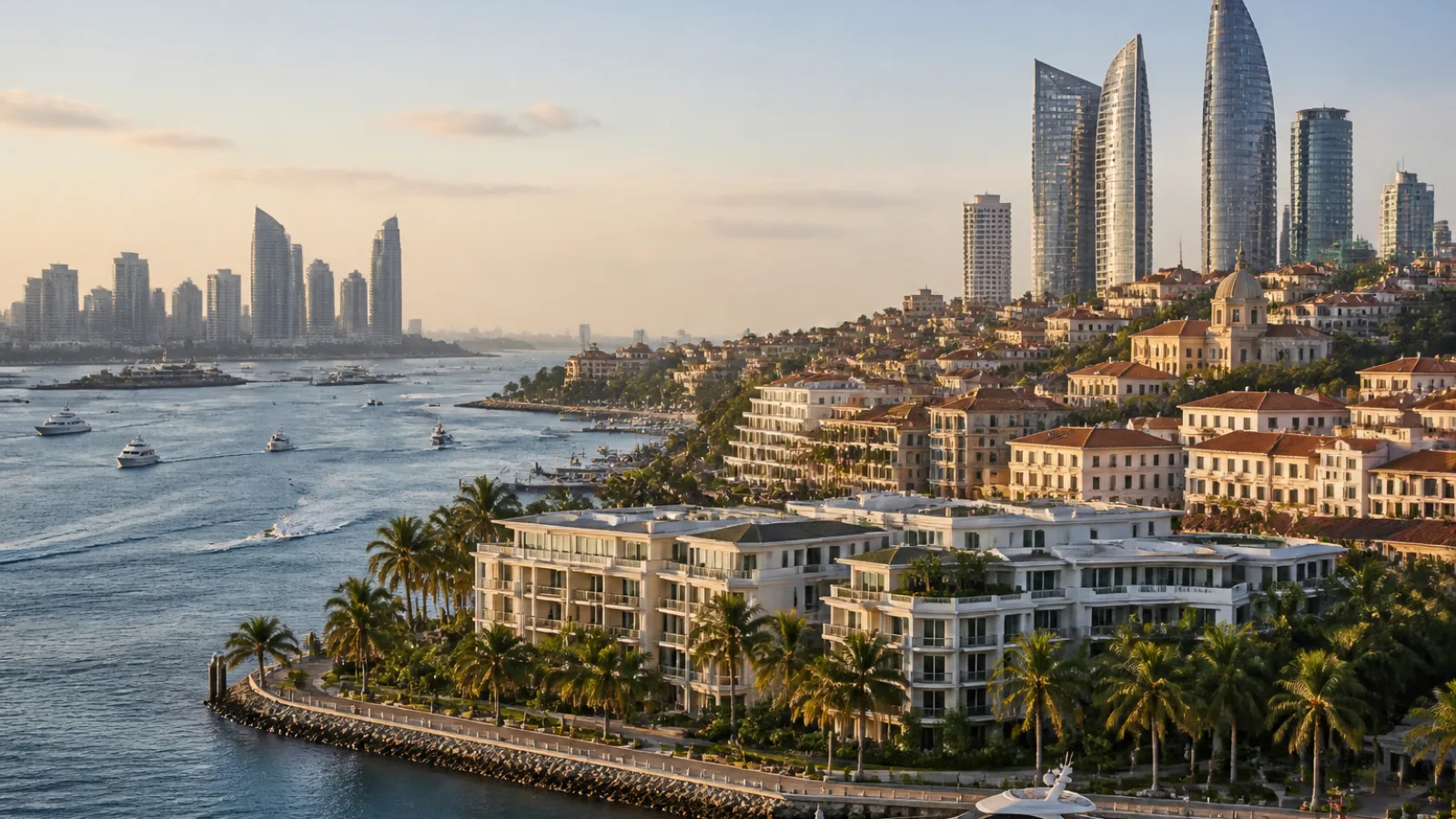
The most attractive luxury real estate markets in 2026 are not necessarily the places with the largest annual price gains. For international buyers, the stronger question is whether demand is durable, prime real estate is genuinely scarce, ownership rules are workable, and an exit remains realistic. This comparison examines Dubai, Miami, Lisbon, Monaco, and Singapore across those factors, alongside the quality and location of available luxury homes. Buyers can also review international luxury property listings to understand how prime inventory differs from one market to another.
Each city offers a different investment proposition. Dubai stands out for momentum and international accessibility, Miami for depth and lifestyle demand, Lisbon for its European appeal and constrained prime supply, Monaco for extreme scarcity, and Singapore for institutional stability. None is universally “best.” The right choice depends on whether the priority is capital growth, rental income, wealth preservation, personal use, or development opportunity.
How to compare luxury real estate markets in 2026
Luxury housing is a thin and highly segmented market. A small number of transactions can influence headline averages, while a trophy penthouse, waterfront villa, or newly completed branded residence may behave very differently from an established apartment in the same city. A sound comparison therefore looks beyond price movement.
The indicators that matter
- Cross-border demand: Are purchases being supported by business migration, wealth creation, lifestyle demand, or short-term speculation?
- Supply constraints: Can new prime homes be delivered easily, or are land, planning, geography, and infrastructure limiting future inventory?
- Liquidity: How deep is the buyer pool when an owner needs to sell?
- Income potential: Do rents, occupancy, and permitted rental strategies justify the purchase price and operating costs?
- Tax and regulation: What are the acquisition taxes, annual charges, capital-gains rules, foreign-buyer restrictions, and rental controls?
- Asset quality: Does the property have durable advantages such as location, views, privacy, services, energy performance, and flexible use?
Why local market differences matter
Currency exposure can change the result for an overseas investor even when the property value rises in local terms. Financing costs, insurance, service charges, maintenance, property management, and taxation can also reduce net returns. In addition, a luxury property may take longer to sell than a mainstream home because the number of qualified buyers is smaller.
For that reason, the comparison below is a strategic ranking of market characteristics rather than a promise of future performance. Investors should verify current legal, tax, lending, and rental rules with local professionals before committing funds.
Quick comparison of the five markets
| Market | Main demand drivers | Supply profile | Investment strengths | Principal risks |
|---|---|---|---|---|
| Dubai | Global mobility, business growth, lifestyle migration, and tax appeal | New supply is possible, but prime waterfront and established districts remain selective | Strong transaction activity, broad international buyer base, and varied price points | Construction cycles, market volatility, service charges, and oversupply in some submarkets |
| Miami | Domestic wealth, international buyers, finance, technology, and lifestyle demand | Waterfront and well-located land are constrained, while development remains active | Deep market, strong amenities, and potential rental demand | Insurance costs, climate exposure, taxes, and cyclical pricing |
| Lisbon | European lifestyle demand, tourism, technology, and limited central inventory | Historic fabric and planning constraints limit replacement supply | Livability, cultural appeal, and relative value within prime Europe | Policy changes, rental restrictions, affordability pressure, and liquidity |
| Monaco | Wealth preservation, fiscal appeal, privacy, and prestige | Exceptionally scarce because of geography and planning limits | Rare inventory and resilient high-end demand | Very high entry prices, limited yield, and a small buyer pool |
| Singapore | Regional headquarters, family wealth, education, and safe-haven demand | Land is managed tightly and development is carefully regulated | Transparency, infrastructure, and long-term institutional confidence | Foreign-buyer taxes, ownership rules, and policy sensitivity |
Dubai: the strongest momentum and broadest investor access
Dubai has become one of the most visible global luxury property markets because it combines international connectivity, a large development pipeline, strong hospitality infrastructure, and relatively accessible ownership pathways for overseas buyers. Demand comes from entrepreneurs, executives, investors, regional families, and individuals relocating for lifestyle or business reasons.
Demand, supply, and prime districts
The market spans several distinct segments. Established waterfront communities, central high-rise districts, gated villa neighbourhoods, and emerging master-planned areas appeal to different buyer profiles. Prime inventory with unobstructed views, private outdoor space, high-quality services, or direct access to retail and hospitality tends to be more defensible than generic stock.
Dubai can add supply more readily than Monaco or Lisbon, which creates both opportunity and risk. New developments may support liquidity and attract fresh buyers, but investors must assess delivery schedules, developer quality, construction standards, service charges, and the volume of competing units due to complete nearby.
Investment advantages and risks
The main attraction for luxury real estate investment is the combination of global demand and market breadth. Buyers can choose between completed assets, off-plan opportunities, villas, apartments, and income-oriented units. However, growth can be uneven and sentiment can turn quickly when supply, financing conditions, or geopolitical factors change. A detailed building-level analysis is more important than relying on the city’s overall reputation.
Miami: global appeal with a sharper cycle and higher carrying costs
Miami remains a major destination for international capital, second-home buyers, entrepreneurs, and high-income households. Its appeal includes beaches, private aviation access, cultural amenities, business links, and a strong ecosystem of luxury services. Demand is particularly resilient for well-located homes offering privacy, security, outdoor space, and high-quality building management.
Why international buyers remain active
Miami benefits from a diversified buyer base spanning Latin America, Europe, Canada, and the United States. That depth can support resale liquidity, although the luxury segment is still sensitive to interest rates, equity-market conditions, and currency movements. Condominiums, single-family homes, branded residences, and new developments can perform differently, so the property’s tenure, association finances, construction quality, and location need careful review.
Insurance, taxation, and market-cycle considerations
Insurance is one of the most important factors in the Miami underwriting process. Premiums, deductibles, coverage limitations, building assessments, and exposure to storms can materially affect annual costs. Buyers should also model property taxes, closing expenses, financing costs, management, maintenance, and vacancy rather than using gross rent as a proxy for return.
Miami may suit buyers seeking lifestyle utility and a deep, internationally recognised market, but it is not a low-risk income play. Climate exposure and carrying costs should be treated as central investment variables.
Lisbon: lifestyle demand meets tighter regulation and limited supply
Lisbon continues to attract international buyers through its architecture, climate, culture, food, transport links, and comparatively attractive lifestyle proposition within Western Europe. Prime demand is concentrated in established central districts, river-facing areas, renovated historic buildings, and carefully designed new developments.
Prime locations and buyer profile
The city appeals to private buyers seeking a European base as well as investors targeting long-term rental demand. Quality matters greatly: buildings with lifts, parking, energy improvements, outdoor space, sound insulation, and professional management can command a meaningful premium over poorly renovated stock.
Policy, rental, and liquidity risks
Lisbon requires close attention to changing rules around immigration pathways, short-term rentals, planning, heritage buildings, and tenant protections. Regulations can affect the feasibility of a proposed rental strategy, particularly where an investment case depends on tourist accommodation. Buyers should confirm licensing, permitted use, renovation obligations, and the tax treatment of rental income before purchasing.
Lisbon’s supply constraints can support well-located prime real estate, but lower transaction volumes and regulatory uncertainty may lengthen the selling process. It is generally more suitable for patient investors who value lifestyle and long-term ownership than for rapid resale strategies.
Monaco: exceptional scarcity and wealth-preservation appeal
Monaco is unlike the other markets in this comparison. Its investment case is based less on broad development growth and more on extraordinary scarcity, prestige, privacy, and its role as a residence for internationally mobile wealth. Geography severely limits the amount of land available, while the buyer pool is unusually affluent.
Why scarcity supports prime values
Well-positioned apartments with sea views, outdoor space, security, parking, and high-quality services are difficult to replicate. This scarcity can support values over long periods, particularly when the property meets the needs of buyers who prioritise status, convenience, and wealth preservation.
Entry barriers and limited yield potential
Monaco has very high acquisition costs and entry prices, and the small supply of suitable homes can make the search process competitive. Rental yields may be modest relative to capital values, meaning the market is often better suited to preservation, personal use, and long-term ownership than to maximising current income.
Liquidity should not be confused with scarcity. A rare property may retain strong appeal, but it can still take time to sell because the number of potential purchasers is limited. Independent valuation and careful legal review are essential.
Singapore: a highly regulated safe-haven market
Singapore attracts global wealth through political and institutional stability, efficient infrastructure, strong education and healthcare systems, and its role as a regional business hub. Luxury demand is supported by executives, entrepreneurs, family offices, and regional investors who value transparency and operational reliability.
Institutional quality and luxury demand
Prime districts, prestigious condominium developments, and limited landed housing provide different routes into the market. Building quality, management, transport access, school proximity, privacy, and long-term maintenance are important differentiators. Singapore’s reputation can support demand, but individual assets still need to be priced sensibly.
Taxes, ownership rules, and practical constraints
Singapore is one of the clearest examples of why a strong economy does not automatically mean easy foreign investment. Additional buyer taxes, eligibility rules, property-type restrictions, financing requirements, and cooling measures can significantly change the economics for an overseas purchaser. Rules may also be adjusted to manage affordability and speculative demand.
The market may suit investors who prioritise stability, transparency, and long-term capital preservation. It is less attractive for buyers who need high rental yields or maximum flexibility, particularly after taxes and transaction costs are included.
Which luxury real estate market suits which investor?
- For growth and market momentum: Dubai offers the broadest combination of new demand, development activity, and international accessibility, but requires careful submarket selection.
- For lifestyle and market depth: Miami provides strong amenities and a broad buyer pool, balanced against insurance, tax, and climate-related costs.
- For European lifestyle ownership: Lisbon can appeal to patient buyers who value central location, architecture, and long-term use, provided they understand regulation.
- For scarcity and wealth preservation: Monaco offers a rare supply profile, but high entry prices and modest income potential limit its suitability for yield-focused investors.
- For institutional stability: Singapore is compelling for buyers who value governance and infrastructure, although foreign ownership costs and rules must be modelled precisely.
Due diligence checklist before buying luxury property abroad
- Define the purpose of the purchase: residence, second home, rental income, capital preservation, or development.
- Calculate total acquisition and annual ownership costs in both local currency and the investor’s home currency.
- Confirm foreign-buyer eligibility, taxes, financing rules, inheritance implications, and ownership structure.
- Inspect title, permits, building records, renovation quality, warranties, and outstanding assessments.
- Test rental assumptions against permitted use, seasonality, management fees, vacancy, and local taxes.
- Compare recent transactions for genuinely similar properties rather than relying on asking prices.
- Assess resale liquidity, likely buyer profiles, and the time required to exit.
- Use independent legal, tax, technical, valuation, and property-management advice.
FAQ
Which luxury real estate market is growing fastest in 2026?
Dubai has the strongest combination of visible momentum, international demand, development activity, and buyer accessibility among the five markets. That does not guarantee the best return for every property. Location, developer quality, supply, financing, and entry price remain decisive.
Which market is best for rental income?
Dubai and Miami may offer the broadest rental opportunities, but the result depends on permitted use, occupancy, taxes, insurance, service charges, and management. A high gross rent does not necessarily produce a high net return.
Are luxury homes a reliable inflation hedge?
Some prime properties can preserve purchasing power over long periods, especially when supply is scarce and demand is diversified. However, luxury homes are illiquid, expensive to maintain, and exposed to interest rates, regulation, currency movements, and changing buyer preferences.
What is the biggest risk in cross-border luxury real estate investment?
The biggest risk is often underwriting the property using assumptions that do not reflect local rules or total costs. Tax, insurance, financing, rental restrictions, currency exposure, and resale liquidity can matter as much as the purchase price.
Conclusion
The leading global luxury housing markets in 2026 offer different forms of value. Dubai is the clearest growth and access story; Miami combines international depth with higher operating risk; Lisbon offers lifestyle appeal and constrained prime supply; Monaco is built around scarcity and wealth preservation; and Singapore provides institutional strength within a tightly regulated framework.
The best luxury real estate investment is therefore not simply the market with the strongest headline performance. It is the market where the property’s quality, ownership costs, legal structure, rental plan, and exit strategy align with the buyer’s objectives. A disciplined comparison of net returns, downside risks, and long-term usability should come before any purchase decision.