Revolutionizing Tooling and Die Repair: The Role of Metal Additive Manufacturing
Explore how innovative 3D printing technologies are transforming tooling and die repair, with a focus on metal additive manufacturing in the USA.
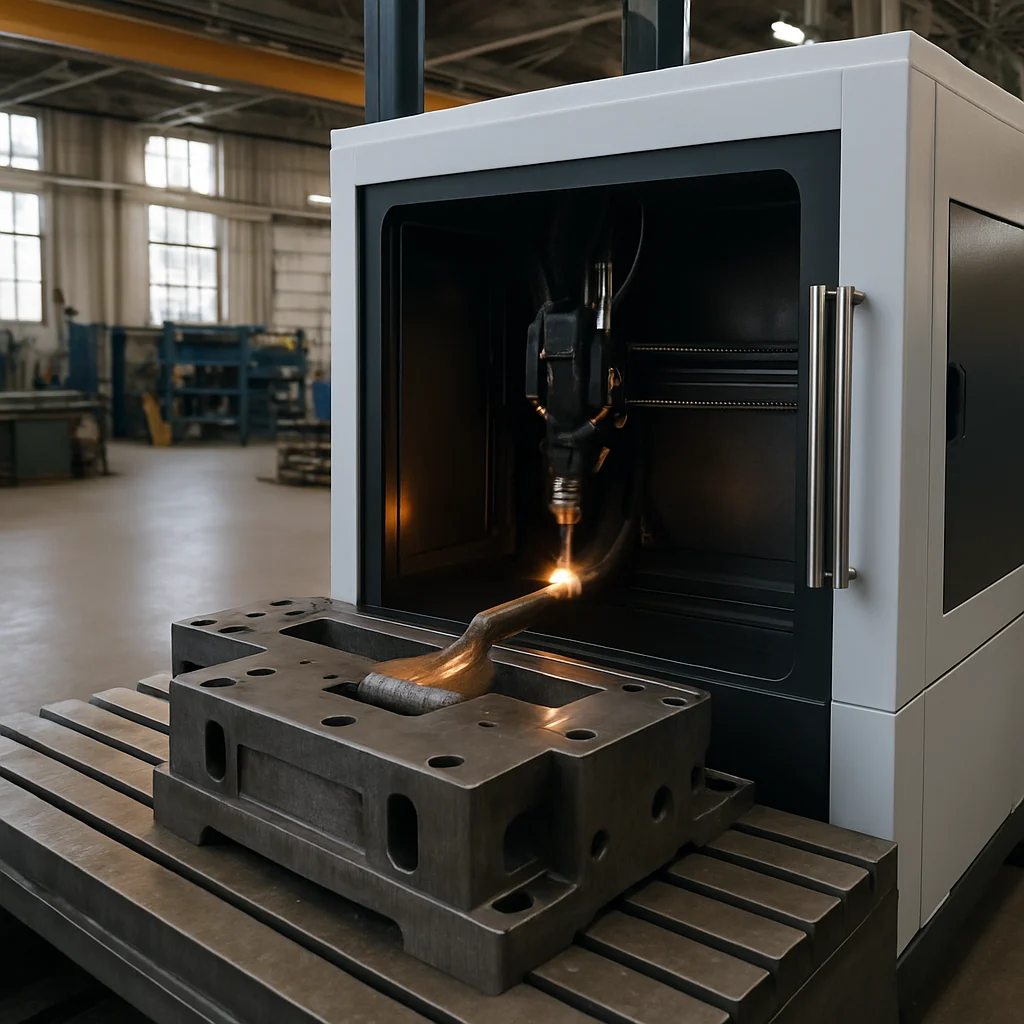
In the face of increasing demand for customized components and rapid prototyping, metal additive manufacturing (AM) is emerging as a game-changer in the fields of tooling and die repair. This innovation provides engineers, architects, and builders with effective solutions to traditional challenges associated with manufacturing processes. In this article, we will explore various tools and workflows that leverage metal AM technology for tooling and die repair, comparing their features to help professionals select the best fit for their projects.
Understanding Metal Additive Manufacturing
Metal additive manufacturing encompasses various techniques, including selective laser melting (SLM), electron beam melting (EBM), and direct energy deposition (DED). These processes allow for the layer-by-layer construction of metal parts, enabling the creation of complex geometries that are difficult, if not impossible, to achieve with traditional manufacturing methods.
The Importance of Tooling and Die Repair
Tooling and die repair are critical aspects of manufacturing, affecting production efficiency and costs. With traditional repair methods often resulting in long downtimes, metal AM offers a faster and more reliable alternative. Here are key benefits of utilizing metal AM for tooling and die repair:
- Reduced Lead Time: Metal AM can significantly decrease the time required to produce critical tooling components.
- Enhanced Customization: The ability to produce unique geometries allows for tailored solutions that meet specific requirements.
- Cost-Effectiveness: By minimizing material waste and reducing overall manufacturing costs, metal AM can offer a more economical solution over time.
- Improved Performance: 3D printed components can be designed for optimal strength and durability, which is essential in high-stress applications.
Comparative Analysis of Metal AM Tools and Workflows
To facilitate the choice of suitable tools and technologies for tooling and die repair, we present a comparison of three notable metal additive manufacturing systems utilized in the USA. The comparison table below highlights their key features, advantages, and ideal use cases.
| Tool/Workflow | Technology | Material Compatibility | Build Volume | Ideal Applications |
|---|---|---|---|---|
| System A | Selective Laser Melting (SLM) | Stainless Steel, Titanium | 250x250x300 mm | Complex Tooling Geometries |
| System B | Electron Beam Melting (EBM) | Inconel, Cobalt Chrome | 200x200x150 mm | Aerospace Components |
| System C | Direct Energy Deposition (DED) | Aluminum, Various Alloys | 500x500x500 mm | Repairing High-Value Dies |
System A: Selective Laser Melting (SLM)
System A utilizes SLM technology to produce intricate tooling components. Suitable for stainless steel and titanium, it boasts a build volume of 250x250x300 mm. This system excels in creating complex geometries required for modern manufacturing.
System B: Electron Beam Melting (EBM)
System B leverages EBM technology, compatible with materials like Inconel and cobalt chrome. Its build volume is slightly smaller, at 200x200x150 mm. This system is particularly effective for aerospace components, where precision and material strength are paramount.
System C: Direct Energy Deposition (DED)
System C employs DED technology, offering compatibility with aluminum and various alloys. With a generous build volume of 500x500x500 mm, this system is particularly useful for repairing high-value dies that require material addition and modification.
Conclusion
As the manufacturing landscape continues to evolve, metal additive manufacturing is proving to be a vital component in tooling and die repair processes. Each system presents unique advantages that cater to different needs within the industry. By understanding the strengths and limitations of these tools, engineers, architects, and builders can make informed decisions to enhance productivity, reduce costs, and lead the charge in innovation within their respective fields. Embracing metal AM technology is not just about keeping pace with advancements; it is about redefining the possibilities in manufacturing.