Dams: Structure, Engineering, Challenges, and Strategic Importance in Modern Infrastructure
An expert analysis into the structural design, engineering challenges, and strategic importance of dams. This guide covers everything from construction and safety to the modern technologies shaping the future of water infrastructure.
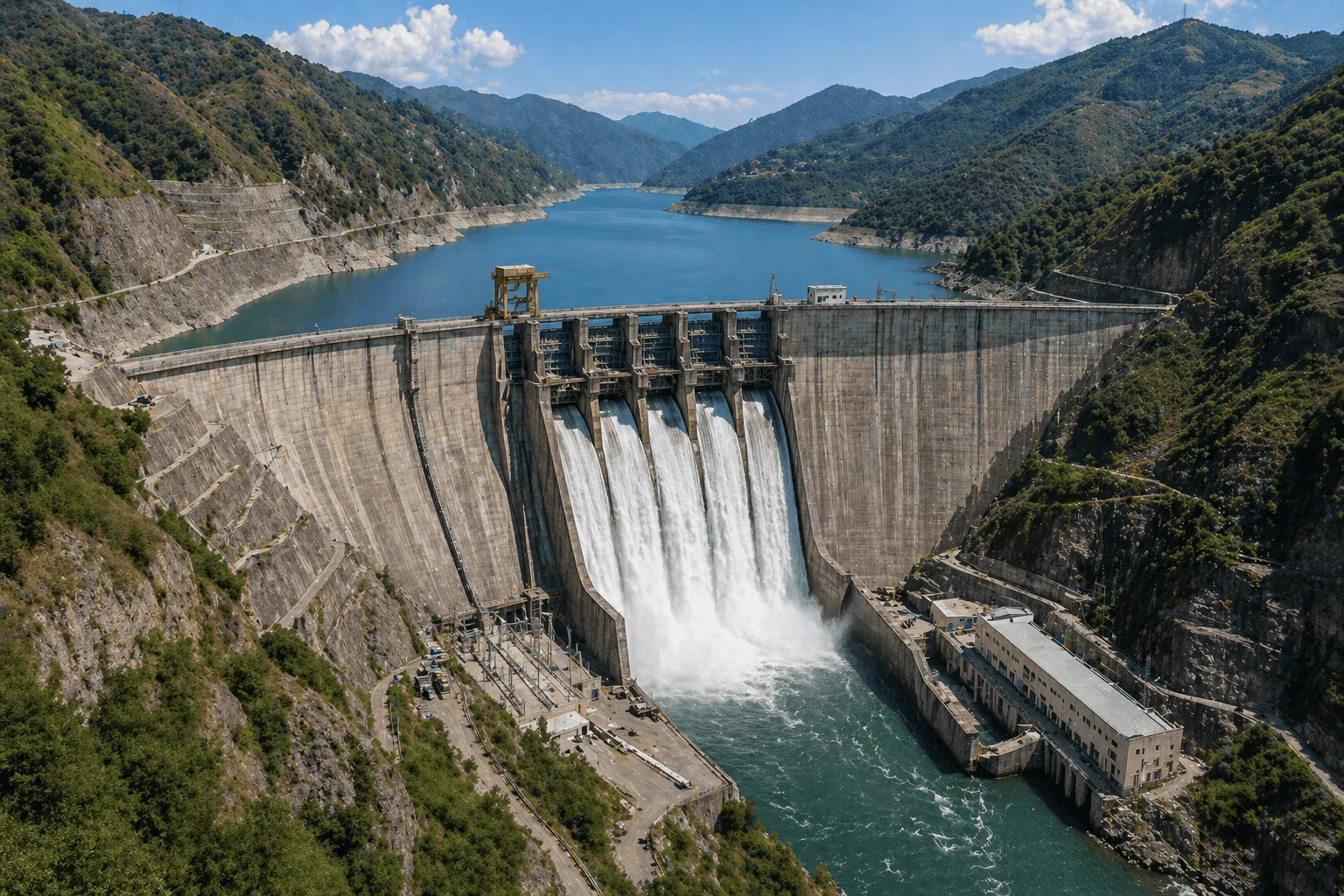
Harnessing the immense power of water is one of humanity's greatest engineering achievements. Dams stand as monuments to this ambition, yet they represent a profound responsibility. These massive structures are critical assets for national economies, but their failure can lead to catastrophic consequences, underscoring the critical importance of robust dam engineering principles.
Understanding the forces at play, the materials used, and the lifecycle management required is not just an academic exercise. For engineers, investors, and policymakers, it is a prerequisite for developing resilient and sustainable water infrastructure that serves generations.
The Importance of Dams in Modern Infrastructure
Dams are far more than just barriers holding back water; they are multifunctional engines of economic development and societal stability. Their strategic value is rooted in four primary functions.
Water Supply and Irrigation
For arid and semi-arid regions, dams provide a reliable water supply for municipal use and agriculture. By storing wet-season runoff, they ensure year-round availability, transforming non-arable land into productive agricultural zones and supporting urban growth.
Flood Control
Downstream communities are protected from devastating floods by the storage capacity of dam reservoirs. During periods of extreme rainfall, dams can capture peak flows and release them gradually, mitigating property damage and saving lives.
Hydroelectric Power
As a source of clean, renewable energy, hydroelectric dams are indispensable. They provide baseload power to national grids, offering a level of stability that intermittent renewables like solar and wind cannot match. This function is vital for industrialization and energy security.
Economic and Recreational Impact
The reservoirs created by dams often become hubs for recreation, tourism, and aquaculture, generating local economic benefits. Furthermore, the reliable water and power they supply attract industrial investment, creating a positive feedback loop of development.
Types of Dams and Structural Design
The design of a dam is dictated by site geology, material availability, and the hydraulic forces it must withstand. The core principle of dam engineering is to safely transfer the immense hydrostatic load of the reservoir into the foundation and abutments.
Gravity Dams
Typically made of concrete or masonry, gravity dams resist water pressure using their own mass. Their sheer weight provides the stability needed to prevent overturning or sliding. They are best suited for wide valleys with strong rock foundations capable of supporting the immense load.
Arch Dams
Arch dams are elegant, curved structures that transfer water pressure horizontally into the canyon walls (abutments). This design is highly efficient, requiring less concrete than a gravity dam of similar height, but it is only viable in narrow, steep-sided canyons with very strong rock.
Embankment Dams
The most common type of large dam, embankment dams are constructed from compacted earth and/or rock. They feature an impermeable core (often clay or a concrete face) to prevent seepage. Their massive footprint distributes the load over a wider area, making them suitable for sites with less competent foundations.
How Dams Are Constructed
The process of dam construction is a monumental undertaking that requires meticulous planning and coordination. Understanding how dams are built and maintained begins with appreciating the complexity of each phase.
Site Selection and Geological Investigation
This is the most critical phase. Engineers conduct extensive geotechnical surveys, including drilling core samples and seismic analysis, to assess the foundation rock's strength, permeability, and fault lines. An unsuitable foundation is a primary cause of dam failure.
Foundation Preparation
Once a site is chosen, the foundation area is excavated down to competent bedrock. Any cracks or fissures are sealed through a process called grouting, where cement slurry is injected under pressure to create an impermeable barrier and improve stability.
Construction Stages
For a concrete dam, construction involves placing concrete in massive, interlocking blocks called monoliths to control heat from hydration and prevent cracking. For an embankment dam, it involves placing and compacting millions of cubic meters of soil and rock in carefully controlled layers.
This entire process demands massive logistical coordination, from managing material supply chains to orchestrating a workforce of thousands in a remote and often challenging environment.
Challenges and Risks in Dam Projects
Despite modern advancements, dam projects are fraught with technical, environmental, and financial risks. A focus on dam safety is paramount throughout the project lifecycle.
Structural Failure Risks
The primary risks include overtopping during extreme floods, internal erosion (piping) through the embankment or foundation, and structural collapse due to seismic activity or design flaws. Rigorous quality control and ongoing monitoring are essential to mitigate these threats.
Geological Uncertainty
Even with thorough investigation, unforeseen geological conditions can emerge during excavation, such as unmapped faults or weak rock zones. These surprises can necessitate costly and time-consuming design changes.
Environmental and Social Impact
Large dams fundamentally alter ecosystems by disrupting river continuity, trapping sediment, and changing downstream flows. They can also require the resettlement of local communities, creating significant social challenges that must be managed ethically and effectively.
Cost Overruns and Delays
The immense scale and long duration of dam projects make them highly susceptible to cost overruns and schedule delays. Factors range from geological surprises and extreme weather to regulatory hurdles and supply chain disruptions.
Modern Technologies in Dam Engineering
The field of dam engineering is continuously evolving, leveraging technology to enhance safety, efficiency, and operational intelligence. Modern dams are no longer static structures but are highly instrumented systems.
Advanced monitoring relies on a network of sensors embedded within the dam and its foundation. Piezometers measure water pressure, inclinometers detect movement, and strain gauges monitor stress on the concrete. Fiber optic sensors can provide continuous strain and temperature data along their entire length, offering a complete picture of structural behavior.
This data is fed into sophisticated analysis platforms, often using artificial intelligence and machine learning to detect anomalies that could indicate potential safety issues. This proactive approach to dam safety allows operators to address problems before they become critical. For those seeking deeper data on industry trends, accessing resources that provide global hydropower and dam engineering insights can be invaluable for strategic planning.
Furthermore, digital twins—virtual replicas of the physical dam—are becoming a cornerstone of modern asset management. These models integrate real-time sensor data, allowing engineers to simulate various scenarios, such as extreme floods or seismic events, to optimize operational strategies and plan for long-term maintenance.
Real Examples and Case Studies
Examining real-world projects provides invaluable lessons in both the triumphs and tribulations of dam construction.
Three Gorges Dam, China
The world's largest power station, the Three Gorges Dam is a monumental gravity dam with an installed capacity of 22,500 MW. Its primary successes lie in its massive clean energy generation and significant flood control benefits for the Yangtze River basin. However, the project faced immense challenges, including the resettlement of over a million people and significant environmental impacts, such as increased reservoir-induced seismicity and altered downstream ecosystems.
Hoover Dam, USA
Completed in 1936, the Hoover Dam was an unprecedented engineering feat for its time. As a concrete arch-gravity dam, its design was revolutionary, and its construction required the development of new techniques for placing and cooling massive amounts of concrete. It remains a symbol of American ambition and a testament to durable engineering, continuing to provide power and water to the Southwest nearly a century later.
Long-Term Value and Future of Dam Infrastructure
The strategic value of a dam must be assessed over its entire lifecycle, which can exceed 100 years. This requires looking beyond the initial construction cost to consider long-term operation, maintenance, and eventual decommissioning.
Sustainability is now a central theme. This includes managing sedimentation that reduces reservoir capacity, implementing environmental flow releases to support downstream ecosystems, and ensuring the structure's resilience to climate change. Future designs must account for more extreme weather patterns, including larger floods and longer droughts.
The future of water infrastructure will likely involve not just building new dams but also retrofitting and upgrading existing ones. As global water and energy demands grow, the strategic importance of well-engineered and safely managed dams will only increase, making them a perpetual cornerstone of modern civilization.