From GPS Guidance to AI Machinery: The Global Evolution of Autonomous Heavy Equipment in Construction
Construction equipment automation has progressed from GPS guidance and automated grade control to connected, sensor-rich machines capable of assisting with or performing defined tasks. This article explains how autonomous excavators, bulldozers, telematics, machine vision, and AI are changing project delivery while examining the limits that still require skilled human oversight.
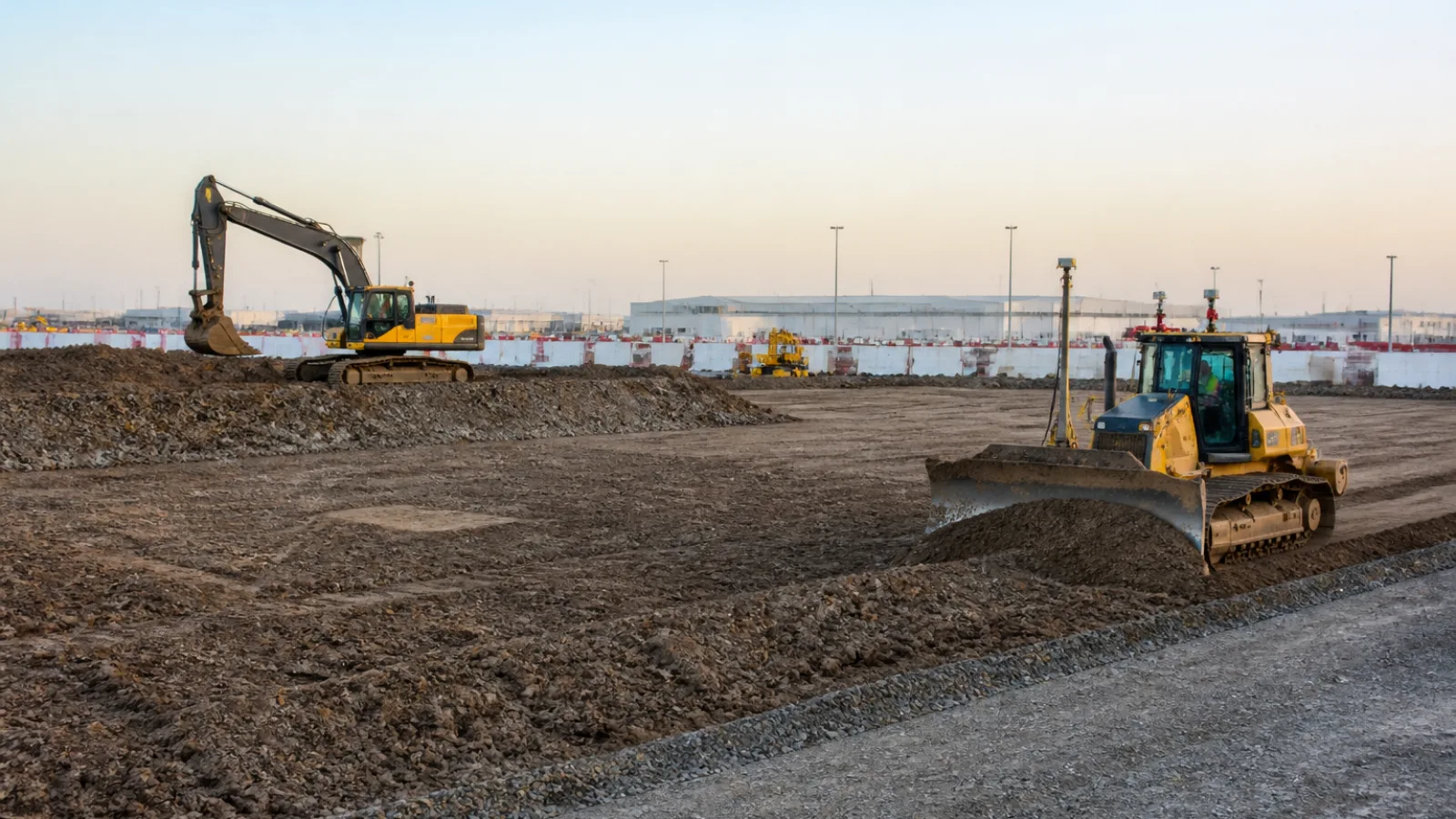
Heavy equipment automation is changing how contractors plan, operate, and monitor earthmoving work. Yet autonomous construction equipment has not emerged as a single fully driverless solution. It has developed in stages, beginning with positioning and operator guidance, progressing through automated grade control and connected fleet management, and now incorporating machine vision, lidar, artificial intelligence, and remote supervision. Early construction grade-control technology established an important foundation by linking digital design models with the machine’s position and working tools.
That progression matters because each project has different terrain, traffic, materials, safety risks, and tolerance for automation. A machine that can repeat a dozing pass in a controlled work zone may not be ready to operate independently beside workers, utilities, or public traffic. Understanding the evolution from GPS machine guidance to AI-assisted and autonomous machines helps construction professionals distinguish practical capability from marketing language.
What Heavy Equipment Automation Means
In construction, heavy equipment automation is the use of positioning systems, sensors, software, communications, and machine controls to assist or perform tasks that would otherwise require continuous manual input. The technology can improve how a machine follows a design, moves material, detects hazards, reports its condition, or coordinates with other equipment.
Automation exists on a spectrum rather than as a simple manual-versus-autonomous choice:
- Machine guidance shows the operator where the blade, bucket, or cutting edge should be in relation to a digital design. The operator remains responsible for all machine movements.
- Machine control connects position data and design information to hydraulic or implement controls. The system may automatically adjust a blade or bucket to maintain a target elevation, slope, or depth.
- Operator assistance uses cameras, sensors, alerts, or software to reduce workload and improve awareness without taking complete control.
- Remote operation allows a professional to control a machine from a station away from the immediate hazard. This is different from autonomy because a human still directs the machine.
- Semi-autonomous operation automates defined portions of a task, such as a digging sequence, a grading pass, or a haul route, while a person supervises, approves, or intervenes.
- Full autonomy means the machine can perceive conditions, plan actions, control its functions, and manage defined tasks without continuous human command. In practice, this is usually limited to specific machines, applications, and controlled environments.
Operators remain important on many modern worksites. They interpret changing ground conditions, coordinate with crews, respond to unusual materials, verify safe clearances, and make judgments that are difficult to encode in advance. Automation generally changes the operator’s role from constant manual control toward supervision, exception handling, quality verification, and broader site coordination.
From GPS Guidance to Autonomous Machines
GPS machine guidance and automated grade control
GPS machine control is more accurately described in many engineering applications as GNSS machine control, because systems may use multiple global navigation satellite systems rather than GPS alone. A receiver on the machine determines its position, while inertial sensors, angle sensors, and implement-position sensors establish the orientation and location of the blade, bucket, or other working tool.
The machine compares this live position with a digital terrain model or three-dimensional design surface. A screen can guide the operator toward the correct elevation, slope, excavation depth, or material placement point. With automated grade control, the system can also send commands to hydraulic valves so the implement follows a specified surface more consistently.
This approach improves grading and excavation by reducing dependence on repeated physical checks and manual estimation. It can help limit over-excavation, maintain drainage slopes, place aggregate more accurately, and reduce unnecessary passes. It also provides a measurable digital connection between the design office, survey data, and work in the field. These capabilities are not fully autonomous, but they form much of the technical and operational foundation for more advanced automation.
Telematics and connected construction equipment
Construction telematics connects equipment to software platforms that collect and transmit machine data. Depending on the system, information may include location, operating hours, fuel or energy use, engine and hydraulic alerts, idle time, utilization, payload, work mode, and maintenance status.
Fleet managers can use this information to identify underused machines, schedule servicing, investigate abnormal operating patterns, and coordinate equipment across several work areas. Geofencing can alert managers when a machine enters or leaves a defined zone, while maintenance alerts can help teams address developing issues before they cause unplanned downtime. Connected equipment can also support theft monitoring, work verification, production reporting, and coordination between machines and site offices.
Telematics does not make a machine autonomous by itself. It supplies the data and communications layer that allows a fleet to be monitored, analyzed, and increasingly coordinated. As more machines share location, task, and condition data, construction companies can move from managing individual assets to managing a connected production system.
AI operators, cameras, lidar, and site mapping
More advanced autonomous machines need to understand their surroundings, not merely know their geographic coordinates. Cameras provide visual information about terrain, workers, vehicles, stockpiles, barriers, and other objects. Lidar, which uses laser pulses to measure distance, can create a three-dimensional view of nearby surfaces and obstacles. Radar may help detect objects in conditions where cameras are affected by dust, darkness, or reduced visibility. Inertial sensors help maintain an estimate of machine movement and orientation when satellite signals are interrupted or degraded.
These sensors work with jobsite mapping and digital site models. A map may define haul roads, exclusion zones, excavation boundaries, dumping areas, and approved machine routes. Artificial intelligence can classify objects or patterns in sensor data, estimate whether an area is passable, and recognize deviations from expected conditions. The system is not simply following a fixed line; it is comparing perception data with task rules and site constraints.
Manufacturers and technology providers sometimes describe this combination as an AI operator. The phrase generally refers to software that supports perception, decision-making, and machine control. It should not be interpreted as a universal replacement for a qualified equipment operator. Performance depends on sensor coverage, software validation, map quality, connectivity, weather, and the complexity of the worksite.
How Autonomous Excavators and Bulldozers Work
A typical autonomous machine follows a perception, planning, and control cycle. First, sensors determine the machine’s position and observe nearby conditions. Next, software compares the observations with a task plan, digital terrain model, geofenced work area, and safety rules. It then selects a movement or work sequence, such as approaching a dig face, filling a bucket, reversing to a dumping point, or making a dozing pass. Machine controls execute the movement, while sensors continually check the result and update the next action.
For an autonomous excavator, the task may include positioning the upper structure, lowering the boom, filling the bucket, avoiding a defined exclusion zone, and placing material in a target location. Bucket angle, digging depth, swing path, and truck position can all be incorporated into the plan. An autonomous bulldozer may follow a mapped corridor, control blade elevation against a design surface, make a series of passes, and adjust its route when material distribution changes.
These systems commonly include:
- Task planning: defining the material to move, surface to achieve, route to follow, or production objective to meet.
- Path planning: selecting a safe and efficient route while respecting work boundaries, slopes, obstacles, and other machines.
- Implement control: managing bucket, blade, or attachment movement to achieve a target grade or repeatable cycle.
- Obstacle detection: identifying workers, vehicles, structures, stockpiles, and unexpected objects through cameras, lidar, radar, or other sensors.
- Geofenced work zones: restricting operation to approved areas and defining no-go zones or speed limits.
- Remote supervision: allowing a trained professional to monitor multiple machines or intervene when the system encounters an exception.
- Emergency stop systems: providing immediate means to halt the machine locally or remotely when an unsafe condition develops.
Excavation and dozing are attractive candidates for automation because they often involve repeatable movements, defined surfaces, and measurable results. Cut and fill volumes, final elevations, bucket cycles, and pass coverage can be compared with the digital plan. However, the work becomes more difficult when ground conditions change unexpectedly, visibility is poor, underground utilities are uncertain, traffic is mixed, terrain is uneven, or people enter the work zone without warning.
Wet clay may behave differently from dry granular material. A buried obstruction may change the digging sequence. Dust, rain, snow, glare, or vegetation can reduce sensor performance. Even a well-mapped site can change as trucks arrive, temporary roads move, and stockpiles grow. Autonomous operation therefore requires conservative operating boundaries, reliable detection, human escalation procedures, and frequent verification that the digital model still represents reality.
Global Manufacturer Comparison
Leading manufacturers are pursuing related technologies through different combinations of machine control, autonomy, fleet management, remote operation, and digital site coordination. Their systems should not be treated as identical, and the level of autonomy varies by machine, software package, application, and work environment.
| Manufacturer | General direction | Most relevant applications |
|---|---|---|
| Caterpillar | Develops autonomy and command capabilities alongside machine control, fleet integration, and production monitoring. Its approach emphasizes scalable automation across equipment and operating environments rather than a single autonomous machine concept. | Mining and quarry operations, haulage, earthmoving, and controlled construction tasks where machine coordination, productivity data, and defined work zones are valuable. |
| Komatsu | Combines Smart Construction tools, machine guidance, autonomous haulage experience, and digital site management. The emphasis is on linking design, positioning, machine operation, and jobsite coordination. | Large earthmoving projects, mines, quarries, infrastructure corridors, and sites where coordinated fleets and accurate digital models can support production control. |
| Volvo Construction Equipment | Advances operator-assist functions, connected machines, electric equipment, and research into autonomous operation. Its development direction places strong emphasis on safer, lower-impact, and more adaptable worksites. | Construction and industrial applications involving operator assistance, controlled repetitive work, electric-machine integration, and future autonomous or remote workflows. |
| Hitachi Construction Machinery | Builds on autonomous haulage and excavation-related technologies, digital platforms, remote monitoring, and data-supported fleet management. Development spans mining and construction rather than assuming one operating model fits every site. | Mining haulage, large excavation, quarrying, and construction applications where remote supervision, equipment condition data, and controlled production cycles are practical. |
The comparison shows a broad industry pattern. Mining and quarry autonomy often progresses faster because routes, loading areas, traffic rules, and work cycles can be tightly controlled. Construction manufacturers are extending these principles into civil earthmoving, but urban projects and building sites typically require more flexible interaction with people, temporary structures, utilities, and changing layouts.
Practical Benefits of Autonomous Construction Equipment
Precision and reduced rework
Digital plans, positioning sensors, and automatic implement control can improve consistency across grading, trenching, excavation, and material placement. When a machine works to a current design surface, it may reduce over-excavation, excess fill, repeated passes, and manual correction. Better control can also make quality verification easier because the machine’s location and operating data can be compared with the intended geometry.
Precision is not guaranteed by automation alone. Survey accuracy, model updates, calibration, satellite reception, sensor condition, and operator or supervisor decisions all affect the result. A precise machine working from an outdated or incorrect model can produce a consistently incorrect outcome.
Fuel efficiency and lower operating waste
Automation may support fuel efficiency by optimizing travel paths, reducing idle periods, limiting unnecessary passes, improving grade accuracy, and coordinating loading or dumping cycles. Better task planning can reduce wasted movement, while telematics can reveal operating patterns that increase consumption.
Actual savings depend on machine type, site conditions, operator behavior, payload, software settings, terrain, weather, and duty cycle. Automation can also increase energy use if a machine performs extra sensing, repeated corrections, or inefficient movements. Contractors should evaluate fuel and productivity data from their own applications rather than applying a universal savings assumption.
Productivity and workforce capacity
Autonomous and semi-autonomous functions can support consistent cycle times in controlled environments and allow remote supervision of tasks that are repetitive, hazardous, or difficult to staff. They may help experienced professionals oversee more equipment, reduce fatigue during repetitive operations, and address labor shortages without removing the need for skilled workers.
The workforce requirement changes rather than disappears. Projects still need people to survey, plan, maintain, inspect, supervise, respond to exceptions, manage interfaces with other trades, and make decisions when conditions fall outside the system’s operating envelope. Training may increasingly include digital model management, sensor verification, remote control, data interpretation, and autonomous-system safety.
Construction safety
Autonomous construction equipment can support safety by separating people from machines, detecting obstacles, enforcing geofenced boundaries, and enabling remote operation in hazardous zones. Telematics can improve visibility into machine location, operating status, and unauthorized use. Fewer unnecessary movements and more predictable routes may also reduce exposure to equipment hazards.
Residual risks remain significant. Sensors may miss an object, a worker may enter a restricted area, communications may fail, or a temporary site condition may not appear in the digital map. Safe deployment requires site-specific procedures, trained personnel, inspections, emergency stops, clear handover rules, exclusion zones, and human oversight. Automation is a safety control, not a substitute for a complete construction safety management system.
What Slows Adoption
The technical capability of autonomous machines is only one part of the adoption decision. Capital costs can be substantial, particularly when a contractor needs new machines, sensors, software subscriptions, connectivity, survey support, and staff training. Retrofitting older equipment may be possible in some cases, but compatibility with hydraulic controls, electrical systems, positioning hardware, and software interfaces varies widely.
Connectivity is another practical constraint. Remote supervision and fleet coordination depend on reliable communications, while large or remote sites may have limited cellular coverage. Data interoperability can also be difficult when design platforms, survey tools, machine systems, and contractor software use different formats or access rules. Poor model quality, inaccurate site boundaries, or infrequent updates can undermine otherwise capable automation.
Cybersecurity becomes more important as machines connect to cloud services and remote operations centers. Access control, software updates, network monitoring, data governance, and incident response must be part of the deployment plan. Companies also need to resolve questions about liability: who is responsible when an automated decision contributes to damage, delay, or injury?
Workforce training, public acceptance, regulations, insurance requirements, and changing site conditions add further complexity. A contractor may find it difficult to prove return on investment when benefits appear across several areas, including reduced rework, better machine utilization, lower exposure to hazards, and improved maintenance planning. Controlled mines, quarries, earthmoving corridors, and repetitive bulk operations may adopt autonomy sooner than congested urban projects or highly variable building sites because their routes and work cycles are easier to define.
What the Future of Smart Construction May Look Like
The next stage of smart construction is likely to involve mixed fleets rather than one manufacturer’s machines operating in isolation. A common data environment could connect digital designs, survey updates, machine locations, production records, maintenance systems, and safety zones. This would allow autonomous machines to work alongside conventional equipment while supervisors see the overall production picture.
Drones and site-positioning systems may provide frequent terrain updates, helping machines compare completed work with the design and adjust task plans. Digital twins could combine the physical site with construction progress, equipment condition, and planned sequences. Predictive maintenance may use operating data to identify developing faults and schedule service before a failure interrupts production.
Remote operations centers may become more common for controlled tasks, particularly where several machines can be supervised through standardized alerts and intervention procedures. Electric construction equipment could also benefit from automation because software can manage charging schedules, energy use, and duty cycles alongside machine movements. AI machinery may become more adaptive as perception systems improve, but adaptation must remain bounded by validated safety rules and site-specific constraints.
The most realistic near-term development is gradual task automation, not universal driverless construction sites. Machines will increasingly assist with positioning, grade control, cycle optimization, hazard detection, and repetitive movements. Human professionals will continue to approve plans, manage exceptions, verify work, and coordinate activities that cannot be reduced to a predictable sequence.
Frequently Asked Questions
What is heavy equipment automation?
Heavy equipment automation uses positioning, sensors, software, communications, and machine controls to assist or perform construction tasks. It includes guidance, automated grade control, operator assistance, remote operation, semi-autonomous functions, and, in defined settings, full autonomy.
Are autonomous excavators and bulldozers fully driverless?
Not generally. Some systems can perform defined excavation, dozing, or haulage tasks with limited direct input, but autonomy varies by machine and application. Many deployments still require an operator, remote supervisor, safety observer, or intervention procedure.
How does GPS machine control improve construction work?
GPS or GNSS machine control compares the machine and implement position with a digital design surface. It can guide or automatically control elevation, slope, depth, and material placement, helping improve consistency and reduce rework when the model and calibration are accurate.
Can autonomous machines reduce fuel consumption?
They may reduce fuel use through fewer idle periods, optimized routes, accurate grading, and better cycle planning. Results depend on machine type, payload, terrain, software settings, site conditions, and operating practices, so savings must be measured in the actual application.
How does automation improve construction safety?
Automation can separate workers from hazardous areas, detect obstacles, enforce geofences, reduce unnecessary movements, and provide better equipment visibility through telematics. It does not remove risk and must be supported by training, inspections, emergency procedures, and human oversight.
Which construction tasks are best suited to autonomous equipment?
Repetitive, measurable, and controlled tasks are usually the strongest candidates. Examples include defined dozing passes, bulk earthmoving, quarry or mine haulage, stockpile management, grading, and excavation in work zones with reliable maps and limited unexpected human activity.
Conclusion
The evolution of heavy equipment automation has moved from GPS guidance and automated grade control to connected fleets, machine vision, lidar, AI-assisted decisions, remote operation, and increasingly autonomous construction equipment. Each stage has improved the machine’s ability to understand its position, follow a design, report its condition, and perform repeatable work.
The practical future is not the immediate disappearance of operators. It is a connected human-machine system in which automation improves precision, safety, fuel efficiency, and productivity while trained professionals retain oversight. Contractors and engineers that evaluate the technology against actual site conditions, data quality, workforce capability, and measurable project objectives will be better positioned to adopt autonomous machines responsibly.