Residential, Commercial & Industrial Fencing: Materials, Security and Installation
The right fencing system balances security, privacy, appearance, access and long-term maintenance. This guide explains material choices, gates, railings and professional installation for residential, commercial and industrial properties.
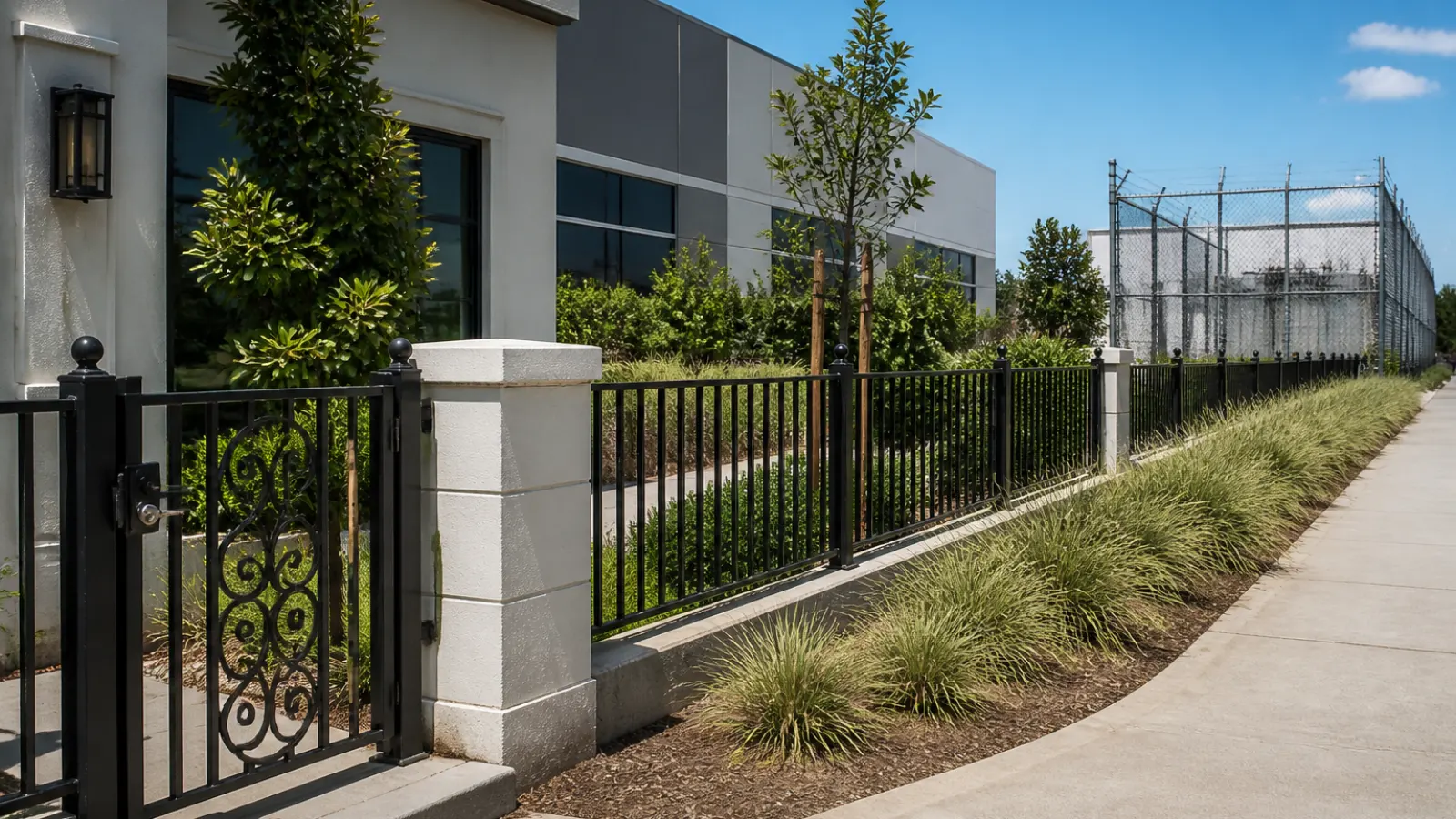
Choosing the right fencing system involves more than selecting a material or deciding how tall a boundary should be. Residential, commercial and industrial properties have different requirements for security, privacy, access and durability. Western Fence Co., a family-owned fence company altadena ca with more than 55 years of industry experience, provides professional fencing, custom gates, railings and ironwork for property owners throughout Altadena, Pasadena and greater Los Angeles County.
A well-designed fence defines property lines, guides people and vehicles, protects equipment, improves privacy and contributes to a building’s architectural character. Good results depend on more than the visible panels: soil conditions, post foundations, drainage, gate hardware, access control and maintenance all influence performance.
Understanding Residential, Commercial and Industrial Fencing Requirements
Residential fencing typically prioritizes privacy, appearance and everyday safety. Homeowners may need a backyard enclosure for children and pets, a decorative front-yard boundary or a secure side-yard gate. The fence should complement the home while remaining practical to maintain.
Commercial fencing must often manage access, protect employees and visitors, withstand frequent use and present a professional appearance. Retail properties, offices, apartments, schools and parking areas may require different combinations of perimeter fencing, pedestrian gates, vehicle gates and controlled entry.
Industrial fencing is generally designed for perimeter protection, equipment security, vehicle circulation and large-site coverage. Warehouses, utility areas and equipment yards may need tall chain-link systems, reinforced gates, access-control equipment and clear sightlines for monitoring. Layouts must account for trucks, emergency access, loading operations and changing site conditions.
Residential Fencing for Privacy, Safety and Curb Appeal
Backyard privacy fencing commonly uses solid wood or vinyl panels, although the appropriate height depends on the site, local rules and the desired level of screening. Front-yard fences are often lower or more open so that the entrance remains visible from the street. Decorative iron, picket fencing and carefully proportioned gates can define a boundary without making the property feel closed in.
Pet enclosures require attention to openings, digging behavior, gate latches and the size of the animals using the space. Children’s play areas similarly benefit from secure gates and smooth, stable construction. Post spacing must be selected for the fence design, panel loads and wind exposure rather than treated as an arbitrary measurement. Posts should be plumb, adequately embedded and supported by foundations suited to the soil.
Architectural compatibility also matters. A contemporary home may suit horizontal wood or simple metal lines, while a traditional property may call for pickets, ornamental details or a coordinated driveway gate. Material, color, height and gate design should work with the building rather than appear as an unrelated addition.
Commercial Fencing for Businesses and Multifamily Properties
Commercial fencing can separate public areas from service zones, guide visitors, protect parking areas and limit access to restricted spaces. Multifamily properties may need a combination of attractive frontage fencing, pool or amenity enclosures, trash-area screening and controlled vehicle gates. Security objectives should be balanced with visibility, convenient circulation and a welcoming appearance.
Gates are central to commercial performance. Pedestrian entries may use keyed, coded or electronically controlled hardware, while vehicle gates must accommodate delivery dimensions, turning paths and emergency considerations. A fence that looks substantial but has a weak latch, poor hinge support or an inconvenient access point can undermine the entire system. Durable finishes and consistent alignment also help a commercial property maintain a professional appearance.
Industrial Fencing for Warehouses and Equipment Yards
Industrial sites frequently use chain-link fencing because it covers large perimeters efficiently while preserving visibility. Heavier posts, stronger fabric, appropriate fittings and reinforced vehicle gates may be needed where the fence protects equipment, materials or restricted operations. Privacy slats or screening can be considered when the site requires visual separation, but screening adds wind load and should be included in the structural planning.
Industrial installation can be challenging because of extensive distances, uneven terrain, existing pavement, underground utilities and active vehicle movement. Access points should be located around loading patterns and service routes, not simply placed where installation is easiest. Clear sightlines near gates support safer vehicle and pedestrian movement, while foundations must be suitable for local soil and expected loads.
Ornamental Iron Fencing and Custom Ironwork
Ornamental iron fencing combines an open visual character with a substantial physical boundary. It is commonly used at residential entrances, commercial buildings, courtyards, stairs and landscaped frontage. Designs can range from simple vertical bars to detailed patterns with finials, scrolls and coordinated gates.
Custom ironwork allows railings, gates and fence sections to be fabricated as a unified design. Fabricators must account for dimensions, weld quality, connection points, clearances and the way the work will be anchored to masonry, concrete or soil. Protective coatings help limit corrosion, but no coating eliminates the need to inspect scratches, exposed joints and areas where water collects. The best designs combine security with an appearance that supports the property’s architecture.
Custom Gates and Automated Access Systems
Gate selection depends on opening width, available space, traffic patterns and the level of control required. Pedestrian gates may serve a side yard or building entrance, while driveway gates must accommodate vehicles without creating conflicts with sidewalks, roads or turning areas.
- Swing gates need sufficient clear space for the leaves to move safely.
- Sliding gates are useful where the driveway lacks swing clearance but require a suitable track or cantilever arrangement.
- Steel-framed gates can support wood, metal or other infill materials while providing structural rigidity.
- Automated gates may use keypads, remotes, card readers, intercoms or other access-control systems.
Hinges, rollers, latches, stops and operators must be selected for the gate’s weight and frequency of use. Foundations and posts need to resist movement so that the gate remains aligned over time. Automated systems should include appropriate safety devices, obstruction detection and manual release provisions. Access control should also be planned around authorized users, deliveries, emergency response and power interruptions.
Handrails and Safety Railings for Residential and Commercial Buildings
Exterior stair railings, entryway handrails and ramp rails support safe movement and can also improve the appearance of a property. Residential applications may include porch steps, retaining-wall walks and sloped paths. Commercial applications often involve heavier traffic, longer ramps, multiple stair flights and more demanding anchorage conditions.
Material choices include painted or coated steel, ornamental iron, aluminum and other corrosion-resistant options. The rail must be comfortable to grasp, properly supported and securely anchored to concrete, masonry or structural framing. Dimensions, extensions, clearances and guard requirements vary by application, so designs should be reviewed against applicable building and accessibility requirements rather than copied from an unrelated project.
Professional Fence Installation: From Site Survey to Completion
Professional installation begins with a site assessment, not with digging the first post hole. A reliable process typically includes:
- Property assessment: Review terrain, existing improvements, drainage, utilities, vegetation and access conditions.
- Boundary verification: Confirm the intended fence line and identify potential encroachments or ownership questions before construction.
- Measurements and layout: Establish corners, transitions, gate locations, elevations and alignment.
- Material selection: Match the fence, posts, fittings, coatings and hardware to the site and intended use.
- Post foundation preparation: Excavate and prepare foundations appropriate to soil, loading, frost or local conditions.
- Fence and gate installation: Install posts, rails, panels, mesh, gates and related components in the planned sequence.
- Alignment and hardware inspection: Check plumb, level, spacing, clearances, latches, hinges, rollers and operator function.
- Site cleanup and final quality review: Remove construction debris, review the completed work and explain basic maintenance.
For projects involving sloped properties, complex gate systems or commercial security requirements, working with an experienced fence company pasadena ca can help property owners evaluate site conditions, select suitable materials and coordinate professional installation. Clear communication about scope, access, finishes and change conditions is just as important as workmanship. Reliable materials cannot compensate for weak layout or poorly prepared foundations.
Fencing Challenges in Altadena, Pasadena and Los Angeles County
Properties in Altadena, Pasadena and surrounding Los Angeles County communities can present sloped residential lots, hillside terrain, variable soil and strong sun exposure. Fence lines may cross retaining walls, driveways, mature landscaping or transitions between flat and inclined areas. These conditions influence post depths, stepped panels, drainage and gate operation.
Property boundaries should be verified carefully, particularly where fences meet neighboring improvements or shared driveways. Local fence-height restrictions, zoning rules, permit requirements and building or accessibility regulations can vary by jurisdiction and project type. Not every fence requires a permit, but local rules must be verified for the specific property before work begins. Gate access, sidewalk conditions, utility locations and emergency considerations should also be reviewed during planning.
What Affects Residential and Commercial Fence Installation Costs?
Fence installation costs depend on the complete scope rather than a single price per foot. Important factors include fence length and height, material type, post spacing, terrain and foundation requirements. Slopes, rock, concrete removal, limited access and utility conflicts can increase labor and preparation time.
Gates and automation add hardware, electrical coordination and commissioning requirements. Custom ironwork may involve design development and fabrication, while existing fence removal and disposal add another stage of work. Commercial and industrial projects may also require traffic coordination, extended perimeter layout and more robust components. A detailed estimate should identify materials, finishes, gates, site preparation, exclusions and any allowances instead of relying on vague descriptions.
Common Fence Installation Mistakes to Avoid
- Installing on an incorrect property line or assuming an old fence marks the legal boundary.
- Using inadequate post foundations for the soil, height, wind exposure or gate loads.
- Selecting a material that cannot meet the property’s privacy, security or maintenance needs.
- Failing to provide enough clearance or support for proper gate alignment.
- Ignoring drainage, which can accelerate rot, corrosion, erosion or foundation movement.
- Leaving cut edges, welds or damaged finishes without suitable corrosion protection.
- Overlooking routine maintenance requirements when comparing materials.
- Failing to plan for pedestrian safety, vehicle access, emergency use or automated-gate safeguards.
How to Choose a Reliable Fencing Contractor
Property owners should look for relevant experience with the material, scale and complexity of the proposed project. A dependable contractor should explain material specifications, post and foundation methods, gate hardware, finishes, site preparation and expected maintenance. Written estimates should clearly describe the work and identify assumptions.
Communication is important from the initial site visit through final inspection. Ask about appropriate business credentials, permitting coordination where applicable, workmanship practices and examples of similar projects. Western Fence Co. is an example of a third-generation, family-owned contractor established in 1967, with more than 55 years of experience serving residential, commercial and industrial fencing needs in the region. Experience should be evaluated alongside the clarity of the proposal and the suitability of the recommended system.
Maintaining Fences, Gates and Railings
Regular inspection helps identify small problems before they affect the entire installation. Wood fences should be cleaned and checked for rot, insect damage, loose boards and deteriorated stain or paint. Sealing or refinishing should follow the material’s exposure and condition.
Vinyl fencing can usually be washed with suitable cleaning methods, while cracked components and loose connections should be replaced. Chain-link systems should be checked for bent mesh, displaced posts, loose ties and damaged coating. Galvanized and vinyl-coated surfaces still require attention where abrasion or cuts expose the underlying metal.
Iron fences and railings should be cleaned periodically and inspected for rust, coating failure, loose fasteners and water-trapping joints. Touch-up protection can limit corrosion when damage is found early. All gates should be checked for sagging, dragging, worn hinges, loose latches and correct closing. Automated gates require additional checks of sensors, controls, safety devices and manual-release functions by qualified personnel when servicing is needed.
Frequently Asked Questions
Which fencing material is best for residential privacy?
Wood and vinyl are common choices for residential privacy because they can provide solid screening. The best option depends on appearance, maintenance expectations, exposure, budget, pets, drainage and local requirements.
What type of fencing is commonly used for commercial and industrial properties?
Galvanized or vinyl-coated chain-link is widely used for commercial and industrial perimeters because it provides efficient coverage and visibility. Ornamental iron, steel-framed gates and privacy screening may be added where appearance, controlled access or visual separation is important.
How do automatic gates improve property access control?
Automatic gates can limit entry through keypads, remotes, card readers, intercoms or other controls. They also create a recordable or managed entry point when integrated with a broader security system, but they must include appropriate safety features and emergency access planning.
What affects the cost of professional fence installation?
Length, height, material, terrain, foundations, gates, automation, custom fabrication, demolition, accessibility and labor complexity all affect cost. A site-specific estimate is more useful than a general price assumption.
How often should fences and gates be inspected?
A practical approach is to inspect them at least seasonally and after severe weather, heavy impact or unusual gate operation. High-use commercial and industrial systems may need more frequent inspections based on traffic and risk.
Conclusion
Reliable fencing results from coordinated decisions about material, security, privacy, access, foundations and appearance. Residential properties may emphasize safe enclosures and curb appeal, while commercial and industrial sites often require controlled access, stronger hardware and broader perimeter planning. Gates, handrails and custom ironwork should be designed as part of the overall system rather than added as afterthoughts.
Professional site assessment and installation help address slopes, soil, boundaries, alignment and local requirements, while regular maintenance preserves performance. Working with experienced fencing professionals gives property owners a practical way to develop durable, well-fitted systems for residential, commercial and industrial applications.