AI Construction Scheduling: How Predictive Analytics Identifies Delays Before They Happen
AI construction scheduling combines machine learning, project data, dependency analysis, weather information, and live progress updates to forecast delay risks. This guide explains how project teams can use those forecasts for better resource planning, practical risk reduction, and informed decision-making.
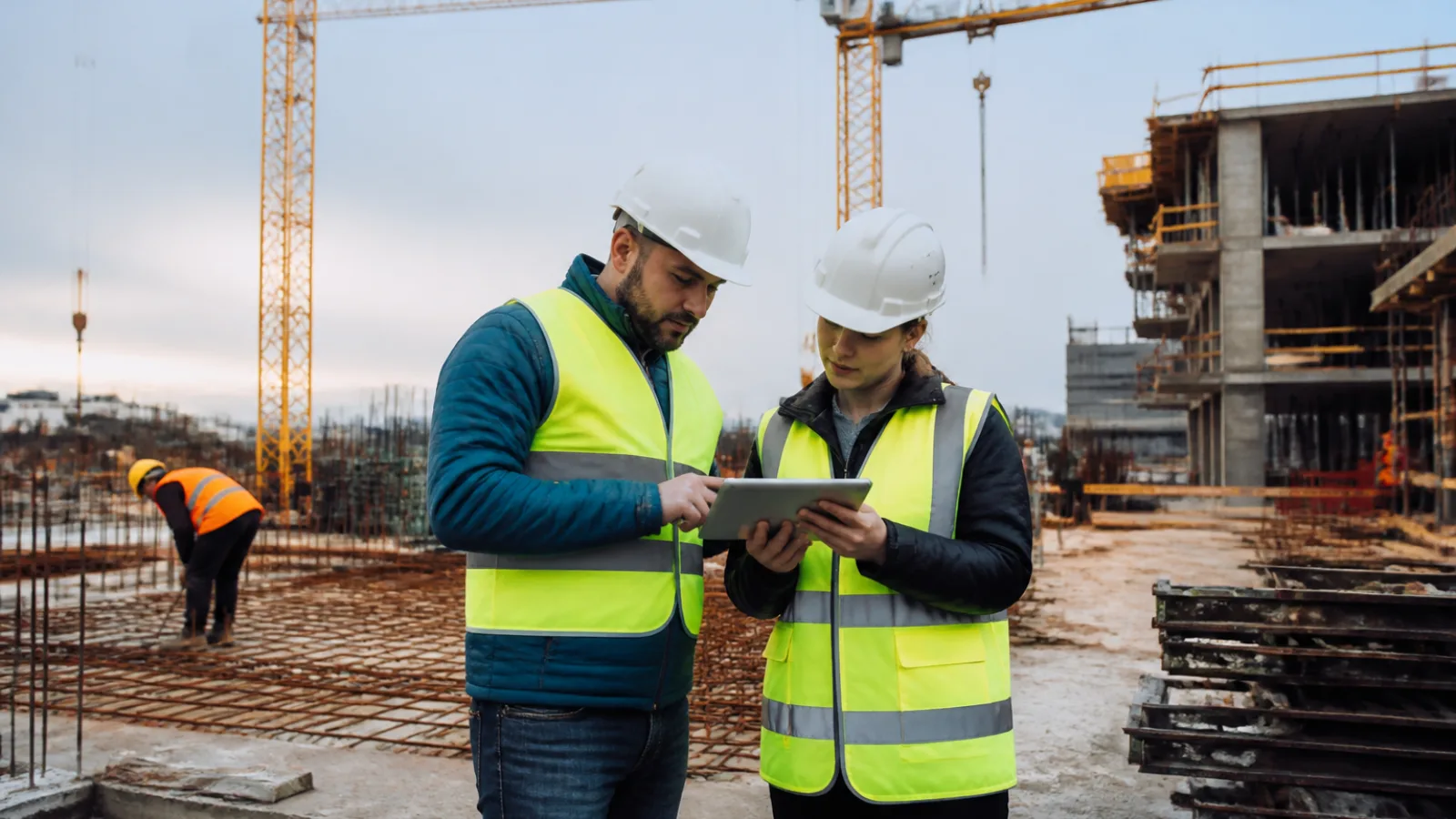
A construction schedule is more than a list of activities and dates. It is a model of how design decisions, materials, labor, equipment, inspections, weather, and subcontractor work must connect to deliver a project. When one connection weakens, the effect may not appear on the critical path immediately. AI construction scheduling helps project teams detect those early warning signals and respond before a risk becomes a visible delay.
Using construction project management software as a central data source, an AI scheduling system can compare the current project against the approved baseline, historical patterns, resource availability, and live progress information. The result is not a guaranteed completion date. It is a more informed forecast that shows where attention is needed first.
What Is AI Construction Scheduling?
AI construction scheduling applies machine learning and predictive analytics to project scheduling data. Traditional scheduling software records activities, relationships, calendars, durations, and progress. AI adds a forecasting layer that looks for patterns associated with missed milestones, low productivity, procurement problems, rework, and resource conflicts.
For example, a project team may report that a concrete pour is 80% complete. On its own, that update may not indicate a serious problem. An AI model can evaluate it alongside the remaining quantity, crew productivity, inspection requirements, weather conditions, equipment availability, and the start date of dependent activities. If the combined signals suggest that the pour is unlikely to finish on time, the system can flag the risk while corrective action is still possible.
This makes AI scheduling different from simply automating a Gantt chart. The system continually evaluates whether the plan remains realistic as conditions change. It can identify emerging risk, rank activities by urgency, and present possible scenarios to the planner or project manager.
How Predictive Analytics Identifies Construction Delays
1. It combines multiple project data sources
Delay prediction is only as useful as the information behind it. Depending on the platform and project setup, an AI scheduling workflow may use:
- Baseline schedules and current schedule updates
- Activity durations, logic links, float, and critical-path information
- Daily reports, timesheets, quantities installed, and productivity records
- Submittal, request for information, approval, and change-order status
- Procurement milestones, delivery dates, and material lead times
- Labor, equipment, and subcontractor availability
- Weather forecasts and site conditions
- Site photographs, drones, sensors, or progress-tracking systems where available
Connecting these sources gives the model more context than a schedule update alone. It can distinguish between an isolated late task and a pattern that is likely to affect several downstream activities.
2. It learns from historical project patterns
Machine learning construction applications identify relationships in past data. A model may learn that certain combinations of conditions frequently precede delay, such as late design approvals, long-lead equipment, repeated inspection failures, or productivity falling below the planned rate.
Historical data does not need to come only from completed projects. A contractor can also use its own records from active projects, provided the information is structured consistently. Over time, the quality of forecasts can improve as the organization records actual start dates, finish dates, reasons for variance, recovery actions, and final outcomes.
However, a model trained on one type of work may not transfer perfectly to another. A pattern found on commercial interiors may be less relevant to highway construction or a large industrial facility. Project teams should therefore examine whether the training data reflects the project’s location, delivery method, trade mix, scale, and risk profile.
3. It analyzes dependencies and downstream exposure
Not every late activity creates a late project. The effect depends on logic, available float, and the importance of the affected milestone. AI scheduling tools evaluate these relationships to estimate downstream exposure.
Suppose a curtain-wall approval is trending late. The system can trace the connection to fabrication, delivery, installation, interior close-in, testing, and handover. It may then identify the first contractual milestone at risk and show whether resequencing another area could protect the completion date.
This dependency analysis is especially useful on complex projects where a small change can propagate through multiple trades. It also helps planners focus on the causes that matter rather than reacting to every variance equally.
4. It updates forecasts as new information arrives
Predictive construction is dynamic. A forecast created during preconstruction may change after procurement begins, site conditions are confirmed, or actual production rates become available. AI systems can recalculate risk when teams submit a daily report, revise an activity, approve a submittal, record a delivery, or update installed quantities.
Instead of waiting for a weekly meeting to discover that a milestone has already slipped, project leaders can receive an earlier indication that the probability of meeting it is declining. The warning is valuable because available responses decrease as the planned date approaches.
Resource Planning: Turning a Warning Into an Action
Delay prediction has limited value unless it leads to a decision. AI construction scheduling can support resource planning by comparing planned demand with available labor, equipment, materials, work areas, and subcontractor capacity.
Common actions may include:
- Moving qualified crews to a work package with greater schedule exposure
- Adding a second shift or adjusting crew composition
- Releasing or reallocating equipment before a conflict occurs
- Expediting a material order or approving an acceptable alternative
- Resequencing work so another area can proceed while a constraint is resolved
- Escalating a design decision, inspection, or procurement issue
- Revising activity durations based on observed productivity rather than optimistic assumptions
The best systems present these choices as scenarios. A planner might compare the effect of adding labor, changing the sequence, or accepting a later milestone. The final choice still requires practical judgment about cost, safety, quality, contracts, workforce availability, and site logistics.
Major Platform Examples
AI capabilities vary by product, subscription, integrations, and project configuration. The following examples illustrate how widely used construction technology platforms can fit into an AI scheduling strategy. They should not be treated as identical products or as proof that every feature is available in every edition.
| Platform or product family | Potential role in predictive scheduling | Best evaluation question |
|---|---|---|
| Autodesk Construction Cloud | Connects construction information, documents, workflows, model context, and project reporting that can support schedule-risk analysis. | Can schedule, field, document, and model data be connected without creating duplicate records? |
| Procore | Provides a project-management environment for field updates, commitments, documents, RFIs, and schedule-related collaboration. | Can the team capture timely, structured data from the field and link it to schedule activities? |
| Oracle Primavera and Primavera P6 | Offers established scheduling, logic, baseline, resource, and earned-value workflows that can provide a strong foundation for advanced analytics. | Are schedule logic, coding structures, calendars, and progress updates consistent enough for reliable forecasting? |
| Bentley Systems | Supports infrastructure and engineering workflows where digital models, asset data, field information, and project controls may contribute to predictive analysis. | How will infrastructure, design, reality-capture, and schedule data be governed in one reporting process? |
In practice, organizations often use more than one system. The important issue is not choosing a product because it includes the word “AI.” It is determining whether the platform can access dependable data, explain its warnings, integrate with existing project controls, and support the team’s actual decision process.
How to Implement AI Construction Scheduling
1. Define the decision before selecting the technology
Start with a specific business problem. Examples include forecasting the handover date, identifying procurement-driven risks, improving subcontractor accountability, or managing labor conflicts across multiple projects. A defined objective makes it easier to select useful data and measure value.
2. Standardize the schedule structure
AI cannot compensate for a schedule with missing logic, unrealistic durations, inconsistent activity names, or outdated calendars. Establish rules for work breakdown structures, coding, calendars, progress measurement, baseline control, and responsibility assignment. A clean schedule is the foundation of useful predictive analytics.
3. Improve the quality of field updates
Daily reports should record what was planned, what was completed, what prevented progress, and what support is required. Quantities and objective milestones are generally more useful for forecasting than vague comments such as “work is progressing.” Train supervisors and subcontractors to submit updates consistently and promptly.
4. Integrate procurement, design, and resource information
Many schedule risks begin outside the schedule itself. Connect submittals, RFIs, change management, purchase orders, delivery tracking, labor planning, and equipment records where possible. The system should show the relationship between a constraint and the activities it affects.
5. Pilot the workflow on a controlled use case
Begin with one project, phase, or risk category. Compare AI forecasts with planner assessments and actual outcomes. Review false alarms as carefully as missed warnings. A pilot helps the team understand which data is reliable, which alerts are actionable, and how often forecasts should be reviewed.
6. Create a human review process
Assign responsibility for reviewing alerts, validating the underlying information, choosing an action, and recording the result. A forecast should enter the project’s normal risk and schedule-control process rather than becoming another disconnected dashboard.
Limitations and Risk Controls
AI scheduling is not a crystal ball. Construction projects are affected by events that may be rare, poorly documented, or outside the model’s historical experience. A sudden regulatory change, major design revision, labor dispute, extreme weather event, or unexpected site condition may not be predicted accurately.
Data quality is another important limitation. Late updates, duplicated records, optimistic progress reporting, and missing reasons for variance can produce misleading results. Teams should be able to see which inputs influenced an alert and whether the forecast is based on sufficient comparable data.
Organizations should also address access control, privacy, cybersecurity, model governance, and contractual responsibilities. Sensitive project and workforce information should be handled according to company policies and applicable requirements. Automated recommendations should never bypass safety procedures, professional review, or contractual notice obligations.
The most reliable approach combines machine output with the experience of planners, superintendents, engineers, trade partners, and commercial teams. AI can identify a pattern; people determine what the pattern means on the site and what response is feasible.
Conclusion
AI construction scheduling changes project controls from a primarily retrospective activity into a more forward-looking process. By combining project management software, historical records, machine learning, live progress, resource data, and dependency analysis, predictive analytics can highlight schedule threats while there is still time to act.
The practical advantage is not an automated promise that every project will finish on time. It is earlier visibility, better prioritization, and more disciplined resource planning. Contractors and owners that establish clean schedule logic, reliable field reporting, connected data, and human review will be in the strongest position to use construction AI responsibly.
Frequently Asked Questions
What is AI construction scheduling?
AI construction scheduling uses machine learning and predictive analytics to evaluate schedule data, progress updates, resources, dependencies, and external conditions. It forecasts which activities or milestones may be at risk and helps teams decide how to respond.
Can AI predict every construction delay?
No. AI can identify patterns and estimate risk, but it cannot reliably predict every unusual event or poorly documented condition. Forecasts should be reviewed by qualified project professionals and treated as decision support.
How does AI improve resource planning?
It compares planned work with available labor, equipment, materials, and work areas. When demand or productivity changes, the system can highlight conflicts and help teams assess options such as resequencing, reallocating crews, or expediting materials.
Is Primavera P6 still useful for AI scheduling?
Yes. Primavera P6 can provide structured activities, logic links, baselines, calendars, resources, and progress records. Those controls can serve as valuable inputs for predictive analytics when the schedule is maintained consistently.
What should a contractor do before adopting construction AI?
Define a specific use case, standardize schedule data, improve field updates, connect related project records, and run a controlled pilot. The organization should also establish data governance and a process for human review of alerts.
ARTICLE