Henry J. Kaiser’s Construction Legacy: Hoover Dam, Shipyards, and Industrial-Scale Delivery
Henry J. Kaiser helped move construction toward an integrated model of labor, equipment, procurement, logistics, and production control. His participation in Hoover Dam and his Richmond shipyards offer useful, but historically grounded, lessons for modern infrastructure delivery.
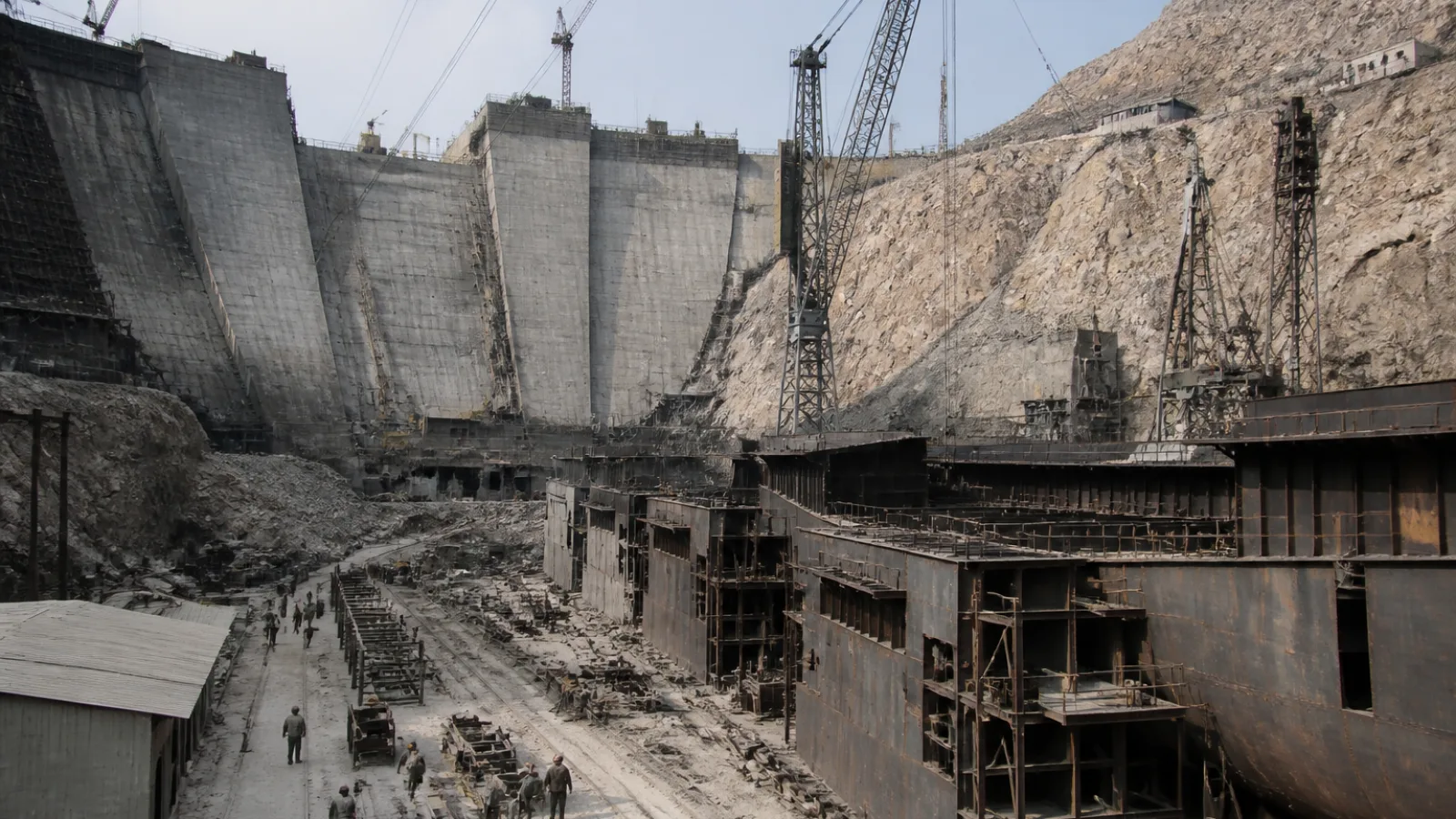
Henry J. Kaiser’s career connected road paving, major public works, dam construction, shipbuilding, and industrial production. He became one of the most prominent American contractors and industrial organizers of the twentieth century, but his importance rests on more than the structures associated with his companies. His lasting contribution was the development of systems for coordinating people, materials, equipment, suppliers, schedules, and repetitive work under severe constraints.
That history remains relevant because modern construction faces many of the same management problems at a different technical and regulatory level. Equipment planning, mechanization, and fleet coordination are central to reliable delivery, especially when work depends on construction equipment and machinery solutions. Kaiser’s experience provides a case study in how project organizations can connect field production with procurement, logistics, workforce planning, and decision-making.
From Road Builder to Industrial Contractor
Kaiser entered construction through road paving and related public-works activity. Early road projects exposed him to the practical demands of moving large quantities of material, maintaining equipment, organizing crews, and completing work in a planned sequence. Road construction is often described as a straightforward production process, but successful delivery depends on the relationship between grading, aggregate supply, mixing, hauling, placement, compaction, weather, and access. A delay in one activity can quickly affect the entire operation.
As Kaiser’s business expanded, he pursued larger contracts and joined forces with other established firms. His growth was not the story of one individual working alone. Engineers, superintendents, equipment operators, skilled tradespeople, laborers, public agencies, designers, suppliers, and partner contractors all shaped the results. Kaiser’s role was especially visible in organizing capital, assembling business partnerships, securing work, and creating management structures capable of handling greater scale.
This progression from roads to larger infrastructure projects encouraged a production-oriented view of construction. Work had to be broken into operations, resources had to arrive when needed, and equipment had to be kept productive without creating unsafe congestion. The underlying lesson was not simply to use more machinery. It was to align machinery, labor, material flow, and schedule logic so that the job functioned as a connected system.
Hoover Dam and the Six Companies Model
Hoover Dam was conceived during a period when the American Southwest needed water storage, flood control, and hydroelectric power development on the Colorado River. During its construction period, the project was commonly associated with the Boulder Canyon Project and was often called Boulder Dam. It was later officially named Hoover Dam, a designation that became permanent in the postwar period.
The project presented an extraordinary organizational and engineering challenge. Before the dam could rise, the river had to be diverted through temporary works. Crews had to excavate and prepare the canyon, establish access and material-handling systems, produce and place enormous quantities of concrete, manage cooling requirements, and coordinate power, ventilation, transportation, and worker safety in a difficult environment.
Hoover Dam was delivered by the Six Companies, a consortium formed by six major contracting interests: Utah Construction, Morrison-Knudsen, J. F. Shea, Pacific Bridge, W. A. Bechtel, and the Henry J. Kaiser Company. Kaiser participated through his contracting interests as one member of this consortium. He did not personally design Hoover Dam, and he did not single-handedly build it. The Bureau of Reclamation, consulting engineers, consortium partners, managers, and a large workforce were all essential to the project.
The Six Companies structure addressed a central problem in large infrastructure delivery: no single conventional contractor necessarily possessed every resource, specialty, financial capacity, and regional capability required for the work. The consortium combined complementary firms under a shared delivery organization. That arrangement required coordination of responsibilities, equipment, field operations, purchasing, labor, schedule commitments, and communication with the government owner.
At a high level, the construction methods illustrate the importance of interfaces. River diversion had to precede major dam work. Excavation and foundation preparation had to support concrete placement. Material production and transportation had to match placement operations. Concrete cooling and placement procedures had to be planned as part of the structure’s engineering requirements, not treated as separate field concerns. Power, access, ventilation, worker movement, and inspection also had to support the main sequence.
What the Hoover Dam Experience Revealed About Scale
The Hoover Dam construction experience showed that scale cannot be managed by optimizing individual trades in isolation. A highly productive excavation crew is of limited value if haul routes are unavailable. A strong concrete operation cannot maintain its rate if aggregate, cement, cooling capacity, forms, or inspection resources are not ready. Large projects therefore require integrated planning across engineering, procurement, production, safety, quality, and logistics.
In modern terms, this resembles interface management and work packaging. Each work package must have defined prerequisites, responsible parties, information requirements, resources, and handoff conditions. Schedule control is not only a matter of updating dates; it requires identifying constraints before they interrupt production. The Six Companies model also demonstrates why risk allocation, escalation paths, and clear authority are essential when several major organizations share one delivery structure.
Kaiser’s Wartime Shipyards and the Factory Approach
World War II created exceptional demand for cargo ships and other support vessels. The United States needed to expand maritime capacity while managing shortages of labor, materials, equipment, and time. In response, Kaiser and his partners established shipbuilding operations in Richmond, California. The Richmond yards became a prominent example of applying industrial organization to a complex construction product.
Shipbuilding differed from dam construction, but it created a similar management challenge: many specialized activities had to be coordinated around a fixed sequence and a constrained physical environment. The yards brought together engineering, procurement, plate and component fabrication, welding, assembly, outfitting, inspection, transportation, and worker training.
The shipyards used standardized designs and repeatable assemblies to make production more predictable. Sections could be fabricated in controlled areas and moved toward final assembly. Welding reduced reliance on some traditional joining methods and supported the assembly of steel components, although welding itself required training, inspection, supervision, and process control. Work areas were arranged to support flow rather than treating every ship as an entirely unique field project.
Kaiser did not invent mass production, prefabrication, welding, or the Liberty ship. Those methods had broader engineering and industrial histories, and many organizations contributed to their wartime development. The significance of the Kaiser shipyards was their application and coordination of these approaches at an unusually large scale. The yards helped show how a construction organization could operate more like a factory while still managing the variability, safety risks, and quality requirements of a large physical product.
This approach depended on more than a standardized drawing set. Procurement had to support the production sequence. Fabrication had to deliver components to the right location. Transportation had to prevent congestion. Supervisors had to assign work clearly. Inspectors had to verify quality. New workers needed training, and managers needed production information quickly enough to correct problems before they spread through the system.
Standardization Without Losing Control of Quality
Standard components and repeatable processes can reduce variation, simplify training, improve planning, and make defects easier to identify. They can also support prefabrication and modular thinking on modern projects when site conditions, design requirements, and tolerances permit.
Standardization, however, is not a substitute for quality management. It requires approved procedures, clear tolerances, competent supervision, inspection points, traceable materials, and feedback from the field. Repetition can make a process faster, but it can also multiply an error if the error is not detected early. The modern lesson is to pair standard work with inspection, testing, nonconformance management, and continuous improvement.
The Operating System Behind Industrial-Scale Delivery
Kaiser’s construction legacy is best understood as an operating system for delivery rather than a single invention. The following comparison connects practices visible in his major enterprises with modern construction-management applications.
Historical practices and modern construction-management equivalents
| Historical practice | Management principle | Modern application |
|---|---|---|
| Centralized coordination across firms and work areas | Integrate decisions and clarify authority | Use an integrated project team, interface register, and defined escalation routes |
| Prefabricated and standardized assemblies | Move suitable work into repeatable processes | Apply modular construction, off-site fabrication, and standard work packages |
| Planned equipment and material movement | Design logistics as part of production | Coordinate laydown, haul routes, lifting plans, delivery windows, and fleet utilization |
| Role specialization and workforce training | Match skills to tasks and build operating capability | Use competency plans, foreman development, onboarding, and clear responsibilities |
| Visible production progress | Manage against reliable information | Track planned-versus-completed work, constraints, cycle times, and rework |
| Close coordination with suppliers and partner firms | Extend planning beyond the site boundary | Align procurement schedules, submittals, fabrication, transport, and quality records |
| Rapid escalation of field problems | Resolve constraints before they become systemic | Use daily coordination, issue logs, decision deadlines, and accountable owners |
What Modern Contractors Can Learn from Kaiser
Design Logistics Before Production Begins
Access roads, laydown areas, haul routes, crane positions, delivery windows, temporary utilities, and material-handling sequences should be considered during planning and design. A project can have a sound design and still perform poorly if materials cannot reach the workface or equipment cannot be positioned safely.
Early logistics planning should identify how materials arrive, where they are stored, how they are inspected, and how they move from storage to installation. On constrained sites, the plan may need to define delivery slots, one-way traffic, lifting zones, and contingency routes. These decisions affect cost, safety, schedule reliability, and labor productivity.
Build Repeatability into the Work
Not every project can be treated like a factory, but many projects contain repeatable elements. Standard work packages, prefabricated assemblies, installation templates, consistent inspection points, and reusable planning checklists can reduce avoidable variation. The opportunity is strongest where design conditions, materials, and installation sequences are sufficiently consistent.
Repeatability should be introduced deliberately. Teams need to confirm that a standard detail is suitable for the actual site, that tolerances are achievable, and that changes will be controlled. A standard process that does not reflect field conditions can create rework rather than productivity.
Manage the Project as a Connected System
Design decisions influence procurement. Procurement affects labor and equipment planning. Equipment choices affect access, safety, and production rates. Quality requirements affect sequence and inspection resources. Schedule pressure can affect all of these relationships. Effective construction management makes those connections visible.
Teams should avoid improving one work area while creating a bottleneck elsewhere. Increasing installation crews without improving material supply may increase congestion. Accelerating fabrication without confirming drawings may produce unusable components. Adding equipment without enough operators, maintenance support, or working room may reduce rather than increase output.
Use Scale Deliberately
Larger crews, additional equipment, and longer shifts do not automatically create productivity. Scale must be supported by supervision, communication, safe work planning, adequate supply capacity, and enough space for people and machines to work without interference.
Before expanding an operation, managers should identify the limiting constraint. If the constraint is engineering information, more field labor will not solve it. If the constraint is material delivery, additional installation crews may only increase idle time. Deliberate scaling means increasing capacity in a balanced way.
Treat Workforce Organization as Infrastructure
Training, clear responsibilities, foreman leadership, communication channels, and worker welfare are operating capabilities, not secondary concerns. Kaiser’s shipyards demonstrated the importance of preparing a large workforce for specialized tasks, but the historical record also reminds us that rapid industrial expansion can impose significant human costs.
Modern contractors should establish competency requirements, provide task-specific instruction, maintain accessible supervision, and create reliable channels for reporting hazards and production problems. Safe and respectful working conditions support quality and continuity as well as legal and ethical obligations.
Measure Flow, Not Just Effort
Hours worked and crew size describe effort, but they do not fully describe production. More useful indicators may include planned-versus-completed work, cycle times, equipment utilization, material delays, rework, constraints removed, inspection results, and safety observations.
These measures should be used to learn, not simply to pressure crews. Reliable data helps managers distinguish between a labor problem, a design problem, a logistics problem, and a supply-chain problem. It also supports earlier intervention and more realistic forecasting.
Limits and Context of the Kaiser Model
Kaiser’s methods developed under unusual conditions: substantial public investment, wartime urgency, extraordinary industrial demand, and labor and regulatory environments that differed substantially from those of today. Government agencies, partner firms, workers, and suppliers operated within national mobilization efforts that cannot be reproduced as a normal commercial project setting.
Modern contractors cannot simply copy wartime production rates, organizational structures, or labor arrangements. Contemporary projects must comply with stronger safety expectations, environmental requirements, labor protections, quality systems, community considerations, and transparent contracting practices. Large infrastructure work also faces complex permitting, stakeholder, sustainability, and lifecycle requirements.
The appropriate lesson is therefore adaptability, not imitation. Standardization can be useful without eliminating professional judgment. Central coordination can improve accountability without suppressing legitimate project input. Productivity improvement can be pursued while protecting workers, communities, the environment, and the long-term performance of the asset.
Why Henry J. Kaiser’s Construction Legacy Still Matters
The Henry J. Kaiser construction legacy is not limited to roads, dams, or ships. It lies in demonstrating how construction could be organized as an integrated production and logistics system. Hoover Dam, delivered by the Six Companies consortium, showed the coordination required for a massive public-works project involving multiple major contractors and complex engineering interfaces. The Richmond shipyards showed how standardized components, flow-oriented work areas, procurement, training, and inspection could support repeatable industrial production.
These examples connect directly to current megaprojects, infrastructure programs, modular construction, and industrialized delivery. The technologies have changed, and modern responsibilities are broader, but the management challenge remains familiar: align design, materials, equipment, labor, information, quality, safety, and schedule so that work flows reliably.
For contractors and infrastructure professionals, the practical takeaway is clear: define the production system before work begins, identify constraints early, coordinate interfaces deliberately, and improve the flow of work through reliable information. Kaiser’s career offers no universal formula, but it provides a durable case study in the value of organized scale.
Frequently Asked Questions
What is Henry J. Kaiser best known for in construction?
He is best known for helping organize major infrastructure and industrial projects, including his participation in the Six Companies consortium that built Hoover Dam and his wartime shipbuilding operations in Richmond, California.
Was Henry J. Kaiser the sole builder of Hoover Dam?
No. Hoover Dam was delivered by the Six Companies consortium under the direction and oversight of the Bureau of Reclamation and with the contributions of engineers, managers, workers, suppliers, and partner firms. Kaiser’s company was one member of the consortium.
How did Kaiser’s shipyards change construction delivery?
The Richmond shipyards applied standardized designs, prefabricated assemblies, welding, specialized work areas, coordinated procurement, and workforce training to make ship construction more repeatable and production-oriented.
What construction-management lesson is most relevant today?
A major lesson is that productivity depends on the whole delivery system. Design, procurement, logistics, equipment, labor, quality, safety, and schedule must be coordinated rather than managed as isolated functions.
Can Kaiser’s industrial methods be applied to modern projects?
Yes, as adaptable principles rather than a fixed formula. Modern teams can use early logistics planning, standard work, prefabrication, workforce development, constraint tracking, and integrated coordination while meeting current safety, environmental, labor, and quality requirements.