Top Causes of Construction Delays and How to Avoid Them
In construction, time is money. Project delays do more than just push back deadlines; they inflate costs, trigger contractual penalties, and damage professional reputations. Understanding the root causes of these delays is the first step toward effective prevention and successful project delivery.
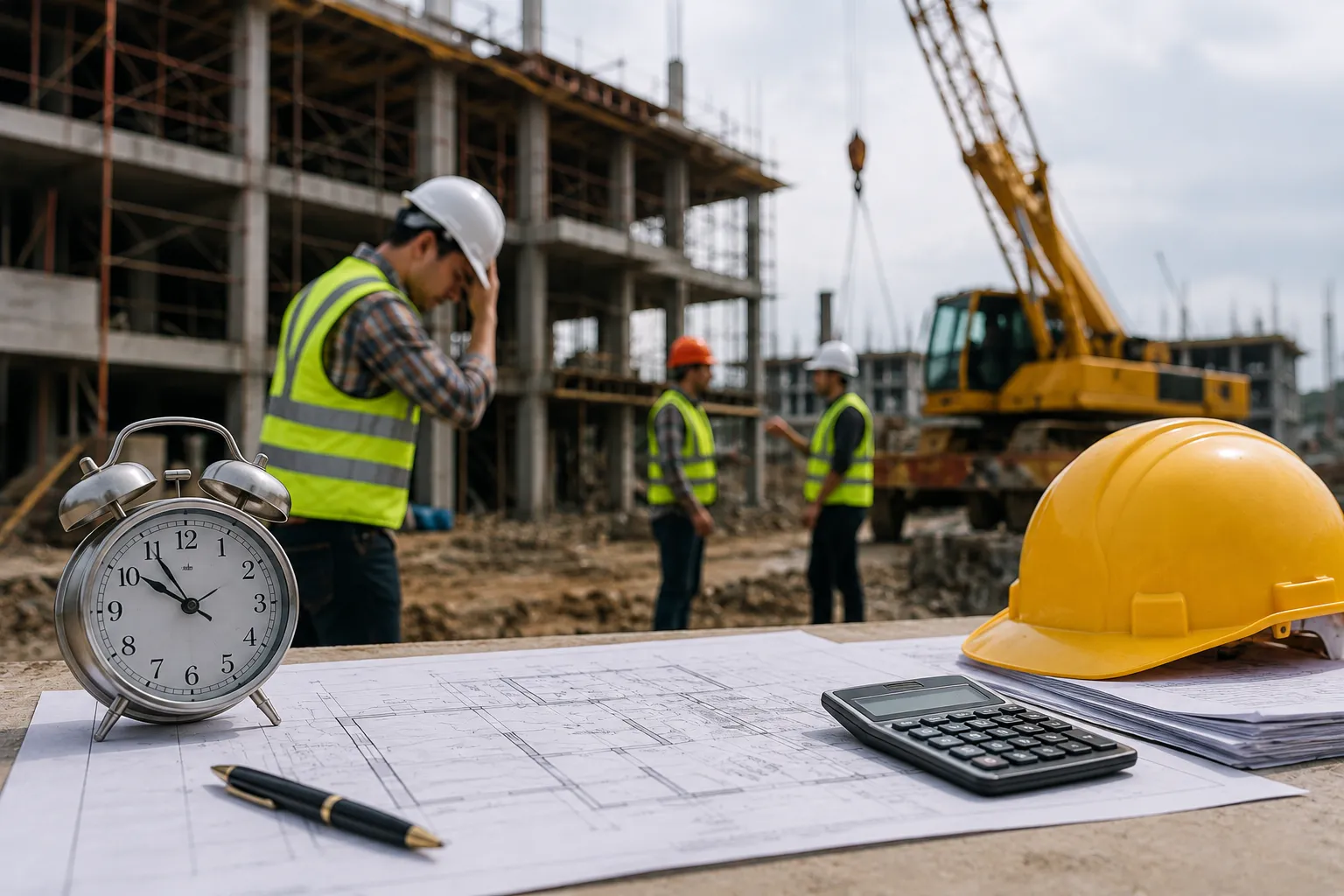
Why Construction Delays Are a Major Industry Problem
In the construction industry, the adage "time is money" is a fundamental truth. Project delays are more than mere inconveniences; they are significant financial and operational threats that can derail even the most well-conceived projects. Every day a project runs past its completion date, it accumulates costs, risks, and liabilities.
The financial impact is the most immediate consequence. Extended general conditions, equipment rental, and labor costs quickly erode profit margins. For owners, a delay means postponed revenue generation, whether from a commercial lease, manufacturing output, or property sale. This direct financial pressure is often compounded by contractual penalties, such as liquidated damages, which are stipulated in agreements to compensate the owner for late delivery.
Operationally, construction delays create a cascading effect. A holdup in one trade’s work prevents subsequent trades from starting, disrupting the entire project sequence and creating logistical chaos. This disruption strains relationships between the general contractor, subcontractors, and suppliers, often leading to disputes and claims that require significant management time to resolve.
Finally, the damage to a company's reputation can be the most lasting. A track record of late projects makes it difficult to secure future work, as clients and developers prioritize reliability and predictability. Consistently delivering projects on time is a hallmark of professionalism and a key competitive advantage in a crowded marketplace.
Poor Planning and Scheduling Issues
The foundation of any successful construction project is a robust, realistic, and detailed plan. Unfortunately, many project delays originate in the pre-construction phase due to inadequate planning and flawed construction scheduling. These early missteps create problems that are difficult and expensive to correct once work is underway.
One of the most common issues is the establishment of unrealistic timelines. Often driven by client demands or overly optimistic bidding, a compressed schedule that doesn't account for complexities, dependencies, or potential risks is a recipe for failure. It puts immense pressure on site teams and forces them to cut corners, compromising both quality and safety.
Weak coordination among stakeholders is another major contributor. When architects, engineers, contractors, and key subcontractors don't communicate effectively during planning, critical details are missed. This leads to improper sequencing of tasks on site. For example, installing drywall before MEP (Mechanical, Electrical, Plumbing) inspections are complete will inevitably lead to costly and time-consuming rework.
Furthermore, a failure to properly plan for resources—including labor, materials, and equipment—guarantees delays. If a critical piece of machinery like a crane isn't booked for the right time, or if long-lead items aren't ordered months in advance, the entire project can grind to a halt. These are classic project execution problems that stem directly from a lack of foresight.
Labor and Workforce Problems
Even the best-laid plans can be undone by issues on the ground related to the workforce. Site management is heavily dependent on the availability, skill, and productivity of labor, and disruptions in this area are a frequent source of project delays.
The industry-wide shortage of skilled labor is a persistent challenge. Finding qualified electricians, welders, and masons can be difficult, leading to understaffed crews and slower progress. When contractors are forced to use less experienced workers, productivity often suffers, and the potential for errors and rework increases significantly.
Low productivity isn't just about skill level; it can also result from poor site management, inadequate supervision, or unclear instructions. Communication breakdowns between foremen, project managers, and the workforce can lead to misunderstandings, repeated work, and a demotivated team.
Subcontractor coordination is another critical factor. A modern construction project is an intricate dance of multiple specialized firms. If the structural steel erector falls behind schedule, they delay the concrete contractor pouring the floors, who in turn delays the MEP trades. This ripple effect can be devastating to the overall construction scheduling.
For instance, on a large commercial build, the HVAC subcontractor failed to mobilize their full crew for two weeks due to a scheduling conflict with another job. This delay created a bottleneck that prevented drywall installers from closing up walls, which in turn held up painters and flooring contractors. A two-week subcontractor issue ultimately added over a month to the critical path.
Design Changes and Technical Problems
Design-related issues are among the most disruptive and costly causes of construction delays. Problems originating from drawings, specifications, and client requests can force work to stop, trigger extensive rework, and create significant administrative burdens for the project team.
Late client modifications are a primary culprit. While change orders are a normal part of construction, significant alterations made after construction has begun can have a massive impact. A seemingly simple request to move a wall can affect structural, electrical, and mechanical systems, requiring redesign, resubmission for permits, and demolition of existing work.
Another common issue is incomplete or conflicting drawings. When design documents lack necessary details or contain clashes—such as an HVAC duct running through a structural beam—the site team must issue a Request for Information (RFI). The project stalls while waiting for the design team to provide a solution, a process that can take days or even weeks.
Resolving these clashes early requires robust coordination, often facilitated by modern construction project management and scheduling solutions that integrate design and site data. Without such tools, engineering conflicts between different disciplines (structural, architectural, MEP) are often only discovered during installation, which is the most expensive time to fix them.
Consider a hospital project where a late design change was made to accommodate a new model of MRI machine. This required reinforcing the concrete slab and re-routing major electrical conduits that were already embedded. The rework not only added direct costs but also delayed the entire wing's finishing schedule by two months as multiple trades had to redo their work in the affected area.
External Factors That Cause Project Delays
Not all delays are within the project team's control. A range of external factors can introduce unforeseen challenges that disrupt even the most carefully managed projects. Proactive project managers anticipate these risks, but their impact can still be significant.
Adverse weather conditions are a classic example. Heavy rain can halt excavation and foundation work, extreme cold can prevent concrete from curing properly, and high winds can make crane operations unsafe. While schedules should include some buffer for typical weather, unusually severe or prolonged events can easily push a project off track.
Supply chain issues and material shortages have become increasingly prevalent. Delays in the delivery of critical materials like steel, specialized glass, or custom-built equipment can bring a project to a standstill. These disruptions can be caused by manufacturing problems, transportation bottlenecks, or geopolitical events, and often come with little warning.
Finally, regulatory and administrative hurdles can create major delays. Securing building permits from municipal authorities can be a slow and unpredictable process. Similarly, projects can be held up waiting for utility companies to connect services or for inspectors to sign off on completed work. These external dependencies are often outside the contractor's influence but must be managed carefully.
How to Avoid Construction Delays
While some delays are unavoidable, most can be mitigated or prevented with proactive strategies and disciplined site management. The key is to shift from a reactive mindset to one focused on foresight, communication, and control. Here are some of the most effective ways to avoid construction delays.
- Realistic and Collaborative Scheduling: Develop the project schedule using the Critical Path Method (CPM) and involve key trade foremen in the process. Their practical experience is invaluable for creating a timeline that is ambitious but achievable. Build in reasonable time contingencies for known risks.
- BIM and Digital Coordination: Utilize Building Information Modeling (BIM) before breaking ground. Creating a 3D digital model of the project allows the team to identify and resolve design clashes virtually, preventing costly rework on site.
- Clear and Consistent Communication: Establish a clear communication protocol. Daily huddles, weekly coordination meetings with all subcontractors, and a streamlined RFI and submittal process ensure that information flows freely and issues are addressed quickly.
- Proactive Risk Management: Don't wait for problems to happen. At the project's outset, identify potential risks (weather, supply chain, labor, etc.) and develop a mitigation plan for each. This allows the team to respond swiftly and effectively when a risk materializes.
- Quality Supervision and Accountability: An experienced on-site superintendent is crucial. They enforce the schedule, coordinate trades, ensure quality standards are met, and hold everyone accountable for their commitments. Strong leadership on site is non-negotiable for on-time delivery.
Final Recommendations for Successful Project Delivery
Preventing construction delays is not about a single solution but a comprehensive management philosophy centered on diligence and collaboration. Successful project delivery hinges on getting the fundamentals right from day one.
The importance of thorough pre-construction planning cannot be overstated. A greater investment of time and resources in the planning phase will pay for itself many times over by preventing costly mistakes and delays during execution. This is where the project's fate is often decided.
Fostering a collaborative environment between the owner, design team, and contractors is essential. When all stakeholders work as partners with a shared goal, communication improves, problems are solved more creatively, and disputes are minimized. An adversarial relationship only breeds inefficiency and delays.
Implement robust monitoring and reporting systems. The project manager must have a clear, real-time view of progress against the schedule and budget. Regular reports, site walks, and progress tracking allow for early detection of deviations, enabling corrective action before a small issue becomes a major delay.
Finally, always have a contingency plan. Despite the best planning, unforeseen events will occur. Having a budget and schedule contingency provides the flexibility needed to absorb these shocks without derailing the entire project. It is a sign of experienced and realistic project management.