Construction Site Safety: Key Risks and Prevention Strategies
A comprehensive analysis of the most significant construction site risks, from falls and machinery accidents to electrical hazards. This guide offers practical, actionable prevention strategies to help contractors, engineers, and developers build a robust safety culture and protect their teams.
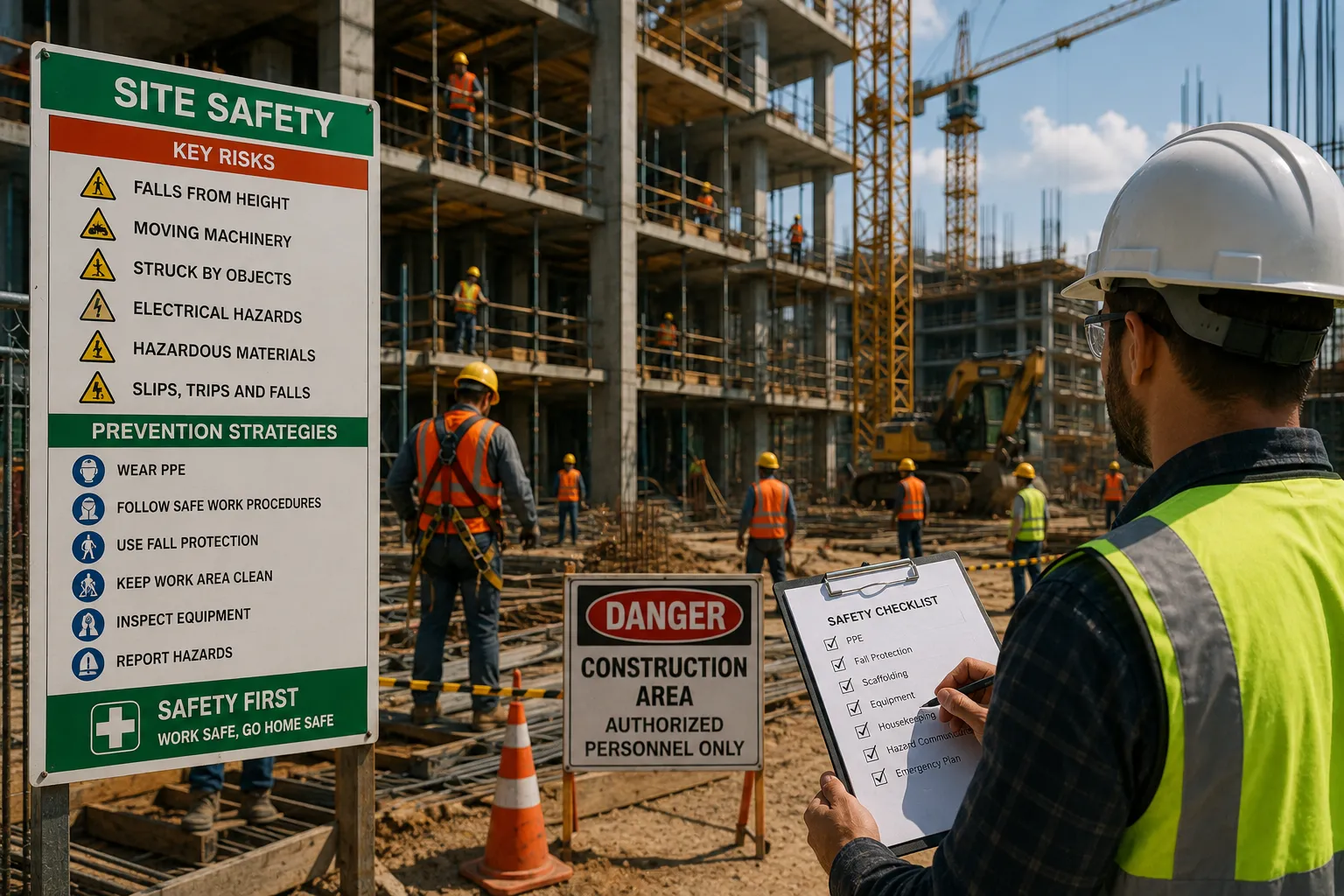
A single overlooked safety protocol can lead to catastrophic failure. On a construction site, this failure isn't just about project delays or budget overruns; it's measured in life-altering injuries, fatalities, and devastating financial consequences that can cripple a company overnight.
Effective construction safety is not a bureaucratic checklist—it's the bedrock of a successful, sustainable, and reputable operation. Ignoring it exposes workers to unacceptable risks and opens the door to crippling lawsuits, regulatory fines, and irreparable brand damage. A proactive safety culture is your most valuable asset.
Why Construction Safety Is Critical
The dynamic and often hazardous nature of construction work makes it one of the most dangerous industries globally. The statistics on site accidents are a stark reminder of the stakes involved. Worker safety must be the primary consideration in every phase of a project, from pre-planning to final handover.
The financial impact of a serious incident extends far beyond immediate medical costs. It includes project shutdowns, legal fees, increased insurance premiums, and the loss of skilled labor. A poor safety record can also prevent a firm from bidding on future contracts, directly impacting its long-term viability.
Ultimately, a strong safety culture protects your most important resource: your people. When workers feel valued and protected, morale improves, productivity increases, and the quality of work is enhanced. This commitment to job site protection is what separates industry leaders from the rest.
The Most Common Construction Site Risks
While every site has unique challenges, a handful of construction hazards consistently account for the majority of injuries and fatalities. Understanding these core risks is the first step toward effective mitigation and building a safer work environment.
These primary dangers, often referred to as the 'Fatal Four' by OSHA, are responsible for a significant percentage of all construction worker deaths. They represent the most immediate threats that every site manager must prioritize.
- Falls from Height: The leading cause of death in construction, resulting from unprotected edges, improperly constructed scaffolding, and ladder misuse.
- Machinery Accidents: Incidents involving heavy equipment like cranes, excavators, and bulldozers, often caused by operator error, blind spots, or mechanical failure.
- Electrical Hazards: Contact with power lines, exposed wiring, and improper use of extension cords can lead to severe burns, electrocution, and fires.
- Falling Objects: Unsecured tools, materials, or debris falling from height can cause severe head injuries or fatalities to workers below.
- Unsafe Equipment Use: Improper handling of power tools, lack of training, or using damaged equipment contributes to a wide range of injuries, from lacerations to amputations.
Fall Hazards and Prevention Methods
Given that falls are the number one killer on construction sites, fall protection is non-negotiable. A comprehensive fall prevention plan involves engineering controls, safe work practices, and the correct use of personal protective equipment (PPE).
Scaffolding must be erected on stable ground by a competent person, with platforms fully planked and equipped with guardrails. Every component should be inspected daily before use to identify any damage or instability that could lead to a collapse.
For tasks where guardrails are not feasible, personal fall arrest systems (PFAS) are essential. This includes a full-body harness, a shock-absorbing lanyard, and a secure anchor point capable of supporting 5,000 pounds. Proper worker training on how to inspect, wear, and use these systems is critical for their effectiveness.
Edge protection, including guardrails, safety nets, and hole covers, must be installed around every unprotected side, edge, or opening. A real-world example of failure occurred when a roofing contractor stepped backward through an unmarked and uncovered skylight opening, resulting in a fatal fall. This tragic site accident was entirely preventable with a simple, inexpensive plywood cover.
Machinery and Equipment Risks
The power and scale of heavy machinery make it both essential and extremely dangerous. Mitigating these construction hazards requires a multi-faceted approach combining operator training, equipment maintenance, and strict site management.
Operator error remains a leading cause of machinery accidents. Only certified and trained individuals should be permitted to operate heavy equipment. Furthermore, operators must be fully aware of the machine's blind spots and operational limitations. Establishing clear communication protocols between operators and ground workers is vital.
A rigorous maintenance schedule is crucial for job site protection. Mechanical failures, such as hydraulic line breaks or brake malfunctions, can have catastrophic consequences. Daily pre-operation inspections by the operator should be mandatory to identify potential issues like fluid leaks, worn tires, or damaged safety features.
Effective site traffic management is another key component of construction safety. Designating clear pathways for vehicles and pedestrians, using spotters in congested areas, and enforcing speed limits can significantly reduce the risk of collisions. It is imperative that all personnel understand and adhere to the established construction safety standards and workplace protection guidelines to ensure a safe, coordinated environment.
Consider an incident where a dump truck, reversing without a spotter, struck a surveyor who was in the vehicle's blind spot. This highlights a breakdown in site management and communication—a preventable accident that underscores the need for unwavering adherence to safety protocols.
How to Improve Construction Safety
Moving from a reactive to a proactive safety culture is the most significant step a company can take. This involves implementing systems and processes that identify and mitigate risks before an incident occurs. This is the core of how to improve construction safety for the long term.
Regular and ongoing training is fundamental. This includes initial safety orientations for new hires, daily 'toolbox talks' to discuss the day's specific hazards, and specialized training for high-risk tasks like confined space entry or crane operation.
Diligent supervision and frequent inspections are essential. A designated competent person should conduct regular site walkthroughs to identify hazards and ensure compliance with safety rules. These inspections create accountability and reinforce the message that safety is a top priority.
Consistent and correct use of Personal Protective Equipment (PPE) is a last line of defense. Management must not only provide appropriate PPE—such as hard hats, safety glasses, and high-visibility vests—but also strictly enforce its use at all times.
Finally, establishing clear communication and reporting systems is vital. Workers must feel empowered to report unsafe conditions without fear of retaliation. An open-door policy and anonymous reporting options can encourage a culture where everyone takes ownership of worker safety.
The Role of Technology in Site Safety
Technology is rapidly transforming the construction industry, offering innovative tools to enhance job site protection and prevent site accidents. Adopting these solutions can provide a significant return on investment by reducing incidents and improving efficiency.
Drones and mobile devices are now used for site inspections, allowing managers to safely assess hard-to-reach areas and document hazards in real-time. This digital approach creates a clear, time-stamped record of site conditions and corrective actions taken.
Wearable safety devices are another emerging trend. These sensors can be attached to a hard hat or vest to detect falls, monitor for signs of fatigue, or alert workers when they enter a designated hazardous zone, providing an immediate warning to both the worker and the site supervisor.
Artificial intelligence (AI) is also being leveraged to analyze site photos and videos, automatically identifying potential construction hazards like missing guardrails or improper PPE usage. This allows safety managers to focus their attention on the most critical areas.
Smart construction technologies, such as Building Information Modeling (BIM), allow teams to plan for safety during the design phase. By visualizing the construction sequence in a 3D model, project managers can identify potential risks and engineer solutions before workers even set foot on site.
Final Safety Recommendations for Construction Teams
Achieving excellence in construction safety is an ongoing commitment, not a one-time achievement. It requires continuous effort from every member of the team, from senior leadership to the newest apprentice on site.
First, focus on building a safety-first culture. Leadership must consistently demonstrate that worker safety is a core value of the company, prioritized above schedule and budget. This message must be clear, consistent, and reinforced through action.
Second, implement proactive risk assessment as a standard practice. Before any new task begins, teams should conduct a Job Hazard Analysis (JHA) to identify potential risks and agree on mitigation strategies. This empowers workers to think critically about their environment.
Third, develop and practice a comprehensive emergency response plan. Everyone on site should know what to do in the event of a fire, medical emergency, or structural collapse. Regular drills ensure that the response is swift and effective when it matters most.
Finally, embrace a mindset of continuous improvement. After any near-miss or incident, conduct a thorough investigation to understand the root cause and implement corrective actions to prevent a recurrence. Safety is a journey, and the goal is to get better every single day.