Erosion Control & Stormwater Compliance: A Practical Guide for Construction Sites
Effective erosion control and stormwater management are critical for environmental compliance on any construction site. This guide explains how to implement Best Management Practices (BMPs) and develop a functional Stormwater Pollution Prevention Plan (SWPPP) to protect your project and the environment.
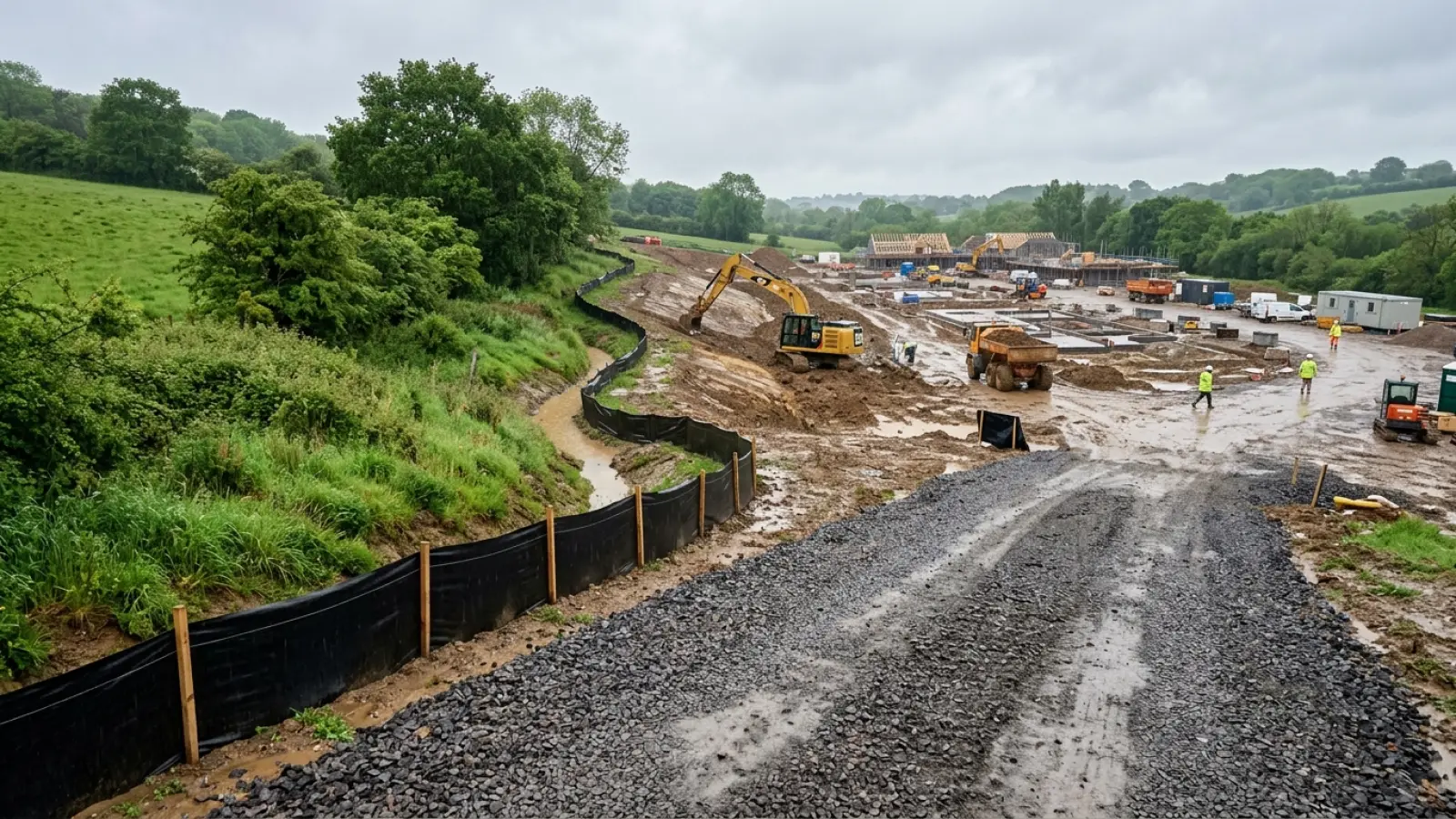
Every construction project begins by disturbing the earth, a necessary step that exposes soil to the elements. Without a proactive strategy, this disturbance can lead to significant erosion, sending sediment-laden stormwater runoff into nearby streams, rivers, and wetlands. Effective construction erosion control is not just about environmental stewardship; it's a fundamental component of risk management, project scheduling, and regulatory compliance. Implementing these measures often requires specialized knowledge, which is why many general contractors partner with firms that provide dedicated environmental installation services to ensure Best Management Practices (BMPs) are installed correctly from the start.
Why Erosion Control is Critical in Construction
When land is cleared, graded, or excavated, the protective layer of vegetation and topsoil is removed. This leaves bare soil vulnerable to the forces of wind and water. Rain striking exposed soil dislodges particles, and without vegetation to slow it down, water flows faster and carries more sediment. This stormwater runoff can cause several problems:
- Environmental Damage: Sediment pollutes waterways, harming aquatic life and degrading water quality.
- Property Damage: Uncontrolled runoff can cause flooding and deposit mud on adjacent properties and public roads.
- Project Delays: Regulatory stop-work orders, cleanup requirements, and rework can derail project timelines and budgets.
- Regulatory Penalties: Failure to comply with federal, state, and local stormwater regulations can result in significant fines.
Key Components of Site Environmental Management
A successful environmental compliance strategy integrates two distinct but related concepts: erosion control and sediment control. Both are managed through the implementation of Best Management Practices (BMPs).
Erosion Control vs. Sediment Control
It's important to understand the difference between these two approaches:
- Erosion Control: These are preventative measures designed to stop soil particles from detaching in the first place. This is the first line of defense and includes practices like soil stabilization, mulching, and minimizing land disturbance.
- Sediment Control: These are reactive measures designed to capture sediment after it has already been dislodged. Silt fences and sediment basins are common examples. While necessary, a heavy reliance on sediment control often indicates that erosion control measures are insufficient.
Best Management Practices (BMPs)
BMPs are the specific techniques and structures used to manage erosion and sediment. The right combination of construction site BMPs depends on site-specific factors like topography, soil type, climate, and the phase of construction. A one-size-fits-all approach is rarely effective.
Common Construction Site BMPs
Effective stormwater management involves a system of BMPs working together. Here are some of the most common and effective measures used on construction sites.
Site Access and Stabilization
A stabilized construction entrance is a pad of coarse aggregate located where vehicles access the site. It knocks mud and sediment off tires before vehicles enter public roads, preventing track-out.
Perimeter and Sediment Barriers
Silt fencing is a temporary sediment barrier made of porous geotextile fabric. It is installed along the downslope perimeter of a disturbed area to intercept and detain sediment-laden sheet flow, allowing sediment to settle out while water passes through.
Inlet and Drainage Protection
Inlet protection consists of filters or barriers placed around storm drain inlets. These devices prevent sediment, debris, and other construction pollutants from entering the storm sewer system.
Soil Stabilization Techniques
Stabilizing exposed soil is the most effective form of erosion control. This can be temporary or permanent:
- Temporary Stabilization: Methods like mulching, erosion control blankets, and temporary seeding protect soil during construction phases when an area will be idle for a period.
- Permanent Stabilization: The final step is establishing a permanent, erosion-resistant ground cover. Hydroseeding, which involves spraying a slurry of seed, mulch, fertilizer, and water, is a highly effective method for quickly vegetating large or sloped areas. Sodding and planting are also used for permanent stabilization.
The Role of the Stormwater Pollution Prevention Plan (SWPPP)
The cornerstone of construction environmental services and compliance is the Stormwater Pollution Prevention Plan (SWPPP). This is a site-specific, written document that details how a project will address and control potential stormwater pollution. A well-developed stormwater pollution prevention plan is more than just a permit requirement; it's the central blueprint for managing environmental risk on your project.
An effective SWPPP should include:
- Site Description and Map: Identifying drainage patterns, slopes, areas of soil disturbance, and locations of all control measures.
- Pollutant Identification: Listing all potential sources of pollution, including sediment, concrete washout, fuel, and chemicals.
- BMP Selection: Describing the specific erosion and sediment controls that will be used and where they will be installed.
- Procedures: Outlining clear procedures for BMP installation, maintenance, and inspections.
- Documentation: Establishing protocols for record-keeping, including inspection reports and corrective action logs.
Crucially, a SWPPP must be a living document. It should be updated to reflect changing site conditions, construction phases, and the effectiveness of the chosen BMPs. Treating it as mere paperwork to be filed away is a common and costly mistake.
Navigating Environmental Compliance
Environmental compliance during construction requires a diligent, proactive approach. Federal, state, and local agencies have regulations governing stormwater runoff from construction sites, and requirements can vary significantly by jurisdiction. Project managers and contractors must understand the specific rules applicable to their project.
Compliance is maintained through a continuous cycle:
- Regular Site Inspections: Conduct inspections at scheduled intervals (e.g., weekly) and after significant rain events to ensure all BMPs are functioning correctly.
- Thorough Documentation: Keep detailed records of all inspections, maintenance activities, and any issues identified.
- Prompt Corrective Actions: When a deficiency is found—such as a damaged silt fence or an overwhelmed inlet protector—it must be repaired or addressed promptly.
Clear communication and coordination between contractors, site superintendents, inspectors, and project managers are essential for keeping the site compliant.
Erosion Control Through the Construction Lifecycle
Effective erosion control is not a single task but a process that evolves with the project.
- Pre-Construction: Planning is key. Develop the SWPPP and schedule BMP installation to align with the grading plan.
- Site Clearing and Grading: Install perimeter controls and stabilized entrances *before* major earthwork begins. Phase grading to minimize the amount of exposed soil at any one time.
- Active Construction: Protect soil stockpiles, manage drainage paths, and maintain all BMPs as work progresses.
- Temporary Stabilization: Apply temporary measures to any disturbed areas that will be inactive for an extended period (often 14 days or more, depending on regulations).
- Inspection and Maintenance: This is an ongoing activity throughout the project. Damaged BMPs are ineffective.
- Final Grading and Permanent Stabilization: As areas are brought to final grade, install permanent stabilization measures like hydroseeding or sod immediately.
- Project Closeout: Once the site is fully stabilized and all temporary BMPs have been removed, the project can be officially closed out with the regulating authority.
Common Mistakes to Avoid
- Poor BMP Installation: A silt fence that isn't properly trenched (or 'keyed in') will fail during the first storm.
- Lack of Maintenance: Damaged, clogged, or overwhelmed controls are a leading cause of compliance issues.
- Unprotected Soil Stockpiles: Large piles of loose soil are highly erodible and must be covered or surrounded by a sediment barrier.
- Insufficient Stabilization: Leaving large areas of disturbed soil exposed for too long invites erosion.
- Failing to Adapt: Not adjusting the SWPPP or BMPs as site conditions change is a recipe for failure.
Frequently Asked Questions (FAQ)
What is the difference between erosion and sediment control?
Erosion control prevents soil from becoming loose (e.g., hydroseeding, blankets). Sediment control traps soil that is already moving in stormwater runoff (e.g., silt fences, check dams). A good plan emphasizes erosion control first.
How often should BMPs be inspected?
Inspection frequency is typically defined by the project's SWPPP and permit requirements. A common standard is at least once every 7 or 14 days and within 24 hours of a significant rainfall event (e.g., 0.5 inches or more).
What is a SWPPP and why do I need one?
A SWPPP (Stormwater Pollution Prevention Plan) is a required document for many construction projects that disturb a certain amount of land. It details how the project will control pollutants, primarily sediment, in its stormwater discharges to protect local waterways.
Who is responsible for maintaining erosion control measures?
The general contractor or site operator is typically responsible for the installation and maintenance of all BMPs as outlined in the SWPPP and construction documents.
When is a construction site considered 'finally stabilized'?
A site is generally considered finally stabilized when a permanent, perennial vegetative cover has been established over at least 70% of the previously disturbed area, or when the surface is covered by a non-erodible material like pavement or rock.