Additive Manufacturing in the Oil & Gas Industry: Transforming Exploration and Production
This article explores the revolutionary impact of additive manufacturing on the oil and gas industry, highlighting its applications, advantages, and future implications for efficiency and sustainability.
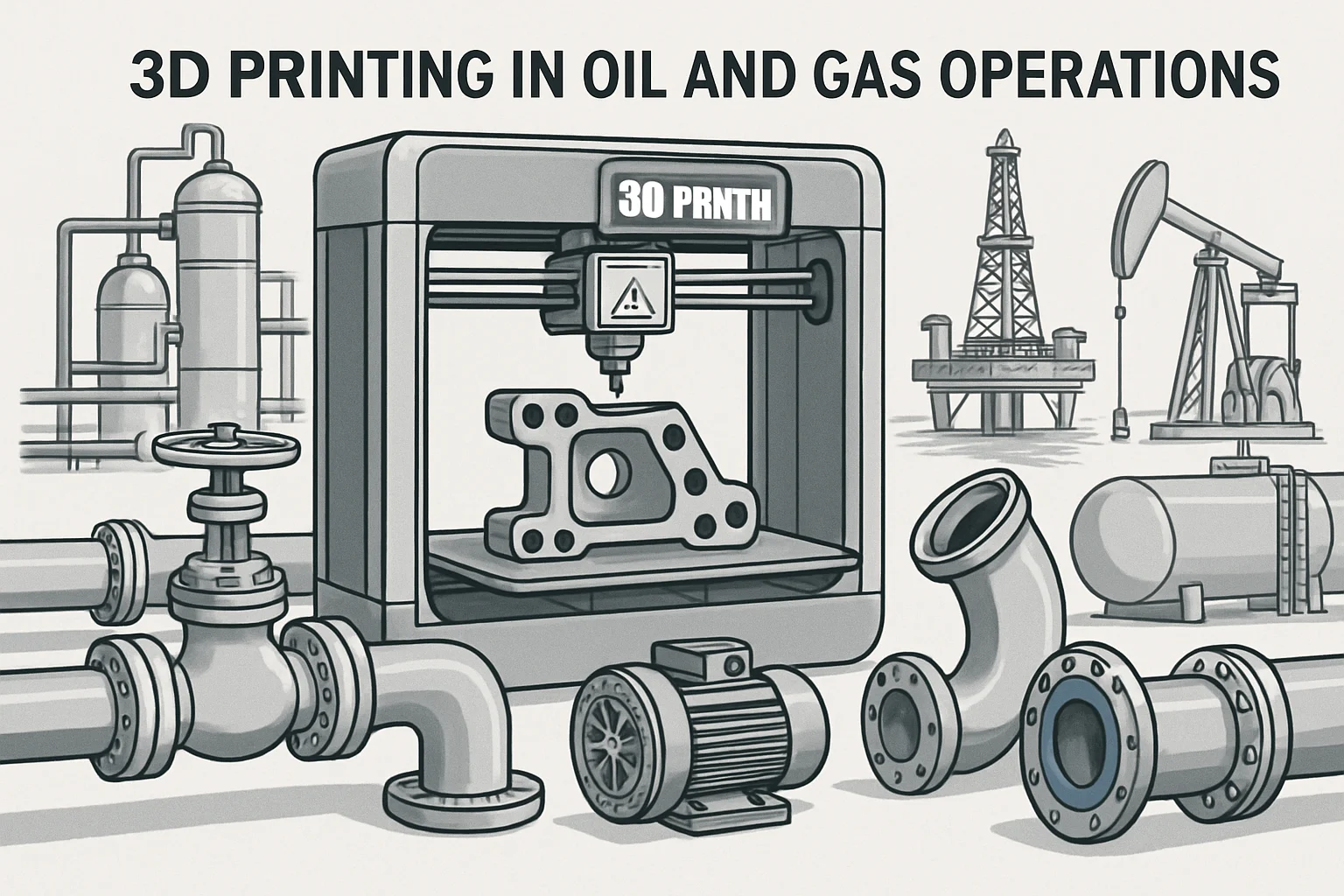
The oil and gas industry is undergoing a significant transformation driven by technological advancements and the need for enhanced operational efficiency and sustainability. Among the most promising innovations is additive manufacturing, commonly known as 3D printing. This article delves into how additive manufacturing is reshaping the oil and gas sector, its applications, advantages, and future implications.
Understanding Additive Manufacturing
Additive manufacturing refers to a process where materials are joined together layer by layer to create a three-dimensional object. Unlike traditional subtractive manufacturing methods, which involve cutting away material from a solid block, additive manufacturing offers greater flexibility, efficiency, and customization capabilities.
In the context of the oil and gas industry, additive manufacturing can produce complex components and tools that meet specific operational requirements, often with reduced lead times and costs. The technology utilizes materials such as metals, polymers, and composites, allowing for the fabrication of both prototypes and end-use parts.
Applications of Additive Manufacturing in Oil & Gas
The integration of additive manufacturing into the oil and gas industry encompasses several key applications:
- Component Production: 3D printing enables the production of complex components such as valves, pumps, and fittings that are essential for oil extraction and processing.
- Prototyping: Rapid prototyping capabilities allow engineers to test new designs quickly, resulting in faster innovation cycles.
- Customization: Additive manufacturing can create tailor-made solutions to meet specific operational demands, enhancing the performance of equipment.
- Repair and Maintenance: The technology facilitates on-site production of replacement parts, reducing downtime and logistical challenges associated with supply chain management.
- Tooling: Specialized tools can be created quickly for various tasks, improving operational efficiency on drilling sites.

Advantages of Additive Manufacturing for Oil & Gas
The adoption of additive manufacturing in the oil and gas industry presents numerous advantages, including:
- Cost Efficiency: Reducing the costs associated with material waste and logistics is a significant benefit of additive manufacturing. The ability to produce parts on-demand minimizes the need for large inventories.
- Time Savings: Traditional manufacturing processes can take weeks or months to complete. In contrast, additive manufacturing can significantly shorten production times, allowing for quicker response to market needs.
- Enhanced Design Freedom: The flexibility of 3D printing allows for the creation of complex geometries that are often impossible or prohibitively expensive to achieve with traditional methods.
- Sustainability: Additive manufacturing can lead to more sustainable practices by reducing material waste and energy consumption in production processes.
- Supply Chain Optimization: Localized production capabilities can minimize transportation costs and associated emissions, enhancing overall supply chain efficiency.
Challenges and Considerations
Despite its many advantages, the integration of additive manufacturing into the oil and gas industry comes with challenges:
- Material Limitations: The range of materials suitable for 3D printing in high-stress environments can be limited, requiring ongoing research and development.
- Quality Control: Ensuring the quality and reliability of 3D printed components is crucial, particularly in safety-critical applications.
- Regulatory Compliance: The oil and gas industry is heavily regulated, and new manufacturing processes must comply with stringent industry standards.
- Skill Gap: There is a need for skilled professionals who understand both the complexities of additive manufacturing and the operational demands of the oil and gas sector.
Future Trends in Additive Manufacturing for Oil & Gas
Looking ahead, several trends are poised to shape the future of additive manufacturing in the oil and gas sector:
- Increased Automation: The integration of robotics and automation technologies with additive manufacturing processes to improve efficiency and reduce human error.
- Advanced Materials Development: Ongoing research into new materials that can withstand extreme conditions found in oil and gas environments.
- Digital Twin Technology: The use of digital twins in conjunction with additive manufacturing to monitor and optimize performance continuously.
- Regulatory Advancements: Evolving regulations that will better accommodate and promote the use of additive manufacturing technologies within the industry.
Conclusion
The incorporation of additive manufacturing into the oil and gas industry holds significant potential for enhancing production efficiency, reducing costs, and contributing to more sustainable practices. While challenges remain, ongoing advancements in technology and materials, coupled with a focus on quality and compliance, will facilitate the widespread adoption of this revolutionary manufacturing process. As the industry continues to evolve, practicing engineers, architects, and builders must stay informed and prepared to embrace these innovations to drive future growth and success.